HVAC Repair
No heat, no cooling, airflow problems, thermostats and heat pumps.
How to get help
Four ways to start
Same shops either way. The difference is how much is known before anyone quotes.
Buy now
You know what you need
Fixed-price repair work you can pay for right now. Price shown is the price you pay, plus the Loclis service fee at checkout.
Nothing listed at a fixed price in this category yet.
Request a quote
It needs a diagnosis
Answer a few questions about what's wrong. Providers who do this work send you a price, a scope and a timeline. You pick one or none.
Book a service call
Someone has to look at it
A diagnostic visit at a set fee. The tech comes out, finds the problem, and quotes the repair before doing it.
Subscribe
Keep it from breaking again
Recurring maintenance on a schedule. Cheaper than the repair it prevents, and you stop thinking about it.
Common problems
What people usually bring here
These are the symptoms the hvac repair questionnaire asks about. Pick the closest one when you submit.
- No heat
- No cooling
- Weak airflow
- Blowing but not conditioning
- Short cycling
- Loud noise
- Ice on the unit
- Water around the unit
- Thermostat unresponsive
- High bills
Questions
Before you book
- What do providers need to know before they can quote?
- HVAC Repair quotes on Loclis ask for: System type; What's happening; Symptoms; When did it start; When was it last serviced; Have you checked the air filter. It takes about a minute, and photos help.
HVAC repair in Virginia: licences, refrigerant certification, permits and quotes
When the heat or the air conditioning quits, it is tempting to hire whoever can come today. A few checks take minutes and protect you on a job that can run into thousands: the company's licence, the technician's refrigerant certification, whether a replacement needs a permit, and what the contract says. This guide covers each one, with the Virginia rules behind them.
By Kasra Taheri, Founder, LoclisPublished
Researched and drafted with AI, then checked claim by claim against the sources listed below before it was published. Prices and rules change; the dates beside each source say when it was last checked.
Start with the company's licence
HVAC is one of three trades, with electrical and plumbing, where Virginia asks for more than a business licence. On top of the company's contractor licence, the Board for Contractors must require a master tradesman licence as a condition of licensing a heating, ventilation and air conditioning contractor.[1] So a properly licensed HVAC company has a master HVAC tradesman behind it, not just a business name.
The licence class tells you how large a job the company may take on. Class C covers single jobs over $1,000 and under $30,000, Class B from $30,000 to under $150,000, and Class A anything larger.[1] A repair or a single-system replacement in a house usually sits inside Class C, but a whole-house system with new ductwork can climb past it. How to check a contractor's licence walks through DPOR's lookup step by step, including where the class and the specialty show.
Then the technician's refrigerant card
The licence covers the company. The person at your outdoor unit needs a federal credential of their own. Under the Clean Air Act, technicians who maintain, service, repair, or dispose of equipment that could release refrigerants into the atmosphere must be certified.[4] The EPA counts as technician work tasks such as attaching gauges to measure the pressure inside a system and adding or removing refrigerant.[4] Many air conditioner and heat pump repairs involve one or both.
There are four types of certification, and the test a technician takes depends on the kind of equipment they work on.[4] Once earned, the credential does not expire.[4] It is fair to ask to see the card before anyone opens the refrigerant lines. An apprentice may do the work while closely and continually supervised by a certified technician,[4] so if the person working is not certified, ask who is supervising.

When a replacement needs a permit
Virginia's building code says a permit is needed before work starts on mechanical systems, fuel supply systems or electric wiring.[2] The same section lists ordinary repairs that need no permit, and in houses one of them is replacing a mechanical appliance that is not fueled by gas or oil.[2] In practice, swapping an electric heat pump or air handler for a similar one is often exempt, while replacing a gas or oil furnace is not. Running a new circuit, moving ductwork or adding a system can each bring a permit back in.
Two details are easy to miss. The exemption does not excuse the work from the rest of the building code, and if you ask for a permit on an exempt job, the building department has to issue one and inspect.[2] An inspection on a new system is cheap insurance. And a dead furnace in January does not have to wait for paperwork: emergency equipment replacement can start first, with the permit application filed by the end of the next working day.[2]
The Board for Contractors' advice is that the contractor should apply for and get any building permits, and the contract should say so.[6] If an HVAC company asks you to pull the permit in your own name, ask why.
What the contract has to say
Virginia requires a written contract for residential contracting, signed by you and the contractor before work starts or any payment is taken.[3] Note that routine maintenance or service contracts are excluded from that requirement,[3] so a tune-up plan may come with less paperwork than a new system. For a repair or replacement, the contract must include, among other things:
- when work begins and the estimated completion date;[3]
- the total cost, or for time-and-materials work, how the price is worked out;
- the amount of the down payment and the schedule of progress payments;[3]
- the contractor's name, address, licence number, class and specialty;[3]
- a promise to meet local permit, inspection and zoning rules;[3]
- and a statement that any change to the cost, materials, work or completion date must be in writing and signed by both of you.[3]
For the deposit, the Board for Contractors' rule of thumb is no more than 10% of the total price or $1,000, whichever is less.[6] The exception is custom-made items or special orders, where a deposit as high as 30% can be reasonable.[6] A system that has to be ordered for your house can fall under that exception; ask the company to say so in writing.
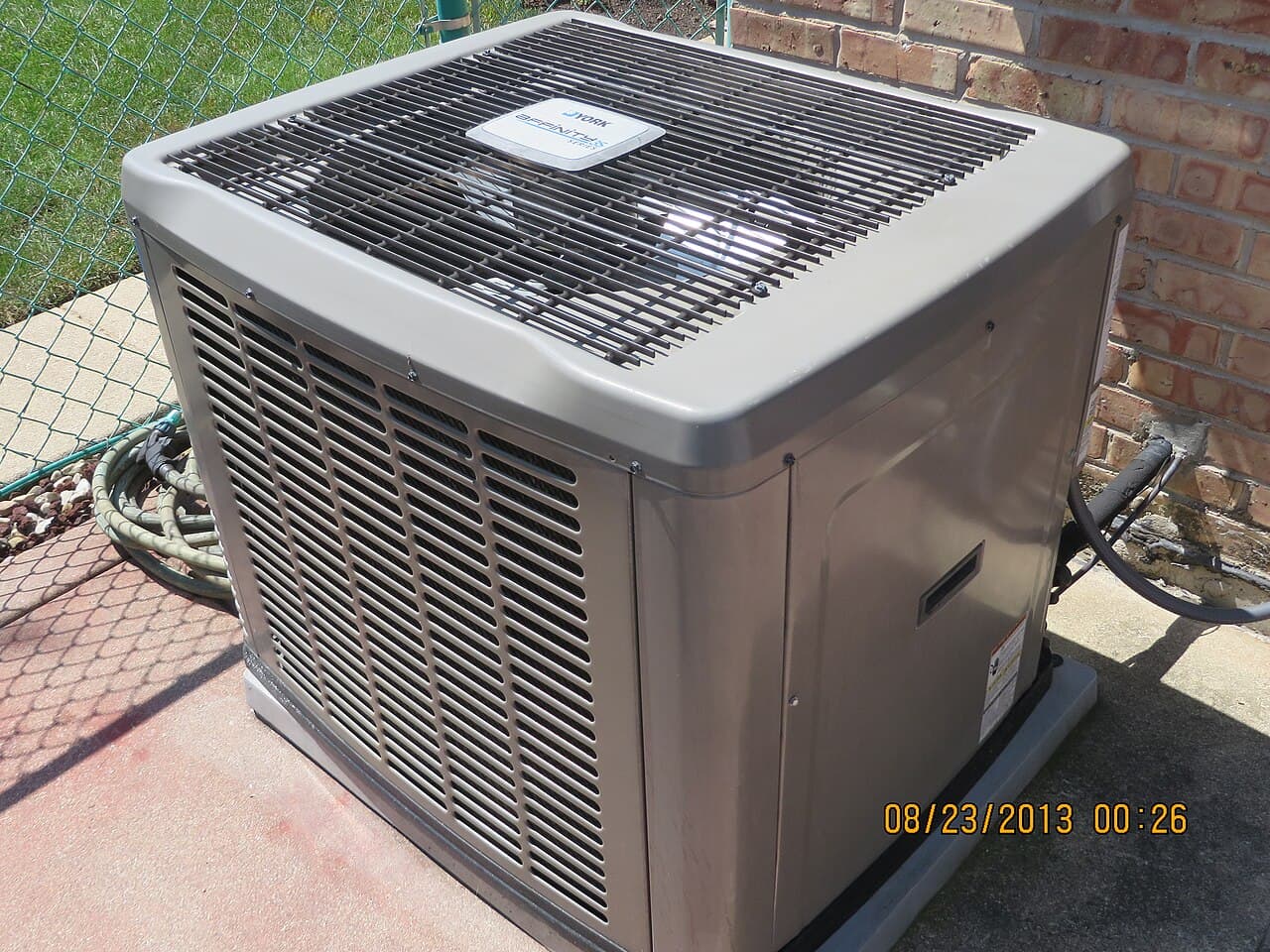
Maintenance that prevents the emergency call
Many no-heat and no-cool calls start as small problems. ENERGY STAR recommends an annual check-up by a contractor, the cooling system in the spring and the heating system in the fall, before contractors get busy.[5] Its checklist explains why each step matters. Too much or too little refrigerant will make your system less efficient.[5] Airflow problems can reduce your system's efficiency by up to 15 percent.[5] A plugged condensate drain can cause water damage in the house,[5] and on a gas or oil system, gas or oil connections that are not working properly are a fire hazard.[5]
The one job ENERGY STAR leaves to you is the filter: inspect, clean, or change air filters once a month.[5] If you would rather not track the check-ups yourself, Loclis lists HVAC maintenance businesses separately from repair.
How quotes work on Loclis
HVAC problems are hard to price from a description, so Loclis gives an HVAC business two honest ways to answer a request:
- A price. If the job is clear from your description and photos, such as a thermostat swap or a known part, the business sends a fixed price with what it includes. You compare quotes side by side and accept one.
- I need to see it first. If it isn't clear, the business offers an estimate visit, sometimes free, sometimes for a fee, and says when they can come. You book the visit, the business gets your address, and after the visit they send a price on the same request. Any visit fee you paid comes off that price automatically.
Some HVAC businesses also sell a fixed-price service call on their shop page. Buying one opens a repair request with that business, and the service call fee comes off their repair price the same way.
HVAC needs a licence at any job size, so Loclis refuses an HVAC quote from a business with no current licence on file. You can browse HVAC businesses by town in the directory, for example HVAC companies in Blacksburg, or read how Loclis checks businesses on the trust page. Loclis's own fees are on the pricing page.
When you are ready, describe the heating or cooling problem once. Licensed local HVAC businesses send quotes or offer a visit, and nothing is charged until you choose one.
Questions people ask
- Does an HVAC company need a licence in Virginia?
- Yes. Virginia's contractor licence classes start at jobs over $1,000, and an HVAC contractor's licence also requires a master tradesman. Check both on DPOR's License Lookup before you sign anything.
- Does the technician need a refrigerant certification?
- Anyone who services equipment that could release refrigerant, including connecting gauges or adding or removing refrigerant, needs EPA Section 608 certification, earned by passing an EPA-approved test. Ask to see the card before work on the refrigerant lines starts.
- Do I need a permit to replace my furnace or air conditioner in Virginia?
- Replacing a mechanical appliance that is not fueled by gas or oil is on the building code's list of ordinary repairs that need no permit in houses. A gas or oil furnace replacement is not on that list, and new wiring or ductwork changes can need a permit too. Your local building department decides borderline jobs.
- Why do some HVAC companies charge to come out and look?
- A system that won't start or short-cycles usually can't be priced until someone tests it. On Loclis, an HVAC business can offer an estimate visit or sell a service call, and the fee you paid comes off the repair price if you hire them for the work.
Sources
- [1] Code of Virginia § 54.1-1100, Definitions (contractors), Virginia General Assembly, Legislative Information System. Checked October 14, 2026.
- [2] 13VAC5-63-80, Virginia Uniform Statewide Building Code, Section 108 Application for permit, Virginia Administrative Code, Legislative Information System. Checked October 14, 2026.
- [3] 18VAC50-22-260, Filing of charges; prohibited acts (residential contract requirements), Virginia Administrative Code, Legislative Information System. Checked October 14, 2026.
- [4] Section 608 Technician Certification Requirements, U.S. Environmental Protection Agency. Checked October 14, 2026.
- [5] Maintenance Checklist, ENERGY STAR, U.S. Environmental Protection Agency. Checked October 14, 2026.
- [6] What You Should Know Before You Hire a Contractor, Virginia Board for Contractors, DPOR. Checked October 14, 2026.