How do I clean an epoxy garage floor?
Sweep or blow off grit first, then scrub with warm water, a mild detergent and a soft-bristle brush or deck mop, rinse, and squeegee dry. Soak up oil and spills early. Skip acids, solvents and stiff wire brushes, which can dull or damage the coating. Wait until the coating has fully cured; one Rust-Oleum data sheet lists 7 days.
Free to ask. Local shops send quotes, and you pay only when you book one.
By Kasra Taheri, Founder, LoclisPublished
Researched and drafted with AI, then checked claim by claim against the sources listed below before it was published. Prices and rules change; the dates beside each source say when it was last checked.
Step by step
Read when to stop and call a pro, further down this page, before you start.
Step 2: Clear the floor
Move cars, bins and loose items off the floor so you can reach all of it.
Step 3: Sweep or blow off grit
Remove sand, gravel and dirt with a soft broom or leaf blower; grit scratches a gloss finish when scrubbed.
Step 4: Blot up oil and spills
Soak up fresh oil, antifreeze or other fluids with rags or absorbent before they dry onto the surface.
Step 5: Scrub with mild soap and warm water
Mop or scrub with warm water and a few drops of mild dish detergent, using a soft-bristle brush or deck mop, working in sections.
Step 6: Rinse
Rinse with clean water so no detergent film is left; a film can make the floor slick.
Step 7: Squeegee and dry
Push the water out the door with a foam squeegee, as the maker advises for prep, and let the floor dry before driving on it.[3]
Step 8: Spot-clean stains separately
Test any stronger cleaner on a small hidden corner first and follow the coating maker's label.
The short version
Routine care is simple: sweep, wash with warm water and a mild detergent, rinse, and squeegee dry. Epoxy is sold as an easy-to-clean surface; Rust-Oleum lists "an easy to clean showroom quality appearance" among its garage floor coating's features.[3] The ways people damage it are scrubbing with grit on the floor, harsh chemicals and solvents, and leaving spills to sit.
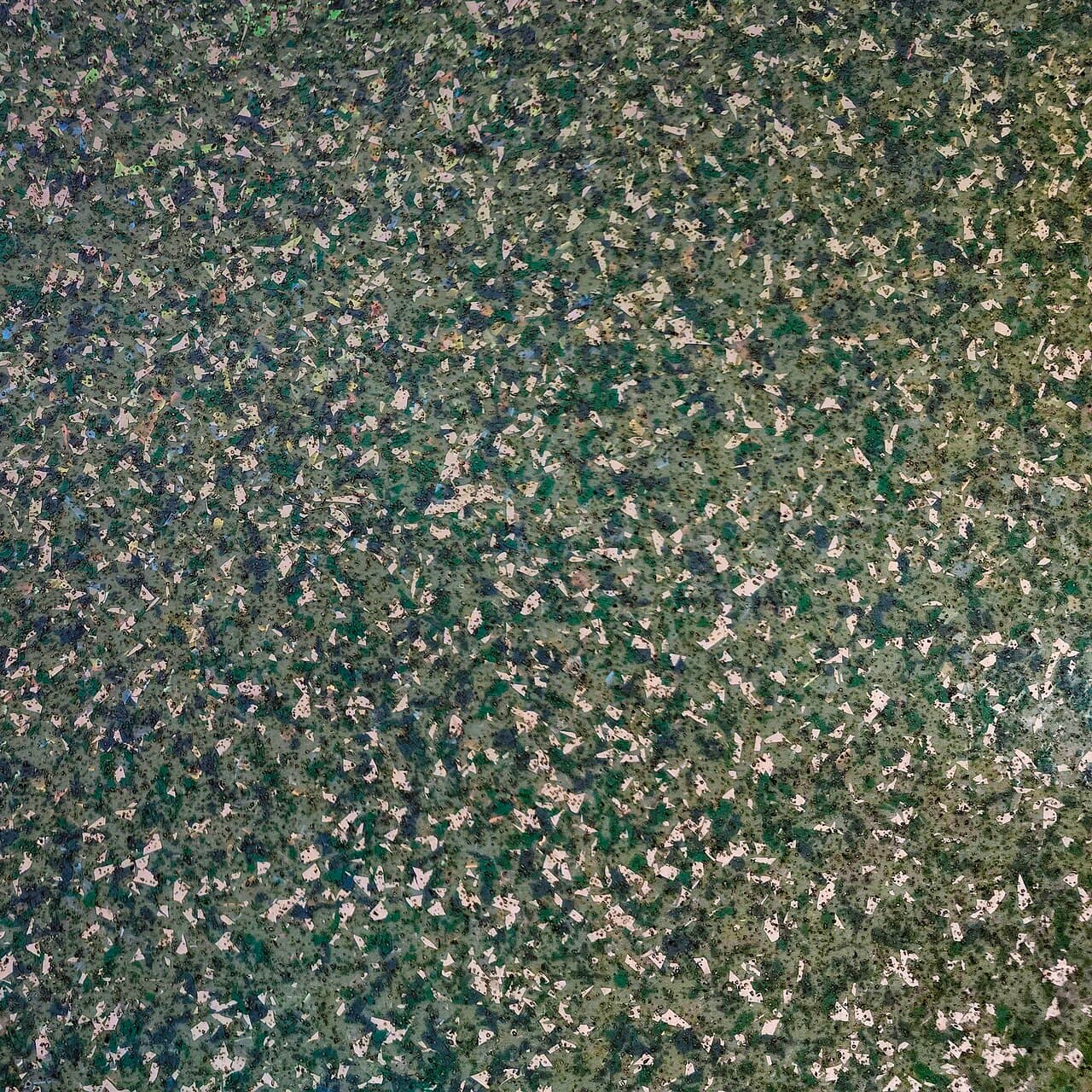
Let a new floor cure first
Do not wash a new coating early. Rust-Oleum's instruction sheet says to allow 3 days for full cure and vehicle traffic, while its ESH-48 data sheet lists vehicle traffic at 72 hours and full cure at 7 days.[1][3] Benjamin Moore's GarageGuard data sheet is more cautious about tires: cool tires at 72 hours and hot tires at 5 to 7 days.[4] Check your own product label, since cure times shift with temperature and humidity.
Weekly and monthly care
Sweep. Use a soft broom or a leaf blower. Grit is the main thing that dulls a glossy finish, because it drags under brushes, shoes and tires.
Wash when it looks dirty. For most garages that is every month or two, and after winter road salt and slush. Wet the floor, scrub with warm water and a little mild dish detergent using a soft-bristle brush or deck mop, then rinse with plenty of clean water. A stiff-bristle broom is the manufacturer's tool for preparing bare concrete,[3] not for polishing a finished coating, so use a soft brush.
Squeegee, do not leave puddles. Pushing water out the door speeds drying, and the maker lists a squeegee among its supplies for exactly that reason.[3] Do not leave pooled water on the floor.[1]
Blot spills quickly. Wipe up oil, antifreeze, brake fluid and similar fluids with rags or absorbent, then wash the spot. A long-sitting spill is harder to remove and can stain.
What not to use
Muriatic acid and other etching materials. Benjamin Moore's sheet says not to use muriatic acid or other etching materials on a painted floor.[4]
Solvents. Rust-Oleum says dried product needs lacquer thinner to remove.[2] A solvent strong enough to dissolve dried epoxy can soften or dull the finished floor, so keep it for tools and test any solvent-based cleaner on a hidden spot first.
Stiff wire brushes and pressure-washer wands held close. Both can scratch or lift the coating, especially at edges and cracks.
Wax and floor polish. They make a slippery film. Rust-Oleum notes that a coated floor typically produces a smoother surface than bare concrete and can become slippery when wet,[1] so do not add anything that makes it slicker.
Slippery when wet
A cleaned epoxy floor is safest when it is dry. Rust-Oleum suggests an anti-slip additive in the mix or a clear top coat that includes one.[1] If your floor is already down and feels slick when wet, ask a coating contractor about adding a textured top coat. For the original installation, see how to epoxy a garage floor.
Stop and call a pro if
- The coating is peeling, bubbling or lifting. Washing will not fix it; read why garage floor epoxy peels.
- The floor looks wet or damp after it has dried elsewhere. That can be moisture coming up through the slab.
- Stains will not come out with soap and water. Check the product label before trying stronger cleaners, or ask the contractor who installed it.
- You want it recoated. Should I hire a pro for an epoxy garage floor and what an epoxy garage floor costs in Virginia cover the choice.
Getting help in Virginia
Browse more painting answers or find painters and floor-coating businesses near you.
When you would rather hand it off, describe your garage floor and local licensed businesses will quote it.
Common questions
- Can I use bleach or ammonia on epoxy?
- Check the coating maker's label first. Neither is needed for routine cleaning; warm water and mild detergent do the job, and a stronger cleaner should be tried on a hidden spot first. Never mix cleaning chemicals.
- Can I pressure wash an epoxy garage floor?
- Light rinsing with a hose is safer. A pressure-washer wand held close can lift edges and cracks, especially on an older or poorly bonded coating.
- How often should I clean it?
- Sweep as needed and wash every month or two, and after winter salt. Blot oil and other spills the same day.
- Why is my clean floor still slippery when wet?
- Coatings are smoother than bare concrete and can be slippery when wet, and leftover detergent adds to it. Rinse well and squeegee dry; an anti-slip additive or textured top coat addresses it.
- How do I remove tire marks?
- Wash with warm water and mild detergent and a soft brush. Fresh marks usually lift; if they persist, check the product label before using a stronger cleaner.
Sources
- [1] Garage Floor Instruction Sheet (EpoxyShield water-based epoxy garage floor coating kit), Rust-Oleum Corporation. Checked October 28, 2026.
- [2] Technical Data ESH-41, EpoxyShield Water-Based Epoxy Garage Floor Coating (can kits), Rust-Oleum Corporation. Checked October 28, 2026.
- [3] Technical Data ESH-48, EpoxyShield Garage Floor Universal Tint Base, Rust-Oleum Corporation. Checked October 28, 2026.
- [4] GarageGuard Waterborne Epoxy Garage Floor Coating Semi-Gloss, technical data sheet EGG-XXXX, Benjamin Moore & Co.. Checked October 28, 2026.
Want a pro to handle it?
Describe the job once. Licensed local businesses send quotes, and you pay only when you book one.
Get a quote from a local pro