How do I clean a front-load washer that smells?
Wipe the door seal and dispenser, run the washer's cleaning cycle monthly, and leave the door ajar after use. The airtight door seal traps moisture that breeds mold and mildew, so drying the machine matters as much as cleaning it. Use HE detergent, unload promptly, and never mix bleach with ammonia cleaners.
Free to ask. Local shops send quotes, and you pay only when you book one.
By Kasra Taheri, Founder, LoclisPublished
Researched and drafted with AI, then checked claim by claim against the sources listed below before it was published. Prices and rules change; the dates beside each source say when it was last checked.
Step by step
Read when to stop and call a pro, further down this page, before you start.
Step 1: Wipe the door seal
Pull the rubber gasket back and wipe every fold and the inside of the glass with a cloth and all-purpose cleaner, wearing gloves.
Step 2: Clean the dispenser drawer
To remove residue from the dispenser, wipe with a damp cloth and towel dry.[2]
Step 3: Run the cleaning cycle
Run the Clean Washer cycle every month to maintain washer freshness, with washer cleaner or liquid chlorine bleach as your manual directs.[2]
Step 4: Keep bleach away from other cleaners
Never mix chlorine bleach solution with other cleaning solutions or detergents that contain ammonia because toxic fumes could be produced.[3]
Step 5: Clean the drain pump filter
With the washer unplugged and a towel and tray under the filter panel, let the water out slowly, then clear and rinse the filter.
Step 6: Wipe the drum and seal dry
Dry the seal and drum with a towel after the cycle so less moisture is left behind.
Step 7: Leave the door open
Leave the door ajar for an hour or two after use to allow moisture to evaporate.[1]
Run a clean cycle, wipe the door seal and dispenser, and leave the door open between loads. A front-load washer smells because moisture, detergent residue and lint stay behind in places a normal wash never dries out, and the fix is nearly always cleaning plus a change of habit.
Why a front-load washer smells
Front-loading washers use airtight seals to prevent water from leaking while the machine is in use. When the machine is not in use, this seal can trap moisture in the machine and lead to mold.[1] The rubber gasket around the door is the usual culprit: water, soap and lint collect in its folds and never fully dry.
Habits make it worse. Using non-HE detergent or more than the manufacturer's recommended amount of detergent can cause excessive suds, which can lead to the washer leaking, draining concerns, and/or poor rinsing performance.[2] Residue that is not rinsed away feeds the smell. So does a wet load left in the drum: leaving wet clothing inside the wash basket can lead to mildew, which can cause odors both in the clothing and in the washer.[2]
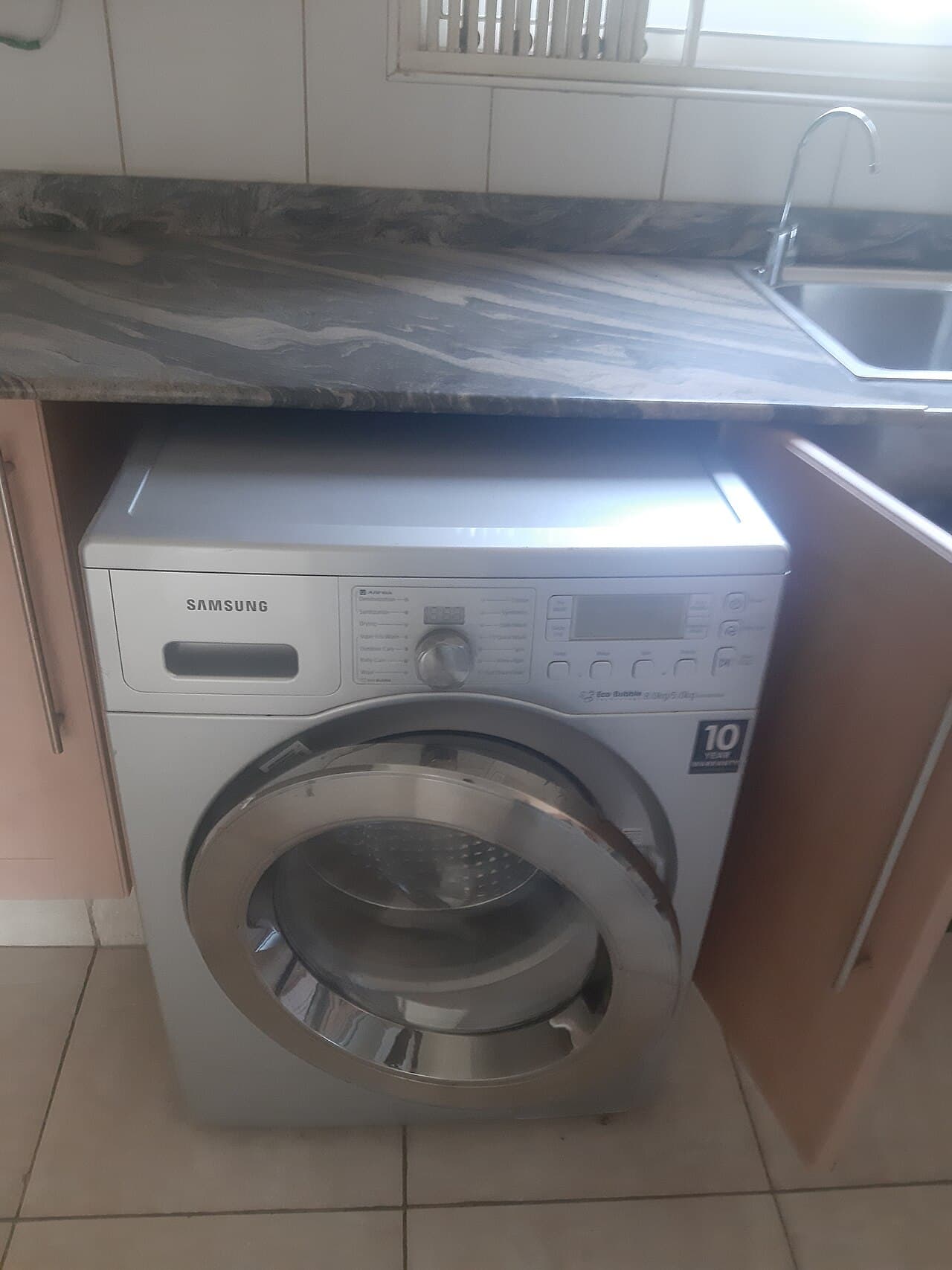
Clean it, step by step
Do these in order. They use only the washer itself, household cleaner and, if your manual calls for it, a cleaning tablet or liquid chlorine bleach.
- Wipe the door seal. Pull the rubber gasket back and wipe every fold, plus the inside of the glass, with a cloth and an all-purpose cleaner. Wear gloves; the folds often hold hair and grime.
- Clean the dispenser drawer. Slide it out if your model allows. To remove residue from the dispenser, wipe with a damp cloth and towel dry.[2] Rinse stubborn buildup under the tap.
- Run the washer's cleaning cycle. Whirlpool says to run the Clean Washer cycle every month to maintain washer freshness, using washer cleaner or liquid chlorine bleach.[2] Some manufacturers recommend rinsing the washer each month by running a normal cycle with 1 cup of bleach and wiping down the compartments to help reduce the risk of mold or mildew buildup.[1] Your owner's manual says which your machine wants.
- Keep bleach away from other cleaners. Never mix chlorine bleach solution with other cleaning solutions or detergents that contain ammonia because toxic fumes could be produced.[3] Run the cycle with the room ventilated.
- Clean the drain pump filter if your model has one. Unplug the washer first. The filter is usually behind a small panel at the bottom front; put a towel and a shallow tray under it, open it slowly and let the water out before you unscrew the filter. Pull out lint, coins and hair, rinse it and screw it back in fully.
- Wipe the drum and seal dry. A dry towel after the cycle finishes means there is less left for mold to grow on.
- Leave the door open. Leave the door ajar for an hour or two after use to allow moisture to evaporate.[1] Make sure children do not climb into the machine while the door is open.[1]
Keep the smell from coming back
Unload the washer as soon as the cycle ends. Use only HE detergent and measure it; more is not cleaner. Run the cleaning cycle monthly, wipe the seal when you see damp or grit, and keep the dispenser drawer clean.
Smell can still come from the house rather than the machine. If a musty or sewer-like odor shows up mainly while the washer drains, the standpipe or its trap may be the source, and that is a plumber's job rather than an appliance one.
Stop and call a pro if
- The smell stays after two full cleaning cycles and a cleaned filter. A technician can check the drain pump and hoses for standing water and residue you cannot reach.
- You see black growth that wipes off the seal and returns within days. That points to a leak or poor drainage keeping the drum wet.
- Water pools under the washer or the drum holds water after a cycle. That is a drain or leak fault, not a cleaning problem. Check the drain hose for kinks and the pump filter, then call for service if water remains.
- There is a hot, burning or electrical smell. Stop the machine, unplug it and call a service technician.
- The odor is sewage. The drain line or standpipe may be at fault; call a licensed plumber.
Getting help in Virginia
If cleaning does not solve it, read whether a washer is worth repairing and what a washer repair costs. Browse more appliance repair answers, or see washer repair pros on Loclis.
When the smell is not something a cleaning cycle fixes, describe the problem and local appliance repair pros will quote it.
Common questions
- Why does my front-load washer smell like mildew?
- Moisture is trapped by the airtight door seal and never dries out, so mildew grows on the gasket, the dispenser and the drum. Detergent residue and clothes left sitting wet make it worse. Wipe the seal, clean the dispenser, run the cleaning cycle and leave the door ajar between loads.
- How often should I run the cleaning cycle?
- Whirlpool says to run its Clean Washer cycle every month to maintain washer freshness. Check your owner's manual for the schedule and the cleaner your brand recommends.[^wp-odor]
- Can I use bleach to clean my washer?
- Some manufacturers recommend a monthly normal cycle with 1 cup of bleach.[^es] Follow your manual, ventilate the room, and never mix bleach with a cleaner or detergent containing ammonia.[^epa-mold]
- Should I leave the washer door open?
- Yes, between loads. ENERGY STAR advises leaving the door ajar for an hour or two after use so moisture can evaporate, and keeping children from climbing into the machine while it is open.[^es]
- Does too much detergent cause a smell?
- It can. Non-HE detergent or too much of it causes excessive suds and poor rinsing, and leftover residue feeds odors.[^wp-odor] Use HE detergent in the amount the maker recommends.
Sources
- [1] Clothes Washers, ENERGY STAR, U.S. Environmental Protection Agency. Checked October 27, 2026.
- [2] Removing Washer Odors or Smells, Whirlpool Product Help. Checked October 27, 2026.
- [3] A Brief Guide to Mold, Moisture and Your Home, U.S. Environmental Protection Agency. Checked October 27, 2026.
Want a pro to handle it?
Describe the job once. Licensed local businesses send quotes, and you pay only when you book one.
Get a quote for Appliance Repair