Should I repair or replace my dryer?
Repair a dryer for a small, one-off fix such as a belt, fuse or vent, and replace it when the repair is a big share of a comparable new dryer's cost, parts are scarce or it keeps failing. First rule out breakers, lint and the vent, then compare written estimates with a real replacement price.
Free to ask. Local shops send quotes, and you pay only when you book one.
By Kasra Taheri, Founder, LoclisPublished
Researched and drafted with AI, then checked claim by claim against the sources listed below before it was published. Prices and rules change; the dates beside each source say when it was last checked.
Step by step
Read when to stop and call a pro, further down this page, before you start.
Step 2: Write down the facts
Note the brand, model, age, symptom and any earlier repairs.
Step 3: Get a written estimate
Ask a repair business for a written estimate that lists the part, labor and any visit fee, and get at least three if the repair is large.[5]
Step 4: Price a comparable replacement
Look up a similar dryer, including delivery, installation and hauling away the old one.
Step 5: Weigh the repair against the replacement
Repair when the fix is a small share of a replacement's cost and the dryer is otherwise sound; replace when it is a large share or the dryer has failed repeatedly.
Repair when it is a small, one-off fix
Repair a dryer when the fault is a single inexpensive part such as a belt, a fuse, a thermostat or a vent problem, and the machine has otherwise run well. Replace it when the repair is a large share of the price of a comparable new dryer, when it has needed repeated repairs, or when the problem is the drum, motor or control board on an old machine and parts are hard to find.
There is no official age or percentage cut-off. Rules of thumb that name a percentage are shop heuristics, not standards. The figures that matter are your written estimate and a real price for the replacement you would buy.
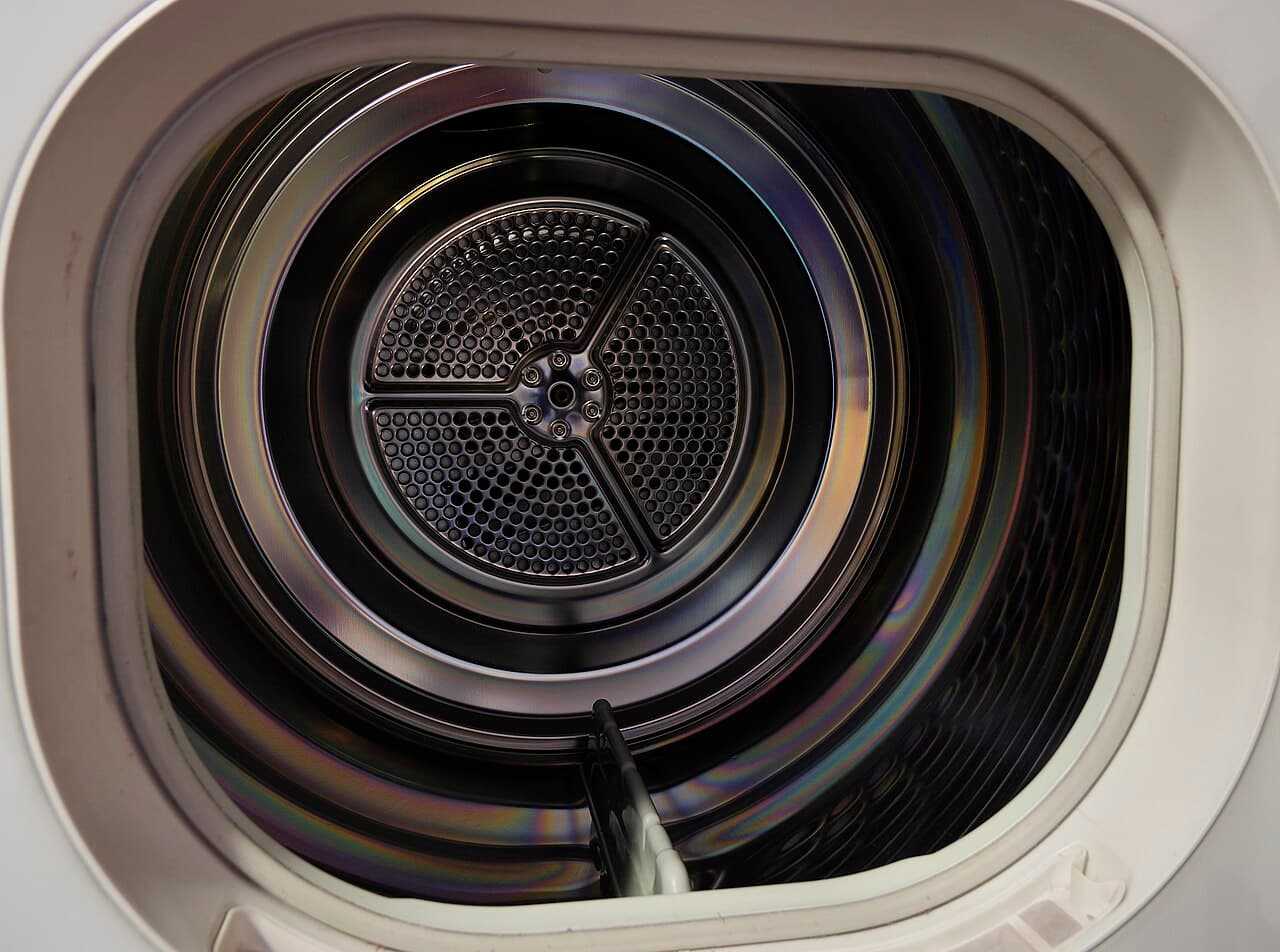
Check the cheap causes first
Before you decide, rule out the free fixes. Most electric dryers use two fuses or breakers,[1] so a half-tripped breaker can leave a dryer that tumbles but does not heat. Lint is a common cause of slow drying and a real hazard: it can block the flow of air, cause excessive heat build-up, and result in a fire in some dryers.[2] If the vent is plastic or foil accordion-type ducting, the Consumer Product Safety Commission advises replacing it with rigid or corrugated semi-rigid metal duct.[2] A new vent can cure a "failing" dryer for far less than a new machine.
What favors replacing
- Safety. Never run a dryer that is damaged, malfunctioning, partially disassembled, or has missing or broken parts, including a damaged cord or plug.[1] If it is scorched inside or overheating after you have cleaned the vent, replacement is the safer course.
- Repeat failures. A second or third repair in a short time usually means other worn parts are coming.
- Major parts on an older machine. A drum, bearing set or control board on a dryer you already consider old rarely pays back.
- Running costs. A full-size electric clothes dryer that has earned the ENERGY STAR saves approximately $210 in energy bills over the life of the product, and ENERGY STAR certified heat pump dryers use around 70% less energy than a conventional dryer.[4] That helps most for a household that dries many loads, and a modest saving does not by itself justify replacing a working machine.
- Venting. A heat pump dryer does not release air through a home's exterior, so there is no need for a dryer vent,[4] which can help in a home without a good vent path. Heat pump dryers use refrigerants,[4] so ask about the refrigerant when you compare models.
What favors repairing
The dryer is in good shape, the part is available, the estimate is small next to a new machine, or the dryer is still under warranty. A repair also avoids the cost of delivery, installation and hauling away the old unit. For a gas dryer, GE's manual says installation and service must be performed by a qualified installer, service agency or the gas supplier.[1] The U.S. Fire Administration likewise says to have your dryer installed and serviced by a professional.[3]
Getting a fair comparison
DPOR's hiring guide says it is advisable to get at least three written bids or estimates using identical specifications so you can compare prices.[5] The same guide says not to automatically accept the lowest.[5] For a dryer, that means giving each business the same model and symptom, and asking what is under warranty if the repair fails.
Stop and call a pro if
- It is a gas dryer with any heating problem or a gas smell. Call a qualified installer, service agency or the gas supplier, not a hardware-store fix.[1]
- You find scorched lint, melted wiring or a damaged cord or plug. Stop using it.[1]
- The dryer takes far longer after you cleaned the vent. A technician can check airflow and heat.
- You plan to install the new dryer yourself on a new circuit or gas line. Have a qualified installer handle a new circuit or gas line.
Getting help in Virginia
See how much dryer repair costs in Virginia and how to replace a dryer belt. More guides are under appliance repair answers, and you can browse dryer repair businesses or appliance repair in general.
When you are ready, describe the dryer problem once and local appliance repair businesses quote it.
Common questions
- How old is too old to repair a dryer?
- No official source sets an age limit. Weigh the written estimate against a comparable new dryer, and consider the dryer's history: a single small part on a well-running machine is worth fixing, while a big part on an old one that has failed before often is not.
- Is it worth repairing a dryer that runs but does not heat?
- Often yes, once you have ruled out the free causes. Check both breakers or fuses first, since most electric dryers use two, and clear the lint filter and vent. If the cause turns out to be a fuse or heating part, the estimate will tell you whether to go on.
- Would a heat pump dryer save me money?
- It can. ENERGY STAR says certified heat pump dryers use around 70% less energy than conventional dryers, and they need no dryer vent. They cost more to buy, so the saving helps most with heavy use and high electricity rates. They also use refrigerants, so ask about the one in the model you compare.
- Is it safe to keep using a dryer that gets very hot?
- No. Lint can block the flow of air, cause excessive heat build-up, and result in a fire in some dryers, according to the Consumer Product Safety Commission. Clean the filter and vent; if the dryer still overheats, stop using it and have it checked or replaced.
- Who can install a replacement gas dryer?
- Installation and service of a gas dryer must be performed by a qualified installer, service agency or the gas supplier, according to GE's owner's manual. Do not connect or move a gas line yourself.
Sources
- [1] Owner's Manual, Dryers (49-90052), GE Appliances. Checked October 27, 2026.
- [2] Overheated Clothes Dryers Can Cause Fires (Publication 5022), U.S. Consumer Product Safety Commission. Checked October 27, 2026.
- [3] Clothes Dryer Fire Safety, U.S. Fire Administration, FEMA. Checked October 27, 2026.
- [4] Clothes Dryers, ENERGY STAR, U.S. EPA. Checked October 27, 2026.
- [5] What You Should Know Before You Hire a Contractor, Virginia Board for Contractors, DPOR. Checked October 27, 2026.
Want a pro to handle it?
Describe the job once. Licensed local businesses send quotes, and you pay only when you book one.
Get a quote for Appliance Repair