Should I upgrade to a variable-speed pool pump?
Usually yes when your pump is old or failing and the pool runs daily. ENERGY STAR says reducing pump speed by one-half lets a pump use just one-eighth as much energy, and that variable-speed pumps are quieter and last longer. The case is weaker for a pump that is newly installed or a pool used only a few weeks a year. Get both options quoted in writing.
Free to ask. Local shops send quotes, and you pay only when you book one.
By Kasra Taheri, Founder, LoclisPublished
Researched and drafted with AI, then checked claim by claim against the sources listed below before it was published. Prices and rules change; the dates beside each source say when it was last checked.
This is a job for a licensed pro in Virginia
This page explains what the work involves, the permits, what a licensed pro does and what drives the cost. It does not give step-by-step instructions, because this work needs a licence, a permit or both, and doing it wrong can injure someone. Before you hire, check the licence on Virginia's DPOR record.
For most year-round pools with an aging pump, yes: replace it with a variable-speed model when the time comes. The reasoning is simple physics that ENERGY STAR spells out. Reducing pump speed by one-half allows the pump to use just one-eighth as much energy,[1] and a pool spends most of its day needing only slow circulation. The upgrade matters less for a pump you installed recently or a pool that runs a few weeks a year, and it does not replace getting the wiring right.
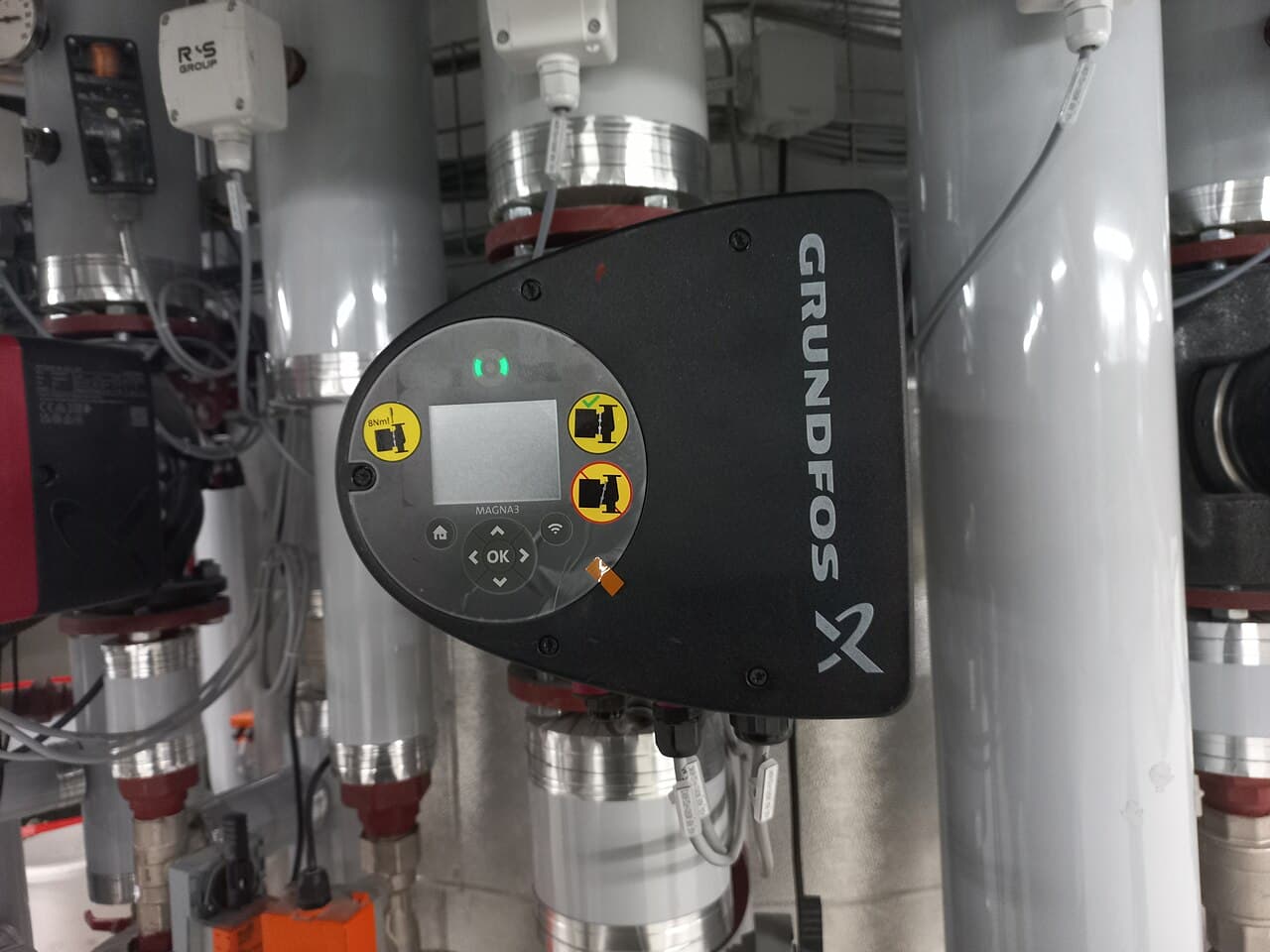
Why it saves energy
A single-speed pump runs at one setting, usually high, whatever the task. A variable-speed pump can drop to a low speed for ordinary filtration and speed up only when something needs more flow, such as a cleaner or a water feature. Your pool pump could be your home's second largest energy user, costing you as much as $310 in energy every year,[1] so a pump that does the same job at a lower speed has real room to save.
ENERGY STAR estimates that certified in-ground pool pumps use 20% less energy than standard pool pumps and can save approximately $50 a year in energy bill costs.[1] It also says ENERGY STAR certified pool pumps will save you up to $290 over their lifetime and pay for themselves in less than 2 years.[1] Treat those as the best case from the program that certifies the pumps, not a promise for your pool. Your own saving depends on your hours of operation and your electric rate.
The other benefits
Energy is not the only reason. ENERGY STAR says variable speed pumps are quieter, require less maintenance and last longer.[1] It adds that the slower circulation rates also put less strain on the filters, plumbing, and other parts of the system, reducing the chance of leaks, repairs, or premature plumbing component replacement.[1] Slow, long filtration also tends to be more effective at clearing the water, which is why a contractor will set the lowest speed that still circulates the pool. The fact sheet's rule is that the minimum speed required is one that would lead to a 12-hour turnover, meaning the pump moves a volume of water equal to the pool's volume in that time.[2]
When it is a harder call
- The pump is new. If it was installed in the last few years and runs well, the saving may not justify replacing a working pump early. Plan the upgrade for when it fails.
- The pool runs a short season. Fewer hours means a smaller bill to cut, so the payback is slower.
- You already run the pump on a timer. ENERGY STAR says running your pool filter only 6 hours a day versus 24 hours, will reduce your energy use by 75%,[1] so a timer captures part of the saving for free. The timer is worth setting whatever pump you choose.
- It is a small seasonal above-ground pool. The ENERGY STAR pool pump specification does not cover seasonal temporary above-ground pools whose small pump has the filter built into the pump housing.[2]
- The pump is failing. This is the best moment to upgrade, since you are buying a pump anyway. ENERGY STAR lists the signs: a pump that is seven to ten years old, does not seem as powerful, makes continuous noise, gets hot and shuts off, hums or buzzes but will not start, or starts slowly.[2] ENERGY STAR says an in-ground pool pump that has earned the ENERGY STAR label has no additional upfront cost compared to standard models,[2] but prices differ by brand and size, so make each company quote both.
Before you buy
Ask your electric utility about incentives first. ENERGY STAR says many utilities offer incentives for purchasing an ENERGY STAR certified pool pump,[2] and some programs have rules about the model or the timing.
Then check what the install involves. Hayward's manual labels a mismatch between supply voltage and the motor nameplate voltage a fire hazard,[4] and Hayward says the pump must be permanently connected to a GFCI, and that the motor should be bonded to the pool structure.[4] Virginia's building code requires a permit application before installations or alterations involving electric wiring.[5] Whether a like-for-like swap needs one is decided by your locality.
One practical point after the switch: when using a variable speed pump the original starting pressure will depend on the pump speed (RPM) when the original operating pressure was recorded.[3] After the install, write down the filter's clean gauge pressure at your normal speed; see how to clean a pool cartridge filter for when to clean.
Hiring for the swap
DPOR advises at least three written bids or estimates using identical plans and specifications so you can compare prices and contractors.[7] Ask each company to quote the same horsepower in a single-speed and a variable-speed model, with the speed it plans to run. For costs, see how much a new pool pump costs in Virginia.
If the work is valued at $1,000 or more, a valid Virginia contractor's licence is required for the licence category in which the contractor is to work.[7] For the wiring, no individual may work, or offer to work, as an electrical tradesman without a tradesman licence, unless working under the supervision of a tradesman licensed in that specialty.[6]
When to call a licensed pro
- The existing pump trips the breaker or GFCI, hums without starting or runs hot. That is a motor or wiring fault, not a reason to buy a bigger pump.
- You plan to change the wiring yourself. Pool circuits need the right GFCI and bonding, and the work needs a licensed electrical tradesman.
- Water is leaking at the pump, unions or filter. Switch off the pump and have it checked.
- A quote leaves out the permit, the wiring or the flow setup, or is far lower than the others.
Getting help in Virginia
Loclis lists DPOR-licensed businesses with their licence number and class. Browse pool and spa services or read more pool and spa answers.
When you are ready, describe your pool equipment once and local pool services quote it.
Common questions
- Will a variable-speed pump really save money?
- ENERGY STAR says reducing pump speed by one-half allows the pump to use just one-eighth as much energy, and it estimates certified in-ground pumps use 20% less energy than standard ones. Your saving depends on how many hours the pump runs and what your utility charges.
- Is a variable-speed pump worth it if my current pump still works?
- Often it makes more sense to wait until the pump is near the end of its life, then replace it with a variable-speed model. ENERGY STAR lists age of seven to ten years, noise and overheating as the signs to start shopping.
- Does it cost more to buy?
- It can, depending on the model. ENERGY STAR says an in-ground pool pump that has earned its label has no additional upfront cost compared to standard models, so ask for both options to be quoted and compare.
- Will my filter need changing too?
- Not necessarily. ENERGY STAR notes that slower circulation puts less strain on the filters and plumbing. Record the filter's clean gauge pressure at the new pump speed, because a filter's starting pressure depends on the speed.
- Does it need a permit in Virginia?
- Virginia's building code requires a permit application before installations or alterations involving electric wiring. Whether your swap needs one is decided by your locality, so ask the building department or the company.
Sources
- [1] Pool Pumps, ENERGY STAR, U.S. Environmental Protection Agency. Checked October 27, 2026.
- [2] Make a Savings Splash with an ENERGY STAR Certified Pool Pump, ENERGY STAR, U.S. Environmental Protection Agency. Checked October 27, 2026.
- [3] Clean & Clear Plus Cartridge Filter Installation and User's Guide, Pentair. Checked October 27, 2026.
- [4] Super Pump Series Owner's Manual (ISSPSERIES, Rev D), Hayward Industries. Checked October 27, 2026.
- [5] 13VAC5-63-80. Section 108 Application for permit (Virginia Uniform Statewide Building Code), Virginia Administrative Code, Virginia General Assembly. Checked October 27, 2026.
- [6] Va. Code § 54.1-1129, Tradesman license required, Code of Virginia, Virginia General Assembly. Checked October 27, 2026.
- [7] What You Should Know Before You Hire a Contractor, Virginia Board for Contractors, DPOR. Checked October 27, 2026.
Want a pro to handle it?
Describe the job once. Licensed local businesses send quotes, and you pay only when you book one.
Get a quote from a local pro