What does clearing a wooded lot involve?
Clearing a wooded lot usually means selling or cutting the timber, dealing with the stumps and brush, protecting the soil, and getting the paperwork right first: a Virginia 811 locate before any digging, and erosion and stormwater approval when the cleared area is large enough. How the stumps come out shapes the cost and how much topsoil you keep.
Free to ask. Local shops send quotes, and you pay only when you book one.
By Kasra Taheri, Founder, LoclisUpdated
Researched and drafted with AI, then checked claim by claim against the sources listed below before it was published. Prices and rules change; the dates beside each source say when it was last checked.
This is a job for a licensed pro in Virginia
This page explains what the work involves, the permits, what a licensed pro does and what drives the cost. It does not give step-by-step instructions, because this work needs a licence, a permit or both, and doing it wrong can injure someone. Before you hire, check the licence on Virginia's DPOR record.
Clearing a wooded lot is several jobs in a row: deciding what the land is for, getting value from the timber, removing or leaving the stumps, handling the brush, and keeping the soil in place until something new grows. Underneath all of it is paperwork, chiefly a Virginia 811 locate before any digging and, on a larger clearing, land-disturbance approval from the erosion and stormwater program that covers your area. The way the stumps come out shapes the cost and how much topsoil you keep.
Start with what the cleared land is for
Virginia Cooperative Extension describes the most common method as harvesting the timber, bulldozing to "grub" out the stumps, and then establishing the next cover, whether that is a yard, pasture, house or driveway.[1] That is not the only way, and the right one depends on the end use. A house site needs stumps out and ground graded. A pasture or a view often does not.
Extension's planning questions include whether to harvest the timber first or bulldoze it all at once, what the economic, ecological and social tradeoffs are, and what legal restrictions apply.[2] It also advises that very steep slopes, riparian areas bordering water, and sites with threatened or endangered species should be avoided.[2] If a house is going in, plan the edge too: the space between a house and the woods, called defensible space, should average 30 feet.[2]
Walk the lot with the contractor and mark what stays: specimen trees, a buffer along a creek, a screen from the road. Trees left near the work area often need their roots kept clear of heavy equipment.
The timber comes first
If the trees have value, sell them before anyone brings a bulldozer. Private consulting foresters can inventory the stand, estimate its value, market and sell the timber, and administer and monitor the sale,[3] and the Virginia Department of Forestry says studies show landowners who use a professional forester receive higher timber sale revenue.[3] Whoever buys it, the department stresses a written sales agreement covering what timber is sold, payment, insurance and liability, access, and the care of roads, fences and the land.[3]
The species matters for what comes next. Pine stumps, except shortleaf pine, rot away in three to five years, while most hardwoods sprout vigorously from the stump unless the root system is killed.[1] On a hardwood lot, a clearing plan has to deal with sprouts as well as stumps.
Stumps, brush and the soil
This is where methods differ most. Extension warns that bulldozers and front-end loaders nearly always destroy the topsoil, and that in many areas of Virginia there are at best a few inches of topsoil to begin with.[1] An excavator with a root rake disturbs less, but it does not eliminate the topsoil loss.[1] It is much more difficult to establish grass without topsoil.[1] The topsoil can be removed and graded back in, but that will increase time and cost and requires a very skilled operator,[1] so ask each bidder whether they do it and what it adds.
Forestry mulching is the main alternative. Mulching heads on tracked or wheeled machines push down and mulch stems up to 6 to 8 inches and grind out a wide range of stump sizes, and the method helps keep soil organic matter and reduce erosion.[1] Very rocky sites are not suited to mulching.[1] For a pasture or a view, some owners skip stump removal entirely and let the stumps decay.
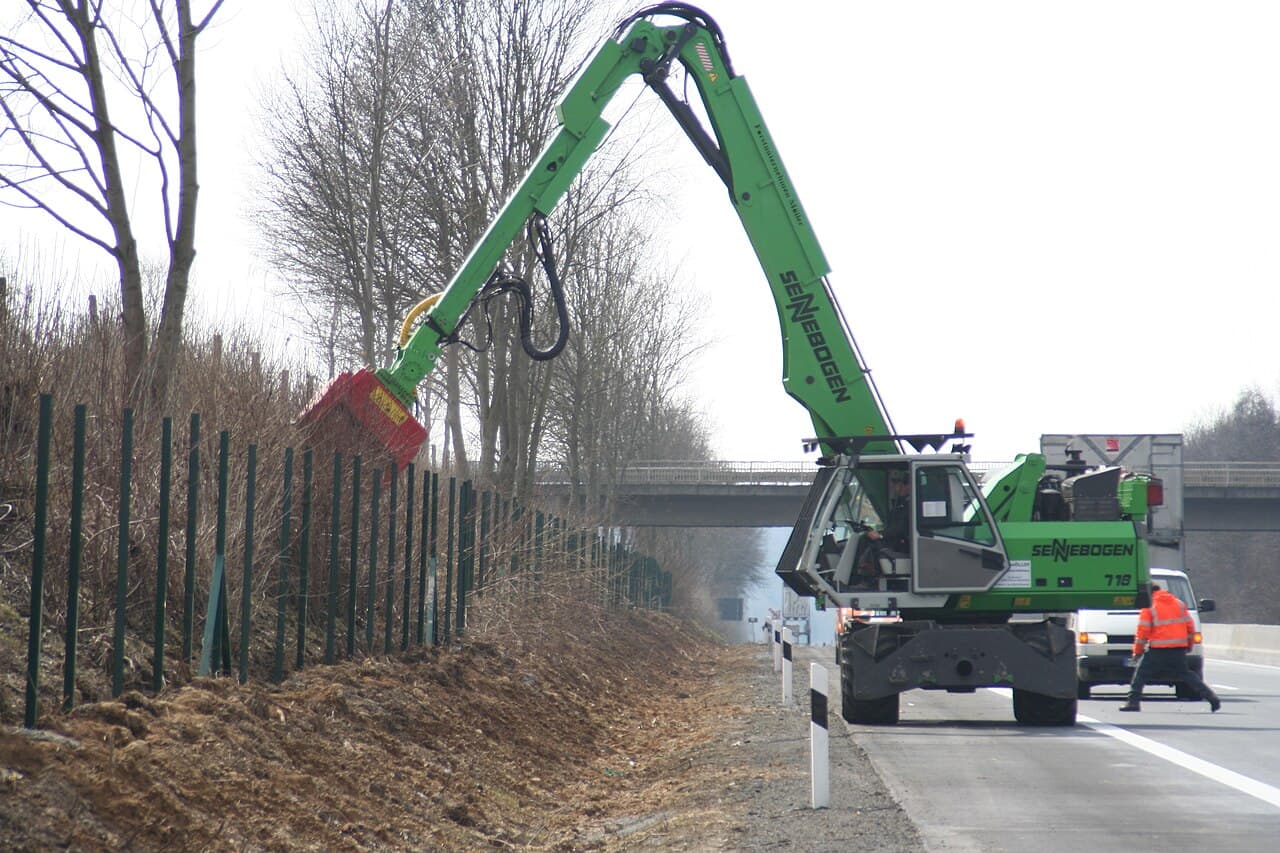
The leftover brush and tops need a plan as well. Extension's options are pile and burn, which is cheap but a fire hazard and may need a permit; pile and leave, which is very cheap but unsightly and can harbor weeds; mulching with a tub grinder, which removes all the material but generally costs more; and selling firewood or sawing logs, which earns value but takes time and equipment.[1]
Burning has its own rules. From February 15 through April 30, the Virginia Department of Forestry's 4 PM Burning Law bans open-air burning before 4 p.m. if the fire is within 300 feet of woods or dry grass that could carry fire to the woods.[4] Even with every precaution, whoever started the fire is responsible for suppression costs if it escapes.[4] A brush fire may require a permit, so check with the local fire department or the Virginia Department of Forestry before anything is lit.[1]
The 811 call and the permits
Pulling stumps and grading are digging. Virginia 811 says to contact it at least 3 working days before breaking ground, including to remove old fence posts or stumps, and that there is no allotted depth before a call is needed.[8] Virginia law says no one may begin any excavation without first submitting a locate request to the notification center.[9] On a contracted job, ask the contractor for the locate ticket number before the machines start.
Larger clearings need erosion approval. That approval comes from the VESMP authority, which under Virginia law is either the state or a locality the state has approved to operate the erosion and stormwater program.[5] Outside Chesapeake Bay Preservation Areas, Virginia's erosion control requirements apply to any activity that disturbs 10,000 square feet or more, and a locality may set a smaller threshold.[6] In Chesapeake Bay Preservation Areas the threshold is 2,500 square feet.[6] Clearing land specifically for bona fide agricultural purposes is exempt, but a timber harvest is exempt only if the land is reforested or converted to bona fide agricultural or improved pasture use.[6]
Montgomery County, for example, requires a land disturbing permit when disturbing more than 10,000 square feet, including clearing, with an erosion and sediment control plan reviewed by the County Engineer, plan review fees and surety.[7] A single-family home project there may sign an agreement in lieu of a plan.[7] For the full picture, read do I need a permit to clear land in Virginia.
Getting something growing again
Bare ground can erode until something covers it, so plan the new cover before the clearing starts. If the land is going to pasture, soil tests set the lime and fertilizer, seeding is usually done in spring or fall, and it can take a year or more to establish a pasture.[1] A lawn or meadow needs its own seed mix and timing. Ask the contractor who seeds and stabilizes the ground and when, and put it in the contract. Keeping the land open afterwards is its own job; see how to keep cleared land from growing back.
When to call a licensed pro
Machine clearing, grading and stump removal are licensed contracting work in Virginia. Virginia's Board for Contractors defines a landscape service contracting specialty that covers altering a land area by excavation, clearing and grading, and it may remove stumps and roots below grade.[10] A Class C licence covers a single job over $1,000 but less than $30,000, or a contractor whose work in any 12-month period totals less than $250,000; Class B covers single jobs of $30,000 or more but less than $150,000, or 12-month totals of $250,000 or more but less than $1 million; Class A covers anything larger.[11]
The Board treats a contractor's failure to follow the Miss Utility notification law as a prohibited act.[12] Its written-contract rule covers residential contracting, which it defines as construction, removal, repair or improvements to residential buildings, including accessory-use structures, with the contract signed by both sides before work starts or payment is taken.[12] Clearing a vacant lot may fall outside that definition, so ask for a written contract either way.
Ask each bidder:
- which method they would use for the stumps and why, and what happens to the topsoil;
- who handles the 811 request, the land-disturbing permit and the erosion controls;
- how brush and logs leave the site, and whether any burning is planned;
- who seeds and stabilizes the ground, and by when;
- for the licence number and class, so you can check it with DPOR.
For prices, read how much land clearing costs per acre in Virginia. Browse land clearing businesses, find excavation and site work businesses in Blacksburg, or see more excavation answers.
Describe your lot and what you want it to become and licensed local contractors quote the clearing.
Common questions
- Should I sell the timber before clearing a wooded lot?
- Often, yes, if the trees have value. A consulting forester can inventory and value the stand and run the sale, and the Virginia Department of Forestry says landowners who use one receive higher revenue. Sell with a written contract, never a handshake.
- Do I need to call 811 before clearing land in Virginia?
- Before any digging, yes. Pulling stumps, grubbing roots or grading moves soil, and Virginia 811 asks for a locate request at least 3 working days before breaking ground, including stump removal. On a contracted job, ask the contractor for the locate ticket number before work starts.
- Is forestry mulching better than bulldozing?
- For soil, usually. Virginia Cooperative Extension notes that bulldozers nearly always destroy topsoil, while mulching keeps organic matter on the site and reduces erosion. Mulching handles stems up to about 6 to 8 inches and does poorly on very rocky ground, so the site decides.
- Do I need a permit to clear my lot?
- It depends on the area and the purpose. Outside Chesapeake Bay Preservation Areas, Virginia's erosion rules apply at 10,000 square feet of disturbance, 2,500 square feet inside them, and a locality can set a lower figure. Ask your county or city planning office which erosion and stormwater program covers your lot, and its threshold, before work starts.
- What happens to the stumps if I leave them?
- Pine stumps, except shortleaf pine, rot in three to five years. Most hardwoods sprout from the stump unless the roots are killed, and hardwood stumps can take years to decades to decay, so leaving them works for a pasture or a view but not where you need graded ground soon.
Sources
- [1] Options for Clearing Land to Establish Pasture (465-341), Virginia Cooperative Extension, Virginia Tech. Checked October 26, 2026.
- [2] To Clear or Not To Clear -- That Is the Question (465-340), Virginia Cooperative Extension, Virginia Tech. Checked October 26, 2026.
- [3] Selling Timber, Virginia Department of Forestry. Checked October 26, 2026.
- [4] 4 PM Burning Law, Virginia Department of Forestry. Checked October 26, 2026.
- [5] Va. Code § 62.1-44.15:24, Definitions, Code of Virginia, Virginia General Assembly. Checked October 26, 2026.
- [6] Va. Code § 62.1-44.15:34, Regulated activities; submission and approval of a permit application; security for performance; exemptions, Code of Virginia, Virginia General Assembly. Checked October 26, 2026.
- [7] Construction & Land Development: Erosion and Sediment Control, Montgomery County, Virginia. Checked October 26, 2026.
- [8] Homeowners, Virginia 811. Checked October 26, 2026.
- [9] Va. Code § 56-265.17, Notification required prior to excavation or demolition; waiting periods; marking of proposed site, Code of Virginia, Virginia General Assembly. Checked October 26, 2026.
- [10] 18VAC50-22-30, Definitions of specialty services, Virginia Administrative Code, Board for Contractors. Checked October 26, 2026.
- [11] Va. Code § 54.1-1100, Definitions, Code of Virginia, Virginia General Assembly. Checked October 26, 2026.
- [12] 18VAC50-22-260, Filing of charges; prohibited acts, Virginia Administrative Code, Board for Contractors. Checked October 26, 2026.
Want a pro to handle it?
Describe the job once. Licensed local businesses send quotes, and you pay only when you book one.
Get a quote from a local pro