What does installing a home EV charger involve?
Mostly planning plus one dedicated circuit. You choose between the car's 120-volt cord and a 240-volt Level 2 unit, a licensed electrician checks whether your panel has room, then runs a dedicated circuit sized for the charger, under a permit with an inspection. In Dominion Energy territory you also tell the utility when a Level 2 charger is added.
Free to ask. Local shops send quotes, and you pay only when you book one.
By Kasra Taheri, Founder, LoclisPublished
Researched and drafted with AI, then checked claim by claim against the sources listed below before it was published. Prices and rules change; the dates beside each source say when it was last checked.
This is a job for a licensed pro in Virginia
This page explains what the work involves, the permits, what a licensed pro does and what drives the cost. It does not give step-by-step instructions, because this work needs a licence, a permit or both, and doing it wrong can injure someone. Before you hire, check the licence on Virginia's DPOR record.
Installing a home EV charger is mostly planning plus one dedicated electrical circuit. You decide whether the car's own 120-volt cord is enough or you want a faster 240-volt Level 2 unit. A licensed electrician checks whether your panel has room, picks the mounting spot with you, and runs a circuit sized for the charger under a permit. An inspector signs it off, and the utility may need to know.

Level 1 or Level 2
Level 1 charging uses a 120-volt plug, and most EVs come with a portable Level 1 cordset.[2] It is slow but often enough: eight hours of charging at 120 volts can replenish about 40 miles of range for a mid-size EV.[2] The U.S. Department of Energy notes that many drivers meet their daily needs this way, provided there is an outlet on a dedicated branch circuit near where you park.[1] If that outlet already exists, there may be nothing to install.
Level 2 runs on 240 volts, like a dryer. ENERGY STAR puts Level 2 at 10 to 20 miles of range per hour of charging, against 2 to 5 miles for a 120-volt charger.[3] The Department of Energy suggests it for drivers with less regular schedules, longer commutes or large batteries that need more than overnight on Level 1.[1]
What the electrician checks first
The first visit is about capacity. Some homes might not have enough electrical capacity for Level 2 equipment, though a qualified electrician can add circuits to provide it.[1] Expect questions about your panel's size, what else runs on it (heat pump, range, water heater, dryer) and how far the panel is from where you park.
Circuit size follows the charger. Most residential Level 2 chargers run at up to 30 amps, delivering 7.2 kW, and need a dedicated 40-amp circuit to meet National Electrical Code Article 625.[2] That margin exists because EV charging is treated as a continuous load,[1][4] and the code sizes the breaker at 125% of the continuous load.[5] One manufacturer gives the arithmetic plainly: a 40-amp charging rate needs at least a 50-amp breaker and a 48-amp rate needs at least a 60-amp breaker.[5] Many chargers let you set a lower charging rate, such as Emporia's, which adjust from 6 to 48 amps,[6] and that can be cheaper than an upgrade when the panel is tight.
The electrician will also help you choose between a plug-in unit and a hardwired one. A plug-in unit goes into a 240-volt outlet, and the outlet matters: standard residential outlets can overheat under sustained high-current loads.[6] Ground-fault protection needs thought too. Emporia's chargers have built-in GFCI protection, and the company warns that adding a separate GFCI breaker on the same circuit causes nuisance tripping.[5] Local code and the charger's manual decide what goes in, so hand the manual to your electrician before the job.
Choosing the spot and the charger
Start from where the charge port sits on your car and whether you back in or pull in. The installation handbook Dominion Energy points customers to says to eliminate any spot that would make the cord wrap around or drape over the car to reach the port.[4] Keep the cord out of walking paths, and check that a garage door or shelving does not get in the way.
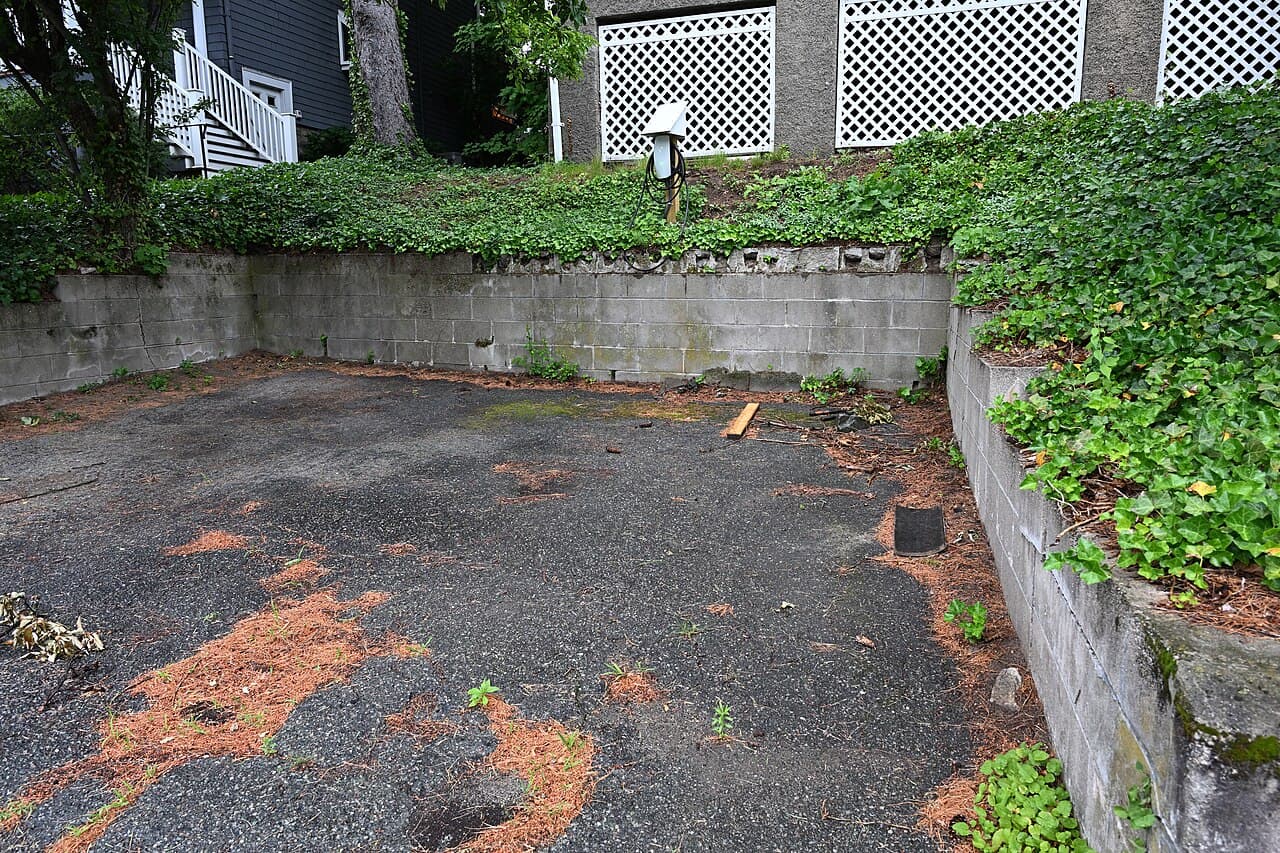
Outside is fine with the right equipment. Outdoor installations require outdoor-rated equipment.[1]
Buy a certified charger. ENERGY STAR warns that not every charger for sale is safety certified, that some products from major retailers carry false safety certifications, and that every ENERGY STAR certified charger is tested for safety by a nationally recognized testing laboratory.[3]
Permit, inspection and the utility
In Virginia a new charger circuit needs a permit. The Uniform Statewide Building Code says a permit is required before work on electric wiring begins,[7] and its exemptions cover wiring under 50 volts and replacing ordinary switches, 125-volt 15- or 20-amp receptacles, light fixtures and ceiling fans,[7] not a new 240-volt circuit. Localities say the same: Fairfax County lists EV chargers among the residential electrical work that needs a permit.[9] In many areas a site installation plan must be submitted for approval before installation.[1]
Under the code, electrical work is inspected before it is concealed and again at a final inspection.[8] On a charger job that usually means a rough inspection after the conduit is run, before the wires are pulled and the charger connected, then a final inspection where the locality requires one.[4]
Your utility may need to know. Dominion Energy's service rules say the customer must notify the company when a Level 2 (240-volt) charger is added or when charging load exceeds the service capacity.[10] Appalachian Power's guide says customers must notify the company before altering service entrance equipment and are responsible for expenses and damage that result from failing to give notice.[11] AEP's guide also describes adding a second meter socket so a car can be charged on a time-of-use rate.[11] A competent electrician handles these calls with you.
Our answer on whether you need a permit for an EV charger goes further, and what installation costs covers the bill.
When to call a licensed pro
For anything beyond plugging the car's cord into an outlet that is already there, call a licensed electrician. Virginia's Board for Contractors regulates electricians as tradesmen, and state certification of the trade is mandatory, not optional,[12] and the work needs a permit and inspection either way. Call one before you buy a Level 2 charger, so the charger matches what your panel can support, and call one if your panel is full, the breaker for an existing outlet trips while the car charges, or the outlet or plug feels hot.
Ask for a written quote that names the charger, the breaker size, the wire run and any panel work, and says who pulls the permit. Check the electrician's licence first. If the panel turns out to be the limit, read what upgrading an electrical panel involves.
Browse electrical services on Loclis, find electricians in Blacksburg, or read more electrical answers.
Describe your EV charger installation and licensed local electricians quote it.
Common questions
- Can I just use the cord that came with my car?
- Often, yes. The U.S. Department of Energy says many drivers cover their daily miles by charging overnight on Level 1, as long as there is an outlet on a dedicated circuit near where they park. Eight hours at 120 volts adds about 40 miles of range to a mid-size EV.
- Plug-in or hardwired Level 2 charger?
- Both are common. A plug-in unit needs a 240-volt outlet suited to EV use, since ordinary outlets can overheat under long high-current loads. A hardwired unit connects straight to the circuit and can allow a higher charging rate. Your electrician will recommend one based on the charger, your panel and local code.
- Will I need a panel upgrade?
- Not always. An electrician works out whether your panel and service have room for a dedicated 40- to 60-amp circuit. If they do not, the choices are a panel or service upgrade, a lower charging rate, or a charger with load management. Some homes need the upgrade; many do not.
- Do I have to tell Dominion Energy or Appalachian Power?
- Dominion's service requirements say the customer shall notify the company when a Level 2 charger is added. Appalachian Power's guide asks customers to notify it before altering service entrance equipment. Your electrician can tell you whether your job touches the service.
- How long does the installation take?
- It depends mostly on the distance from the panel, whether the run goes outside or underground, and whether the service needs an upgrade, which brings in the utility. The inspection is often a separate visit. Ask for the schedule, including the inspection, in the written quote.
Sources
- [1] Charging Electric Vehicles at Home, U.S. Department of Energy, Alternative Fuels Data Center. Checked October 27, 2026.
- [2] Developing Infrastructure to Charge Electric Vehicles, U.S. Department of Energy, Alternative Fuels Data Center. Checked October 27, 2026.
- [3] Electric Vehicle Chargers, ENERGY STAR, U.S. Environmental Protection Agency. Checked October 27, 2026.
- [4] Residential Charging Station Installation Handbook for Single-Family Homeowners and Renters (Version 4.0), Advanced Energy, distributed by Dominion Energy Virginia. Checked October 27, 2026.
- [5] EV Charger Installation, Emporia Energy Help Center. Checked October 27, 2026.
- [6] EV Charger Pre-Purchase Checklist, Emporia Energy Help Center. Checked October 27, 2026.
- [7] 13VAC5-63-80, Virginia Uniform Statewide Building Code, Section 108 Application for permit, Virginia Administrative Code, Legislative Information System. Checked October 27, 2026.
- [8] 13VAC5-63-130, Virginia Uniform Statewide Building Code, Section 113 Inspections, Virginia Administrative Code, Legislative Information System. Checked October 27, 2026.
- [9] Does My Project Require a Permit?, Fairfax County, Virginia, Land Development Services. Checked October 27, 2026.
- [10] Information and Requirements for Electric Service (Blue Book), Dominion Energy. Checked October 27, 2026.
- [11] Guide for Electric Service and Meter Installations (Revision 1.05-2026), American Electric Power (Appalachian Power). Checked October 27, 2026.
- [12] Tradesmen Program, Virginia Department of Professional and Occupational Regulation, Board for Contractors. Checked October 27, 2026.
Want a pro to handle it?
Describe the job once. Licensed local businesses send quotes, and you pay only when you book one.
Get a quote for Electrical Repair