What does installing a skylight involve?
Installing a skylight means opening the roof between the rafters or reframing it, mounting and flashing the unit so it sheds water, then finishing the ceiling, often with a drywall light shaft through the attic. The rooftop and interior work together take half a day to three days. Because it changes the roof structure, expect a building permit and hire a licensed contractor.
Free to ask. Local shops send quotes, and you pay only when you book one.
By Kasra Taheri, Founder, LoclisPublished
Researched and drafted with AI, then checked claim by claim against the sources listed below before it was published. Prices and rules change; the dates beside each source say when it was last checked.
This is a job for a licensed pro in Virginia
This page explains what the work involves, the permits, what a licensed pro does and what drives the cost. It does not give step-by-step instructions, because this work needs a licence, a permit or both, and doing it wrong can injure someone. Before you hire, check the licence on Virginia's DPOR record.
Installing a skylight is a roof job and a carpentry job at once. The crew opens the roof, frames the opening, sets the skylight, flashes it into the roofing so water runs around it, and then finishes the ceiling below, often by building a drywall light shaft through the attic. A skylight installation happens in two phases, rooftop and interior, and takes between half a day and three days depending on roof pitch, the depth and shape of the interior light shaft, and the weather.[1]
Here is what that looks like from the first visit to the final coat of paint, so you know what to expect and what to ask.
The site visit: location, light and the roof structure
A good installer looks at the room, the attic and the roof before quoting. In the attic, the installer examines the structural integrity of the roof,[2] because the rafter layout decides whether the skylight fits between rafters or the framing has to be changed. From that visit come the three big decisions: where the skylight goes, what type of light shaft is built and which skylight suits the room.[2]
Direction matters more than most people expect. Typically, west-facing skylights bring in the afternoon sun, south-facing ones bring in bright light through the day, and north-facing ones give constant, diffused light.[1] Heat comes with the light. North-facing skylights on fairly steep roofs generally do not cause overheating, because the sun never shines directly down onto them; skylights placed elsewhere may need exterior shading in summer.[4] For glass, the Virginia Energy Savers Handbook recommends skylights with a U-value of 0.45 and a solar heat gain coefficient of 0.55 or less.[4] Ask for the rating label numbers in the quote.
If you mainly want daylight in a hallway, bathroom or closet, ask about a tubular skylight. It uses a roof-mounted lens and a mirror-lined tube 10 to 20 inches across that runs through the attic to a ceiling fixture, with much less disruption of the roof and ceiling than an ordinary skylight.[4]
On the roof: mounting and flashing
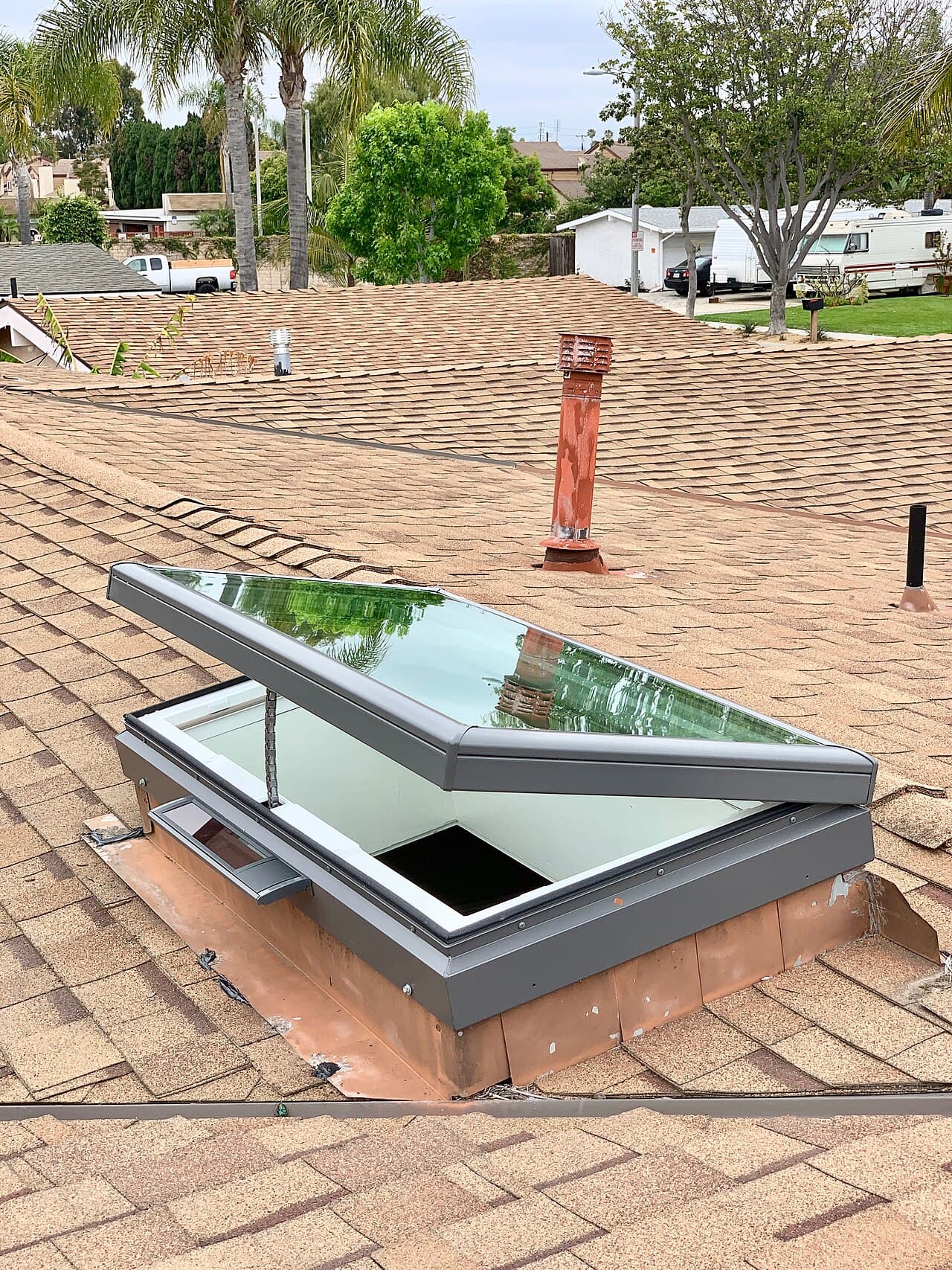
How the skylight attaches depends on the roof. Deck-mounted skylights attach directly to the roof deck and suit pitches from 14 to 60 degrees.[1] Curb-mounted skylights sit on a frame, usually of 2-by-4 lumber, built on the roof, and are designed for low-pitch and flat roofs, though they can go on some standard-pitch roofs too.[1] On a low-slope roof the choice is made for you: deck-mounted skylights are not suitable for low slopes.[3]
The flashing is what keeps the room dry. Manufacturers sell flashing systems made of adhesive underlayment and engineered flashing, designed to shed water without relying on sealants that can break down over time.[3] EPA's moisture guidance for buildings calls for flashing, curbs and counter-flashing to keep water out at skylights.[5] It also notes the obvious failure: water may drip around skylights when it rains.[5] Ask which flashing kit will be used, and whether it is the one the skylight maker specifies.
Inside: the light shaft and finish work
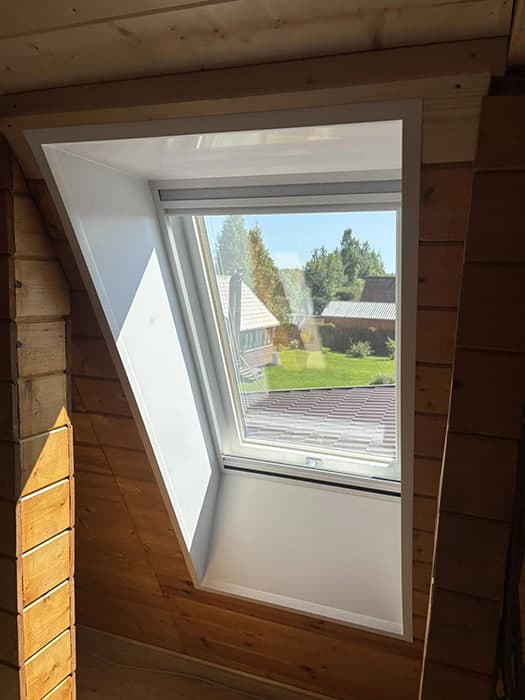
With a vaulted or cathedral ceiling, the skylight opens straight into the room and the finish work is small. If the ceiling is flat with unfinished attic space above, the installer builds a drywall light shaft[2] from the roof opening down to the ceiling. If you have an unheated attic above the ceiling, the light well needs insulated walls.[4] See why a skylight gets condensation for what happens when it is skipped.
The interior work, including drywall and painting, takes about half a day per skylight.[2] Expect drop cloths, plastic sheeting and some drywall dust in the room below.
Power, permits and your roof warranty
Skylights that open come in manual, electric and solar models. Electric venting skylights are wired to the home, while solar-powered ones need no wiring.[1] That difference matters for the paperwork. Virginia's Uniform Statewide Building Code requires a permit for installations or alterations involving any structural component, and for electric wiring.[6] A new roof opening usually touches the framing, so plan on a building permit, and your building office decides whether a given job is covered.
Your roof warranty needs attention too. VELUX notes that skylights, solar panels and satellite dishes all need roof penetrations, and if installed improperly may void the roof warranty.[1] The fix is to check your roofing contract, then ask your roofer in writing to coordinate with the skylight installer.[1] Some roofers prefer to install the skylight themselves, or at least flash it in and replace the shingles around it, so they can keep honoring their warranty.[1] If your roof is near the end of its life, it is usually cheaper to add the skylight during a reroof; see should you replace a skylight with a new roof.
When to call a licensed pro
From start to finish, this is work for a licensed contractor with roofing and carpentry experience, not a weekend project: it means working on a roof, cutting into the structure and making a weathertight seal that has to last decades. Work valued at $1,000 or more needs a valid Virginia contractor's licence in the category the contractor is working in.[7] The licence class has to fit the price: Class C covers single jobs over $1,000 and under $30,000.[9] Check the licence using DPOR's License Lookup or by calling (804) 367-8511,[10] or follow how to check a contractor's licence.
Get the job in writing. Among other things, the contract has to state that the contractor will comply with all local requirements for building permits, inspections and zoning.[8] The contractor should apply for and obtain any necessary building permits,[7] and DPOR advises that you do not let work start until the contractor gives you copies of the issued permit.[7] For the deposit, DPOR's rule of thumb is an initial deposit of no more than 10% of the total price or $1,000, whichever is less.[7]
For prices, see what a skylight costs in Virginia and how long a skylight lasts, or browse more exterior answers. Loclis lists licensed businesses from Virginia's DPOR register with each one's licence number and class: browse skylight installers or exterior contractors in Blacksburg.
When you are ready, describe your skylight project once and licensed local contractors send quotes or offer an estimate visit.
Common questions
- How long does it take to install a skylight?
- Most single skylights take between half a day and three days from start to finish. Roof pitch, the depth and shape of the light shaft and the weather set the pace, and the interior drywall and painting add about half a day per skylight. Swapping an old skylight for a new one in the same opening usually goes faster.
- Do I need a permit to add a skylight in Virginia?
- Usually plan on one. The Virginia building code requires a permit for alterations involving any structural component, and cutting a new opening in the roof normally touches the framing. An electric skylight adds wiring, which is permit work too. Your contractor should pull the permit; ask your local building office if you are unsure.
- Will a new skylight void my roof warranty?
- It can if the installation is done improperly. Check your roofing contract for warranty terms first, then ask your roofer in writing to coordinate with the skylight installer. Some roofers want to flash the skylight in themselves so they can keep honoring the warranty.
- Is a sun tunnel easier to install than a skylight?
- Yes, in most houses. A tubular skylight uses a small roof lens and a mirror-lined tube 10 to 20 inches across that runs through the attic to a ceiling fixture, so it disrupts the roof and ceiling far less than a full skylight and needs no drywall shaft. It brings in light but gives no sky view and does not open.
- Which way should a skylight face?
- You mostly get the direction your roof already faces. West-facing skylights bring in afternoon sun, south-facing ones give bright light through the day, and north-facing ones give steady, diffused light. North-facing skylights on steeper roofs rarely overheat a room, while others may need shades or exterior shading in summer.
Sources
- [1] Skylight FAQs, VELUX America LLC. Checked October 26, 2026.
- [2] Installation Process, VELUX America LLC. Checked October 26, 2026.
- [3] Installation Type & Flashing Systems, VELUX America LLC. Checked October 26, 2026.
- [4] The Virginia Energy Savers Handbook, Virginia Tech, Virginia Center for Energy and the Environment. Checked October 26, 2026.
- [5] Moisture Control Guidance for Building Design, Construction and Maintenance, U.S. Environmental Protection Agency. Checked October 26, 2026.
- [6] 13VAC5-63-80, Virginia Uniform Statewide Building Code, Section 108 Application for permit, Virginia Administrative Code, Legislative Information System. Checked October 26, 2026.
- [7] What You Should Know Before You Hire a Contractor, Virginia Board for Contractors, DPOR. Checked October 26, 2026.
- [8] 18VAC50-22-260, Filing of charges; prohibited acts, Virginia Administrative Code, Legislative Information System. Checked October 26, 2026.
- [9] § 54.1-1100. Definitions (contractor classes), Code of Virginia, Legislative Information System. Checked October 26, 2026.
- [10] Disaster Recovery: Avoiding Fraud, Virginia Department of Professional and Occupational Regulation. Checked October 26, 2026.
Want a pro to handle it?
Describe the job once. Licensed local businesses send quotes, and you pay only when you book one.
Get a quote for Roofing