What does a mini-split repair visit involve?
A mini-split repair visit has three parts. The technician confirms the symptom and reads any fault code, tests the system from the controls through the indoor head to the outdoor unit until the failed part turns up, then explains the fault and prices the repair before doing it. Most faults trace to airflow, the drain, electrical parts, refrigerant or the compressor, and that work is licensed in Virginia.
Free to ask. Local shops send quotes, and you pay only when you book one.
By Kasra Taheri, Founder, LoclisPublished
Researched and drafted with AI, then checked claim by claim against the sources listed below before it was published. Prices and rules change; the dates beside each source say when it was last checked.
This is a job for a licensed pro in Virginia
This page explains what the work involves, the permits, what a licensed pro does and what drives the cost. It does not give step-by-step instructions, because this work needs a licence, a permit or both, and doing it wrong can injure someone. Before you hire, check the licence on Virginia's DPOR record.
A mini-split repair visit usually runs in three stages. The technician confirms what the system is doing wrong and reads any fault code, tests it from the controls through the indoor head to the outdoor unit until the failed part turns up, then explains the fault and prices the repair before doing it. Most faults trace to airflow, the condensate drain, electrical parts, refrigerant or the compressor.
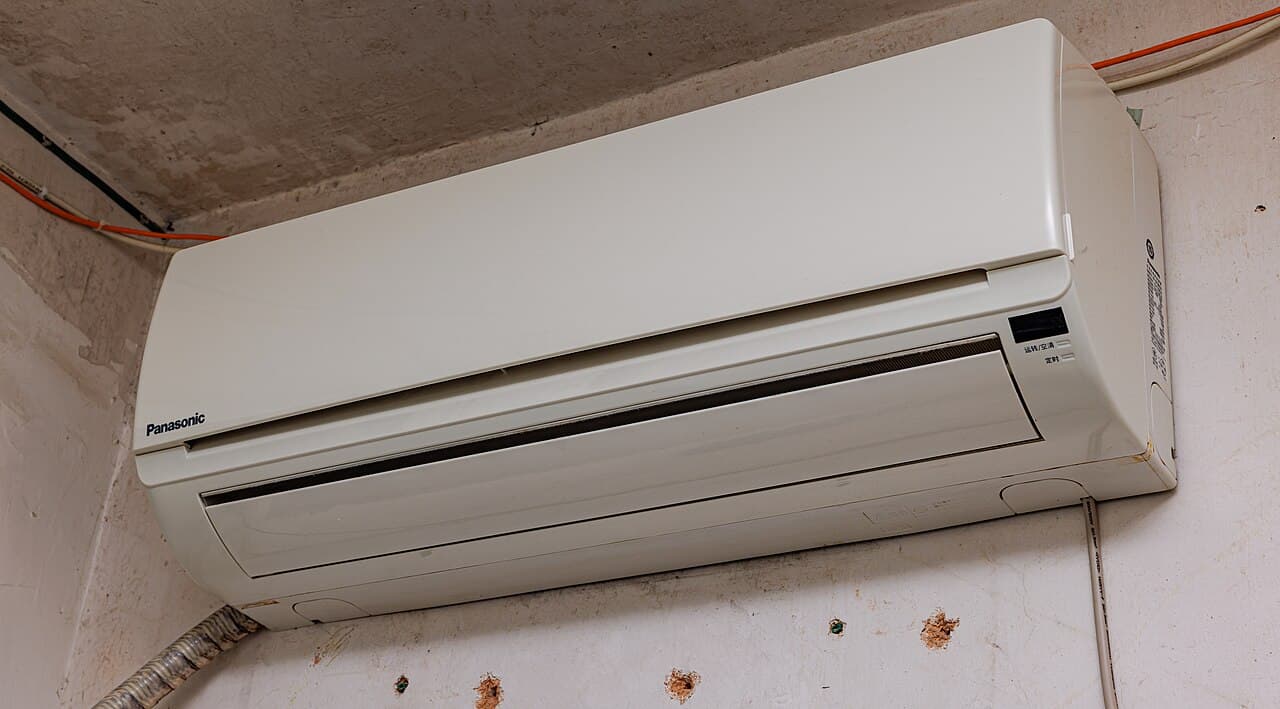
Before the technician arrives
A few minutes of preparation makes the diagnosis faster and the visit cheaper. Before scheduling a repair, Carrier suggests confirming the remote or thermostat is set to the right mode and temperature, checking the air filter, making sure nothing blocks the indoor or outdoor unit, and recording any error code shown on the indoor unit or remote so a technician can use it during diagnosis[1]. Write down the symptoms as well: whether the system is short cycling, making unusual noises, leaking water or producing insufficient heating or cooling[1].
Have the model number and the service history to hand. ENERGY STAR recommends knowing the model of your current system and its maintenance history before you call a contractor[7]. If the system went in recently, call the installer first, because many HVAC companies offer a one-year labor warranty at no extra cost[4].
What the technician checks
The fault code and the controls
Most mini-splits report board faults through error codes on the indoor unit, either a flashing light pattern or an alphanumeric sequence[3]. Codes differ by brand and model, so the technician reads yours against the manufacturer's table and uses it as a starting point, not a verdict. They then confirm the system answers the remote or wall controller and check "the starting cycle of the equipment to assure the system starts, operates, and shuts off properly"[6].
Power and electrical parts
Next comes power to the outdoor unit and the parts that start it. A failing capacitor often makes the outdoor unit hum for a few seconds and then go quiet, or click repeatedly without completing a startup[3], and capacitors store a dangerous electrical charge that does not discharge when the power is cut[3]. ENERGY STAR's maintenance checklist includes tightening all electrical connections and measuring voltage and current on motors[6]. A malfunctioning circuit board may never send the command to start the compressor, even when every other part of the system works[3].
Airflow, coils and the drain
Carrier names lack of maintenance (dirty filters and coils), refrigerant leaks and electrical component failure as the most common reasons mini-splits fail[1]. Expect the technician to look at the filters, the indoor coil and the blower wheel, and at the outdoor coil and fan. Professional service, in Carrier's description, means deep cleaning the blower wheel, flushing the drain line, checking refrigerant pressure and inspecting electrical connections[1].
Water dripping from the indoor head usually points to the drain. In Bryant's guide, a clogged condensate drain line backs water up into the indoor unit, and a frozen evaporator coil can leave excess water as the ice melts[2]. There is more on that in why a mini-split leaks water inside.
Refrigerant
A mini-split should not be low on refrigerant unless it has a leak or was charged incorrectly at installation[4]. Finding a leak takes time. It can involve an electronic leak detector, bubble testing, recovering the refrigerant, fixing the leak and pressure testing the system[4], and the technician also examines the flare fittings on the refrigerant lines that connect the outdoor unit to the indoor units[4]. Once the leak is fixed, the technician replaces the recovered refrigerant and recharges the system according to the manufacturer's specifications[4].
This part of the job is federally regulated: attaching or detaching hoses and gauges, adding or removing refrigerant, and adding or removing components all require EPA Section 608 technician certification[8]. EPA asks homeowners to request that technicians locate and repair leaks instead of "topping off" leaking systems[8].
The compressor
If the indoor fan runs but the room temperature never changes, the compressor in the outdoor unit is often not running[3]. Before blaming the compressor itself, a good technician rules out power, settings, the capacitor, the board, the refrigerant pressure switches and the thermal overload protector. That protector shuts the compressor down when it overheats, and after it trips, the system will typically attempt a restart on its own somewhere between 30 minutes and two hours later[3]. A confirmed compressor failure is the costliest of these repairs[3], and it is usually where the question of whether to repair or replace the mini-split comes up.
The diagnosis, the quote and the repair
Expect to pay for the visit itself. In a guide published August 19, 2024, Trane put the service call fee at $50-200[5], and noted that some companies apply that fee toward the repair if you hire them to fix the problem[5]. Ask about the fee and whether it is credited when you book.
Once the fault is found, the technician should show or tell you what failed, why, and what the fix costs before starting. Lennox's advice is to always get a written estimate before authorizing work[3]. Small electrical parts may be on the truck; a compressor, coil or circuit board may need ordering, which means a second visit.
If the system is still under the manufacturer's warranty, the warranty may pay for certain replacement parts, but without an extended warranty or a separate labor warranty from the installer, you may pay full price for labor[5]. Keep the invoice; it should name the part replaced and what was measured.
For a larger repair, get the price in writing. Virginia's Board for Contractors requires a legible written contract for residential contracting, excluding subcontractors and "those who engage in routine maintenance or service contracts"[9]. That contract must show the contractor's "name, address, license number, class of license, and classifications or specialty services"[9]. For typical part prices, see what mini-split repair costs in Virginia.
When to call a licensed pro
Book the visit once the basic checks are done and the problem is still there. Call sooner if a breaker keeps tripping, you smell burning, or you see ice. If ice has formed, turn the system off and contact a qualified HVAC technician rather than trying to remove the ice yourself[2]. A whistling or hissing sound near the indoor or outdoor unit most likely means a refrigerant leak[4].
Mini-split repair is licensed work in Virginia: no individual may work as a tradesman unless licensed, and the Code defines a tradesman as anyone who does electrical, plumbing or heating, ventilation and air conditioning work for the general public for compensation[10][11]. Someone working under the supervision of a tradesman licensed in that specialty does not need a licence of their own[10]. Before you book, look the business up on DPOR's License Lookup[12].
To keep the next visit further away, read how often a mini-split should be cleaned. You can also browse more HVAC repair answers, see mini-split repair, or find licensed HVAC businesses in Blacksburg.
Describe what your mini-split is doing and licensed local HVAC businesses quote the repair.
Common questions
- How long does a mini-split repair visit take?
- A simple fault, such as a clogged drain or a failed capacitor, is often found and fixed in one visit. A refrigerant leak takes longer, because finding it can mean leak detection, recovering the refrigerant, repairing and pressure testing before the system is recharged. A part that has to be ordered, such as a circuit board or compressor, means a second visit.
- Should I reset my mini-split before calling?
- A power reset can clear a temporary control fault, and manufacturers describe how in the owner's manual. If the same fault or code comes back after one reset, stop and book the repair rather than resetting it again, and never keep resetting a breaker that trips.
- Can the technician just add refrigerant?
- A mini-split should not lose refrigerant unless it leaks or was charged incorrectly at installation. EPA asks homeowners to have technicians find and repair leaks rather than topping off a leaking system, and only Section 608 certified technicians may add or remove refrigerant.
- Who should I call if my mini-split is still under warranty?
- Start with the contractor who installed it. Many HVAC companies offer a one-year labor warranty, and a manufacturer's warranty may cover certain parts while labor is billed separately, so ask before the visit what the warranty covers.
- Does the repair technician need a licence in Virginia?
- Yes. HVAC work for the public for pay is licensed trade work in Virginia, unless the worker is supervised by a tradesman licensed in that specialty. You can look up the business on DPOR's License Lookup before you book.
Sources
- [1] Ductless Mini Split Repair, Carrier. Checked October 26, 2026.
- [2] Ductless Mini Split System Repair Guide, Bryant. Checked October 26, 2026.
- [3] Mini-Split Compressor Not Turning On? Here's What's Causing It, Lennox. Checked October 26, 2026.
- [4] How to Identify and Fix Mini-Split Refrigerant Issues, Trane. Checked October 26, 2026.
- [5] Average Heat Pump Repair Cost, Trane. Checked October 26, 2026.
- [6] Maintenance Checklist, ENERGY STAR, U.S. Environmental Protection Agency. Checked October 26, 2026.
- [7] 10 Tips for Hiring a Heating and Cooling Contractor, ENERGY STAR, U.S. Environmental Protection Agency. Checked October 26, 2026.
- [8] Homeowners and Consumers: Frequently Asked Questions, U.S. Environmental Protection Agency. Checked October 26, 2026.
- [9] 18VAC50-22-260, Filing of charges; prohibited acts, Virginia Administrative Code, Virginia General Assembly. Checked October 26, 2026.
- [10] Va. Code § 54.1-1129, Necessity for licensure, Code of Virginia, Virginia General Assembly. Checked October 26, 2026.
- [11] Va. Code § 54.1-1128, Definitions, Code of Virginia, Virginia General Assembly. Checked October 26, 2026.
- [12] License Lookup, Virginia Department of Professional and Occupational Regulation. Checked October 26, 2026.
Want a pro to handle it?
Describe the job once. Licensed local businesses send quotes, and you pay only when you book one.
Get a quote for HVAC Repair