Why do guests keep complaining about cleanliness at my Airbnb?
Repeat cleanliness complaints usually come from the same few gaps: hair and soap scum in the bathroom, dust in places a fast turnover skips, linens that look or smell tired, a musty smell from moisture, food left in the kitchen, or a turnover window too short to do the list. Read the complaints together, walk in as a guest after a clean, and fix the checklist, not just the room.
Free to ask. Local shops send quotes, and you pay only when you book one.
By Kasra Taheri, Founder, LoclisPublished
Researched and drafted with AI, then checked claim by claim against the sources listed below before it was published. Prices and rules change; the dates beside each source say when it was last checked.
Step by step
Read when to stop and call a pro, further down this page, before you start.
Step 1: Read the complaints together
Put the last several cleanliness comments side by side and sort them by room and by problem, so a pattern shows instead of single bad stays.
Step 2: Walk in as a guest
Right after a turnover, arrive the way a guest does and look at eye level, under things and in the shower with the light on, before you touch anything.
Step 3: Compare with the checklist
Check whether the missed items are on the checklist at all, and whether the photos the cleaner sent show them done.
Step 4: Time the turnover
Ask how long the turnover really takes and compare it with the time between checkout and check-in.
Step 5: Check the linens and towels
Hold sheets, towels and pillow protectors up to the light, smell them, and retire anything stained, grey or thin.
Step 6: Track down smells
Check drains, trash cans, the refrigerator, the dishwasher filter and the HVAC filter, and measure humidity if the unit smells musty.[1]
Step 7: Check the beds for bugs
With the sheets off, look along mattress seams, tags and piping and the bed frame for reddish stains, dark spots and tiny eggs.[3]
Step 8: Fix the list and retrain
Add or rewrite the checklist lines that caused complaints, walk the cleaner through them once, and ask for photos of those spots.
Step 9: Follow up
Watch the next several reviews and inspect again after a few turnovers to make sure the fix stuck.
When guests keep mentioning cleanliness, it is rarely random. Repeat complaints usually trace back to a handful of gaps: hair and soap scum in the bathroom, dust where a fast turnover does not reach, linens that look or smell tired, a musty smell from moisture, food or crumbs left in the kitchen, or a turnover window too short for the checklist. The fix is to find which of those it is, then change the checklist and the schedule so it stops happening, rather than having one room re-cleaned and hoping.
Read the complaints as a set
One review is an opinion; five reviews are data. Collect the last several cleanliness comments, including private feedback, and sort them by room and by problem. "Hair in the shower" twice and "dusty ceiling fan" twice tell you exactly where to look. If the complaints are vague, such as "not very clean", ask the next guests a specific question at checkout: was there anything in the unit that did not look clean?
Walk in as a guest
Then do what a guest does. Right after a turnover, arrive with your bag, turn on every light and look before you touch anything. Guests notice the shower floor and the drain, the floor behind the toilet, the top of the headboard, the inside of the microwave, crumbs in the toaster and cutlery drawer, smudges on mirrors and glass doors, sticky remotes and the underside of the throw pillows. Look at eye level, but also crouch and look under the beds and sofa.
Compare what you find with the checklist. If a missed item is not on the list, the list is the problem. If it is on the list and the photos show it done, it may be a standard problem: the cleaner's idea of clean differs from yours, and a reference photo will fix that.
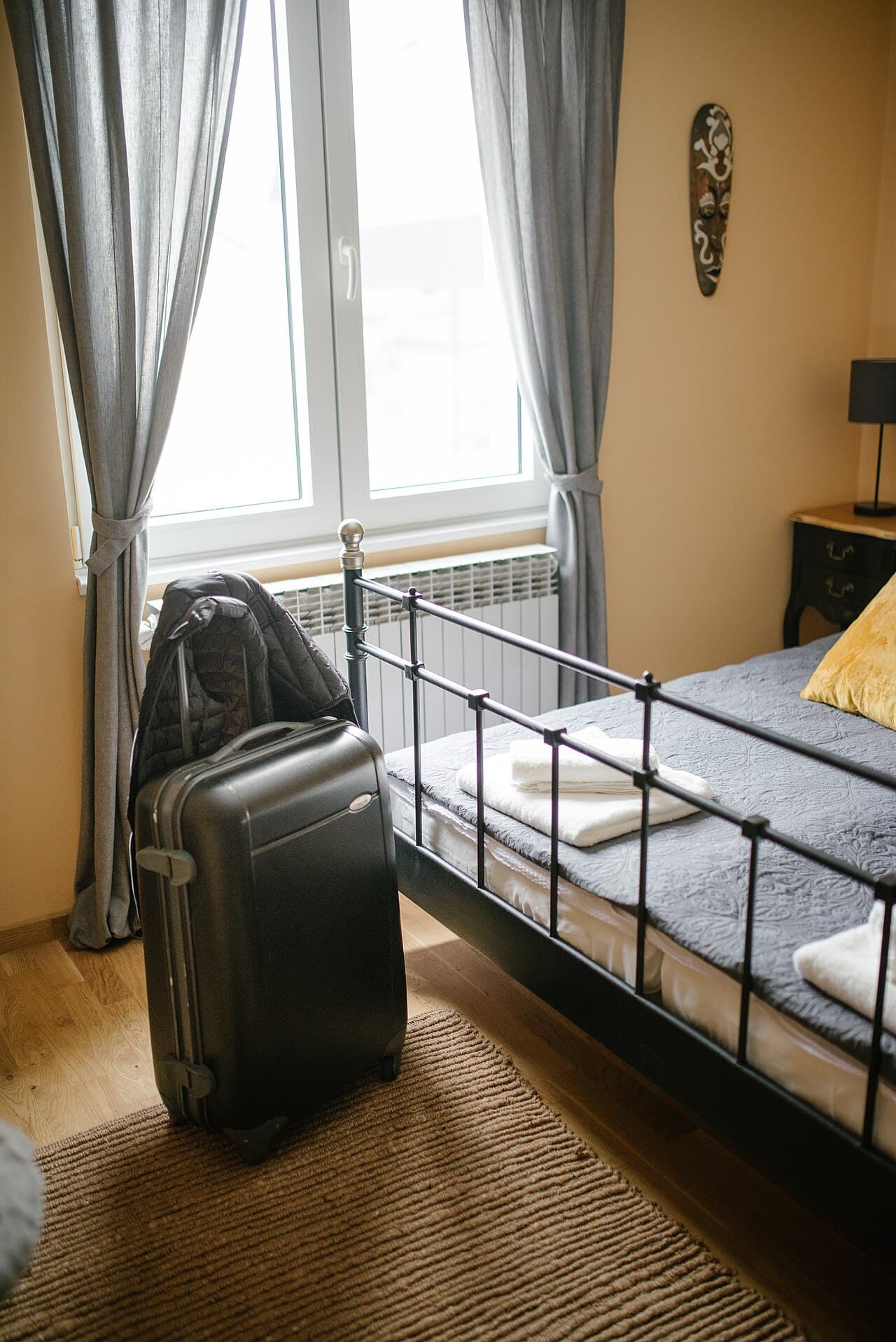
The usual causes
Bathrooms. Hair and soap scum are the most common complaints. They survive in corners, drains, grout lines, behind the toilet and around the vanity base. Rewrite the bathroom lines as results to check, and ask for a photo of the shower floor every time.
Dust that builds between turnovers. A turnover covers what guests touch; dust settles on ceiling fan blades, vents, baseboards, window sills, lamp shades and the tops of door frames, and it shows in daylight. Move these to a rotating list so each one is done every few turnovers. Carpets matter too: the carpet maker Shaw notes that "Frequent vacuuming stops soil from working its way below the surface of the carpet pile where it is far more difficult to remove".[7] For the air itself, ENERGY STAR's advice is to inspect, clean, or change air filters once a month.[2]
Tired linens. Sheets and towels can be clean and still look dirty: grey, stained, thin or smelling of a damp laundry room. Keep enough sets that a damp load never goes back on a bed, and retire anything stained rather than hoping a guest does not notice.
Smells. A smell that comes back after cleaning usually has a source cleaning does not reach. Check drains, trash cans, the dishwasher filter, the refrigerator and the HVAC filter. A musty smell points to moisture. EPA's advice is to keep indoor humidity below 60 percent (ideally between 30 and 50 percent) relative humidity,[1] and it notes that "Condensation can be a sign of high humidity".[1] It also says "You may suspect hidden mold if a building smells moldy, but you cannot see the source",[1] with places such as the underside of carpets and pads[1] among those it lists. After any leak, the rule is to dry water-damaged areas and items within 24-48 hours to prevent mold growth.[1]
The kitchen. Guests notice what the last guests left: a sticky shelf, a smell in the refrigerator, grease on the stovetop. FDA's advice is short: "Clean the refrigerator regularly and wipe spills immediately".[5] Put the refrigerator, microwave, toaster and coffee maker on the turnover list by name.
Rushed disinfecting. Kitchen counters and bathroom touch points need cleaning and then disinfecting, and the product has to stay wet for its contact time. Virginia Cooperative Extension notes that it may be necessary to use more than one wipe to properly clean the surface and keep it wet for the stated length of contact time,[6] and that "High-touch areas or surfaces such as tables and countertops may need to be cleaned daily, or even more frequently".[6] A quick wipe looks fine and does neither job.
The window is too short. If the turnover takes longer than the time between checkout and check-in, something gets skipped every busy weekend. Ask your cleaner how long the full list really takes, and either widen the window, add help on same-day turnovers or move slower jobs to a deep clean on a schedule.
When the complaint is bed bugs
A complaint about bites or bugs is a different kind of problem and needs a fast, careful response. Look for the signs EPA lists, such as "Rusty or reddish stains on bed sheets or mattresses caused by bed bugs being crushed",[3] and look near the piping, seams and tags of the mattress and box spring, and in cracks on the bed frame and headboard.[3] Virginia's bed bug action plan for hotels sets out the response. Keep the room as it is: "do not move anything in or out of the room until it can be inspected".[4] "Document the guest’s complaint, your response to the complaint, and your inspection results".[4] And "If bed bugs are found call your pest management company immediately".[4] How to check a mattress for bed bugs walks through the inspection.
Fix the system, not just the room
Once you know the cause, change something that lasts: a new checklist line, a reference photo, a photo you ask for after every turnover, a longer window, a second set of linens, or a rotating deep-clean list. Walk the cleaner through the change once. Then watch the next several reviews and inspect again after a few turnovers. How to make a cleaning checklist for a short-term rental shows how to build lines that are easy to check.
Stop and call a pro if
- A guest reports bites or bugs, or you find signs of bed bugs. Call a pest control company and hold the next booking until it is inspected.
- The smell is musty and keeps coming back, or you find mold, a leak or wet drywall. A moisture problem needs a repair, not more cleaning.
- You smell gas or a carbon monoxide alarm sounds. Leave, call the gas utility or 911, and have a licensed pro inspect.
- Stains or odors are in the carpet or upholstery itself. Book a professional carpet and upholstery cleaning.
Getting help
If the cleaner is the problem, read how to find a reliable cleaner for your Airbnb. Browse short-term rental turnover cleaners, see cleaning businesses near Blacksburg, or read more cleaning answers. To get quotes for a deep clean or new turnover service, describe the job on Loclis.
Common questions
- Why do guests find hair when my cleaner says the bathroom was cleaned?
- Hair usually survives in the same few spots: the shower drain and corners, behind the toilet, around the base of the vanity and on bath mats and towels pulled from a shared pile. Add those spots as separate checklist lines and ask for a photo of the shower floor and the floor behind the toilet after each turnover.
- The rental smells musty even after cleaning. Why?
- A musty smell that cleaning does not fix usually points to moisture. EPA advises keeping indoor humidity below 60 percent, ideally between 30 and 50 percent, and says a building that smells moldy without a visible source may have hidden mold. Measure humidity and look for leaks before reaching for air freshener.
- Are fragrances and air fresheners a good fix?
- Not for a real smell. Guests often read a strong fragrance as covering something up, and some are sensitive to scents. Find and remove the source first: drains, trash, the refrigerator, damp towels, a dirty HVAC filter or moisture.
- What should I do when a guest reports bed bugs?
- Take it seriously and act the same day. Virginia's bed bug action plan for hotels says to keep the room as it is until it can be inspected, document the complaint, your response and the inspection, and call a pest management company immediately if bed bugs are found. Do not book the next guest until it is resolved.
- Is it the cleaner or the turnover window?
- Often the window. If, for example, checkout is at 11 and check-in at 3 and the turnover takes three and a half hours on a good day, any delay means something gets skipped. Ask how long the work really takes, and either widen the window, add a second cleaner on busy days or move slower jobs to a periodic deep clean.
Sources
- [1] A Brief Guide to Mold, Moisture and Your Home, U.S. Environmental Protection Agency. Checked October 27, 2026.
- [2] Maintenance Checklist, ENERGY STAR (U.S. EPA and DOE). Checked October 27, 2026.
- [3] How to Find Bed Bugs, U.S. Environmental Protection Agency. Checked October 27, 2026.
- [4] Bed Bug Action Plan for Hotels, Virginia Department of Agriculture and Consumer Services (Dini M. Miller, Virginia Tech). Checked October 27, 2026.
- [5] Are You Storing Food Safely?, U.S. Food and Drug Administration. Checked October 27, 2026.
- [6] How to Clean, Sanitize, and Disinfect Surfaces (FST-395NP), Virginia Cooperative Extension, Virginia Tech. Checked October 27, 2026.
- [7] Carpet Care, Shaw Floors. Checked October 27, 2026.
Want a pro to handle it?
Describe the job once. Licensed local businesses send quotes, and you pay only when you book one.
Get a quote from a local pro