Can I burn brush and yard waste in Virginia?
Sometimes. The state allows burning leaves and yard trimmings on your own property in some areas only where no regular collection service serves your street, and your county, city or town may ban it or require a permit. Between February 15 and April 30 you cannot burn before 4 p.m. near woods or dry grass. Call your fire department before you light anything.
Free to ask. Local shops send quotes, and you pay only when you book one.
By Kasra Taheri, Founder, LoclisPublished
Researched and drafted with AI, then checked claim by claim against the sources listed below before it was published. Prices and rules change; the dates beside each source say when it was last checked.
Step by step
Read when to stop and call a pro, further down this page, before you start.
Step 1: Call before you burn
Check with your local fire department, the Virginia Department of Forestry office or the Department of Environmental Quality to learn about burning restrictions and whether a permit is required.[3]
Step 2: Check for collection service
Find out whether a regularly scheduled collection service for yard trimmings reaches your street, because in the state's emissions control areas that can rule burning out.[1]
Step 4: Sort the pile
Burn only yard debris. Keep tires and other hazardous materials out of it, and anything that makes dense smoke or noxious odors.[3]
Step 5: Keep it small and clear the ground
Clear at least a 25-foot radius around a burn pile, make sure no branches or power lines are overhead, and wet the surrounding area before, during and after.[3]
Step 6: Set out water and tools
Keep a water-charged hose, a bucket of water, a shovel, and dirt or sand within reach.[3]
Step 7: Stay with the fire
Monitor the burn continually from start to finish, until the fire is completely out.[3]
Step 8: Drown it and recheck
Drown the pile with water, stir the coals and drown it again, then go back over the following weeks, because old burn piles can retain heat and rekindle.[3]
Sometimes, and only if your location, the season and the day all allow it. Virginia lets you burn leaves and tree, yard and garden trimmings on your own property in some places, but not where a regular collection service already reaches your street, and your county, city or town can ban it or require a permit. Call your local fire department before you light anything.
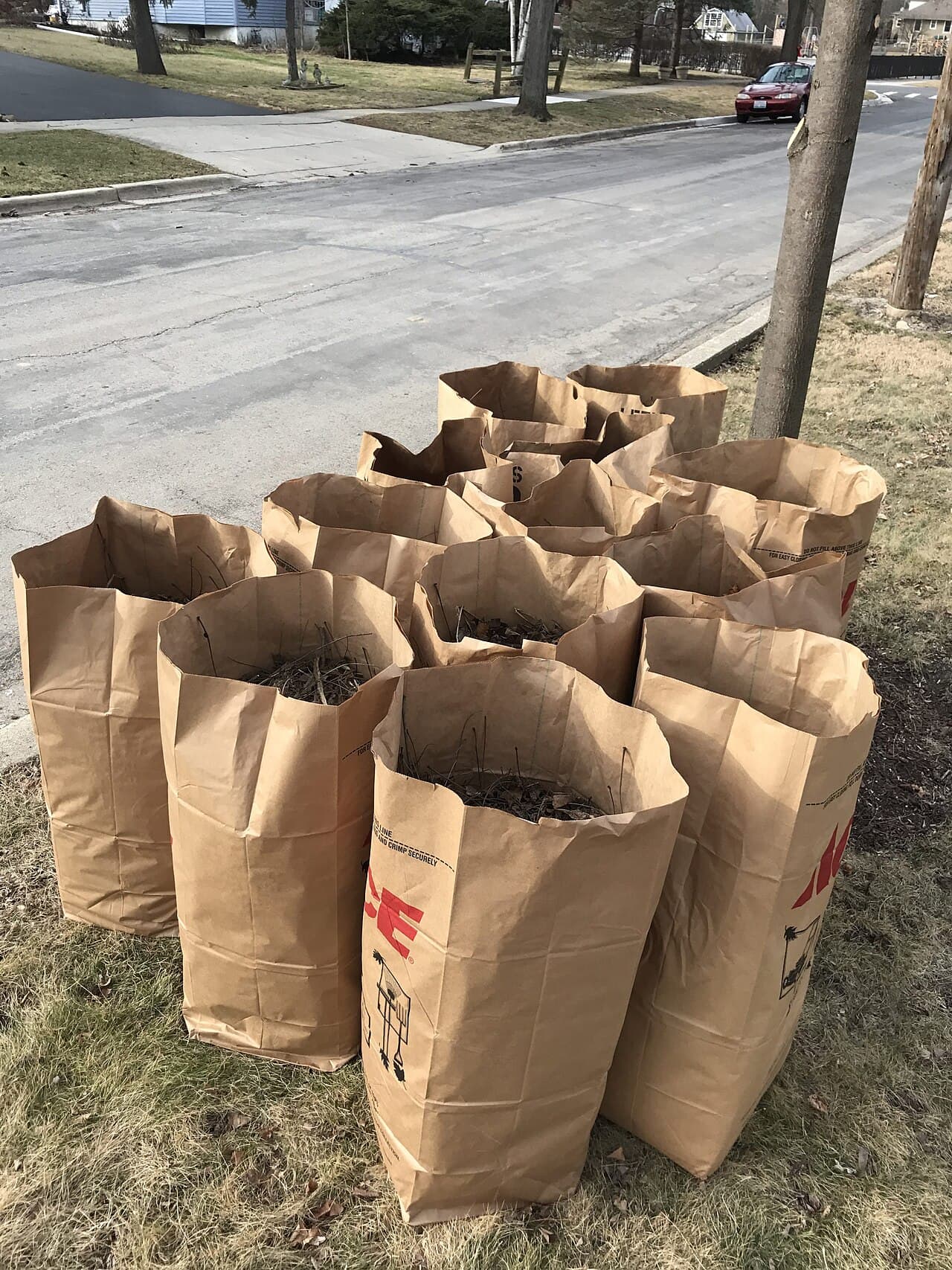
What the state rules say
In the parts of Virginia the state calls volatile organic compound emissions control areas, open burning is permitted for the on-site destruction of leaves and tree, yard, and garden trimmings on private property, provided that no regularly scheduled collection service for them is available at the adjacent street or public road.[1] If your trash company or locality picks up yard waste at your curb on a schedule, burning it is not the allowed route there.
A separate provision covers on-site burning of clean burning waste and debris waste from property maintenance, but it is prohibited from May 1 through September 30.[1] A state rule does not excuse you from local ordinances either: the regulation says burning that complies with it still has to comply with other applicable laws and ordinances of the governmental entities having jurisdiction.[1] Because areas differ, ask your fire department whether your address is in one of these areas.
What you can never burn
Yard debris means leaves, brush and trimmings, not everything that happens to be in the yard. The Department of Forestry says state regulations prohibit open burning of any material that creates dense smoke or noxious odors, and no one in Virginia may burn tires or other hazardous materials at any time.[3] The open burning rules also bar burning tires, asphaltic materials, crankcase oil and impregnated wood, which is why treated lumber and other scrap wood do not belong in the fire.[5]
The 4 p.m. rule
From February 15 through April 30, it is unlawful in a county or city organized for forest fire control to set fire to brush, leaves, grass or debris located in or within 300 feet of woodland, brushland or a field with dry grass, except between 4:00 p.m. and 12:00 midnight.[2] A violation is a Class 3 misdemeanor.[2] The Department of Forestry calls escaped debris burns "the leading human cause of wildfire in Virginia."[3]
Any fire in the open air within 150 feet of woodland, brushland or a dry field must be totally extinguished before you leave and may not be left unattended.[2]
What a local rule can add
Localities can be stricter. In Suffolk, residential open burning needs a permit from the Fire Marshal's Office, the pile may not exceed 5 feet by 5 feet unless approved, and it may contain yard debris only.[4] Failing to comply with that city's open burning ordinance is a Class 1 misdemeanor that can bring a fine of up to $2,500 and/or one year in jail.[4] Suffolk points residents to Public Works bulk pickup or a local landfill as alternatives.[4] Your own locality may have a similar rule, a seasonal ban or a no-burn day, so the call to your fire department comes first.
Burning safely if you are allowed to
The eight steps above are the Department of Forestry's guidance in order. Two details matter most. Size: keep the pile small, or use a burn barrel with at least a 15-foot cleared radius,[3] because a big pile throws embers. Weather: the Department's guidance is never to burn on dry or windy days, because it is easy for fire to spread out of control.[3] Check the forecast the day before and the morning of.
Easier ways to clear it
Burning is rarely the cheapest or least risky option. The Department of Forestry itself asks whether burning is your only option and names chipping, composting and building brush piles for wildlife as alternatives.[3] Many localities collect brush or take it at a drop-off site: see whether your county will pick up yard waste, and if you would rather pay someone, what yard debris removal costs.
Stop and call a pro if
- The fire escapes your pile or the wind picks up. Call 911 immediately; even a slight delay may be disastrous, and the Department says not to fight it unless it is small and you can do so safely.[3]
- Your locality bans burning or a burn ban is in effect. Put the brush out for collection or hire it hauled away.
- The pile includes treated lumber, tires, paint or anything that is not plain yard debris. Take it to a disposal site rather than burning it.[5][3]
- Trees are down across a house, a road or power lines. That is tree-service and utility work, not a burn pile.
Getting help in Virginia
Loclis lists local businesses that haul brush and clear yards: browse junk and moving services, read more junk and moving answers, or see whether backyard fire pits are allowed for rules on recreational fires. When you would rather not burn, describe the yard debris once and local haulers quote it.
Common questions
- Do I need a permit to burn brush in Virginia?
- There is no single statewide permit. The Department of Forestry says to check with your local fire department, its own office or the Department of Environmental Quality to learn whether a permit is required.[^vdof-burn] Some localities do require one: in Suffolk a permit from the Fire Marshal's Office must be on hand at the burn.[^suffolk]
- Can I burn yard waste in the summer?
- Often not. The state rule for property-maintenance debris prohibits burning from May 1 through September 30,[^deq-130-40] and Suffolk, for one, allows no open air burning in those months.[^suffolk]
- What happens if my fire spreads?
- Call 911 immediately if it gets beyond your control.[^vdof-burn] A permitted burn does not excuse you from the consequences, liability or damages that result,[^deq-130-40] and if a forest fire starts because someone broke the 4 p.m. or other burning rules in Va. Code § 10.1-1142, that person is liable to the Commonwealth for the full amount of all expenses incurred by the Commonwealth in suppressing such fire.[^va-1142]
- Can I burn pressure-treated wood or lumber scraps?
- Do not. State rules bar burning impregnated wood, and the Department of Forestry says no one in Virginia may burn tires or other hazardous materials at any time.[^deq-130-30][^vdof-burn] Yard debris means leaves, limbs and trimmings, so take scrap lumber to a disposal site instead.
- What can I do with brush instead of burning it?
- The Department of Forestry suggests chipping, composting or building brush piles for wildlife.[^vdof-burn] Many localities also collect brush or accept it at a drop-off site for a fee.
Sources
- [1] 9VAC5-130-40. Permissible open burning, Virginia Administrative Code, State Air Pollution Control Board. Checked October 27, 2026.
- [2] Va. Code § 10.1-1142, Regulating the burning of woods, brush, etc.; penalties, Code of Virginia, Virginia General Assembly. Checked October 27, 2026.
- [3] Before You Burn, Virginia Department of Forestry. Checked October 27, 2026.
- [4] Open Burning & Recreational Fires, City of Suffolk Fire & Rescue. Checked October 27, 2026.
- [5] 9VAC5-130-30. Open burning prohibitions, Virginia Administrative Code, State Air Pollution Control Board. Checked October 27, 2026.
Want a pro to handle it?
Describe the job once. Licensed local businesses send quotes, and you pay only when you book one.
Get a quote from a local pro