Do you need a permit to replace a roof in Virginia?
For a house, often not. Virginia's building code exempts replacing any amount of roof covering on one- and two-family homes and townhouses, unless the house is in an area where the nominal design wind speed is over 100 mph. Replacing more than 256 square feet of decking, structural repairs, and work in historic districts or flood zones can still need one.
By Kasra Taheri, Founder, LoclisPublished
Researched and drafted with AI, then checked claim by claim against the sources listed below before it was published. Prices and rules change; the dates beside each source say when it was last checked.
The short version
Virginia has one building code for the whole state, the Uniform Statewide Building Code, enforced by every city and county building department. Under it, a permit is needed before work starts on the construction or alteration of a building, including work on any structural component.[1] The code then lists ordinary repairs that need no permit, and a new roof on a house is usually one of them.
The entry that matters covers replacing an unlimited amount of roof covering or siding on buildings in Groups R-3, R-4 and R-5, as long as the building is not in an area where the nominal design wind speed is greater than 100 miles per hour.[1] Those groups are where houses sit: Group R-5 takes in detached one- and two-family houses and townhouses no more than three stories above grade.[2]
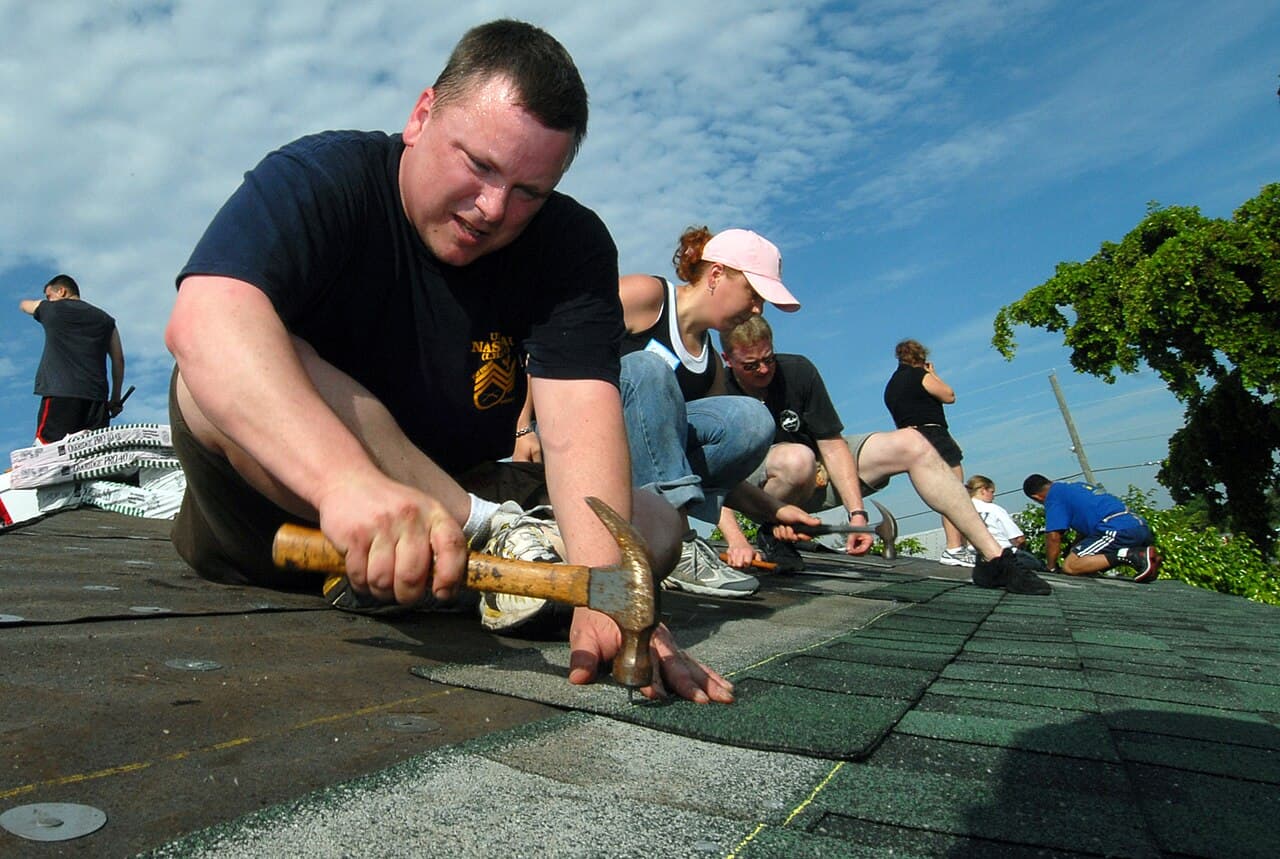
When a reroof does need a permit
Tearing off shingles and putting new ones down is the easy case. These change the answer:
- Your area's wind speed. The unlimited exemption depends on the nominal design wind speed where the house stands. Building departments publish their own design criteria, and wind figures can be stated in more than one way, so ask the building department directly whether a reroof at your address is exempt rather than working it out from a map. Small jobs are safe either way: replacing 100 square feet or less of roof covering needs no permit in any building and any wind zone.[1]
- Decking. Replacing 256 square feet or less of roof decking on a house is exempt, unless that decking had to be fire-retardant-treated or otherwise protected to form a fire-rated wall termination when the house was built.[1] A roofer who finds more rot than that under the old shingles may need to stop and get a permit.
- Structure. Rafters, trusses and other framing are a different matter: ordinary repairs do not include removing or cutting any structural beam or load-bearing support.[2] Changing the roof's shape or adding a dormer goes well beyond replacing the covering, so expect a permit.
- Historic districts and flood zones. The building official may require a permit for replacement roofing on buildings in a historic district designated by the locality, and for any exempt work in a special flood hazard area.[1]
- Apartments and businesses. The unlimited exemption covers only the residential groups above. Other buildings get the 100 square foot allowance and, beyond it, other repair work the building official deems minor and ordinary.[1]
Two more points from the same section. The exemptions do not excuse the work from the code's other requirements,[1] so an exempt reroof still has to be installed to code. And if you ask for a permit for exempt work, the building official has to issue one and inspect it.[1] Some homeowners do that for the record of an inspection. After a storm, when a damaged roof does need a permit, the code allows for it: for emergency work, the code lets the permit application follow by the end of the first working day after the work starts.[1]
Hire a licensed roofer, and let them pull it
No permit does not mean no rules for the roofer. Virginia's Board for Contractors says work valued at $1,000 or more needs a valid Virginia contractor's licence in the right category, and that for roofing-only work you may want a contractor licensed in that specialty.[3] When a permit is needed, whoever applies for a permit has to show the building department proof of a contractor licence, or file a written statement that they are not subject to licensing.[1]
The board also says the contractor should apply for and obtain any necessary building permits, and the contract should say so.[3] Be wary of a roofer who asks you to pull the permit yourself: the permit holder becomes the general contractor and takes on responsibility for the overall job.[3] Before you sign, check the roofer's licence on DPOR's record.
Find a roofer on Loclis
Loclis lists licensed businesses from Virginia's DPOR register, with each one's licence number and class. Browse roofing or roof repair, look up roofing and exterior contractors in Blacksburg, or describe the job once and local roofers quote it. Ask each one whether your job needs a permit and, if it does, whether the quote includes it.
Common questions
- Do I need a permit to reshingle my house in Virginia?
- Usually the statewide code exempts it: replacing any amount of roof covering on a one- or two-family house or townhouse needs no permit, unless the house is in an area where the nominal design wind speed is over 100 mph, in a locally designated historic district, or in a special flood hazard area. Your building department can tell you whether any of those apply to your address.
- Does replacing rotten roof decking need a permit?
- Not for 256 square feet or less on a house, unless the decking was required to be fire-retardant-treated when the house was built. Past 256 square feet, or if rafters or other structural members need work, expect a permit.
- Can I patch a small area of roof without a permit?
- Yes. Replacing 100 square feet or less of roof covering is exempt in every kind of building and every wind zone under Virginia's building code.
- If no permit is needed, can anyone do the work?
- No. The exemption is only from the permit. The work still has to meet the building code, and a job valued at $1,000 or more needs a contractor licensed by Virginia's Board for Contractors in the right category.
Sources
- [1] 13VAC5-63-80, Virginia Uniform Statewide Building Code, Section 108 Application for permit, Virginia Administrative Code, Legislative Information System. Checked October 20, 2026.
- [2] Ordinary Repairs Not Requiring a Permit, City of Bristol, Virginia. Checked October 20, 2026.
- [3] What You Should Know Before You Hire a Contractor, Virginia Board for Contractors, DPOR. Checked October 20, 2026.