How does a standby generator connect to a house?
Through an automatic transfer switch. It sits on the house side of the utility meter and feeds your circuits from either the grid or the generator, never both at once. A fuel line runs from the gas meter or propane tank, and control wiring lets the switch start the generator when the power fails. In Virginia it is permitted work for a licensed electrician and gas fitter.
Free to ask. Local shops send quotes, and you pay only when you book one.
By Kasra Taheri, Founder, LoclisPublished
Researched and drafted with AI, then checked claim by claim against the sources listed below before it was published. Prices and rules change; the dates beside each source say when it was last checked.
This is a job for a licensed pro in Virginia
This page explains what the work involves, the permits, what a licensed pro does and what drives the cost. It does not give step-by-step instructions, because this work needs a licence, a permit or both, and doing it wrong can injure someone. Before you hire, check the licence on Virginia's DPOR record.
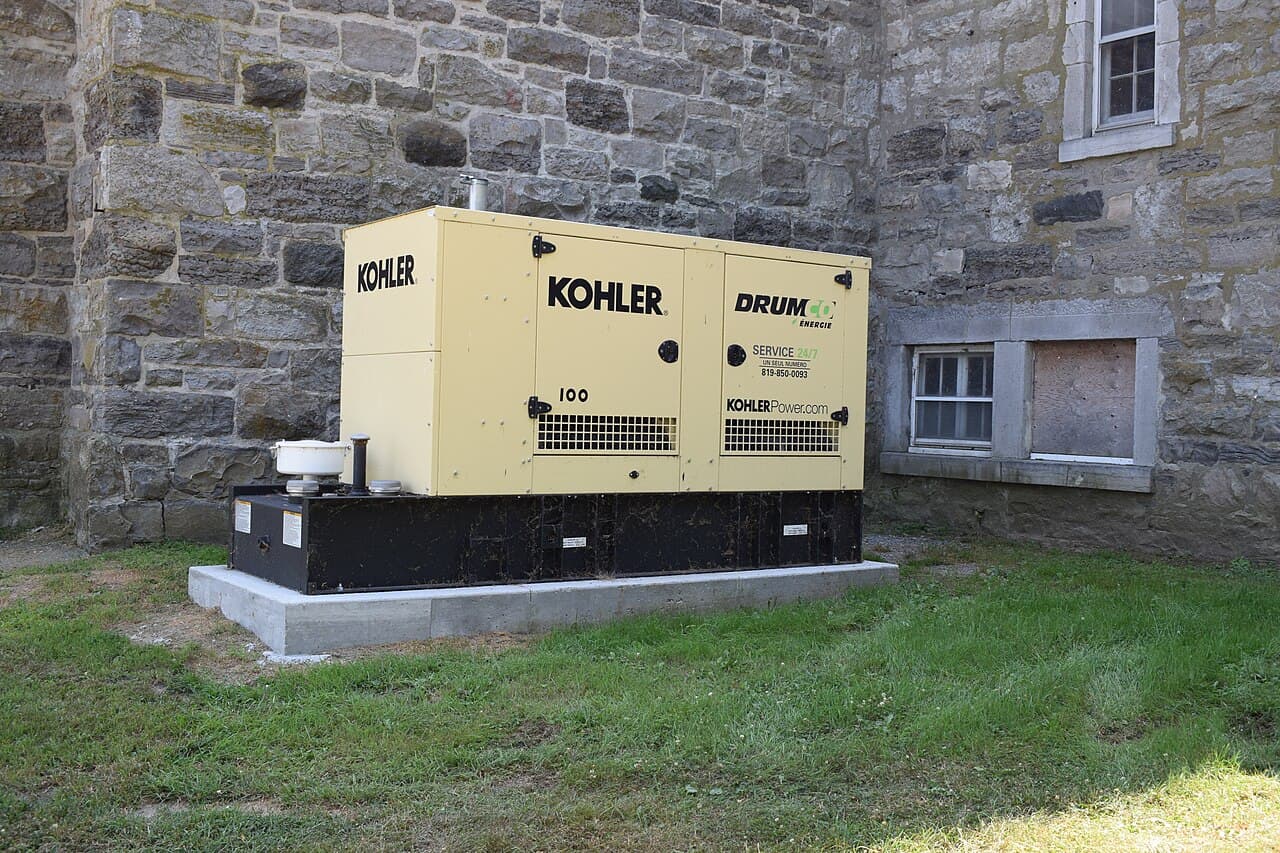
A standby generator is wired to your house through an automatic transfer switch, not plugged into it. The switch sits between the utility service and the circuits it backs up. When the grid fails, it starts the generator and moves those circuits over; when the grid returns, it moves them back and lets the generator shut down. Around that sit three smaller connections: a fuel line from the gas meter or propane tank, control wiring between the switch and the generator, and a circuit that keeps the generator's starting battery charged. All of it is permitted work for licensed trades in Virginia.
The transfer switch is the connection
Every electrical tie between the generator and the house runs through the transfer switch. Dominion Energy's service rules say it in one line: "Connections for Customer-owned emergency generation are made in the transfer switch."[1] The switch has to be on your side of the meter. Dominion does not allow customer emergency generation on the line side of the meter or inside its metering equipment.[1]
The switch exists to keep two power sources apart. A break-before-make switch disconnects from one source of power before it connects to the other, which keeps a generator from backfeeding into the utility line.[1] Backfeed is the danger that matters most: "Electrical backfeed into a utility electrical system can cause severe injury or death to utility personnel working on power lines."[4] It can hurt your equipment too. AEP's service guide notes that if generator and utility power are not isolated and utility power returns while the generator is supplying power, the generator can be damaged and an electrical fire can result.[2]
Utilities treat the switch type differently. Dominion Energy does not require its approval for portable or standby generators that use manual or automatic break-before-make switching, but equipment that connects to its lines in parallel, even for a few cycles, needs its prior written approval.[1] AEP, whose guide covers Appalachian Power, says the utility shall be notified of a customer's intention to install an emergency standby power system.[2]
Whole house or essential circuits
Transfer switches come in two broad layouts. A service-entrance switch uses a circuit breaker as the service disconnect for the utility,[3] so it can back up everything behind the meter. Other switches feed a separate small panel. Either way, the switch can carry every circuit in the house or only essentials such as the furnace, refrigerator, well pump and some lights,[3] and the generator and the transfer switch both have to be rated for the loads connected to them.[3]
Load management stretches a smaller generator further. Many appliances cycle on and off, and load management powers the less critical ones while the more important ones are idle, which allows a smaller generator than one sized to run everything at the same time.[3] Kohler's combined load management board handles up to six household loads.[3]

What happens when the power goes out
The transfer switch watches the utility voltage. In Kohler's words, "An automatic transfer switch monitors the utility power and signals the generator set to start when utility power is lost."[5] The switch then moves the load to the generator.
On Kohler's RXT switch, the factory settings wait 3 seconds after the utility is lost before starting the engine, 3 seconds after generator power is available before transferring, and 2 minutes after the utility returns before switching back.[3] The delays keep a brief dip in utility power from starting the engine or transferring the load.[3] After the load goes back to the grid, the generator runs unloaded to cool down, and on Kohler's controller the engine cooldown time delay is set to 5 minutes.[5] Generac describes the same cycle for its units: the generator comes on within seconds of sensing an outage and shuts itself off after utility power returns.[6]
Kohler's switch also includes a fixed 5-minute load control delay so that large motor loads such as air conditioners do not all start at once after transfer.[3]
None of it happens if the generator is switched off at its own controller. "The controller must be in AUTO mode for automatic transfer switch operation."[5]
The fuel connection
Home standby generators run on natural gas or propane and are usually installed close to the fuel source, the gas meter or propane tank.[6] The gas service has to keep up. Kohler says the utility gas meter flow rate must be enough to supply the generator at rated load plus all other gas-consuming appliances,[4] and its 20 kW home models burn 281 cubic feet of natural gas an hour at full load.[4] The pipe size depends on the length of the run, with 8 feet added for each 90-degree elbow,[4] so a long run may need larger pipe or a bigger gas meter. On propane, the tank and regulator are planned with your supplier, and Kohler tells installers to contact the local LPG provider.[4]
Control and charger wiring
Two smaller circuits finish the job. Control or communication wiring runs between the transfer switch and the generator, which is how the switch tells the engine to start. The generator's battery charger also needs house power, and Kohler specifies that power for the battery charger must be backed up by the generator so that power is available at all times.[4]
Where the generator sits
The generator goes outdoors on a flat, level base of gravel over a weed barrier or a concrete pad.[4] "The required distance from a structure is dependent on state and local codes."[4] The maker's clearances apply too. On Kohler's 14 and 20 kW models, no plants, shrubs or other combustible materials may be within 4 feet of the exhaust end, and furnace and similar intakes must be at least 10 feet from it.[4] Kohler also says not to put it near patios, decks, play areas or animal shelters.[4]
Any engine makes carbon monoxide, so Kohler calls for carbon monoxide detectors on each level of any building next to the generator.[4]
Permits, digging and licences
Virginia's building code says a permit must be obtained before work begins on electric wiring, fuel supply systems or any equipment the code regulates.[7] Localities spell it out; Roanoke County lists generators among the new and replacement gas appliances that need a trade permit.[8] Our answer on standby generator permits in Virginia covers fees and inspections.
The trench for the gas line or conduit is excavation, and under Virginia law no one may begin any excavation without first submitting a locate request to the state's notification center.[9]
The trades are licensed. Virginia law requires a licence to work as a tradesman, as a liquefied petroleum gas fitter or as a natural gas fitter provider,[10] and state rules define an electrician as a tradesman who works on electrical systems regulated under the Uniform Statewide Building Code.[11]
When to call a licensed pro
At the planning stage, before you buy a generator. A licensed electrician, working with a licensed gas fitter or propane company, should visit, work out which circuits you want backed up, size the generator and transfer switch, check your gas meter or tank, and pick a spot that meets the clearances and local setbacks. Ask for a written quote that names the transfer switch type, the circuits covered, the fuel line route and any meter or tank changes, who pulls the permits, and who notifies the utility. Our answer on what a whole-house generator costs in Virginia lists what drives the price.
Never tie any generator into house wiring without a transfer switch. For portable generators, AEP's guide puts it this way: "A positive method of isolating Company power circuits from the generator circuits must be provided."[2] Before you sign, check the contractor's licence.
Browse generator and backup power services, find electricians in Blacksburg, or read more electrical answers.
Describe your generator project once, and licensed local businesses quote it.
Common questions
- Does a standby generator plug into my electrical panel?
- Not directly. It connects through a transfer switch, which either replaces your main disconnect or feeds a panel of chosen circuits. The switch makes sure the house is fed by the grid or the generator, never both, so generator power cannot flow back into the utility lines.
- Can a generator power my whole house?
- It can if the generator and transfer switch are sized and rated for every circuit, or if load management sheds less important loads while big ones run. Many homeowners back up only essentials such as the furnace, refrigerator, well pump and some lights. A site visit and load calculation decide which fits.
- How fast does the power come back on?
- Within seconds on most systems. With Kohler's RXT switch at factory settings, the engine starts after the utility has been gone 3 seconds and the load transfers 3 seconds after generator power is ready. Expect a short blackout while that happens.
- Do I have to tell my power company?
- It depends on the utility and the equipment. Dominion Energy does not need to approve a standby generator that uses break-before-make switching, but it does need to approve equipment that runs in parallel with its lines. AEP's guide, which covers Appalachian Power, asks to be notified of a standby system. Your installer should handle it.
- Can I connect a portable generator to my house instead?
- Only through a transfer switch or other approved isolating device installed by a licensed electrician. AEP's guide requires a positive method of isolating its circuits from generator circuits, because an unisolated generator can electrocute line workers and be damaged when power returns.
- Does the generator need its own gas line?
- It needs a gas supply sized for it on top of your other gas appliances. Kohler requires the meter and piping to carry the generator at full load plus everything else, so a longer run, a bigger pipe or a meter upgrade from the gas company is common. On propane, your supplier sets the tank and regulator.
Sources
- [1] Information and Requirements for Electric Service (Blue Book), March 2024, Dominion Energy. Checked October 27, 2026.
- [2] Guide for Electric Service and Meter Installations, American Electric Power (Appalachian Power's parent company). Checked October 27, 2026.
- [3] Operation and Installation Manual TP-6807, Model RXT Automatic Transfer Switch, Kohler Co.. Checked October 27, 2026.
- [4] Installation Manual TP-6803, Residential/Commercial Generator Sets 14RESA, 20RESC, Kohler Co.. Checked October 27, 2026.
- [5] Operation Manual TP-6804, Residential/Commercial Generator Sets 14/20RESA, 20RESC, Kohler Co.. Checked October 27, 2026.
- [6] Home Standby Generator FAQ, Generac Power Systems. Checked October 27, 2026.
- [7] 13VAC5-63-80, Virginia Uniform Statewide Building Code, Section 108 Application for permit, Virginia Administrative Code, Legislative Information System. Checked October 27, 2026.
- [8] Residential: Electric, Plumbing and Mechanical, Roanoke County, Virginia, Building Safety. Checked October 27, 2026.
- [9] Code of Virginia § 56-265.17, Notification required prior to excavation or demolition, Code of Virginia, Legislative Information System. Checked October 27, 2026.
- [10] Code of Virginia § 54.1-1129, Necessity for licensure, Code of Virginia, Legislative Information System. Checked October 27, 2026.
- [11] 18VAC50-30-10, Definitions (Tradesman Rules and Regulations), Virginia Administrative Code, Board for Contractors. Checked October 27, 2026.
Want a pro to handle it?
Describe the job once. Licensed local businesses send quotes, and you pay only when you book one.
Get a quote for Electrical Repair