How much does a whole-house generator cost in Virginia?
There is no single Virginia price. The installed cost depends on the generator's size, the transfer switch, the distance to your panel and gas meter, any meter or propane tank work, the pad and the permits. For scale, Generac's website on October 27, 2026 listed a 10 kW unit from $3,649 and a 22 kW unit with a whole-house switch from $6,979, before installation.
Free to ask. Local shops send quotes, and you pay only when you book one.
By Kasra Taheri, Founder, LoclisPublished
Researched and drafted with AI, then checked claim by claim against the sources listed below before it was published. Prices and rules change; the dates beside each source say when it was last checked.
This is a job for a licensed pro in Virginia
This page explains what the work involves, the permits, what a licensed pro does and what drives the cost. It does not give step-by-step instructions, because this work needs a licence, a permit or both, and doing it wrong can injure someone. Before you hire, check the licence on Virginia's DPOR record.
A whole-house generator in Virginia has no single price, because the installed cost is mostly about your house: how much of it you want powered, how far the generator sits from your panel and gas meter, and whether your gas meter, propane tank or electrical service needs work. The equipment sets a floor. When we checked Generac's website on October 27, 2026, a 10 kW Wi-Fi model started at $3,649.00, a 14 kW Guardian Series model with a whole-house switch at $5,389.00, a 22 kW model with a whole-house switch at $6,979.00, and a 26 kW model with a whole-house switch at $7,899.00.[1] Installation comes on top of that.
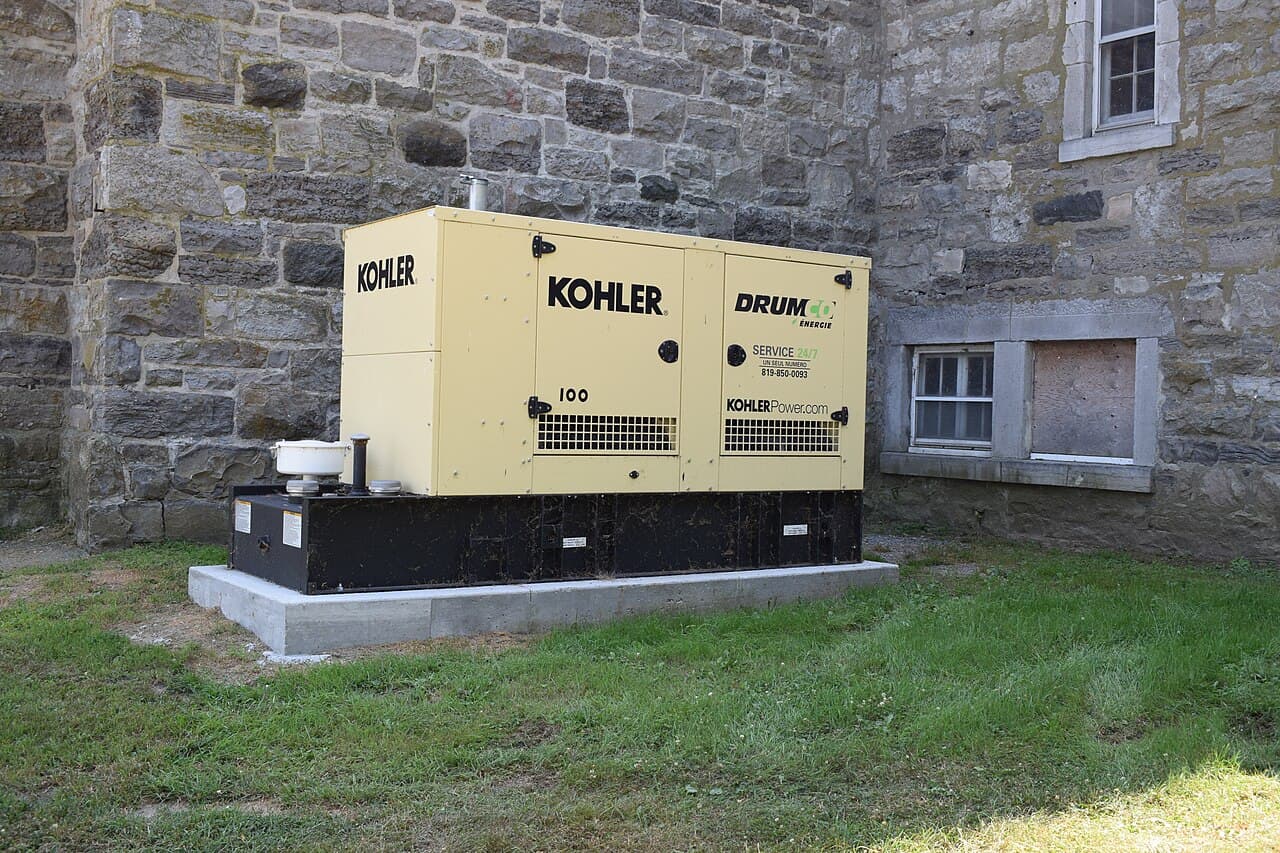
Equipment price versus installed price
Treat a list price as the start of the budget. Generac's own price page adds: "For pricing specific to your region, please consult with your local Generac dealer."[1] Its FAQ is just as direct about the rest, noting that the cost of installation is determined by the dealer and will vary based on several factors.[2] A fair comparison is between written quotes for the whole job from licensed installers who have visited the house.
What drives the installed cost
How much of the house you back up. The transfer switch can carry every circuit in the house or only essentials such as the furnace, refrigerator, well pump and some lights.[3] Backing up everything usually means a bigger generator. Where everything is wanted on a budget, load management lets a smaller generator do the job by powering less critical appliances while the more important ones are idle.[3]
The transfer switch. Some generator packages include a switch and some do not, as the model listings above show. A service-entrance switch also serves as the utility service disconnect,[3] which changes how much electrical work happens at the meter. An older or undersized main panel may need upgrading first, which can add significantly to the electrical side.
The fuel supply. On natural gas, the utility gas meter must be able to supply the generator at rated load plus all other gas appliances, and Kohler tells installers to contact the fuel supplier for a gas meter upgrade if necessary.[4] The required pipe size grows with the length of the run, and each 90-degree elbow counts as 8 more feet,[4] so a generator placed far from the meter costs more to pipe. On propane, you may need a larger tank and new regulators from your supplier.
Distance and digging. Every foot between the generator, the transfer switch and the panel is more wire, conduit and trench. Rocky ground, long runs around the house or a run under a driveway add labor.
The site. Kohler's home units sit on a flat, level base of gravel over a weed barrier or a concrete pad,[4] and clearances from air intakes plus local setback rules can push the generator to a spot that needs longer runs.
Permits and inspections. Fees are set locally, and they belong in the quote. Prince George County's fee schedule, effective July 1, 2021, lists a generator permit, electrical included, at $100.00, plus a 2% state levy.[6] Montgomery County's fee page, when we checked it on October 27, 2026, prices residential electrical, plumbing and mechanical trade permits at $0.03 per square foot with a $45 minimum each, and adds a 2% state levy and a 2% technology fee with a $10 minimum.[7] Roanoke County adds a 2% state levy and a 5% technology fee to trade permits.[8] See whether you need a permit for a standby generator for what the permits cover.
The cost of owning one
Fuel. A standby generator burns fuel during outages and during its routine self-test. As a guide to scale, a 20 kW Kohler home model uses about 161 cubic feet of natural gas or 82 cubic feet of propane an hour at half load,[4] and Kohler's conversion figure is 36.39 cubic feet of propane to the gallon,[4] so that propane use is a little over 2 gallons an hour. Kohler's recommended exercise runs the generator without load once each week for 20 minutes,[5] which uses fuel too. Multiply by your gas or propane rate to estimate a long outage.
Maintenance. Generac recommends having its units serviced every 6 months by an authorized dealer,[2] and Kohler's schedule says to change the oil yearly or every 150 hours on its 20 kW models,[5] along with filters, spark plugs and battery checks. Many dealers sell annual plans. Our answer on how often a standby generator needs maintenance covers the schedule, and what generator service costs covers the visits.
Warranty. Coverage depends on who installs it. Generac's 5-year warranty applies when the generator is bought from and installed by one of its local dealers.[2] Ask every bidder what warranty comes with their installation and who honors it.
What to ask for in a written quote
Ask each installer to price these separately, so quotes can be compared line by line:
- the generator model and size, and whether the transfer switch is included
- the transfer switch type and which circuits it covers
- electrical work: wiring runs, conduit, any panel or service upgrade
- gas or propane work: pipe size and length, meter upgrade or tank changes
- the pad and any site work or trenching
- permits, inspections and utility notification
- start-up, the first service visit, warranty registration and the maintenance plan, if any
Licensing and the contract
The size of the contract decides the licence class. Under Virginia law, a Class C contractor may take a single contract over $1,000 but less than $30,000, and a Class B contractor from $30,000 to under $150,000.[9] The firm also needs the right trade specialties for electrical and gas work.
Make sure the permit is in the contract. The state Board for Contractors advises: "The contractor should apply for and obtain any necessary building permits."[10] If the contract does not say so, it warns, you may be held legally responsible for failure to obtain any required permits.[10]
When to call a licensed pro
Before you buy equipment. Have two or three licensed installers visit, size the generator to the circuits you want, check your panel and gas meter or tank, and give written, itemized quotes. Read how a standby generator connects to a house first so the line items make sense, and check each contractor's licence before you sign.
Browse generator and backup power services, find electricians in Blacksburg, or read more electrical answers.
Describe your generator project once, and licensed local businesses send you quotes.
Common questions
- Is the price on the manufacturer's website what I will pay?
- No. A listed price covers the equipment, and Generac says installation cost is set by the dealer and varies. Labor, the transfer switch if it is not included, gas piping, the pad, electrical work and permits come on top. Get written quotes with each part priced.
- What size generator do I need?
- It depends on what you want to run. Backing up only essentials such as the furnace, refrigerator, well pump and some lights takes a smaller unit than powering every circuit, and load management can let a smaller generator cover more. A dealer or electrician should size it from your actual loads.
- Is propane or natural gas cheaper to run?
- It depends on your rates. A 20 kW Kohler home model uses about 161 cubic feet of natural gas or 82 cubic feet of propane an hour at half load. Multiply by your gas company's or propane supplier's price to compare. Natural gas needs a big enough meter; propane needs a tank sized for long outages.
- How much is the permit?
- Fees are set locally. Prince George County's schedule, effective July 1, 2021, lists a generator permit with electrical at $100.00 plus a 2% state levy. Montgomery County prices trade permits by square footage with a $45 minimum each. Ask whether the quote includes permit fees.
- What does upkeep cost?
- Plan for regular service. Generac recommends service every 6 months by an authorized dealer, and Kohler's schedule calls for an oil change yearly or every 150 hours on its 20 kW models. Many dealers sell annual maintenance plans; ask what each visit includes before you sign.
- Does the contractor need a particular licence for this job?
- Yes. Any firm taking a contract over $1,000 needs a Virginia contractor licence in a class that covers the contract's value, plus the right trade specialties, such as electrical and gas fitting. Look the firm up on DPOR's licence lookup before signing.
Sources
- [1] Whole House Generators and Home Standby Generators, Generac Power Systems. Checked October 27, 2026.
- [2] Home Standby Generator FAQ, Generac Power Systems. Checked October 27, 2026.
- [3] Operation and Installation Manual TP-6807, Model RXT Automatic Transfer Switch, Kohler Co.. Checked October 27, 2026.
- [4] Installation Manual TP-6803, Residential/Commercial Generator Sets 14RESA, 20RESC, Kohler Co.. Checked October 27, 2026.
- [5] Operation Manual TP-6804, Residential/Commercial Generator Sets 14/20RESA, 20RESC, Kohler Co.. Checked October 27, 2026.
- [6] Building Inspections Fee Schedule, Prince George County, Virginia, Community Development. Checked October 27, 2026.
- [7] Permit & Inspection Fees, Montgomery County, Virginia, Building Permits & Inspections. Checked October 27, 2026.
- [8] Residential: Electric, Plumbing and Mechanical, Roanoke County, Virginia, Building Safety. Checked October 27, 2026.
- [9] Code of Virginia § 54.1-1100, Definitions, Code of Virginia, Legislative Information System. Checked October 27, 2026.
- [10] What You Should Know Before You Hire a Contractor, Virginia Board for Contractors, DPOR. Checked October 27, 2026.
Want a pro to handle it?
Describe the job once. Licensed local businesses send quotes, and you pay only when you book one.
Get a quote for Electrical Repair