How long does a whole-house renovation take?
No official Virginia source publishes a standard length for a whole-house renovation, because the scope decides everything, from cosmetic updates to stripping a house to the studs. What you can count on is the paperwork: a Virginia residential contract must state when work begins and the estimated completion date, and any change to that date must be in writing.
Free to ask. Local shops send quotes, and you pay only when you book one.
By Kasra Taheri, Founder, LoclisPublished
Researched and drafted with AI, then checked claim by claim against the sources listed below before it was published. Prices and rules change; the dates beside each source say when it was last checked.
This is a job for a licensed pro in Virginia
This page explains what the work involves, the permits, what a licensed pro does and what drives the cost. It does not give step-by-step instructions, because this work needs a licence, a permit or both, and doing it wrong can injure someone. Before you hire, check the licence on Virginia's DPOR record.
No Virginia agency publishes a typical duration for a whole-house renovation, and any single number you see online is an average of very different jobs. The honest answer is that the schedule comes from your scope: how many rooms, how much of the structure and the systems is opened up, and how long permits, orders and inspections take. What Virginia law does give you is a way to pin the schedule down in writing before work starts.
What a Virginia contract has to say about time
Virginia's Board for Contractors regulations require a residential contract to state when work is to begin and the estimated completion date.[2] Ask your contractor to fill those dates in with a realistic estimate, not a hopeful one.
The same rules require the contract to include a "plain-language" exculpatory clause concerning events beyond the contractor's control, with a statement that delays caused by such events do not constitute abandonment and are not included in calculating timeframes for payment or performance.[2] In practice that is where weather, a supplier backlog or a hidden problem behind a wall is written down. The state's consumer guide says the same thing in plain terms: external factors such as weather or availability of supplies might cause delays.[1]
If the date has to move, it should move on paper. Under the regulations, any modification that changes the cost, materials, work to be performed, or estimated completion date must be in writing and signed by all parties.[2] The regulations also define abandonment as the unjustified cessation of work under the contract for a period of 30 days or more.[2]
What stretches or shortens the schedule
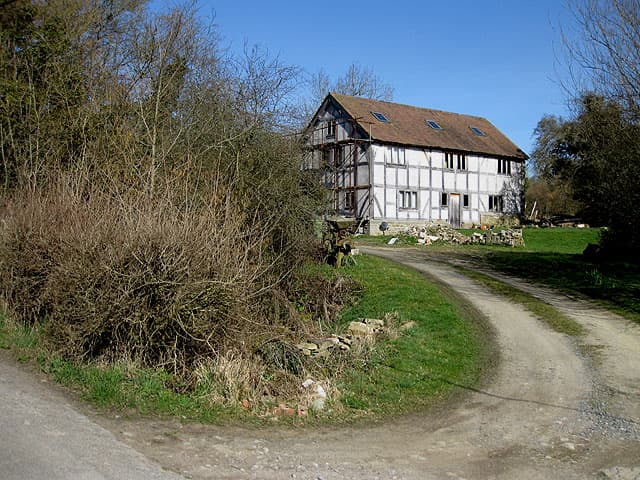
Scope and sequence. A whole-house job normally runs in phases: design and permits, demolition, structural and rough-in work for plumbing, electrical and mechanical systems, inspections, insulation and drywall, then finishes and punch list. Work that stays inside existing walls goes faster than work that opens them up. A job that moves walls, kitchens and bathrooms and replaces systems takes much longer than one that refreshes floors, paint and fixtures.
Permits and plan review. Virginia's building code requires a permit before work that involves the removal or addition of any wall, partition, or portion thereof, any structural component, a water supply and distribution system, sanitary drainage system, or vent system, or electric wiring.[4] Review times are set locally. The code says the building official examines construction documents "within a reasonable time after filing",[5] so ask your locality how long residential reviews are running now, and have your contractor build that into the start date.
Older houses. The EPA says approximately three-quarters of the homes in the United States built before 1978 still contain some lead-based paint, and that anyone paid to disturb painted surfaces in such a home must be certified in lead-safe work practices.[7] Ask whether your contractor is certified, since lead-safe setup and cleanup add steps before and during demolition. Virginia's code also requires an asbestos inspection before a renovation permit for some pre-1985 buildings, but that requirement does not apply to single-family dwellings or housing with four or fewer units unless the work is for commercial or public development purposes.[6]
Inspections. Your contractor schedules inspections with the local building department as the work reaches each stage. Missing a window means waiting for the next one, so ask how far ahead inspectors book in your locality.
Orders and changes. Windows, cabinets and special-order materials can take a long time to arrive, so a good schedule orders them early. Every owner change after the contract is signed pushes dates, which is the quiet reason many renovations run long.
Keeping the project moving
The permit itself has a clock. A building official may revoke a permit if authorized work is suspended or abandoned for a period of six months, and it is up to the applicant to prove substantive progress, such as an approved inspection, within that window.[6] Long gaps between phases put that at risk.
Tie payments to progress, not to dates. The state's consumer guide advises that a draw schedule should be based on progress made toward project completion, and its example ties payments to the Building Official passing the foundation and framing, then roofing and rough-in work, with the remainder on the final satisfactory inspection.[1] That way, if the contractor falls behind, your payments wait for the work.
Ask each bidder for a written phase schedule and which phases can overlap, and for what happens to the dates if a permit review runs long. See what has to be in a home improvement contract in Virginia for the full list of required terms, and how much a whole-house renovation costs in Virginia for how scope drives the price.
When to call a licensed pro
A whole-house renovation is a job for a licensed general contractor, with licensed tradesmen for the electrical, plumbing and mechanical work. In Virginia, a Class A contractor is one whose single contract or project is $150,000 or more, a Class B contractor handles $30,000 or more but less than $150,000, and a Class C contractor handles over $1,000 but less than $30,000.[3] Many whole-house projects land in Class B or Class A. Check the licence on DPOR before you sign, and read how much deposit a contractor can ask for before you pay.
Loclis lists DPOR-licensed remodelers with their licence number and class. Browse remodeling services, read more remodeling answers, or describe the job once and licensed local contractors will quote it with a schedule.
Common questions
- Is there a standard timeline for a whole-house renovation?
- Not from any Virginia source. The length depends on how much of the house is opened up, the permits and inspections your locality requires, and how long materials take to arrive. Ask each bidder for a written phase schedule instead of relying on an average.
- Does the contract have to include a completion date?
- Yes. Virginia's Board for Contractors regulations require a residential contract to state when work is to begin and the estimated completion date. Any change to that date must be in writing and signed by all parties.
- Can a contractor be penalized for delays caused by weather?
- Not if the contract covers it properly. The regulations require a plain-language clause explaining that delays from events beyond the contractor's control do not count as abandonment or toward payment and performance timeframes.
- Can a renovation permit expire if work stalls?
- It can be revoked. A Virginia building official may revoke a permit if authorized work is suspended or abandoned for six months, so keep inspections happening and ask for an extension in writing if you need a longer pause.
- Does an older house take longer to renovate?
- Often. A building permitted before January 1, 1985 needs an asbestos inspection certification before a renovation permit can be issued, and paid work that disturbs paint in a pre-1978 home must follow lead-safe rules.
Sources
- [1] What You Should Know Before You Hire a Contractor, Virginia Board for Contractors, DPOR. Checked October 27, 2026.
- [2] 18VAC50-22-260, Filing of charges; prohibited acts, Virginia Administrative Code, Board for Contractors. Checked October 27, 2026.
- [3] Va. Code § 54.1-1100, Definitions, Code of Virginia, Virginia General Assembly. Checked October 27, 2026.
- [4] 13VAC5-63-80, Section 108 Application for permit, Virginia Uniform Statewide Building Code, Virginia Administrative Code. Checked October 27, 2026.
- [5] 13VAC5-63-90, Section 109 Construction documents, Virginia Uniform Statewide Building Code, Virginia Administrative Code. Checked October 27, 2026.
- [6] 13VAC5-63-100, Section 110 Permits, Virginia Uniform Statewide Building Code, Virginia Administrative Code. Checked October 27, 2026.
- [7] Lead Renovation, Repair and Painting Program, U.S. Environmental Protection Agency. Checked October 27, 2026.
Want a pro to handle it?
Describe the job once. Licensed local businesses send quotes, and you pay only when you book one.
Get a quote from a local pro