How much deposit can a contractor ask for in Virginia?
Virginia's Board for Contractors advises an initial deposit of no more than 10% of the total price or $1,000, whichever is less, and up to 30% when the job needs custom-made or special-order items. That is a rule of thumb, but the written contract must state the down payment, and later payments should follow the work, never run ahead of it.
Free to ask. Local shops send quotes, and you pay only when you book one.
By Kasra Taheri, Founder, LoclisPublished
Researched and drafted with AI, then checked claim by claim against the sources listed below before it was published. Prices and rules change; the dates beside each source say when it was last checked.
This is a job for a licensed pro in Virginia
This page explains what the work involves, the permits, what a licensed pro does and what drives the cost. It does not give step-by-step instructions, because this work needs a licence, a permit or both, and doing it wrong can injure someone. Before you hire, check the licence on Virginia's DPOR record.
The short answer
Virginia's Board for Contractors puts it plainly: "a good rule of thumb is an initial deposit of no more than 10% of the total price or $1,000, whichever is less."[1] There is one exception it names. When the job needs custom-made or special-order items, it says a reasonable deposit could reach 30% of the total contract value.[1]
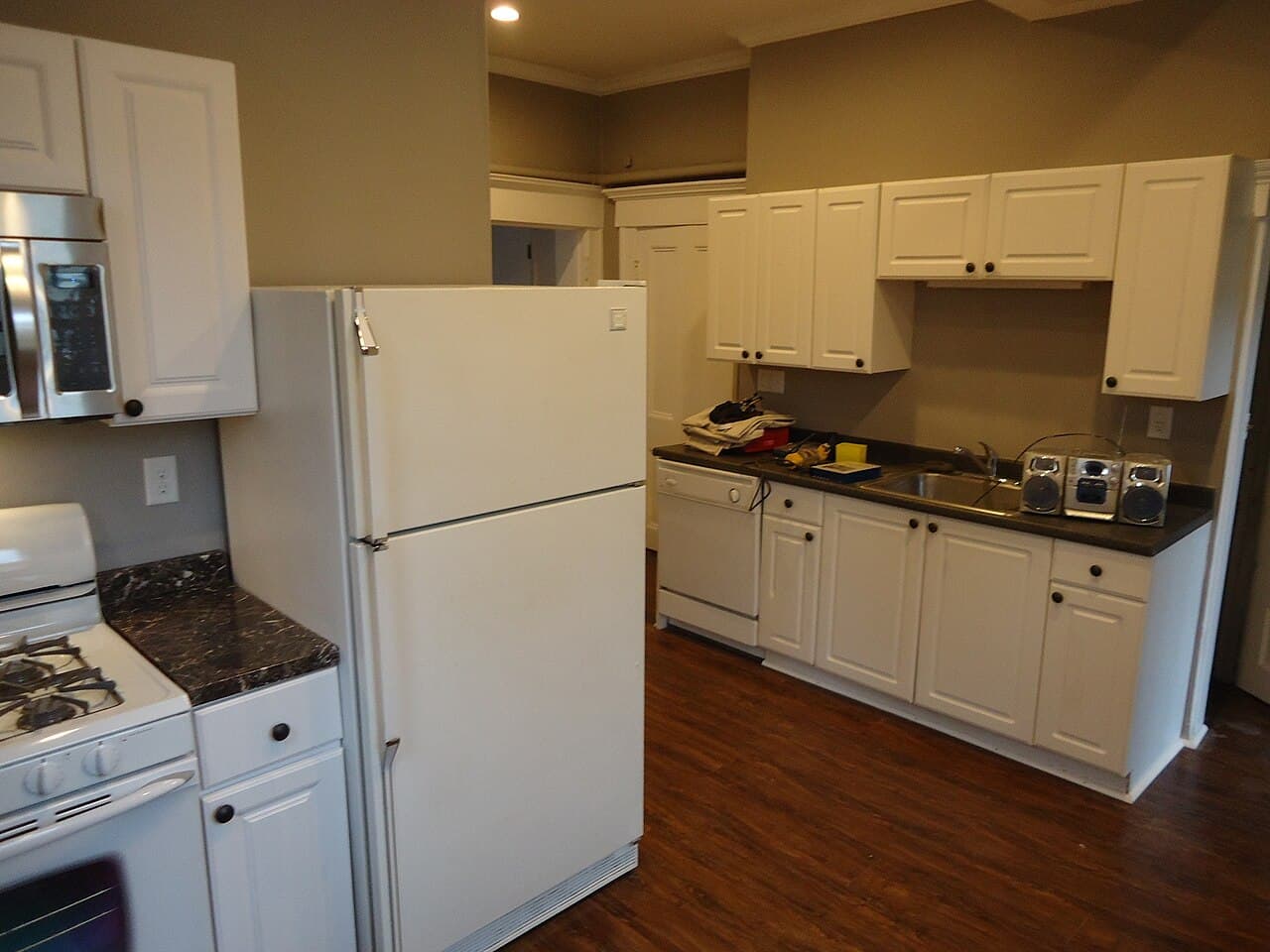
On a kitchen remodel, that usually means a small deposit for a job built from stock cabinets and materials, and a larger one when custom cabinets or special-order counters have to be bought for your house alone. The board's reasoning is worth keeping in mind when a quote asks for more: "A reputable contractor should be able to front the costs of supplies without a large sum of up-front money from you."[1]
What the contract has to say about money
Virginia doesn't leave the payment terms to a handshake. Under the Board for Contractors' regulations, residential contracting needs a legible written contract, and the contract must be signed by both you and the contractor before work starts or any payment is accepted.[2] It must include, among other things:[2]
- The start date and the estimated completion date
- The total cost, stated according to the type of contract (a fixed total, cost-plus with a cap, or time and materials)
- The amount and timing of each progress payment, with a specific statement of the down payment
- The cancellation rights of both parties
- The contractor's name, address, licence number, class of licence, and specialty
- A statement that any change to cost, materials, work or completion date must be in writing and signed by all parties
The contractor must deliver a fully signed copy of the contract to you before work begins.[2] If the deposit amount isn't written into the contract, ask for it to be added before you pay anything.
Paying the rest: tie every draw to finished work
After the deposit, most remodels are paid in stages called draws. The board says "A draw schedule should be based on progress made toward project completion and never on a date."[1] Its example of a reasonable draw schedule is "10% down; 25% upon passing inspection by the Building Official of the completed foundation and framing; 25% upon passing inspection by the Building Official of the roofing and all rough-in work; and the remainder upon completion of the project and final satisfactory inspection by the Building Official."[1]
A kitchen has no foundation or roofing stage, but the same idea works: a payment after the plumbing and electrical rough-in passes inspection, another when cabinets and counters are in, and the last after the final inspection and your walk-through.
The board also recommends two more protections:
- Retention. The contract can hold back "a percentage of each payment or of the total job, ordinarily 10 percent, which you retain until the job is completed."[1]
- No final payment early. The board's advice is not to pay the whole bill until the work is completely finished.[1]
Warning signs at the deposit stage
The board lists these among the signs of trouble ahead:[1]
- Being asked to pay for the whole job up front, or to pay in cash rather than by check or money order
- Being told the price is a special one that lasts only if you sign today
- Not being able to confirm that the contractor holds the licence the law requires
In its top ten tips for hiring a contractor, the board's advice is simply never to pay cash.[1] A check or money order leaves a record you may need later.
If a contractor takes the deposit and stops
Board for Contractors regulations list as prohibited acts abandonment, which they define as stopping work under the contract without justification for 30 days or more, and keeping or misapplying money paid for work that was not done or was done only in part.[2] You can file a complaint with DPOR. When an investigation shows probable cause that a licensed contractor broke the law or the regulations, the board may suspend or revoke the licence, fine the contractor or refuse to renew the licence.[1] The board is clear about its limits, though: it cannot make a contractor refund money or fix defective work.[1]
Virginia's criminal code also covers deposits. Under § 18.2-200.1, a person who takes an advance with fraudulent intent on a promise to build, repair or improve, then fails to do the work or substantially make good the advance, is guilty of larceny if they fail to return the advance within fifteen days of a request sent by certified mail, return receipt requested, to their last known address or the address in the contract.[3] That is why a written request by certified mail matters if a deposit goes missing.
Getting money back through the courts is a civil matter. The board refers questions about civil law and the courts to an attorney.[1] If you win a civil court judgment against a licensed contractor for improper or dishonest conduct, you may be able to claim from Virginia's Contractor Transaction Recovery Fund.[1]
When to call a licensed pro
A kitchen remodel almost always needs a licensed contractor. The Board for Contractors says that when one contract covers plumbing, electrical and carpentry work on a kitchen, you should hire a licensed general building contractor.[1] Before you hand over a deposit, look the licence up and check that its class fits the job. Under the Code of Virginia, Class C licences cover single jobs over $1,000 but under $30,000, and Class B covers jobs from $30,000 up to, but not including, $150,000.[4]
For what the whole job is likely to run, read what a kitchen remodel costs in Virginia, browse kitchen remodeling businesses, or see every remodeling answer. Loclis's own fees are on the pricing page.
When you are ready, describe your kitchen project once and licensed local contractors will quote it.
Common questions
- Is a 50% deposit normal for a Virginia kitchen remodel?
- Not by the Board for Contractors' measure. Its rule of thumb is no more than 10% or $1,000, whichever is less, or up to 30% for custom or special-order items. Its regulations require the contract to state the down payment, and the list of required contract terms names no percentage. Being asked to pay for the whole job up front is on the board's list of warning signs.
- Why would a kitchen deposit be higher than $1,000?
- Custom-made cabinets and special-order items are bought for your job alone, so the Board for Contractors says a reasonable deposit could reach 30% of the total contract value in that case. Ask what the deposit buys and get the order details in writing.
- Does the deposit have to be in the contract?
- Yes. Board for Contractors regulations require a residential contract to set out the amount and timing of each progress payment, with a specific statement of the down payment, and it must be signed by both parties before work starts or payment is accepted.
- What can I do if a contractor took my deposit and never started?
- Put your request for the money back in writing. Virginia's Code makes it larceny to take an advance with fraudulent intent and not return it within fifteen days of a request sent by certified mail, return receipt requested. You can also file a complaint with DPOR, and an attorney can advise on a civil claim.
Sources
- [1] What You Should Know Before You Hire a Contractor, Virginia Board for Contractors, DPOR. Checked October 26, 2026.
- [2] 18VAC50-22-260. Filing of charges; prohibited acts, Virginia Administrative Code, Board for Contractors Regulations. Checked October 26, 2026.
- [3] Code of Virginia § 18.2-200.1, Failure to perform promise for construction, etc., in return for advances, Virginia General Assembly, Legislative Information System. Checked October 26, 2026.
- [4] Code of Virginia § 54.1-1100, Definitions (contractors), Virginia General Assembly, Legislative Information System. Checked October 26, 2026.
Want a pro to handle it?
Describe the job once. Licensed local businesses send quotes, and you pay only when you book one.
Get a quote from a local pro