How much does hydroseeding cost in Virginia?
Hydroseeding is priced mostly by the square foot, plus soil preparation. A federal benchmark, an EPA fact sheet from December 2021 using 2020 RSMeans data, put hydroseeding bluegrass at about $50 to $100 per 1,000 square feet, far below sod at $25 to $100 per square yard installed. Grading, topsoil, lime, slopes and small-job minimums move a Virginia quote most.
Free to ask. Local shops send quotes, and you pay only when you book one.
By Kasra Taheri, Founder, LoclisPublished
Researched and drafted with AI, then checked claim by claim against the sources listed below before it was published. Prices and rules change; the dates beside each source say when it was last checked.
Step by step
Read when to stop and call a pro, further down this page, before you start.
Step 1: Measure the area
Measure the bare area in square feet, since hydroseeding is quoted by area and 1,000 square feet is 111.1 square yards.[4]
Step 2: Get a soil test
Run a soil test before asking for quotes so lime and fertilizer are priced to what the soil needs, not guessed.[5]
Step 3: Decide the grass
Choose the grass type first; seed, rate and timing all change the price, and some warm-season grasses cannot be seeded at all.[6]
Step 4: List the prep work
Note anything that needs doing before spraying: removing old turf, rocks or debris, grading, adding topsoil, or tilling.
Step 5: Ask for written quotes
Ask two or three businesses for written quotes that list the seed mix and pounds per 1,000 square feet, the mulch type, fertilizer and tackifier.
Step 6: Ask about failures
Ask in writing what happens if areas wash out or fail to come up, and whether a touch-up visit is included or charged.
Step 7: Plan the watering
Budget for your own water and time, since the seedbed needs frequent watering for the first three to four weeks.[8]
Hydroseeding in Virginia is priced mostly by the square foot, with soil preparation and site conditions added on top. There is no official Virginia price list, so the most useful dated benchmark is federal. In its December 2021 stormwater fact sheets, EPA reported that seeding bluegrass by hydroseeding generally cost around $50 to $100 per thousand square feet, based on 2020 RSMeans construction cost data.[1] The same series reported that sod including installation ran $25 to $100 per square yard[2] in 2020 data, and 1,000 square feet is 111.1 square yards.[4]
Those are national construction-cost figures from 2020, not Virginia residential quotes, and prices have moved since. Treat them as a sense of scale: per square foot, hydroseed costs a fraction of sod. What you actually pay depends on the work around the spraying.
What drives the price
EPA lists the factors that move seeding costs as availability and proximity of materials, application method, time of year, prevailing wage rates and regional cost trends.[1] For a Virginia homeowner, these are the items that change a quote the most:
- Size and minimum charge. A contractor brings a truck, a large tank and a crew. Small jobs can cost more per square foot than large ones because the trip itself costs the same; ask whether there is a minimum charge.
- Soil preparation. Removing dead turf or weeds, raking out rocks, rough grading, hauling in topsoil and tilling are separate labor and equipment charges.
- Lime and fertilizer. Many Virginia soils are very acid and need lime,[5] and a soil test tells you how much. Lime is usually spread separately from the slurry, so it shows up as its own line.
- Seed choice and rate. Virginia Tech recommends 6 to 8 pounds of seed per 1,000 square feet for tall fescue against 2 to 3 pounds for Kentucky bluegrass,[7] and seed prices differ by species and cultivar. Some grasses cannot be hydroseeded at all: hybrid bermudagrass can only be established from sprigs, plugs or sod.[6]
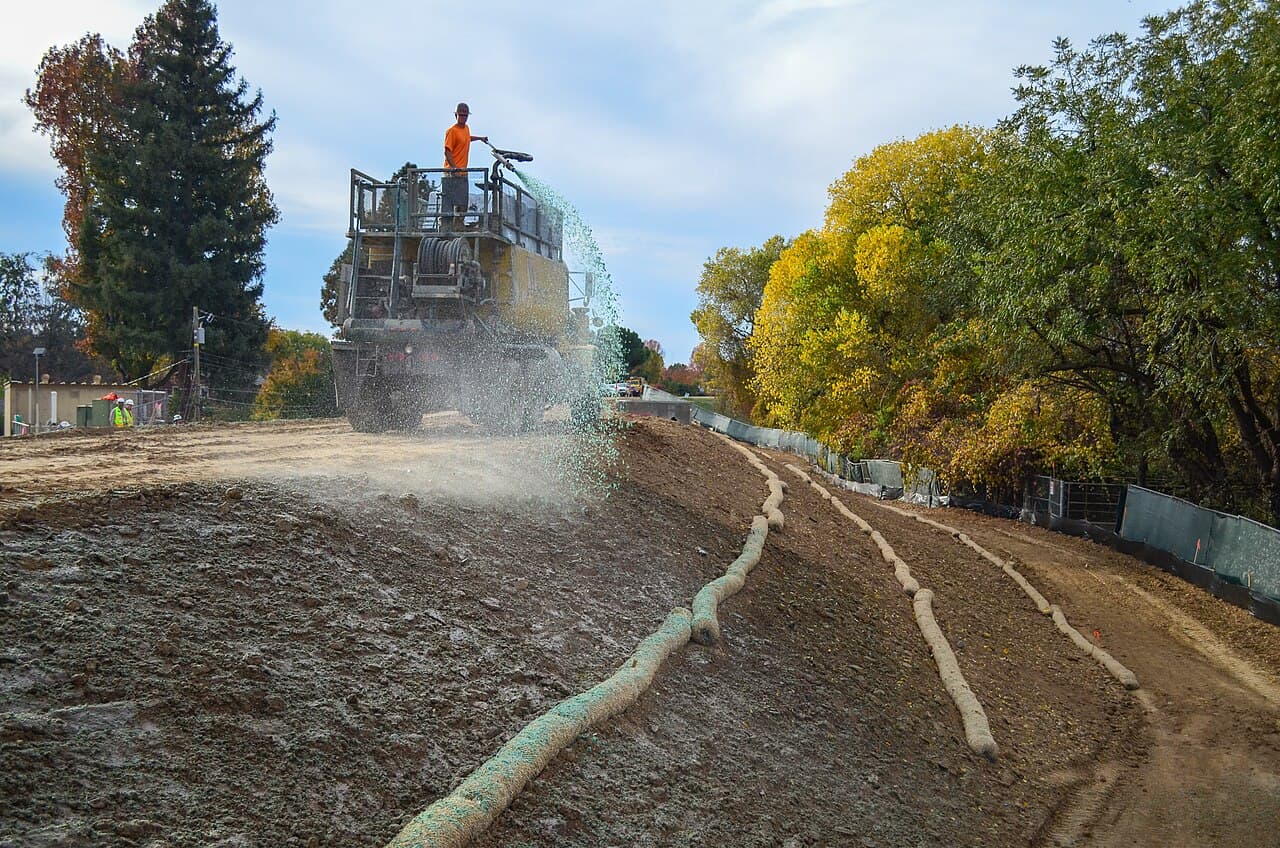
- Mulch type. Standard paper or wood-fiber mulch is the norm for lawns. On steep banks a contractor may specify an erosion-control product. High-performance erosion-control mulches such as bonded fiber matrix cost 3 to 4 times as much as paper mulch and are applied heavily, often at 3,000 to 4,000 pounds per acre.[9]
- Slopes and access. Banks, narrow gates and long hose runs from the street slow the job down.
- Season. A fall cool-season seeding is the normal schedule. Spraying outside the planting window raises the risk of a redo.
For scale on the mulch alone, the EPA mulching fact sheet listed hydromulch at $10,000 to $17,000 per acre, from 2019 RSMeans data,[3] for construction-site erosion control.
Hydroseed, dry seed or sod
Sod is more expensive than seed, and more difficult to obtain, transport and store,[2] but it gives you a finished lawn the day it goes down. Hydroseed sits between the two: more than spreading seed and straw yourself, much less than sod, with even coverage and a mulch layer that holds moisture and soil. Our guide to when hydroseeding is worth paying for compares the three side by side.
What a good written quote includes
Ask for quotes in writing and compare line by line. A useful quote names:
- the area in square feet and the price per square foot or per 1,000 square feet
- the seed mix by species, and the pounds of seed per 1,000 square feet
- the mulch type and how much, plus the tackifier
- the fertilizer, and whether lime is included
- every prep task: turf removal, grading, topsoil, tilling
- who waters, and for how long
- what happens if areas wash out or fail to come up
Virginia requires certification for all licensees and contractor-applicators engaged in the commercial application of fertilizers to non-agricultural lands,[10] so a crew that puts fertilizer in the tank should have a certified applicator. It is a fair question to ask.
Remember the cost that is not on the quote: water. Newly seeded lawns need more frequent watering for the first three to four weeks[8] than an established lawn, and that is usually the homeowner's job.
Doing it yourself instead
Renting a small hydroseeder can make sense for a prepared area of modest size, where you pay only rental, seed, mulch, fertilizer and tackifier. The steps are in how to hydroseed a lawn yourself.
Stop and call a pro if
- The yard needs grading, fill or topsoil before anything can be seeded, or water drains toward the house.
- The area includes a steep bank or a channel where runoff has already cut gullies.
- The lot is a new-construction site where the builder is responsible for stabilizing bare soil under an erosion and sediment control plan.
- The area is large enough that a small rental machine would take many loads to cover it.
Browse more lawn and landscaping answers, see hydroseeding services, or look up lawn and landscaping businesses around Blacksburg. When you are ready for prices, describe the job once and local businesses quote it.
Common questions
- Is hydroseeding cheaper than sod?
- Usually by a wide margin per square foot. In EPA's December 2021 fact sheets, based on 2020 RSMeans data, hydroseeding bluegrass ran about $50 to $100 per 1,000 square feet, while sod with installation ran $25 to $100 per square yard. Sod gives an instant lawn; hydroseed needs weeks of watering and patience.
- Why is my quote so much higher than the per-square-foot figures?
- Benchmarks cover the spraying, not the work before it. Removing old turf, grading, hauling topsoil, liming and tilling can cost more than the hydroseed itself, and small yards often carry a minimum charge for bringing the truck out.
- Does the price include watering?
- Usually not. The contractor sprays once; keeping the seedbed moist for the first few weeks is normally the homeowner's job, using your own water. Ask whether any follow-up visits are included.
- Does a hydroseeding contractor need a licence in Virginia?
- Virginia requires certification for contractor-applicators who apply fertilizer commercially to non-agricultural land, which covers fertilizer in a hydroseed mix. Ask whether the crew includes a Virginia Certified Fertilizer Applicator.
- Is it cheaper to rent a hydroseeder and do it myself?
- It can be for a small, already prepared area, since you pay only rental, seed, mulch, fertilizer and tackifier. The savings shrink if you need grading or topsoil, or if a small machine takes many loads to cover a large yard.
Sources
- [1] Stormwater Best Management Practice: Permanent Seeding (EPA-832-F-21-028FF), U.S. Environmental Protection Agency. Checked October 27, 2026.
- [2] Stormwater Best Management Practice: Sodding (EPA-832-F-21-028LL), U.S. Environmental Protection Agency. Checked October 27, 2026.
- [3] Stormwater Best Management Practice: Mulching (EPA-832-F-21-028V), U.S. Environmental Protection Agency. Checked October 27, 2026.
- [4] Sod Source Selection, Installation, Maintenance, and Producers in Virginia (418-040), Virginia Cooperative Extension, Virginia Tech. Checked October 27, 2026.
- [5] Fall Lawn Care (430-520), Virginia Cooperative Extension, Virginia Tech. Checked October 27, 2026.
- [6] Selecting Turfgrass for Virginia (SPES-748), Virginia Cooperative Extension, Virginia Tech. Checked October 27, 2026.
- [7] Maintenance Calendar for Cool-Season Turfgrasses in Virginia (430-523), Virginia Cooperative Extension, Virginia Tech. Checked October 27, 2026.
- [8] Summer Lawn Management: Watering the Lawn (430-010), Virginia Cooperative Extension, Virginia Tech. Checked October 27, 2026.
- [9] Hydroseeding Materials, Turbo Technologies, Inc. (Turbo Turf). Checked October 27, 2026.
- [10] Certified Fertilizer Applicator Training, Virginia Department of Agriculture and Consumer Services. Checked October 27, 2026.
Want a pro to handle it?
Describe the job once. Licensed local businesses send quotes, and you pay only when you book one.
Get a quote from a local pro