How often should a garage door be serviced?
Check the door every month, oil the rollers, bearings and hinges once a year, and re-grease the opener rail every two to three years. LiftMaster's maintenance sheet sets those intervals, and the Consumer Product Safety Commission says to inspect the door and opener every 30 days. Call a technician when the door is unbalanced, binds or sticks.
Free to ask. Local shops send quotes, and you pay only when you book one.
By Kasra Taheri, Founder, LoclisPublished
Researched and drafted with AI, then checked claim by claim against the sources listed below before it was published. Prices and rules change; the dates beside each source say when it was last checked.
Step by step
Read when to stop and call a pro, further down this page, before you start.
Step 1: Every month: look and listen
Inspect the door and opener to make sure they are working properly.[2] Watch a full cycle for new noise, jerks or a door that does not reach the floor.
Step 2: Every month: test by hand
With the door closed, pull the quick-release so the door is detached from the opener, then lift and lower it by its handle. If it is unbalanced or binding, stop and call a trained technician.[1]
Step 3: Every month: check full travel
Confirm the door opens and closes fully, and adjust the opener limits only as its manual describes.[1]
Step 4: Every month: test the reversal
Lay a 2x4 flat on the floor in the door's path and close the door; it should reverse when it touches it.[2]
Step 5: Every year: oil the moving parts
Oil the door rollers, bearings and hinges, and wipe off drips. Do not grease the tracks.[1]
Step 6: Every year: test the battery backup
If your opener has a battery backup, test it and consider replacing the battery.[1]
Step 7: Every two to three years: grease the rail
Wipe the old grease off the opener rail and add a small layer of white lithium grease where the trolley slides.[1]
Step 8: Look over the hardware
Look at hinges, brackets, rollers and tracks for loose, bent or worn parts, but leave springs and cables alone.[2]
A simple schedule
There is no single date to service a garage door. What the manufacturer and the federal safety agency describe is a rhythm of small checks, with a technician called in when something fails them.
- Every month: inspect the door and opener, test by hand, check full travel, test the safety reversal.
- Every year: oil the rollers, bearings and hinges, and test any battery backup.
- Every two to three years: re-grease the opener rail.
The U.S. Consumer Product Safety Commission puts the first line plainly: inspect the garage door and the garage door opener every 30 days to make sure they are working properly.[2] LiftMaster's own maintenance sheet adds the yearly and multi-year tasks.[1]
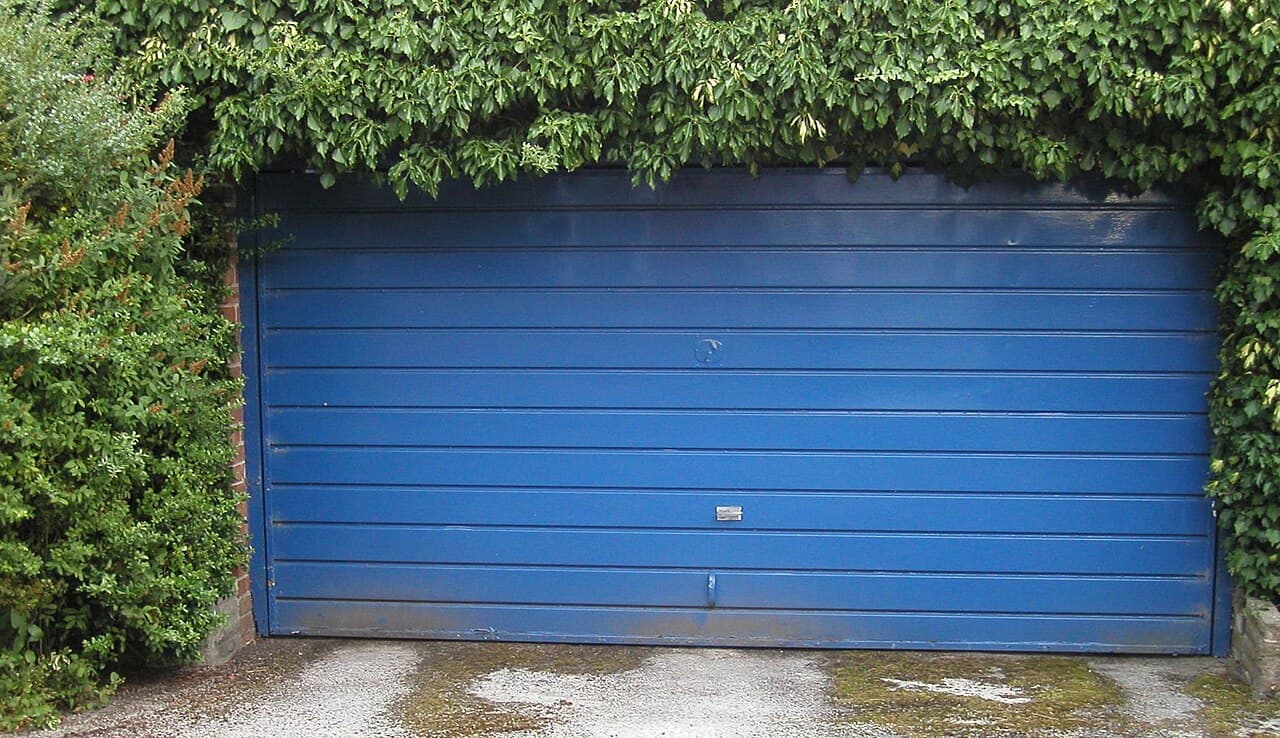
The monthly check
Begin by watching the door run through a full cycle and listening. A new scrape, jerk or groan is the earliest warning you get.
Then take the opener out of the picture. With the door closed, pull the quick-release so the door is detached from the opener, and lift it by its handle. LiftMaster's checklist says to manually operate the door, and that if it is unbalanced or binding, call a trained door systems technician.[1] The CPSC explains what a good result looks like: a properly operating garage door will be "balanced." This means that the door will stay in place when stopped in any partially-open position.[2]
Reconnect the opener and check that the door opens and closes fully. Check to be sure door opens and closes fully.[1] If it stops short of the floor, the opener's limits may need adjusting according to its manual.
Finish with the safety reversal. Test the safety reversal system.[1] The CPSC's method is to place a 2x4 on the floor of the garage in the door's path; if the door does not reverse when it touches the board, disengage the opener until it is adjusted, repaired or replaced.[2]
The yearly check
Once a year, oil door rollers, bearings and hinges. The garage door opener does not require additional lubrification. Do not grease the doors tracks.[1] Wipe the tracks clean instead. The full steps are in how to lubricate a garage door.
If the opener has a battery backup, test the battery backup and consider replacing the battery so the door will work in a power outage.[1] Unplug the opener, run the door from the remote or wall control, and plug it back in.
Take ten minutes to look over hinges, brackets, rollers and the tracks. Hardware and fittings should be checked to keep the door on track at all times.[2] Look for loose bolts on brackets that are not on the springs, hinges that are cracked, rollers that wobble and tracks that are dented or pulling away from the wall.
Every two to three years
Use a rag to wipe away the existing grease from the garage door opener rail. Reapply a small layer of white lithium grease to the top and underside of the rail surface where the trolley slides.[1] Only a rail-driven opener has this; a belt or screw drive may need different care, so follow your manual.
What is left for a technician
The two things homeowners should not touch are the springs and the cables. They carry the door's weight under tension, and a severely unbalanced garage door could unexpectedly crash to the floor, possibly striking someone under the open door.[2] If doors are not "balanced," or if they bind or stick, they should be serviced by a professional.[2]
That is the real answer to "how often": a technician when the monthly test fails, not on a calendar. If the door is old and the visits are stacking up, whether an old garage door is worth repairing walks through repair against replacement, and what garage door repair costs in Virginia explains what drives a quote.
Stop and call a pro if
- The door is heavy, drifts down or shoots up when you let go part way.
- It binds, sticks or scrapes in the tracks, or a track is bent.
- A cable is frayed or a spring looks stretched, gapped or broken. Do not touch either.
- The door does not reverse when it meets the 2x4.
- A hinge, bracket or panel is cracked, or hardware is pulling out of the framing.
Getting help in Virginia
When you hire a garage door company, Virginia's Board for Contractors warns that a license number in an advertisement or on a business card does not necessarily mean the contractor's license is valid,[3] so check it with DPOR, and Ask the contractor for local references.[3] Loclis lists DPOR-licensed businesses with their licence number and class: browse garage door services or see more garage door answers.
When you are ready, describe what the door is doing once and licensed local garage door pros quote it.
Common questions
- Does a garage door need a professional service every year?
- Neither LiftMaster nor the Consumer Product Safety Commission sets a fixed interval for a professional visit. LiftMaster's maintenance sheet lists owner tasks: a monthly check, a yearly oiling and a rail re-greasing every two to three years. Both say a technician is for a door that is unbalanced, binds or sticks, so book one when the monthly hand test goes wrong rather than on a fixed date.
- What is the monthly check?
- Inspect the door and opener, move the door by hand with the opener detached, confirm it opens and closes fully, and test the safety reversal system. The Consumer Product Safety Commission recommends inspecting both every 30 days.
- Should I grease the garage door tracks?
- No. LiftMaster's sheet says to oil the rollers, bearings and hinges and not to grease the tracks. Wipe the tracks with a dry rag instead.
- Does the opener need lubrication?
- Very little. LiftMaster says the opener does not require additional lubrication, apart from a small layer of white lithium grease on the rail where the trolley slides every two to three years.
- Can I lubricate or adjust the springs?
- Leave the springs and cables to a trained technician. They hold the door's weight under tension, and a severely unbalanced door could crash to the floor.
Sources
- [1] LiftMaster Residential Maintenance, LiftMaster (Chamberlain Group), maintenance sheet. Checked October 27, 2026.
- [2] Non-Reversing Automatic Garage Door Openers Are a Hazard (Pub. 523), U.S. Consumer Product Safety Commission. Checked October 27, 2026.
- [3] What You Should Know Before You Hire a Contractor, Virginia Board for Contractors, DPOR. Checked October 27, 2026.
Want a pro to handle it?
Describe the job once. Licensed local businesses send quotes, and you pay only when you book one.
Get a quote from a local pro