Is it worth repairing an old garage door?
Usually yes, if the panels are sound and the fault is a worn part such as a roller, hinge, cable or spring. Replace the opener, though, if it will not reverse on a 2x4 or predates the federal reversing rule of 1991. Weigh two or three written repair bids against the cost of replacing the whole door.
Free to ask. Local shops send quotes, and you pay only when you book one.
By Kasra Taheri, Founder, LoclisPublished
Researched and drafted with AI, then checked claim by claim against the sources listed below before it was published. Prices and rules change; the dates beside each source say when it was last checked.
Step by step
Read when to stop and call a pro, further down this page, before you start.
Step 1: Test the opener's reversal
Place a 2x4 flat on the floor in the door's path and close the door. If it does not reverse, disengage the opener until it is adjusted, repaired or replaced.[1]
Step 2: Check the opener's age
Look at the label on the opener. The federal reversing requirement applies to openers made or imported for sale after January 1, 1991.[1]
Step 3: Test the balance by hand
Pull the quick-release, lift the door by its handle and see whether it stays put when you let go partway up. If not, call a professional.[1]
Step 4: List what is worn or broken
Write down every symptom and damaged panel so each bidder quotes the same work.
Step 5: Collect written bids
Get at least three written bids or estimates using identical specifications, for repair and for replacement.[3]
Step 6: Decide on the whole picture
Compare the repair total, how long the work should last and the warranty against the price of a new door, and choose.
Start with the opener, not the door
Many old garage doors are worth repairing when the panels and tracks are sound and the fault is a worn part. The exception is a door that is crushed or rusted through, or an opener that is not safe.
The opener is the safety question, so check it first. CPSC says about 73 children between the ages of 2 and 14 have been trapped and killed under automatic garage doors since March 1982.[1] It requires that all garage door openers manufactured or imported for sale in the United States after January 1, 1991 have reversing systems.[1] A requirement for external entrapment protection system was added in 1993.[1] If an electric eye is used, it should be installed at a height of 4 to 6 inches above the floor.[1]
So an opener that predates those rules, or that does not reverse, should be replaced rather than repaired. CPSC's advice is that homeowners with automatic garage door openers that do not automatically reverse should repair or replace them with new reversing openers.[1] Replacing the opener does not mean replacing the door.
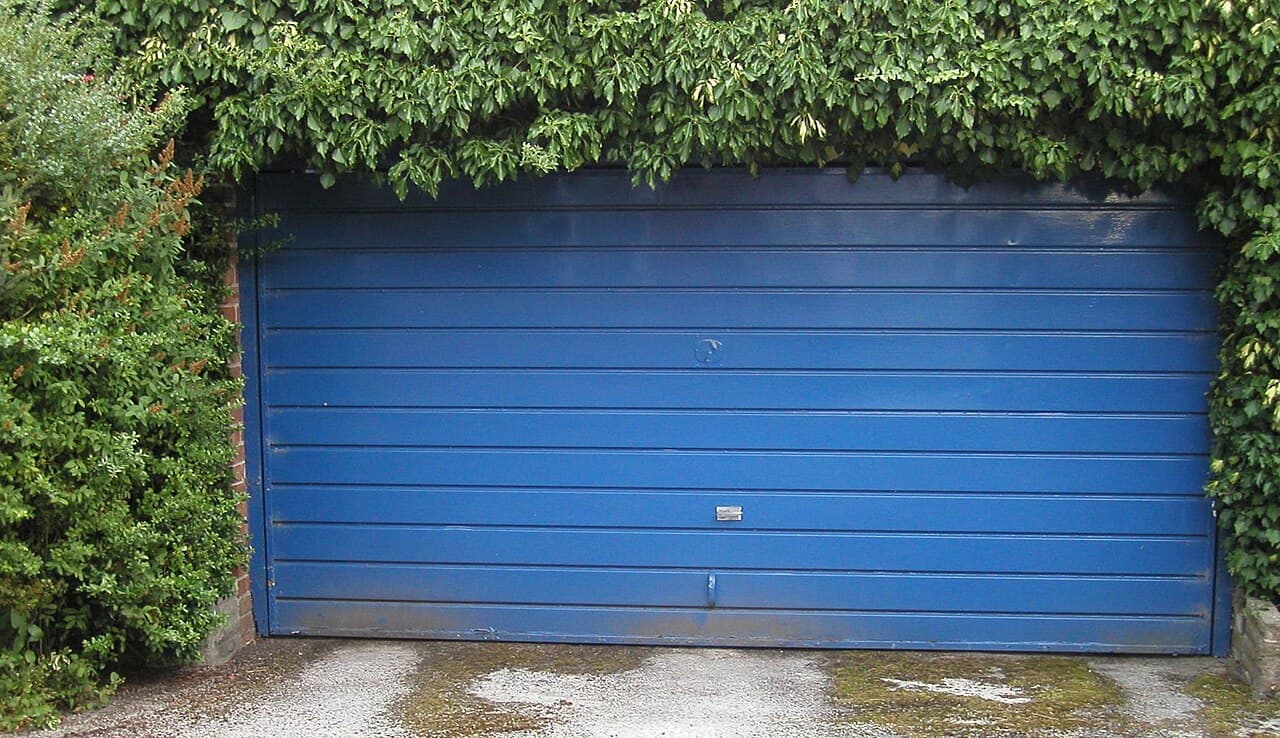
Then check the door
A properly operating garage door will be "balanced." This means that the door will stay in place when stopped in any partially-open position.[1] If doors are not "balanced," or if they bind or stick, they should be serviced by a professional.[1] Springs and cables are under tension, so do not try to adjust them yourself.
Look at the panels, too. A door that has dents, a cracked panel or a rusted bottom section is a different case from one that is merely noisy. A single bent or cracked panel can sometimes be replaced alone, while panels that are rotted, delaminated or rusted throughout are a sign the door is at the end of its life.
When repair makes sense
- The fault is a worn part. Rollers, hinges, cables, springs, weatherstripping and a failed remote are routine fixes on a sound door.
- The panels and tracks are straight. A door that runs true is worth keeping.
- The opener passes the 2x4 test. If it reverses and is not from before the 1991 and 1993 rules, it can stay.
- It has been looked after. LiftMaster's yearly checklist begins with: Oil door rollers, bearings and hinges.[2] A door that was never oiled may simply need that and new rollers.
When replacing makes sense
- Several panels are damaged, or the door has rusted or rotted through.
- The door keeps needing repairs and each one costs a large part of a new door.
- You want something the old door cannot do, such as an insulated door for a heated garage, a quieter drive or a different look.
None of these rules is fixed. The deciding figure is what the repair costs against what a new door and installation would cost, and the only way to know is to get both priced.
How to decide with real numbers
Virginia's Board for Contractors says to get at least three written bids or estimates using identical plans and specifications so you can compare prices and contractors.[3] Ask each business to price the repair and the replacement on the same scope. Sometimes a higher price may be worth it, if the materials to be used are of higher quality or the work is more extensive.[3] And beware of any bid substantially lower than the others.[3]
Ask what the repair will cover, which parts are being replaced, and what else the technician found that is worn.
Stop and call a pro if
- The door is out of balance, or binds or sticks. CPSC says it should be serviced by a professional.[1]
- The door will not reverse on the 2x4. Disengage the opener until it is repaired or replaced.
- A spring is broken or a cable is frayed or off its drum. Do not lift or force the door.
- The door has come off its track, or is bent. It can fall. Keep people and cars out from under it.
Getting help in Virginia
To see what the work might cost, read how much garage door repair costs in Virginia, and for maintenance that makes a door last, how to lubricate a garage door. Loclis lists local pros under garage doors, and there are more garage door answers.
When you are ready, describe the problem once and local pros will quote it.
Common questions
- Should I replace a garage door opener made before 1991?
- Yes. CPSC says all openers manufactured or imported for sale in the United States after January 1, 1991 must have reversing systems, and an external entrapment protection requirement was added in 1993. An older opener is one to replace rather than repair.
- How do I know if my opener is safe?
- Test it. Place a 2x4 flat on the floor in the door's path. If the door does not reverse when it hits the 2x4, CPSC says to disengage the opener until it is adjusted according to the owner's manual, repaired or replaced. If it has an electric eye, that should be installed 4 to 6 inches above the floor.
- When is replacing the door better than repairing it?
- Usually when several panels are damaged or the door keeps needing the same expensive repair. A single worn part on a door with sound panels is normally worth fixing. Ask each bidder to price both options so you can compare.
- How long will a repaired door last?
- That depends on the condition of everything the repair did not touch. Ask the technician to say which other parts are worn and what warranty covers the parts and labor.
- Can a cheap repair bid be trusted?
- Be careful. Virginia's Board for Contractors says to beware of any bid substantially lower than the others, because it may leave out work the other bidders included.
Sources
- [1] Non-Reversing Automatic Garage Door Openers Are a Hazard (Pub. 523), U.S. Consumer Product Safety Commission. Checked October 27, 2026.
- [2] LiftMaster Residential Maintenance, LiftMaster (Chamberlain Group), maintenance sheet. Checked October 27, 2026.
- [3] What You Should Know Before You Hire a Contractor, Virginia Board for Contractors, DPOR. Checked October 27, 2026.
Want a pro to handle it?
Describe the job once. Licensed local businesses send quotes, and you pay only when you book one.
Get a quote from a local pro