How do I clean windows without streaks?
Wash windows when the glass is out of direct sun, use a mild solution such as a little dish soap in water or equal parts distilled white vinegar and water, scrub from the top down, then pull the water off with a clean squeegee in straight overlapping strokes and dry the edges with a lint-free cloth. Most streaks come from solution drying too fast or a dirty blade.
Free to ask. Local shops send quotes, and you pay only when you book one.
By Kasra Taheri, Founder, LoclisPublished
Researched and drafted with AI, then checked claim by claim against the sources listed below before it was published. Prices and rules change; the dates beside each source say when it was last checked.
Step by step
Read when to stop and call a pro, further down this page, before you start.
Step 1: Pick a shaded time
Wash a window when its glass is out of direct sun, so the solution does not dry before you can squeegee it off.[1]
Step 3: Clear the frame and sill
Brush or vacuum dirt and cobwebs off the frame and sill, then wipe the sill with a damp cloth.
Step 4: Take off the screen
Lift the screen out, wash it with a soft brush and mild soapy water, rinse it, and leave it to dry while you do the glass.[1]
Step 5: Wash from the top down
With a soft scrubber or non-abrasive sponge, wash the glass from the top, rubbing up and down and side to side with light pressure.[1]
Step 6: Dry a starting strip
Wipe the top and side edges with a dry cloth to break the bead of water, so the squeegee starts on dry glass.[1]
Step 7: Squeegee in straight strokes
Start in a top corner, pull straight down, wipe the blade dry after every stroke, and overlap each stroke slightly into the wet glass.
Step 8: Detail the edges
Pick up the line of water along the bottom and edges with a dry part of a lint-free cloth, using a fresh part for each wipe.[1]
Step 9: Find which side a streak is on
Wipe the inside in one direction and the outside in the other, so a leftover streak tells you which side to redo.[5]
Step 10: Dry the frame and sill
Wipe off solution left on the frame and sill, because window parts left damp can deteriorate.[2]
Step 11: Put the screen back dry
Reinstall the screen only once it has dried completely.[4]
Streak-free glass comes down to three things: wash when the glass is not in direct sun, use a mild solution and not too much of it, and take the water off with a clean squeegee instead of letting it dry. A lint-free cloth then catches the drips at the edges. The steps above work for most household windows, inside and out.
Why windows streak
Streaks are what is left when dirty water or cleaner dries on the glass instead of being removed. The usual causes:
- Sun on the glass. Andersen's guidance is not to wash windows in direct sunlight, because the sun dries the cleaning solution faster than you can wipe it away.[1] Marvin gives the same advice, especially for tinted and coated glass,[2] and MI Windows and Doors says to clean glass during cooler temperatures without direct sunlight.[4] Morning or evening, or the shaded side of the house, works.
- Too much soap. A strong mix leaves a film that smears. More product rarely means cleaner glass.
- A dirty or worn blade. A nicked squeegee rubber or a cloth full of grit leaves lines.
- Water left to dry. Drips at the bottom and edges dry into the spots people notice from across the room.
What to use
You do not need special products. Andersen suggests either a 10-second squeeze of dish detergent in 2 to 3 gallons of water, or one part distilled white vinegar to one part water in a spray bottle.[1] Harvey's care guidance is similar: mild detergent in clean water, or a standard household glass cleaner, applied with a grit-free cloth or sponge.[3] Marvin also warns off cleaning products with a strong chemical base or a high alcohol content,[2] so a plain mix is the safer default for window frames and seals.
Andersen's equipment list is microfiber cloths, a T-bar scrubber or soft sponges without abrasive coatings, a squeegee, a bucket and a small brush for the sill.[1] For very dirty outside glass, Marvin's method is to soak the glass with clean water first to loosen dirt, and make sure no abrasive particles are left before you scrub.[2] Grit dragged across glass is how it gets scratched.
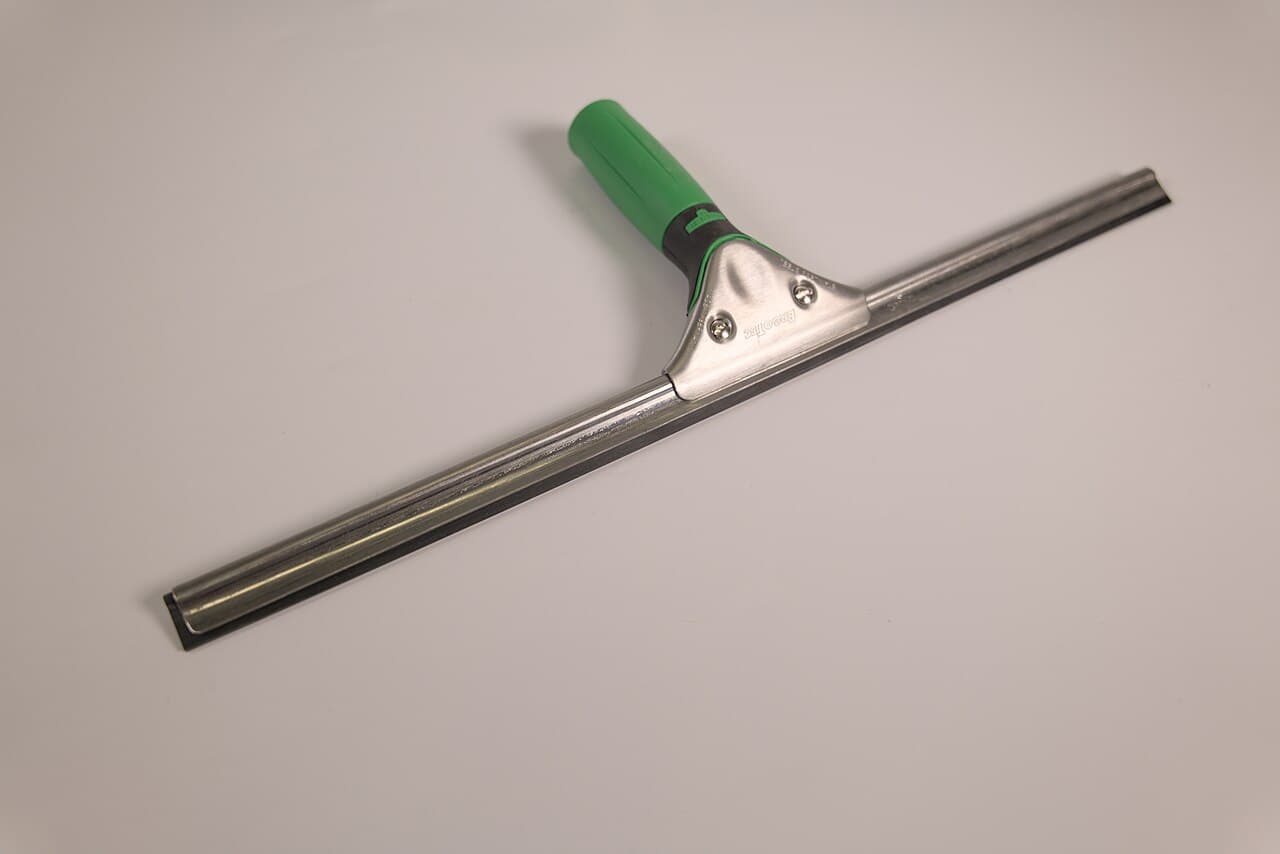
Squeegee technique
The squeegee does most of the work. Before you start, check that the squeegee is free of debris that could scratch the glass,[3] and keep the metal parts of the tool from touching the glass.[2]
Dry a narrow strip along the top and sides with a cloth first, so the blade starts on dry glass. Then start in a top corner and pull straight down, wiping the blade on a cloth after each stroke. As you move across, angle the blade slightly so it pushes water toward the glass you have not done yet.[1] Overlap each stroke a little into the last one. Finish by picking up the line of water at the bottom and around the edges with a dry part of the cloth.
Do not dry windows with newspaper: Andersen notes the ink can bleed and discolor the frame.[1] And skip the garden hose. Hosing windows down leaves mineral spots, even with soft water.[1] If you see cloudy spots after rain or sprinklers, see why windows get cloudy spots after rain.
Go easy on the liquid near the edges of the glass. Harvey cautions against damaging glazing or insulating-glass seals with an overgenerous amount of cleaner.[3] Wash the screens while you are at it; for torn ones, see how to rescreen a window screen.
What not to use on glass
Never use razor blades, putty knives, abrasive pads, sandpaper or abrasive cleaners on window glass.[4][3][1] Marvin says not to use scrapers of any kind and that glass scratched by a scraper is not covered under its warranty.[2] MI also lists caustic chemicals, petroleum-based chemicals and high-pressure water hoses as things never to use on a window.[4] Coated energy-efficient glass is the most sensitive, so when in doubt, check your window maker's care guide.
Upstairs windows and ladders
Check the window type before you reach for a ladder. Tilt-wash double-hung windows tip inward, so you can clean the outside of the glass from inside the room.[1] An extension pole with a squeegee head also covers a lot of second-storey glass from the ground.
If you do use a ladder, Virginia Commonwealth University's ladder safety program sets out the basics: the top two rungs are not for standing on, you keep three points of contact while climbing, and you keep the centre of your body between the rails instead of overreaching.[6] Metal ladders must not be used on or near electrical wires.[6] For more on ladder setup, see how to clean gutters safely from a ladder.
Stop and call a pro if
- The outside of the glass is only reachable from a tall extension ladder or from the roof.
- A ladder position would put you or the ladder near the service wire or a power line.
- You see fog or droplets between the panes that no cleaning removes. That is not dirt: condensation between the two panes of a double-pane window means its seal has failed.[7] See how to know if windows need to be replaced.
- The glass is scratched, etched or has paint or construction residue that a mild cleaner will not lift.
For what a professional window cleaning costs, see how much window cleaning costs in Virginia, and for the hire-or-DIY call, whether a window cleaner is worth it. You can browse window cleaning businesses, look up cleaning services around Blacksburg, or read the other cleaning answers. To get quotes, describe your window cleaning job once and local businesses can quote it.
Common questions
- Why do my windows streak even with a good glass cleaner?
- Usually because the cleaner dried on the glass before it was wiped off, there was too much of it, or the cloth or squeegee was dirty. Clean out of direct sun, use less product, wipe the squeegee blade after every stroke, and finish the edges with a clean, dry, lint-free cloth.
- Is vinegar or dish soap better for windows?
- Both work. Andersen gives both recipes: a 10-second squeeze of dish detergent in 2 to 3 gallons of water, or equal parts distilled white vinegar and water in a spray bottle. Soap water suits a bucket and scrubber on dirty outside glass; the vinegar spray is handy for light smudges indoors.
- Can I use newspaper to dry windows?
- Andersen advises against it, because the ink can bleed and discolor the window frame. A lint-free microfiber cloth does the same job without that risk.
- Can I use a razor blade to get paint or stickers off the glass?
- Window makers say no. MI, Harvey and Andersen all warn against razor blades on glass, and Marvin says glass scratched by a scraper is not covered under its warranty. Use an approved glass cleaner to soften a label, and ask the window's maker how to remove paint from its glass.
- Should I hose the windows off first?
- Not with a garden hose if you can avoid it. Andersen notes that hosing windows down leaves mineral spots, and MI lists high-pressure water hoses among things never to use on a window. Wet the glass from your bucket with the scrubber instead.
- How do I clean second-floor windows without a ladder?
- If they are tilt-wash double-hung windows, tip the sashes inward and clean the outside from inside the room. Otherwise, either use an extension pole and squeegee from the ground or hire a window cleaner with the right ladder and insurance.
Sources
- [1] How to clean windows like a pro, Andersen Windows. Checked October 27, 2026.
- [2] Window and Door Maintenance: Cleaning and Care, Marvin. Checked October 27, 2026.
- [3] FAQs: Cleaning the Glass, Harvey Windows + Doors. Checked October 27, 2026.
- [4] Care and Maintenance: Guide for Cleaning Windows and Doors, MITER Brands (MI Windows and Doors). Checked October 27, 2026.
- [5] Green Cleaning Methods for Your Home (Guide G-315), New Mexico State University Cooperative Extension Service. Checked October 27, 2026.
- [6] Portable Ladder Safety Program, Virginia Commonwealth University, Safety and Risk Management. Checked October 27, 2026.
- [7] Condensation on windows, Andersen Windows. Checked October 27, 2026.
Want a pro to handle it?
Describe the job once. Licensed local businesses send quotes, and you pay only when you book one.
Get a quote from a local pro