How do I rescreen a window screen?
Take the screen out and lay it flat, pull out the old rubber spline and torn mesh, then lay new mesh over the frame and press fresh spline into the groove with a spline roller, working around the frame and into each corner. Trim the extra mesh with a utility knife cutting toward the outside edge of the groove, and pop the screen back in.
Free to ask. Local shops send quotes, and you pay only when you book one.
By Kasra Taheri, Founder, LoclisPublished
Researched and drafted with AI, then checked claim by claim against the sources listed below before it was published. Prices and rules change; the dates beside each source say when it was last checked.
Step by step
Read when to stop and call a pro, further down this page, before you start.
Step 1: Lay the screen flat
Take the screen out of the window, set the frame on a table or clean floor, and pull out the old spline and torn mesh.[1]
Step 2: Check the frame
Look for bent sides or cracked corners; if the frame is bent, a whole new screen may be the better buy.[4]
Step 3: Match the spline
Take a piece of the old spline to the store, or measure across the groove and buy spline one size smaller.[3]
Step 4: Tape the frame down
Tape the outside edges of the frame to the work surface, keeping the tape off the spline groove.[1]
Step 5: Lay out the new mesh
Unroll the new mesh over the frame, square it up, and leave extra hanging past the groove on all four sides.[1]
Step 6: Start the spline
Start at one corner and use the spline roller to press the spline and mesh down into the groove, holding the mesh straight as you go.[1]
Step 7: Keep it taut
Work around the frame keeping the mesh snug so it does not wrinkle, without pulling so hard that a thin frame bows inward.
Step 8: Seat the corners
Push the spline into each corner with a flat screwdriver so it is fully seated.[1]
Step 9: Trim the excess
Cut off the leftover spline, then trim the extra mesh with a sharp utility knife angled toward the outside edge of the groove.[1]
Step 10: Refit the screen
Peel off the tape, fit the screen back in the window, and check that its clips or turn buttons hold it firmly.[7]
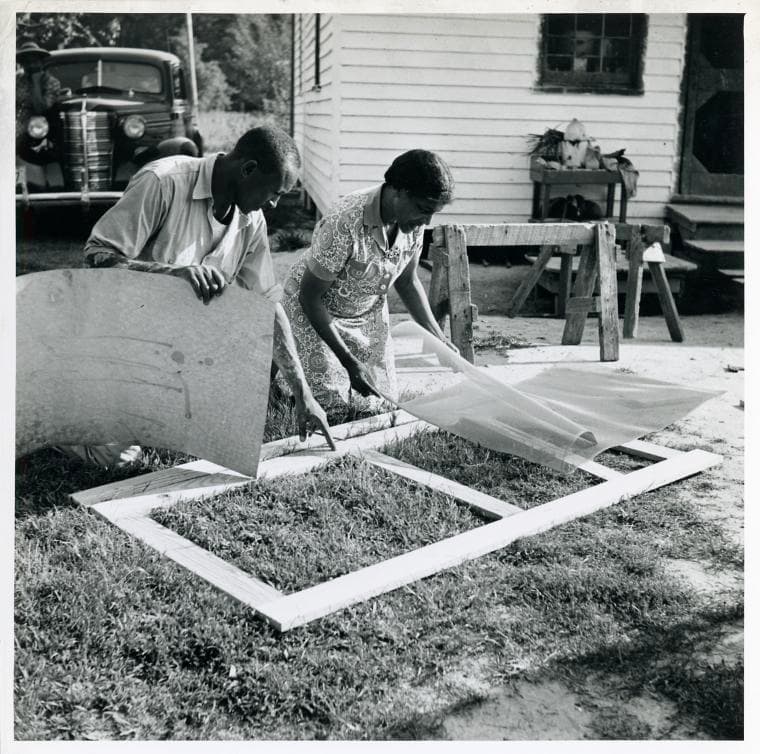
Rescreening a window screen is a short job you can do at a table. You pull out the old rubber spline and the torn mesh, lay new mesh over the frame, roll fresh spline into the groove to lock the mesh in, and trim the excess. Phifer's installation kit comes with a 36-by-84-inch roll of screen, a spline roller and spline,[1] which covers most of what you need.
Patch it or rescreen it?
A small puncture does not always need new mesh. Phifer's maintenance advice is plain: "Small rips or holes can often be repaired with a screen repair patch or some sewing."[4] Phifer's patch kit has 2-by-2-inch patches of aluminum screen with small hooks around the edges that you bend onto the existing weave.[2]
Rescreen instead when the tear is too big to patch neatly, when the mesh has gone brittle, faded or baggy, or when there are several holes. Look at the frame too. Phifer notes that if the frame is bent or the screen is significantly deteriorated, replacing the whole screen might ultimately be more cost-effective in the long run.[4]
What you need
- New mesh, enough to cover the frame with a little to spare.
- Spline, the rubber cord that wedges the mesh into the groove. Bring a piece of the old spline to the store if you can. If not, Phifer's rule is: "Measure across the spline channel or groove of the screen frame and use one size smaller spline for fabrication."[3]
- A spline roller, the small tool with a wheel on each end.
- A sharp utility knife, a flat screwdriver, masking tape and scissors.
Choosing the mesh
Most window screens use vinyl-coated fiberglass, which Phifer describes as tough yet flexible,[5] and it is the easiest material to install for a first attempt. Aluminum is the other common choice; Phifer says aluminum screening won’t sag over time,[5] but it can crease if you are rough with it while rolling.
If a dog or cat goes through screens, consider TuffScreen, a vinyl-coated polyester that Phifer says is three times stronger than standard fiberglass and installs like regular screening.[6] For gnats and other tiny insects, Phifer's answer is direct: "Fiberglass 20×20 “No-See-Ums screen” provides the maximum protection."[3]
To match the mesh you already have on other windows, tape a 1-inch paper square to the old screen and count the openings across and down.[3] If you count 18 one way and 16 the other, you have 18x16 mesh.
Getting a tight, neat result
The steps on this page follow the order of the job. A few details make the difference between a screen that looks factory-made and one that ripples.
Leave enough extra. Phifer's own method has the mesh overlap the frame by 1/2 inch on all sides.[1] A little more margin gives you something to hold while you roll, and you trim it off at the end anyway.
Hold the mesh straight as you roll. Line the weave up with the frame before you start, then keep a light, even pull on the mesh just ahead of the roller. Phifer's advice for doors applies to windows too: be sure to stretch your screen tightly to avoid wrinkled screen, or screen that flaps in the breeze.[1] On a light aluminum window frame, pulling too hard can bow the long sides inward, so let the roller do most of the tensioning.
Work the corners. The spline often lifts at corners. Press it down with a flat screwdriver before you turn the corner and keep rolling.
Trim last, and trim outward. Cut off the spare spline first, then trim the mesh. Phifer's tip is to cut toward the outside edge of the spline groove to prevent damage to the newly-installed screen fabric.[1] A fresh blade cuts cleaner than a dull one.
Clean it the right way later. Phifer's care advice: "Rinse metal products with water only. Clean vinyl products with a mild soapy solution, avoiding hard scrubbing."[3]
Why it is worth doing well
A screen with a gap at the corner or a loose edge lets insects in as surely as a hole does. The EPA's mosquito guidance says: "Make sure window and door screens are "bug tight.""[8] That matters in Virginia summers: the Virginia Department of Health says, "The most common locally acquired mosquito-borne illness in Virginia is West Nile Virus."[9]
When the screen is back in, check that it sits flat in the window and that its clips, springs or turn buttons hold it. Marvin's yearly checklist has you check that screws and turn buttons on storm and screen combinations are securely fastened.[7] For more on making the new mesh last, see how to keep window screens from tearing.
Stop and call a pro if
- The frame is bent, cracked or missing a corner piece, or the screen is an odd shape; a screen shop or window dealer can build a new frame to size.
- The screen only comes out from outside an upper-floor window and reaching it would mean a ladder against the house.
- The window sash or frame behind the screen is soft, rotted or will not open and close properly.
- You have a whole porch of panels to redo; see whether to rescreen a porch yourself or hire someone.
Getting help
If you would rather have the screens done for you, read what rescreening costs in Virginia, browse screen repair businesses, find handyman businesses around Blacksburg, or see the other exterior answers. To get quotes, describe the window or screen repair once and local businesses will reply.
Common questions
- What size spline do I need for my window screen?
- The easiest match is a short piece of the old spline taken to the store. Without one, Phifer's rule is to measure across the groove in the frame and buy spline one size smaller than that measurement.
- Can I reuse the old spline?
- Sometimes, if it is still soft and springy. Old spline that has gone hard, cracked or flattened often will not grip the new mesh well, and a new length costs little compared with redoing the job.
- Should I use fiberglass or aluminum screen?
- Fiberglass is flexible, forgiving to install and the usual choice for windows. Aluminum, which Phifer says will not sag over time, gives a crisp look but is less forgiving if you crease it while rolling. For pets, look at heavier vinyl-coated polyester such as PetScreen or TuffScreen.
- How do I fix a small hole without rescreening?
- Phifer says small rips or holes can often be repaired with a patch or some sewing. Its patch kit uses small squares of aluminum screen with hooks on the edges that you bend onto the existing weave.
- Why is my new screen wavy?
- Usually the mesh was not kept straight and snug as the spline went in, or the spline is too small to grip. Pull the spline back out along the loose side, re-tension the mesh, and roll it in again.
Sources
- [1] How to Replace a Window, Door or Patio Screen, Phifer Incorporated. Checked October 26, 2026.
- [2] Door & Window Screening Replacement Guide, Phifer Incorporated. Checked October 26, 2026.
- [3] Insect Screening FAQ, Phifer Incorporated. Checked October 26, 2026.
- [4] Ultimate “Spring” Home Maintenance Tips: Ensuring Your Windows and Doors Are Season-Ready, Phifer Incorporated. Checked October 26, 2026.
- [5] Insect Screening Materials, Phifer Incorporated. Checked October 26, 2026.
- [6] TuffScreen Heavy-Duty Mesh Screen, Phifer Incorporated. Checked October 26, 2026.
- [7] Caring for Your Windows and Doors, Marvin. Checked October 26, 2026.
- [8] Success in Mosquito Control: An Integrated Approach, U.S. Environmental Protection Agency. Checked October 26, 2026.
- [9] Mosquito Control Awareness Week, Virginia Department of Health. Checked October 26, 2026.
Want a pro to handle it?
Describe the job once. Licensed local businesses send quotes, and you pay only when you book one.
Get a quote for Roofing