How do I get pet stains out of carpet?
Blot up as much as you can right away, then work a mild detergent solution into the spot, rinse it out with plain water and dry it under weighted paper towels. For urine, follow with a weak white vinegar rinse and an enzymatic cleaner for the odor. Test everything on a hidden spot first, and keep the pet off the area until it is dry.
Free to ask. Local shops send quotes, and you pay only when you book one.
By Kasra Taheri, Founder, LoclisPublished
Researched and drafted with AI, then checked claim by claim against the sources listed below before it was published. Prices and rules change; the dates beside each source say when it was last checked.
Step by step
Read when to stop and call a pro, further down this page, before you start.
Step 1: Blot it up fast
Press paper towels or a towel into a urine spot and stand on them, repeating until no more comes up.[1]
Step 2: Lift solids gently
For feces or vomit, scrape the solids up gently without pushing the stain into the pile.[3]
Step 3: Test on a hidden spot
Try each cleaning solution on an inconspicuous patch of carpet first to check that the colour does not run.[2]
Step 4: Apply a mild detergent
Mix 1/4 teaspoon of liquid dishwashing detergent into 1 cup of warm water, apply it with a white cloth and let it soak about 5 minutes.[2]
Step 5: Blot from the outside in
Blot from the edge of the stain toward the middle with clean white cloths, without rubbing or scrubbing.[4]
Step 6: Rinse out the detergent
Apply small amounts of plain warm water and blot again until no soap is left, because leftover detergent attracts new dirt.[4]
Step 7: Add a vinegar rinse for urine
For urine, blot on a solution of 2 tablespoons of white vinegar to 1 quart of water, then rinse with warm water again.[2]
Step 8: Dry under weight
Cover the spot with a thick stack of white paper towels weighted with a glass baking dish and something heavy, and change the towels as they soak through.[4]
Step 9: Treat the odor
Once the area has dried, apply an enzymatic pet-odor cleaner and follow the directions on its label.[1]
Pet stains come out best when you move fast and keep the cleaning gentle: blot up as much as you can, work a mild detergent solution into the spot, rinse the soap back out, and dry it under weight. Urine needs one more round, a weak vinegar rinse and then an enzymatic cleaner for the odor. The full sequence is in the steps above; this page explains why each one matters and when to stop.
Start with what you can lift out
The less urine that soaks down into the backing and pad, the less you have to fight later. For a fresh puddle, cover it with a towel or a pile of paper towels and stand on them, repeating until you have soaked up as much as you can.[1] For feces or vomit, scrape up the solids gently so you do not push the stain deeper into the pile.[3] A dull knife or the edge of a spoon works; a stiff brush does not.
Use white cloths or white paper towels throughout. Coloured ones can transfer dye onto a damp carpet.
Clean the spot, then rinse the cleaner out
Before anything touches the stain, test it on a patch of carpet inside a closet or under a sofa. Then make a mild solution: the STAINMASTER carpet care booklet uses 1/4 teaspoon of liquid dishwashing detergent in 1 cup of warm water.[2] Apply it with a white cloth and let it soak about 5 minutes.[2] Blot from the outside of the stain inward, and do not rub or scrub, which can damage the fibres.[4]
The rinse is the step people skip, and it is the one that decides whether the spot stays clean. Any detergent left behind can make the spot re-soil quickly,[4] so dab on small amounts of plain warm water and blot again until no suds come up.
For urine, the carpet care booklet in STAINMASTER's warranty adds a rinse of 2 tablespoons of white vinegar to 1 quart of water, blotted on,[2] followed by another plain-water rinse and drying.
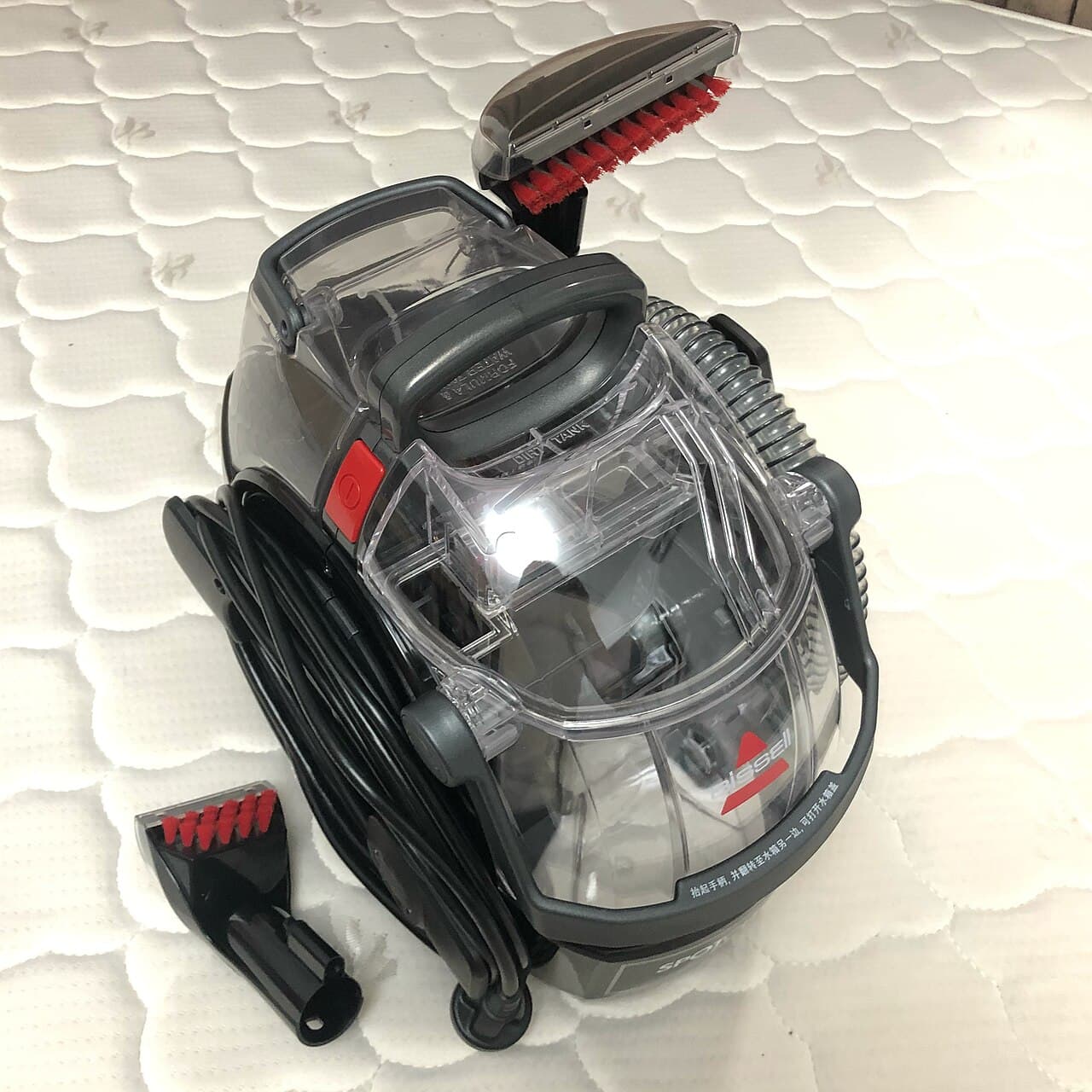
A small spot extractor like this one does the rinse-and-suck-up part well, as long as you use the detergent sparingly and run extra passes with plain water.
What not to use
Ohio State's veterinary college advises against ammonia or ammonia-based products on carpet, because the smell may draw a cat back to the same place.[1] Ammonia also damages silk and wool,[3] so check what your rug is made of before using any household chemical on it. EPA warns never to mix chlorine bleach solution with other cleaning solutions or detergents that contain ammonia, because toxic fumes could be produced.[6]
Keep bleach off the carpet altogether. INVISTA's care booklet lists bleach among the substances that can affect or damage the actual colour of the carpet.[2]
Deal with the odor, not just the colour
For pet odor, Ohio State's veterinary college recommends an enzymatic cleaner, used according to its own directions.[1] In Ohio State's sequence it comes last: the spot is cleaned, rinsed and left under weighted towels overnight, and the enzymatic cleaner is sprayed on in the morning.[1]
Odor matters for more than comfort. Pets often return to the same place because the odor draws them,[2] so a spot that still smells to the animal is likely to be used again. Keep the pet away from it until it is clean and dry, and close the door or put a piece of furniture over it if you have to.
Dry it properly
Cover the cleaned spot with a thick stack of white paper towels, set a flat glass baking dish on top, and weight it with a jug of water. With that set-up, the wicking can take several hours, and adding fresh towels to the bottom of the stack speeds it up.[4] When it is fully dry, vacuum or brush the pile upright.
Drying matters on a big accident too. EPA says wet materials should be dried within 24 to 48 hours to prevent mold growth.[6] Run a fan across the area and keep the room ventilated.
Old stains and repeat spots
Old, set-in stains are harder to shift. If the stain comes back as the carpet dries, see why a carpet stain comes back after cleaning; repeating the rinse and weighted drying usually helps.
If the smell stays strong and the pet keeps using the spot despite cleaning, the padding underneath may need replacing and the floor under the carpet cleaning.[1] That is beyond spot cleaning.
Check your warranty before you count on it, because coverage depends on which carpet you bought. STAINMASTER's current warranty guide covers pet urine, vomit and feces stains for life on its PetProtect carpet styles, and lists them as not covered on its other carpet.[5] The same guide excludes damage caused by pets such as lingering odors and colour change,[5] and it requires proof of a professional hot water extraction cleaning before a claim.[5]
Stop and call a pro if
- The urine has soaked a large area, or you can smell it from across the room after cleaning. The pad may be saturated.
- The rug is wool, silk or an antique, or the colour starts to bleed during your spot test.
- The carpet stays damp for more than a day or two, or you notice a musty smell or mold. A pet accident on top of a leak or flood is a water-damage job.
- The same pet keeps soiling the same places. Professional cleaning helps the carpet; a vet can check whether something medical is behind it.
Find help on Loclis
For a whole-room clean after a pet problem, see whether professional carpet cleaning is worth it and what carpet cleaning costs in Virginia. You can browse carpet and upholstery cleaners, look up cleaning businesses around Blacksburg, or read more cleaning answers. When you are ready, describe the job on Loclis and local businesses can quote.
Common questions
- Should I use hot water or a steam cleaner on a urine spot?
- Stick to warm water for spot cleaning. The STAINMASTER carpet care booklet calls for warm, not hot, water in its basic cleaning steps, and Shaw's spot methods do the same. Save machine extraction for after you have blotted, rinsed and treated the spot.
- Can I use ammonia on pet stains?
- Not on urine. Ohio State's veterinary college says ammonia on carpet can draw a cat back to the same spot. Some extension guides use a weak ammonia solution on feces stains, but ammonia damages wool and silk, and EPA warns never to mix chlorine bleach with detergents that contain ammonia, because toxic fumes could be produced.
- Does vinegar get rid of the urine smell?
- A weak vinegar rinse is part of the cleaning procedure for urine in the STAINMASTER care booklet, but the odor is better handled with an enzymatic pet-odor cleaner once the spot is clean, used according to its label.
- Why can I still smell it after the stain is gone?
- Urine that soaked through can sit in the backing and the pad, out of reach of surface cleaning. If the smell stays strong and the pet keeps returning, the pad may need replacing and the floor under it cleaning, which is work for a carpet professional.
- Will my carpet warranty pay for pet stains?
- It depends on the carpet. STAINMASTER's current warranty guide covers pet urine, vomit and feces stains for life on its PetProtect styles but lists them as not covered on its other carpet, and it excludes lingering pet odors. Check your own carpet's warranty, and keep the receipt from any professional cleaning, because the guide requires proof of one before a claim.
Sources
- [1] How to Clean-Up Cat Urine, Indoor Pet Initiative, The Ohio State University College of Veterinary Medicine. Checked October 26, 2026.
- [2] Limited Warranties: STAINMASTER Carpet (warranty and carpet care booklet), INVISTA, STAINMASTER. Checked October 26, 2026.
- [3] Remove Stains From Feces/manure (Human, Animal), University of Georgia Cooperative Extension. Checked October 26, 2026.
- [4] How to Remove on Carpet: Detergent and Solvent and Detergent Methods, Shaw Floors. Checked October 26, 2026.
- [5] STAINMASTER Carpet Limited Warranties Guide, Lowe's, STAINMASTER. Checked October 26, 2026.
- [6] A Brief Guide to Mold, Moisture and Your Home, U.S. Environmental Protection Agency. Checked October 26, 2026.
Want a pro to handle it?
Describe the job once. Licensed local businesses send quotes, and you pay only when you book one.
Get a quote from a local pro