Why does a carpet stain come back after cleaning?
Usually for one of two reasons. Either some of the stain stayed deep in the pile, backing or pad and wicked back up to the surface as the carpet dried, or cleaning soap was left in the fibres and is now attracting fresh dirt. Both are fixed the same way: rinse with plain water, blot, and dry the spot under weighted towels.
Free to ask. Local shops send quotes, and you pay only when you book one.
By Kasra Taheri, Founder, LoclisPublished
Researched and drafted with AI, then checked claim by claim against the sources listed below before it was published. Prices and rules change; the dates beside each source say when it was last checked.
Step by step
Read when to stop and call a pro, further down this page, before you start.
Step 1: Look at the spot
Note whether it is the original colour coming back or a grey patch that feels slightly sticky, which points to leftover soap.
Step 2: Test on a hidden spot
Test any solution on an inconspicuous patch of the same carpet before using it on the stain.[1]
Step 3: Rinse with plain water
Apply small amounts of warm, not hot, plain water and blot with white cloths until nothing more transfers.[1]
Step 4: Clean again if needed
If the original stain is back, repeat a mild detergent step of 1/4 teaspoon dishwashing liquid in 1 cup of warm water, then rinse again.[1]
Step 5: Blot from the outside in
Blot from the edge toward the middle without rubbing or scrubbing, so you do not spread the stain or fray the fibres.[2]
Step 6: Dry under weight
Cover the spot with a thick stack of white paper towels, a flat glass dish and a heavy jug, and leave it for several hours.[2]
Step 7: Change the towels
Add fresh paper towels to the bottom of the stack as they soak through, to keep pulling moisture up.[2]
Step 8: Restore the pile
When the spot is fully dry, vacuum or brush the pile to restore its texture.[1]
A stain that comes back after cleaning is almost always one of two things: the stain was never fully out, and some of it wicked back up from deep in the carpet as it dried, or the cleaner itself was left behind and is now collecting fresh dirt. Both are fixable at home with plain water, blotting and patience. Neither is fixed by scrubbing harder or using more soap.
Cause one: wicking from below
Carpet has depth: the pile, the backing it is tufted into, and the pad under that. A spill that soaks past the tips of the fibres can leave some of the stain lower down. When you clean the surface, it looks fine while it is wet. As the carpet dries, water moves up the fibres and brings the dissolved stain with it.
INVISTA's STAINMASTER carpet care booklet explains that a stain that reappears after drying may be one where some of the stain remained deep in the pile and wicked up to the surface.[1] Its advice is to repeat the warm-water and detergent cleaning step.[1]
Coffee, cola, juice, wine and pet urine are the usual suspects, because they are liquids that soak in fast.
Cause two: leftover soap
The second cause is the cleaning, not the stain. Detergent left in the fibres stays slightly sticky, and sticky fibres hold the dirt from every shoe that walks over them. The spot starts out clean and then turns grey over the next few days or weeks, often darker than the carpet around it.
Shaw Floors warns that any detergent left in the carpet could result in rapid re-soiling of the area.[2][3] INVISTA's booklet says to avoid too much detergent, because it could cause re-soiling, and to rinse thoroughly.[1] The same thing happens to whole rooms cleaned with a rental machine and too much solution, and its guidance for professional cleaners says immediate maximum residue removal is critical.[1]
Carpet spray products that are not rinsed out can do the same, as can a spot that was rubbed with a coloured cloth or treated with several products in a row.
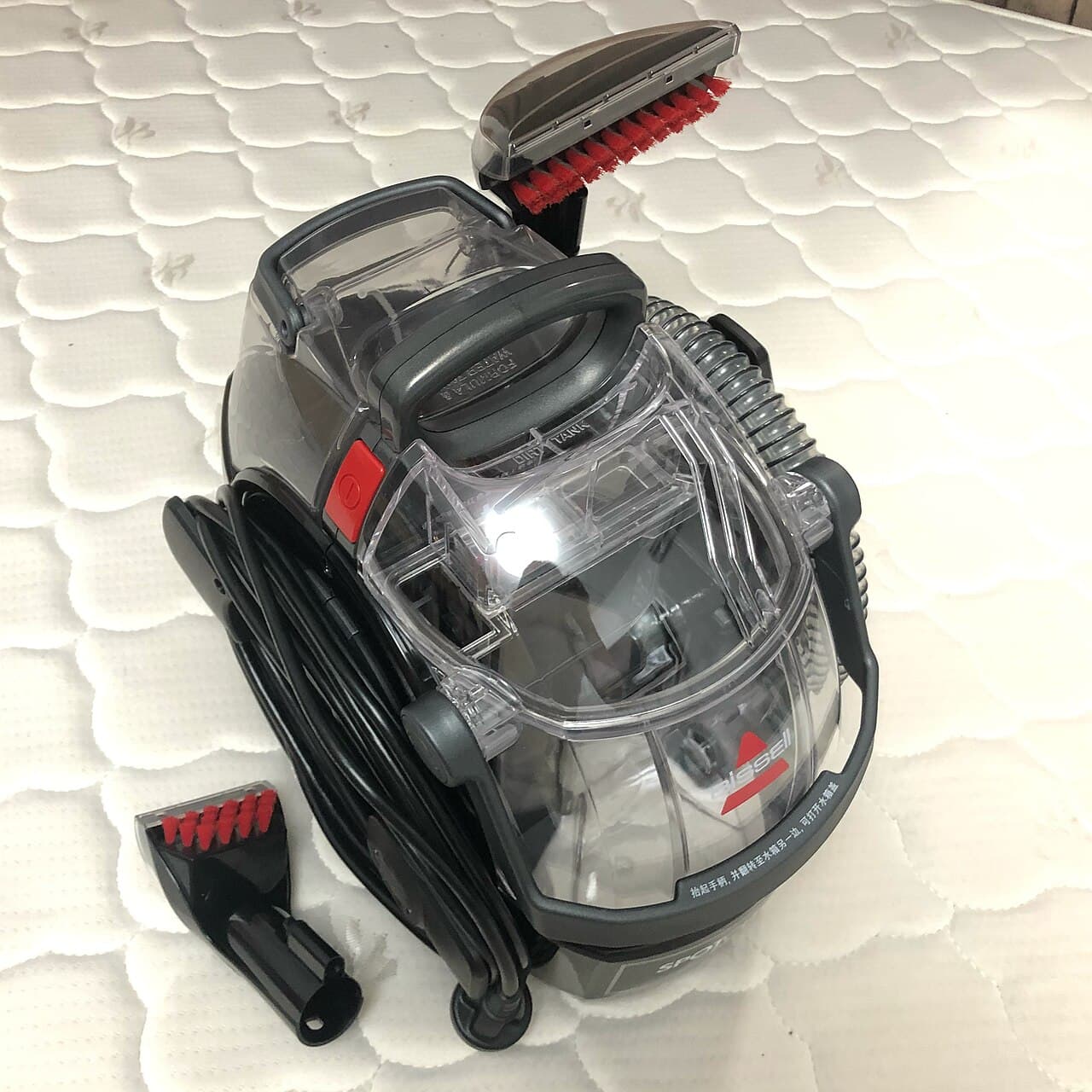
A spot extractor helps here because it pulls the rinse water back out, but only if you run it with plain water at the end.
How to fix it
The fix for both causes is the same sequence, in the steps above. Start with plain water: INVISTA's basic steps call for warm, not hot, water and blotting with white cloths until no stain shows on them.[1] If the original colour is back, repeat a mild detergent step, then rinse again until no suds come up.
Then dry it properly. Lay a thick stack of white paper towels over the spot, put a flat glass baking dish on top, and weight it with a jug of water. This pulls the moisture, and whatever is dissolved in it, up into the towels instead of leaving it at the tips of the fibres. Shaw describes this wicking as taking several hours, and says fresh paper towels added to the bottom of the stack speed the drying.[2]
If the stain still is not removed after repeating the steps, Shaw's advice is to contact a cleaning professional.[2]
When the problem is below the carpet
Some returning stains, and most returning smells, come from the pad. Old pet urine is the common case. If the smell stays strong and a cat keeps returning to the spot despite cleaning, Ohio State's veterinary college says the padding underneath should be replaced and the area under the carpet cleaned.[4] Spot cleaning from above cannot reach that.
Moisture is the other concern. EPA lists the underside of carpets and pads among the places mold can hide,[5] and says wet materials should be dried within 24 to 48 hours to prevent mold growth.[5] A patch that keeps reappearing near an outside wall, a window, a radiator or a bathroom may be getting wet from somewhere else.
Stop and call a pro if
- The spot is near a wall, window, pipe or appliance and the carpet keeps getting damp. Find the leak first.
- You notice a musty smell, or the carpet has been wet for more than a day or two.
- Old pet urine has soaked through, the smell lingers after cleaning, or the pad needs replacing.
- The stain came from bleach, dye, ink or another product that can damage the carpet's actual colour. INVISTA's booklet recommends consulting a professional carpet cleaner for those.[1]
Related answers and next steps
For fresh accidents, see how to get pet stains out of carpet. To weigh a professional clean, see whether professional carpet cleaning is worth it. You can browse carpet and upholstery cleaners, look up cleaning businesses around Blacksburg, or read more cleaning answers. To get quotes, describe the job on Loclis.
Common questions
- How do I tell wicking from soap residue?
- Wicking usually brings back the colour of the original spill, often within a day of cleaning. Residue tends to show up over days or weeks as a grey or dark patch where you cleaned, and the fibres may feel stiff or slightly sticky. Both respond to a plain-water rinse and weighted drying.
- Should I use more cleaner the second time?
- No. Using more detergent makes residue more likely. Rinse with plain water first, and if you clean again, use the same mild solution and rinse it out thoroughly.
- Why did the whole room look worse after I rented a machine?
- Usually because too much soap or too much water went into the carpet and not enough came back out. Run extra passes with plain water, use fans to dry the room quickly, and next time use the least solution the directions allow.
- Can a professional fix a stain that keeps returning?
- Often. A professional can extract and rinse more thoroughly than a spot cleaner, and can tell you whether the source is deeper down. If the source is in the pad, as with old pet urine, the fix may be replacing that section of pad.
- Is a spot that keeps coming back a sign of mold?
- Not usually, but it can be if the carpet has been wet for a long time or you notice a musty smell. EPA lists the underside of carpets and pads among the places mold can hide.
Sources
- [1] Limited Warranties: STAINMASTER Carpet (warranty and carpet care booklet), INVISTA, STAINMASTER. Checked October 26, 2026.
- [2] How to Remove on Carpet: Detergent and Solvent and Detergent Methods, Shaw Floors. Checked October 26, 2026.
- [3] How to Remove on Carpet: Hydrogen Peroxide and Ammonia Method, Shaw Floors. Checked October 26, 2026.
- [4] How to Clean-Up Cat Urine, Indoor Pet Initiative, The Ohio State University College of Veterinary Medicine. Checked October 26, 2026.
- [5] A Brief Guide to Mold, Moisture and Your Home, U.S. Environmental Protection Agency. Checked October 26, 2026.
Want a pro to handle it?
Describe the job once. Licensed local businesses send quotes, and you pay only when you book one.
Get a quote from a local pro