How do I keep animals out of my chimney?
Cap the flue with a professionally made chimney cap in permanent material such as stainless steel, not hardware cloth laid over the opening. Do it only once nothing is living in the chimney: Virginia bars relocating trapped animals, and bats need a separate exclusion. A licensed contractor fits the cap.
Free to ask. Local shops send quotes, and you pay only when you book one.
By Kasra Taheri, Founder, LoclisPublished
Researched and drafted with AI, then checked claim by claim against the sources listed below before it was published. Prices and rules change; the dates beside each source say when it was last checked.
This is a job for a licensed pro in Virginia
This page explains what the work involves, the permits, what a licensed pro does and what drives the cost. It does not give step-by-step instructions, because this work needs a licence, a permit or both, and doing it wrong can injure someone. Before you hire, check the licence on Virginia's DPOR record.
Cap the flue, but only when it is empty
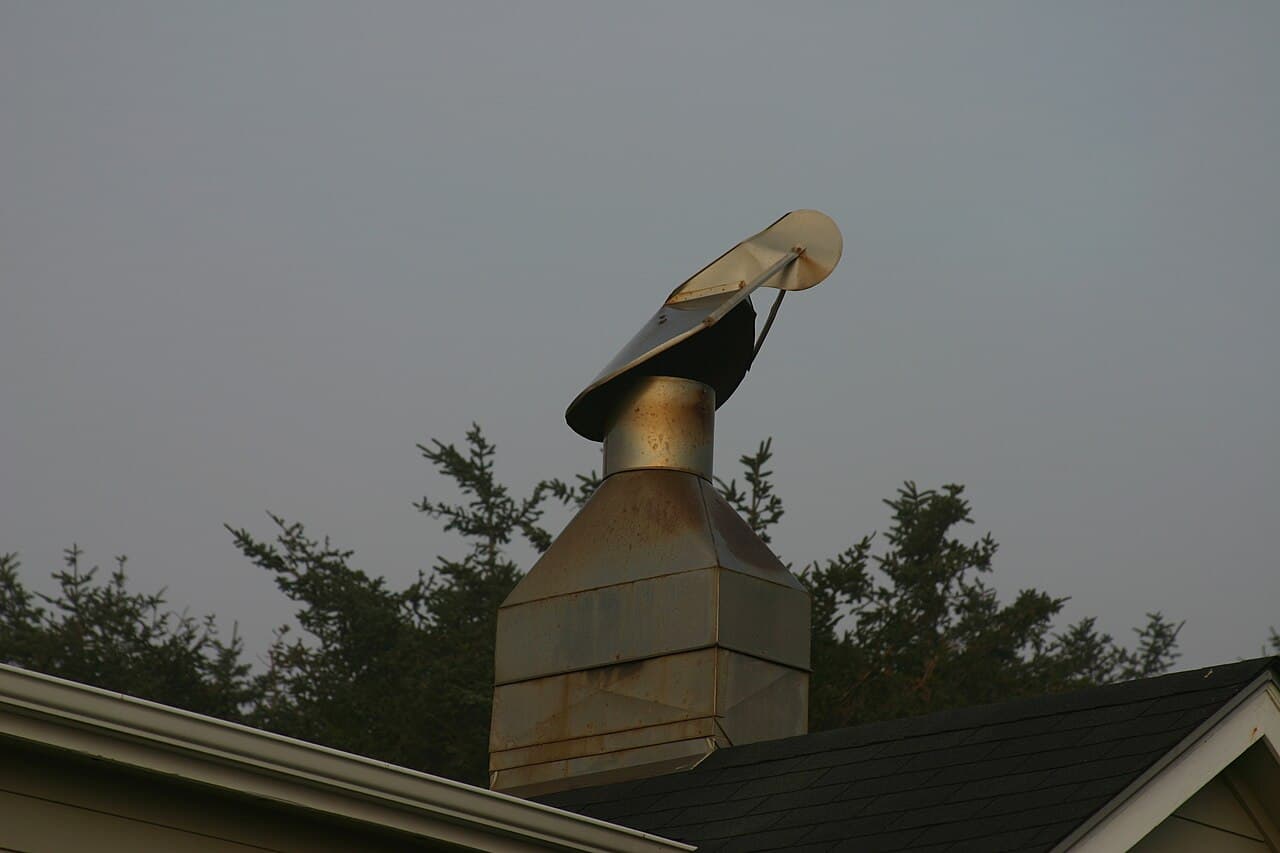
The lasting fix is a chimney cap: a screened top fitted to the flue so animals cannot drop in. A wildlife guide from the Montana Department of Agriculture and Montana Fish, Wildlife and Parks puts the standard plainly. Chimneys should only be secured with professionally manufactured chimney caps made from permanent material such as stainless steel.[1]
Before you book anyone, find out whether something is living in the chimney already. A cap over an occupied flue seals the animal in, and an animal that cannot get out will go the other way, into your house. Listen for scratching, chirping or heavy movement in the damper area, and look for droppings or nest material in the firebox. If you hear anything, deal with the animal first.
Why chimneys attract animals
A flue is a dry, dark, sheltered shaft. Virginia's wildlife agency makes the general point: animals look for places to den and raise their young,[3] and it advises you to close up all openings under and into your buildings.[3] For raccoons, DWR notes they are usually attracted by a food source or an easily accessed area to make a den.[4] An open chimney is both easy to reach and ready-made.
Timing matters most for bats, covered below.
What not to do
- Do not lay hardware cloth over the opening. The Montana guide warns: "Do NOT secure chimneys with hardware cloth laid over the opening as snow, ice, or other material may collect on the screen and prevent toxic gases from escaping."[1] A blocked flue traps toxic gases. A proper cap has an opening sized so smoke can still leave.
- Do not trap and move the animal yourself. DWR says it is illegal in the State of Virginia to trap and relocate an animal to another area.[3]
- Do not poison or smoke it out. DWR lists it as illegal to poison any animal other than rats and mice on your property,[5] and a fire in a chimney with a nest in it is a chimney fire.
Bats need their own rules
Bats are the exception to the usual advice. Virginia's health department guidelines are blunt: bat exclusion should NEVER be performed during any period when bats do not leave their roost on a regular nightly basis,[2] and, to avoid trapping young bats in a building, bat exclusion should be performed before April and after August.[2] The method is to let bats leave through one-way exclusion tubes, and only after that: once all bats are absent, install window screens, chimney caps and draft guards beneath attic doors.[2]
Three bat species in Virginia are federally endangered,[5] and DWR lists what is illegal: it is illegal to transport, release, or relocate a bat anywhere other than the property it was caught on.[5] Bat droppings are a health matter as well. DWR says bat droppings can harbor histoplasmosis fungi spores and should be cleaned up by a professional.[5]
Who does what
Two different trades are involved, and they are rarely the same business.
- Wildlife removal. If an animal is inside, DWR says you can contact a licensed trapper or wildlife control specialist using DWR's Trapper Finder Tool.[3] The tool is the place to start, and a trapper is a separate trade from the cap installer.
- The cap. Once the flue is clear, a roofer, a masonry contractor or a chimney company fits the cap. Read who should install a chimney cap for how to choose, and what a chimney cap does for what the part is for.
For the cap itself, ask for the size to match your flue, a stainless or other permanent material, a mesh opening small enough to stop what you have seen in the neighbourhood, and a fit that does not choke the flue exit. How much a chimney cap costs explains what moves the price. If the cap job turns up damage to the top of the chimney, that is a repair first.
When to call a licensed pro
For both halves of the job. The cap goes on at the top of the chimney, a work-at-height job where a wrong fit can restrict the draft or blow off. For wildlife, a live animal in a flue is not a do-it-yourself problem, and bats come with state and federal rules.
In Virginia, DPOR says that if the work is valued at $1,000 or more, a valid Virginia Contractor's License is required for the license category in which the contractor is to work.[6] Class C contractors are those working on single contracts over $1,000 but less than $30,000.[7] A cap on its own may come in under that, but a cap plus crown, flashing or masonry work may not. DPOR cautions that a license number in an advertisement or on a business card does not necessarily mean the contractor's license is valid,[6] so check the licence before you sign.
Until the flue is capped and clear, do not light fires in it. Loclis lists DPOR-licensed businesses with their licence number and class: browse chimney and fireplace services or read more chimney answers.
When you are ready, describe your chimney once and licensed local businesses send itemized quotes.
Common questions
- Can I just staple hardware cloth over the flue?
- It is the wrong fix. A wildlife guide from the Montana Department of Agriculture and Montana Fish, Wildlife and Parks says chimneys should be secured only with professionally manufactured caps in permanent material such as stainless steel, because snow, ice or debris can collect on cloth laid over the opening and stop toxic gases from escaping.
- There is an animal in the chimney now. Do I cap it?
- Not until you know it is empty. Sealing a live animal in will either trap it or push it into the house. Call a licensed trapper or wildlife control specialist; DWR runs a Trapper Finder Tool and a toll-free wildlife conflict helpline at 1-855-571-9003. Cap the flue after the animal is out.
- Can someone trap the animal and release it in the woods?
- Not in Virginia. DWR says it is illegal in the State of Virginia to trap and relocate an animal to another area. A trapper will handle it within the law, which is one reason to hire a licensed one rather than doing it yourself.
- When can bats be closed out of a chimney?
- Only after every bat has left, and outside the pup season. The Virginia Department of Health says exclusion should be done before April and after August, so young bats are not trapped inside. Once all bats are absent, chimney caps can go on.
- Does a cap keep out everything?
- A well-fitted cap with a screen stops most birds, squirrels and raccoons from dropping into the flue, but it only guards the top. Animals also use other gaps in a building, so DWR's general advice is to close up all openings under and into your buildings.
Sources
- [1] Living with Starlings, Montana Department of Agriculture and Montana Fish, Wildlife and Parks. Checked October 28, 2026.
- [2] Methods for Bat Exclusion and Capture (Virginia Guidelines for Rabies Prevention and Control), Virginia Department of Health. Checked October 28, 2026.
- [3] Help with Human-Wildlife Conflicts, Virginia Department of Wildlife Resources. Checked October 28, 2026.
- [4] Problems with Raccoons, Virginia Department of Wildlife Resources. Checked October 28, 2026.
- [5] Problems with Bats, Virginia Department of Wildlife Resources. Checked October 28, 2026.
- [6] What You Should Know Before You Hire a Contractor, Virginia Board for Contractors, DPOR. Checked October 28, 2026.
- [7] Code of Virginia § 54.1-1100. Definitions, Code of Virginia. Checked October 28, 2026.
Want a pro to handle it?
Describe the job once. Licensed local businesses send quotes, and you pay only when you book one.
Get a quote from a local pro