How often should a chimney be inspected?
Once a year. The U.S. Fire Administration, EPA and Fairfax County all say to have a chimney inspected every year by a professional, ideally before the burning season. Add an extra inspection before you connect a new stove or insert, when you buy a house, and any time you smell smoke indoors or suspect damage.
Free to ask. Local shops send quotes, and you pay only when you book one.
By Kasra Taheri, Founder, LoclisPublished
Researched and drafted with AI, then checked claim by claim against the sources listed below before it was published. Prices and rules change; the dates beside each source say when it was last checked.
This is a job for a licensed pro in Virginia
This page explains what the work involves, the permits, what a licensed pro does and what drives the cost. It does not give step-by-step instructions, because this work needs a licence, a permit or both, and doing it wrong can injure someone. Before you hire, check the licence on Virginia's DPOR record.
Have your chimney inspected once a year. The U.S. Fire Administration advises maintaining heating equipment and chimneys by having them cleaned and inspected each year by a professional.[1] Fairfax County Fire and Rescue says the same: have a licensed chimney sweep clean and inspect your chimney at least once a year.[2] The best time is late summer or early fall, before the first fire.
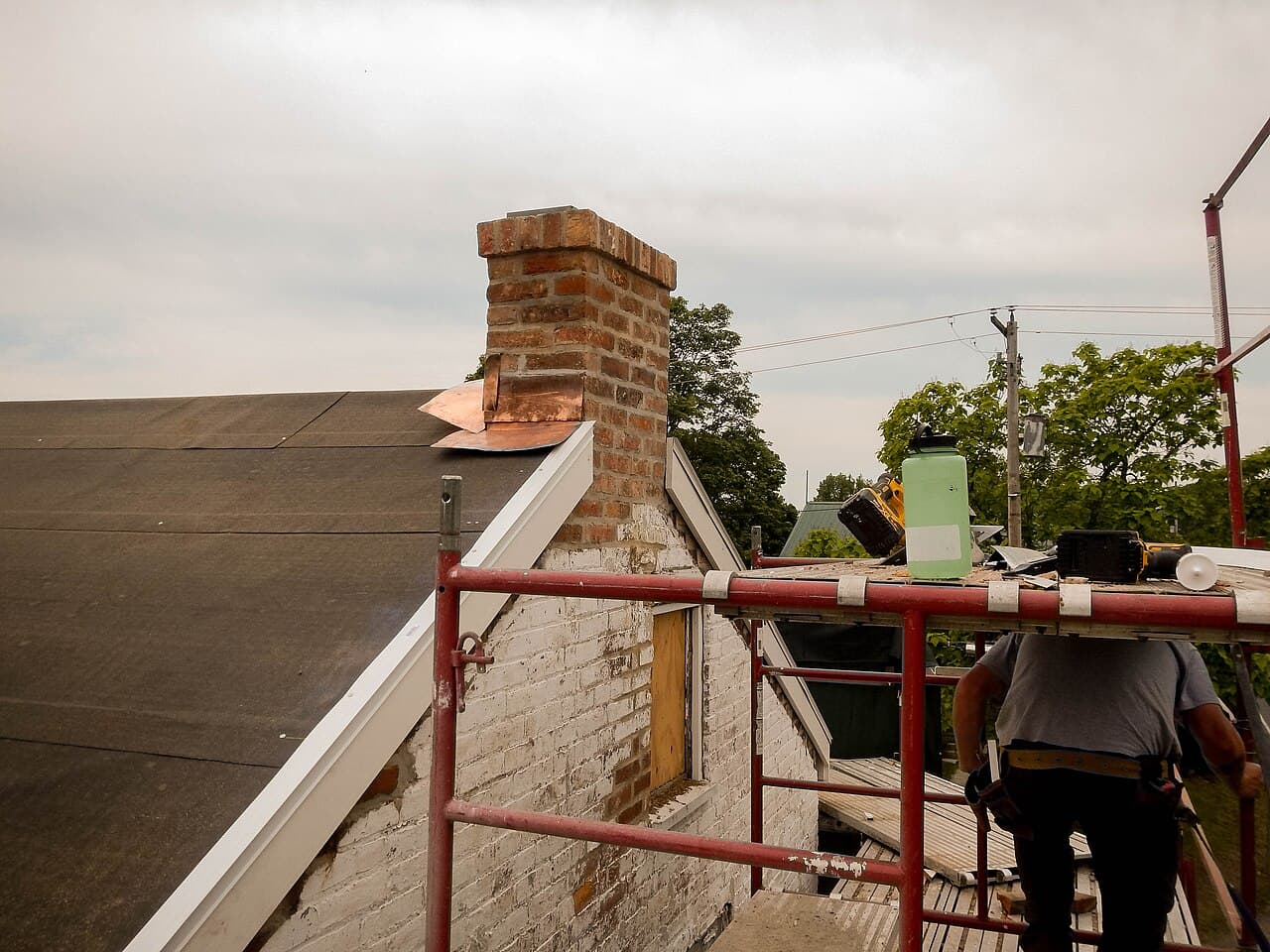
Why every year
A chimney can be damaged or blocked without any sign inside the house. EPA's guidance says fire officials recommend getting your wood-burning appliance, chimney, and vent professionally inspected each year, and describes an inspection as looking for any chimney cracks, which can allow smoke to enter your home, or can expose your chimney's components to high temperatures that may cause a fire.[3] Winter freezes, roof leaks, animals and the heat of the last season's fires all work on a chimney, so a clean bill of health last year says little about this one. What the inspector checks is covered in what a chimney inspector looks for.
Cleaning and inspection are related but not the same. How often to sweep depends on how much you burn; see how often a chimney should be cleaned. The yearly visit is the chance to do both at once.
It is not only wood fireplaces
Gas and other fuel-burning appliances vent through chimneys too. EPA's frequently asked questions quote the U.S. Consumer Product Safety Commission as urging an annual professional inspection of all fuel-burning appliances, including furnaces, wood and gas stoves, fireplaces, clothes dryers, water heaters and space heaters, to detect potentially deadly carbon monoxide leaks.[4] If a furnace or water heater vents through your chimney, the chimney is part of that appliance's safety. For the dryer vent, see how often a dryer vent should be cleaned.
Times to inspect in addition
Before connecting a stove, insert or new appliance. Woodstock Soapstone, a stove manufacturer, says all chimneys should be inspected by a professional and needed repairs should be made before you hook up your stove.[5] The same source says even chimneys in newer homes should be inspected for soundness and proper clearances to combustibles.[5]
Before using a chimney that has been idle. Woodstock warns that an out-of-use or abandoned chimney may not be up to code.[5] A chimney that has not been used for years may have lost mortar, gained a nest or never had a proper liner.
When you buy a house. The seller's yearly record, if there is one, tells you little about today's condition. See whether you need a chimney inspection when buying a house.
When something changes. If you smell smoke indoors, EPA's advice is to shut down your wood-burning appliance, open a window, be sure the flue is open, carefully check the venting (chimney) system, and call a professional wood stove installer or chimney sweep.[3] Treat a burning smell, smoke coming into the room, falling debris in the firebox or visible damage to the masonry as reasons to stop using the fireplace and book an inspection, not to wait for next fall. The same goes after anything that could have hit the chimney, such as a hard storm or a fallen tree limb.
What to ask when you book
- Does the visit include a camera scan of the flue, roof and attic access, and a written report?
- Will you tell me in writing what could not be reached?
- Is the price for inspection only, or does it include sweeping? What a chimney inspection costs in Virginia explains what changes the price.
Keep each year's report. A file of dated reports shows how the chimney is aging and helps when you sell the house.
When to call a licensed pro
Chimney inspection is pro-only. It means roof access, a camera scan and the judgment to tell routine wear from a failing liner, and what is missed can end in a fire or carbon monoxide in the house. There is no do-it-yourself version of a safety inspection, only a quick look that can give false comfort.
Repairs after an inspection are contracting work in Virginia. The Code of Virginia says Class C contractors are those whose single contract or project is over $1,000 but less than $30,000, or whose total work in any 12-month period is less than $250,000,[6] so check the licence before you sign, and get more than one written quote for anything significant.
Loclis lists DPOR-licensed businesses with their licence number and class. Browse chimney services or read more chimney and fireplace answers.
Book this year's chimney inspection by describing your chimney once, and local chimney businesses quote it.
Common questions
- Is a yearly inspection necessary if I rarely use the fireplace?
- The guidance quoted here does not carve out light use, and a chimney can be damaged or blocked without being burned in. If you use it rarely, ask the inspector whether the next visit can wait, and get the answer in the written report.
- When is the best time of year to book?
- Before you start burning in the fall. Many chimney companies are busiest then, so book early. Spring and summer visits also work, and repairs done in the off-season are easier to schedule.
- Is an inspection the same as a sweeping?
- No. Sweeping removes soot and creosote; an inspection looks at the condition of the chimney. Many sweeps include a basic inspection, but a camera scan or a roof and attic check is often separate, so ask what is included.
- Does a gas fireplace need an inspection every year too?
- EPA says gas stoves and gas fireplace inserts should be inspected annually. The U.S. Consumer Product Safety Commission, as quoted by EPA, urges an annual professional inspection of all fuel-burning appliances.
- Do I need an inspection after buying a house?
- Ideally before closing, since a chimney can hide defects that are expensive to repair. See the guide to chimney inspections when buying a house for how to include one in the sale.
- Who can do the inspection?
- Chimney sweeps and chimney businesses do most of them. Ask for the company's credentials and a written report, and check any licence required for repair work through the Virginia Department of Professional and Occupational Regulation.
Sources
- [1] Heating fire safety outreach materials, U.S. Fire Administration (FEMA). Checked October 28, 2026.
- [2] Heating Systems Safety, Fairfax County Fire and Rescue Department. Checked October 28, 2026.
- [3] Wood-Burning Installation and Maintenance, U.S. Environmental Protection Agency, Burn Wise. Checked October 28, 2026.
- [4] Frequent Questions about Wood-Burning Appliances, U.S. Environmental Protection Agency, Burn Wise. Checked October 28, 2026.
- [5] Masonry Chimneys, Woodstock Soapstone Company (stove manufacturer). Checked October 28, 2026.
- [6] Code of Virginia § 54.1-1100. Definitions, Code of Virginia. Checked October 28, 2026.
Want a pro to handle it?
Describe the job once. Licensed local businesses send quotes, and you pay only when you book one.
Get a quote from a local pro