How do I keep my garbage disposal working longer?
Run cold water before, during and for a few seconds after grinding, feed scraps in gradually, and let it run until only the motor and water are heard. Keep grease, shells, glass, metal and caustic drain cleaners out of it, go easy on fibrous scraps, use it regularly, scrub the splash guard now and then, and check underneath for leaks.
Free to ask. Local shops send quotes, and you pay only when you book one.
By Kasra Taheri, Founder, LoclisPublished
Researched and drafted with AI, then checked claim by claim against the sources listed below before it was published. Prices and rules change; the dates beside each source say when it was last checked.
Step by step
Read when to stop and call a pro, further down this page, before you start.
Step 1: Water first, disposal second
Turn on the cold water before the disposal, and keep it running for several seconds after grinding is done to flush the drain line.[1]
Step 2: Feed scraps gradually
With the water and disposal already running, feed peels and scraps in a little at a time instead of packing the chamber first.[1]
Step 3: Let it finish
Leave the disposal on until grinding is complete and you hear only the motor and the water.[1]
Step 4: Grind with cold water
Do not grind with hot water; it is fine to drain hot water into the disposal between grinding sessions.[1]
Step 5: Can the grease
Pour grease and fat into a jar or can and put it in the trash, never down the disposal or any drain.[1]
Step 6: Keep out hard non-food
Never put clam or oyster shells, glass, china, plastic, bottle caps, utensils or hot liquids into the disposal.[1]
Step 7: Go easy on fibrous scraps
Avoid grinding large amounts of egg shells or fibrous scraps such as corn husks and artichokes.[1]
Step 8: Skip caustic drain cleaners
Do not pour caustic drain cleaners or similar products into a disposal.[1]
Step 9: Use it regularly
Run the disposal often, which helps clear the food scraps that build up in the chamber.[2]
Step 10: Scrub the splash guard
With the disposal switched off, scrub the underside of the splash guard with a scouring pad, baking soda and warm water, never putting your hand inside.[6]
Step 11: Freshen it with citrus
Grind lemon or orange wedges one at a time with cool water running to clean the grind parts and leave a fresh smell.[3]
Step 12: Leave the stopper in
Keep the stopper in the drain when the disposal is not running, so spoons and bottle caps cannot fall in.[1]
Step 13: Check underneath for leaks
Regularly look over the disposal and its plumbing fittings with a flashlight for drips or damp spots.[1]
A garbage disposal lasts longest when it gets plenty of cold water, is fed a little at a time, and never sees grease, shells or metal. Most of what wears out a disposal, or makes it smell, jam or leak, comes down to how it is used day to day. The rest is a few minutes of cleaning and a look under the sink now and then.
Run it the way it is designed to run
Water first, and plenty of it. A key habit is to turn on the cold water before the disposal and leave it running for a few seconds after grinding stops. InSinkErator says an odor from the garbage disposal is usually a sign of food buildup, caused by insufficient water flow during and after use.[4] Its manual is blunter: "Failure to flush the disposer properly may result in damage to the disposer and/or property damage."[1] Waste King gives the same advice: run a generous flow of water down the sink drain while the unit runs.[6]
Cold, not hot, while grinding. InSinkErator's manual says: "Don't use hot water when grinding food waste. It is OK to drain hot water into the disposer between grinding periods."[1]
A little at a time. Instead of packing the chamber with peels and then switching on, turn the water and disposal on first and feed peels in gradually.[1] And do not switch it off until grinding is complete and only the sound of the motor and water is heard.[1]
What to keep out of it
Hard food in small amounts is fine and even helps. InSinkErator says small bones, fruit pits and ice create a scouring action inside the grind chamber.[1]
What does damage, per Waste King, is large whole bones, clam shells, oyster shells, whole corn husks, glass, china, plastic, bottle caps, tin, aluminum foil, utensils, caustic drain cleaner, hot grease, or other hot liquids.[6] See what you should never put down a garbage disposal for the full list.
Fibrous food is the other trouble spot, and how much your unit can take depends on the model. InSinkErator says its Standard Series models can grind any food apart from stringy and fibrous materials such as banana peel, celery and rhubarb.[2] InSinkErator's Badger manual adds that large amounts of egg shells or fibrous materials like corn husks and artichokes can cause a drain blockage.[1]
Grease never goes down. The trouble is the drain below the disposal. InSinkErator's manual warns that grease can build up in pipes and cause drain blockages, and says to put it in a jar or can and throw it in the trash.[1]
Clean it before it smells
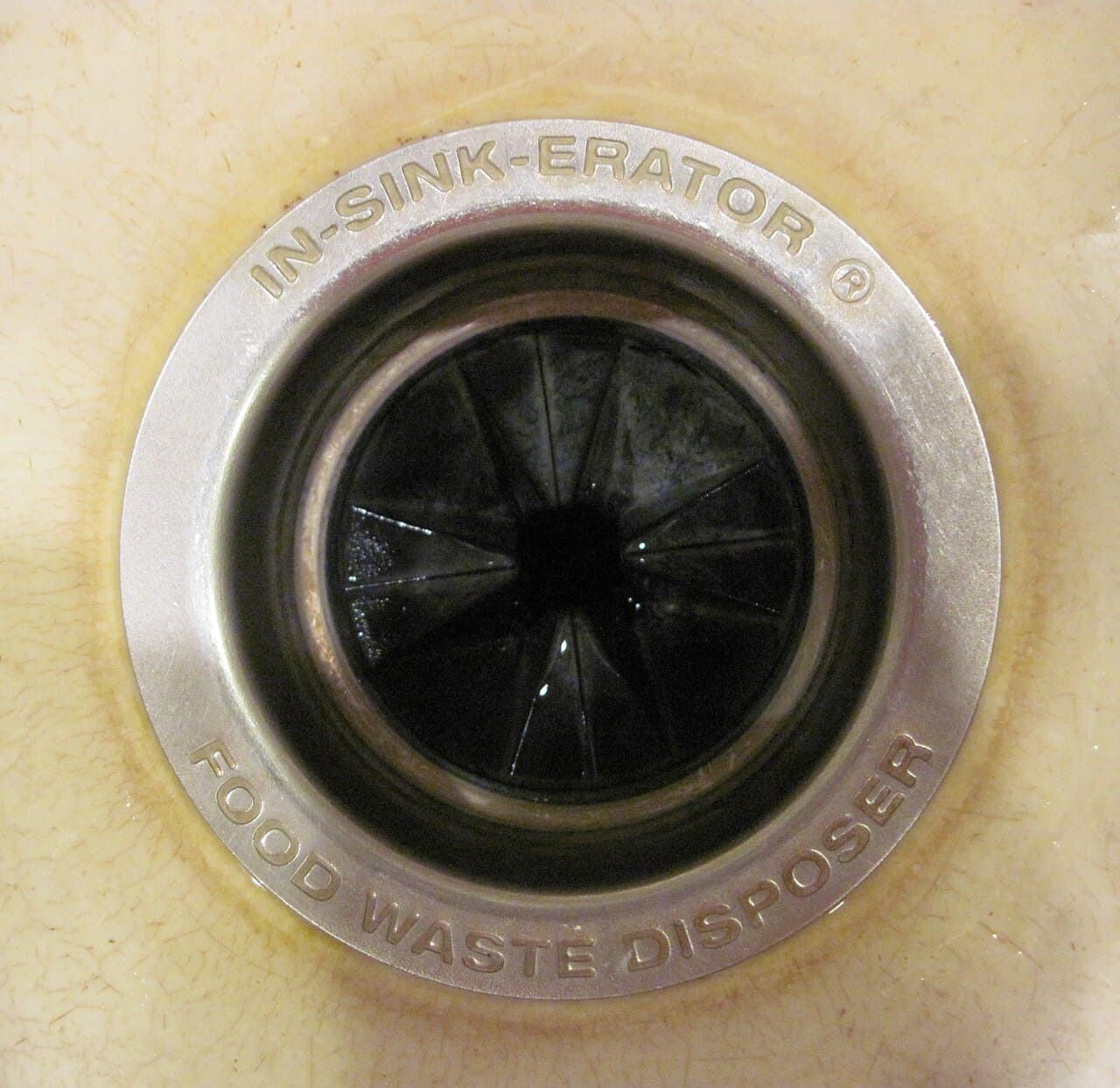
Use it often. InSinkErator says frequently using your disposal helps remove food scraps that build up in the chamber,[2] and that food waste can also accumulate under the sink baffle,[2] the rubber splash guard in the photo.
To clean the splash guard, switch the disposal off and unplug it. Waste King's method is to use a scouring pad with baking soda and warm water on the underside of the splash guard,[6] then rinse. InSinkErator says every Evolution Series model has a baffle you can pull out, rinse and wipe clean.[3] Never put your hand down into the chamber.
For a quick freshen-up, InSinkErator suggests you cut lemons or oranges into wedges and drop them in one at a time with the disposal running and a steady stream of cool water.[3] Ice is a popular trick, but ice usually melts before it cleans the grind chamber completely.[3] If a smell lingers, see why a garbage disposal smells.
Check underneath
Leaks are slow and easy to miss. The manual's warning: "Regularly inspect disposer and plumbing fittings for leaks, which can cause property damage and could result in personal injury."[1] For a drip you cannot find, InSinkErator suggests you spread newspaper flat across the bottom of the cabinet, fill the sink, leave it full for a while, then drain it and run the disposal, and look for wet spots on the paper.[5] Catching a loose drain joint early is cheaper than replacing a swollen cabinet floor.
Keep the stopper in when it is not running, too. The manual says to leave the stopper in place to reduce the risk of objects falling in.[1]
Your drains and sewer in Virginia
Looking after the disposal also looks after the pipes below it, and several Virginia utilities ask residents to go easy on disposals for that reason. The City of Alexandria advises: "Minimize use of garbage disposals as many foods are cooked or contain additional oils."[7] The City of Salem says: "Use garbage disposals sparingly or not at all."[8] King George County puts it as: "Avoid using your garbage disposal whenever possible."[9]
If your home is on a septic system, the Virginia Department of Health advises septic owners to eliminate or limit the use of a garbage disposal,[10] because of the fats, grease and solids it sends to the drainfield. A disposal you use lightly, with plenty of water, is easier on the house as well as on the unit.
Stop and call a pro if
- It hums but will not turn even after you have cleared it with the hex wrench. See why a disposal hums but will not spin.
- Water drips from the body or the bottom of the unit rather than from a drain joint.
- The breaker trips when you run it, or the outlet or switch is not working. That is an electrician's job.
- The sink drains slowly in both bowls even with the disposal clear, which points to a clog further down the drain.
Getting help on Loclis
When a disposal does wear out, see whether to repair or replace it and what disposal repair costs in Virginia. Local businesses on Loclis handle garbage disposal repair, and you can browse every appliance repair answer.
When you are ready, describe the disposal problem once and local businesses quote it.
Common questions
- Should I use hot or cold water with a garbage disposal?
- Cold water while grinding. InSinkErator says not to use hot water when grinding food waste, though it is fine to drain hot water into the disposal between grinding sessions. Keep the cold water running for a few seconds after the grinding stops to flush the drain line.
- Does putting ice in a garbage disposal sharpen the blades?
- No. InSinkErator says its disposals have no blades; lugs push food against a shredding ring. Ice can help clean the grinding parts, but it usually melts before it cleans the chamber completely. Citrus wedges, or scrubbing the splash guard, do more for a smell.
- Can I pour drain cleaner into a garbage disposal?
- No. InSinkErator's manual lists caustic drain cleaners among the things never to put into a disposal, and Waste King says the same. For a slow drain, a plunger over the disposal opening is the usual first step.
- Is it bad to leave a garbage disposal unused for a long time?
- Regular use is better for it. InSinkErator says frequent use helps clear the food scraps that build up in the chamber. If it has sat for a while, run it with plenty of cold water, and if it hums without turning, clear it with the hex wrench before running it again.
- Can I use a garbage disposal on a septic system in Virginia?
- You can, but the Virginia Department of Health advises septic owners to eliminate or limit garbage disposal use, because it adds fats, grease and solids that can clog the drainfield. If you keep one, use it sparingly and keep grease out of it.
Sources
- [1] Badger Series Installation, Care and Use Manual, InSinkErator. Checked October 26, 2026.
- [2] FAQs: Garbage Disposal Support and Advice, InSinkErator. Checked October 26, 2026.
- [3] How to Clean Garbage Disposal 3 Ways, InSinkErator. Checked October 26, 2026.
- [4] There's an Odor Coming From Garbage Disposal, InSinkErator. Checked October 26, 2026.
- [5] Garbage Disposal Leaking, InSinkErator. Checked October 26, 2026.
- [6] Frequently Asked Questions, Waste King. Checked October 26, 2026.
- [7] Sanitary Infrastructure, City of Alexandria, Virginia. Checked October 26, 2026.
- [8] Water & Sewer FAQs: Backup vs. Overflow, City of Salem, Virginia. Checked October 26, 2026.
- [9] Fats, Oils & Grease, King George County, Virginia. Checked October 26, 2026.
- [10] Onsite Sewage System Owner Responsibilities, Virginia Department of Health. Checked October 26, 2026.
Want a pro to handle it?
Describe the job once. Licensed local businesses send quotes, and you pay only when you book one.
Get a quote for Appliance Repair