How do I organize a garage?
Empty the garage, sort what you keep into zones, and give every zone a home off the floor: wall rails for long-handled tools, lidded labelled bins on anchored shelves, a workbench for projects. Keep fuel, paint and chemicals in their original containers away from heat, and give lithium-ion batteries and chargers their own clear spot.
Free to ask. Local shops send quotes, and you pay only when you book one.
By Kasra Taheri, Founder, LoclisPublished
Researched and drafted with AI, then checked claim by claim against the sources listed below before it was published. Prices and rules change; the dates beside each source say when it was last checked.
Step by step
Read when to stop and call a pro, further down this page, before you start.
Step 1: Empty and sort
Pull everything out onto the driveway or a tarp and sort it into keep, donate, sell and dispose piles. Throw nothing hazardous in the trash.
Step 2: Mark out zones
Decide where the car lane, daily-use items, lawn and garden gear, tools and long-term storage will live, and keep a clear path from the car to the house door.
Step 3: Set hazardous products aside
Keep fuel, paint, propane and other flammables in their original containers, away from the sun and any flame or heat source.[2]
Step 4: Hang the long and awkward items
Put rails, hooks or pegboard on the walls for ladders, rakes, hoses and tools, fastened into studs, with the heaviest things lowest.
Step 5: Add shelves that cannot tip
Set sturdy shelving on a level floor, anchor tall units to the wall, and use safety locks and guardrails so stored materials do not fall or tip.[2]
Step 6: Bin and label the small things
Put like with like in lidded bins, one category to a bin, with the label facing out. Keep seed and pet food in tight-lidded containers.[5]
Step 8: Put the car lane back
Return only what has a home, and check that the car doors open fully and the garage door and the house door are unobstructed.
Organize a garage in this order: empty it, sort it, decide where each kind of thing lives, then build storage that gets everything off the floor. Skipping straight to shelves is the usual mistake, because you end up building storage for clutter you meant to throw away. The steps above are the whole job; the sections below explain the choices.
Sort first, buy second
Pull everything out and make four piles: keep, donate, sell, dispose. Be strict with duplicates, broken tools and half-empty cans you will never finish. If cleanup is the hard part, how to clean out a garage in one weekend covers the sorting and disposal in detail.
Measure what remains before you shop. A rough tally of how many bins, how many long-handled tools and how many bikes you own tells you whether you need three shelves or a whole wall of them.
Plan zones
Most garages work with five zones:
- Car lane. Enough room to open the doors and walk around the car without moving anything.
- Daily use, by the house door. Shoes, recycling, leashes, the things you grab on the way out.
- Lawn and garden, near the big door. Mower, rakes, spreader, hoses.
- Tools and projects. A workbench or cabinet with hand tools hung above it.
- Long-term storage, high or at the back. Decorations, camping gear, keepsakes.
Use the walls
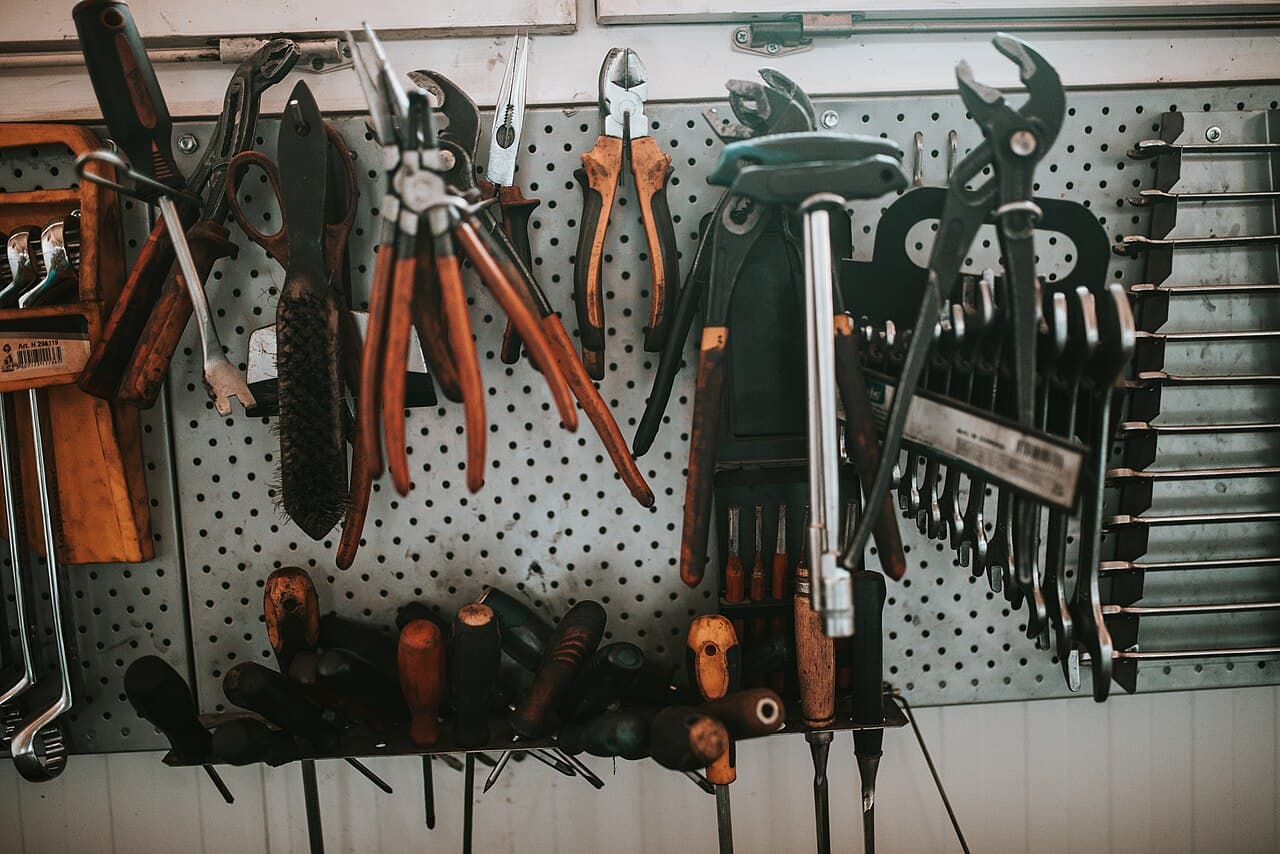
Wall rails with hooks hold bikes, ladders, shovels and hoses, and pegboard or a slatted panel keeps hand tools visible. Fasten them into studs rather than drywall alone, follow the load rating on the hardware, and keep the heavy things low. Use shelving rated for real loads on a level floor and anchor tall units to the wall.
Add safety locks and guardrails to shelves and cabinets so stored materials do not fall or tip.[2] The U.S. Fire Administration's advice is to "Use safety locks and guardrails on shelves and cabinets when you store materials."[2]
Where fuel, paint and chemicals go
Garage fires tend to spread farther and cause more injuries and dollar loss than fires that start in all other areas of the home.[1] That is why storage here is a safety question as much as a tidiness one.
- The fire administration advises to store oil, gasoline, paints, propane and varnishes in a shed away from your home.[1] If you have no shed, keep stocks small.
- Keep items that can burn on shelves away from appliances.[1]
- Store products in their original containers out of the reach of children and pets.[2]
- Never store materials that can cause a fire in the sun or near an open flame or heat source.[2]
- Never store pesticides in cabinets with or near food, animal feed, or medical supplies.[4]
Old cans you no longer need go to your locality's hazardous waste program, not the trash.
Batteries and chargers
Cordless tools, mower batteries and e-bikes all end up in the garage. Store spare lithium-ion batteries away from anything that can burn.[3] You should store lithium-ion batteries at room temperature when possible, and do not charge them at temperatures below 32 degrees F (0 degrees C) or above 105 degrees F (40 degrees C).[3] Plug only 1 charging appliance into an outlet, and don't use an extension cord when charging an appliance.[1]
Keep mice out of what you store
Cardboard boxes on the floor invite mice. Use lidded plastic bins, keep seed and pet food in tight-lidded containers, and prevent mice from entering your house by sealing all openings with caulking or steel wool.[5] Rodents can squeeze through holes as small as a dime.[5]
Stop and call a pro if
- You want ceiling racks hung overhead. They load the roof or ceiling framing, and what is up there needs to be checked first.
- Any shelf or rail needs framing cut, moved or added, or the wall is the one shared with the house.
- You need new outlets, lighting or a workbench circuit. That is a licensed electrician's job.
- You find water stains, damp walls or a musty smell where you meant to store things. Fix the moisture first.
- You find heavy rodent droppings or nesting. Wet the area before cleaning it and do not sweep or vacuum dry debris, or call a pest professional.
- A gas appliance, such as a water heater or furnace, is in the garage and you are unsure how much clearance it needs.
Related answers and getting help
If you would rather buy a system than build one, read how much garage storage installation costs in Virginia and whether professional garage storage is worth it. To keep it that way, see how to set up a garage so it stays organized. Browse more interiors answers or the interiors directory.
When you want help, describe your garage and local businesses can send written quotes.
Common questions
- Where do I start when the garage is a mess?
- Empty it. You cannot organize what you cannot see, and sorting everything into keep, donate, sell and dispose piles first means you only build storage for what you are actually keeping.
- Is it safe to keep gasoline and paint in the garage?
- The U.S. Fire Administration advises storing oil, gasoline, paints, propane and varnishes in a shed away from your home. If they must stay in the garage, keep them in original containers away from the sun, flames and heat sources.
- Where should I keep lithium-ion batteries?
- Away from anything that can burn, at room temperature when possible, and not charged below 32 degrees F or above 105 degrees F. A hot Virginia garage in summer is a poor place to charge them.
- How do I keep mice out of stored boxes?
- Use lidded plastic bins instead of cardboard, keep seed and pet food in tight containers, and seal openings. The Virginia Department of Health notes rodents can squeeze through holes as small as a dime.
- Should I hire someone to do it?
- Not for tidying, bins or a few wall rails. A licensed contractor is worth a call for ceiling racks, cut or moved framing, or new wiring. See the related answers on cost and whether professional storage is worth it.
Sources
- [1] Basement and Garage Fire Safety, U.S. Fire Administration. Checked October 27, 2026.
- [2] Home Hazardous Materials, U.S. Fire Administration. Checked October 27, 2026.
- [3] Battery Fire Safety, U.S. Fire Administration. Checked October 27, 2026.
- [4] Storing Pesticides Safely, U.S. Environmental Protection Agency. Checked October 27, 2026.
- [5] Hantavirus Pulmonary Syndrome (HPS), Virginia Department of Health. Checked October 27, 2026.
Want a pro to handle it?
Describe the job once. Licensed local businesses send quotes, and you pay only when you book one.
Get a quote from a local pro