How do I replace carpeted stairs with wood treads?
Pull the carpet, pad, tack strips and staples, check that the stringers are sound, then fit new wood treads. Retrofit treads over sound old treads are the simplest route. Measure every step, keep all step heights equal, glue and fasten each tread, then sand and finish with some grip. Stop if the stringers are damaged or old materials may contain asbestos or lead.
Free to ask. Local shops send quotes, and you pay only when you book one.
By Kasra Taheri, Founder, LoclisPublished
Researched and drafted with AI, then checked claim by claim against the sources listed below before it was published. Prices and rules change; the dates beside each source say when it was last checked.
Step by step
Read when to stop and call a pro, further down this page, before you start.
Step 1: Inspect under the carpet
Lift the carpet at the top, middle and bottom steps and check the treads and, from below, the stringers for cracks, rot or movement.
Step 3: Choose retrofit or full treads
Use retrofit treads over sound old treads, or full replacement treads only if the old ones lift out without cutting into the stringers.
Step 4: Measure every step
Measure each tread and riser separately, and plan how finished heights meet the floors above and below so every step stays equal.
Step 5: Remove the carpet
Pull the carpet, pad, tack strips and every staple, then vacuum the stairs.
Step 6: Secure loose treads
Screw any loose or squeaking tread down into the stringer before covering it.
Step 7: Dry-fit the new treads
Trim each tread to its own step without glue and check the nosing overhang.
Step 8: Glue and fasten
Apply construction adhesive, set the tread and fasten it with finish nails or screws in pre-drilled holes, working from the top step down.
Step 9: Finish the wood
Fill the holes, sand, then stain and seal with a finish that has some grip.
Step 10: Check the rail and the steps
Test the handrail for movement and walk the stairs to feel for any step that is taller or shorter than the others.
Start by looking at what is under the carpet
Swapping carpet for wood on a staircase is a job a careful homeowner can do when the stairs are structurally sound, and the simplest route is usually to fit new treads over the existing ones rather than rip the old stairs out. The first hour is inspection: lift the carpet at a corner of the top, middle and bottom steps and see what you have. Solid hardwood or pine treads in good shape can be sanded and finished in place. Plywood or rough treads, loose or cracked treads, and treads that rock or squeak are candidates for covering with new treads.
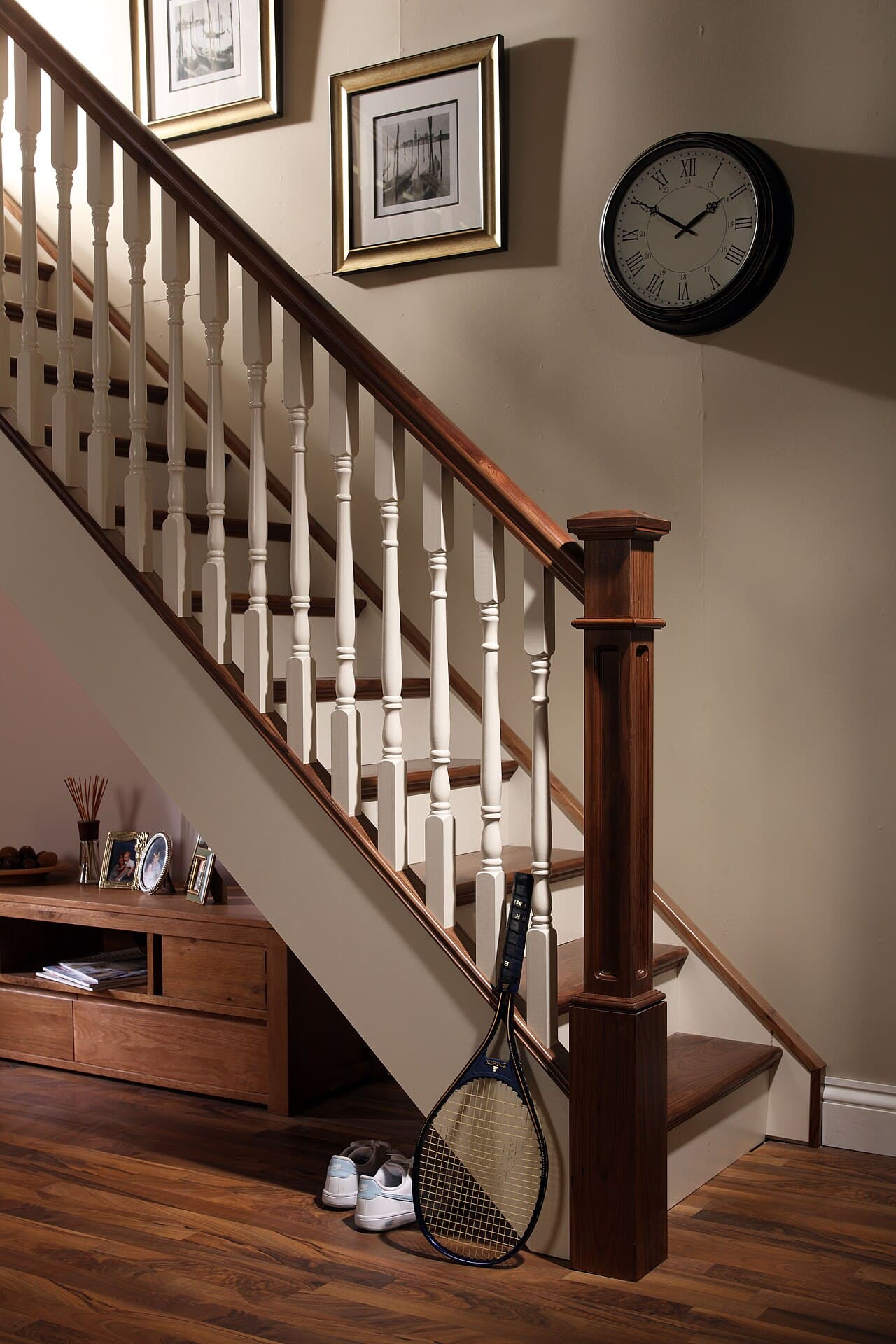
Look at the stringers, the sloped boards at each side that carry the treads, wherever you can see them from below. If they are cracked, notched through or sagging, stop here. That is a framing repair, not a flooring job.
Check for lead and asbestos before you pull anything
Old stairs can hide old finishes. In houses built before 1978, painted risers, trim and old stair parts may contain lead paint. In general, anyone paid to perform work that disturbs paint in housing and child-occupied facilities built before 1978 must be certified in lead-safe work practices.[2] In general, the RRP Rule does not apply to homeowners doing RRP projects in their own pre-1978 homes.[2] That is a legal point, not a reason to be careless: dust from sanding old paint is the hazard, so a professional is the safer choice if you plan to sand or scrape painted surfaces in an older home.
Old resilient flooring or adhesive under carpet can contain asbestos. If you suspect material contains asbestos, don't touch it.[3] Don't sand or try to level asbestos flooring or its backing.[3] Have a suspect material tested before you disturb it.
What to buy
You have two basic choices. Retrofit treads are thin wood treads, often with a matching riser piece, that go over the old treads. Full replacement treads are thick boards that replace the old ones, which only works when the old treads can be removed without cutting into the stringers. Wood stair treads come in oak and other hardwoods, in pine and in several pre-finished options. Hardwood is more durable on a busy staircase; softer woods dent.
Measure every tread. Stairs are rarely square, and treads in older houses often differ from step to step, so cut and fit each one separately. Buy a few spare inches of length and some extra boards.
Keep the steps equal
A stair that is comfortable is one where every step feels the same. Retrofit treads add thickness, which makes the top and bottom steps different from the rest unless you allow for it. A step that is even a little taller or shorter than its neighbors is a common cause of trips. Before you buy, measure the finished heights at the top and bottom of the staircase and plan how the new treads will meet the floors above and below. If you are unsure, ask the building department of your county or city before you start.
Do the work
Remove the carpet and pad, then the tack strips and staples. Pry strips off carefully and pull every staple; a missed staple will show through new wood or catch a stocking. Vacuum the treads and risers. If any tread is loose, screw it down into the stringer before you cover it.
Dry-fit each new tread without glue. Trim it to the width of its step and check the overhang at the nosing. Then run a bead of construction adhesive on the old tread, set the new one and fasten it with finish nails or screws in pre-drilled holes, filling them afterwards. Work from the top step down so you are never standing on wet glue.
Sand, stain and seal with a finish that has some grip. A glossy finish on wood stairs in socks is slippery. Finally, put a hand on the rail: a handrail that is loose is a problem you now have a clear view of, and a good time to fix it.
Permits and who may do the work
Virginia's building code lists "Installation or replacement of floor finishes in all occupancies" among the work that needs no permit application.[1] The same section adds that this section shall not be construed to exempt such activities from other applicable requirements of this code.[1] Whether a building official would treat new treads on a staircase as floor finish or as part of the stair is a question for your local building department, and it matters most if you change the stair's dimensions.
If you hire the work out, the Board for Contractors defines flooring work as the installation, repair, improvement or removal of materials that includes wood and wood composite flooring, tack strips or other products used to secure carpet.[4] Read the next answer on whether to hire a carpenter and on what stair tread replacement costs.
Stop and call a pro if
- The stringers are cracked, notched or soft. Treads cannot be better than what holds them. Repairing a stringer is framing work.
- The treads are housed into the stringers and will not come out without cutting.
- The staircase changes shape. A stair that is altered and is part of a required exit may need a permit: Virginia's building code lists "the alteration of any required means of egress system" among the work that requires one.[1]
- The material under the carpet may be asbestos, or the paint may be lead, and you would have to sand or scrape it.[3][2]
- The rise is uneven from one step to the next and you cannot correct it.
Getting help in Virginia
Browse flooring contractors on Loclis, read about fixing a squeaky floor, or see more flooring answers. When you are ready, describe your stair job and licensed local flooring contractors will quote it.
Common questions
- Can I put wood treads over my existing carpeted stairs?
- Not over the carpet itself. Remove the carpet, pad, tack strips and staples first. Then you can fit retrofit treads over sound old treads, or replace the treads if they come out without cutting into the stringers.
- Do I need a permit to replace stair treads in Virginia?
- Virginia's building code lists the installation or replacement of floor finishes as work that needs no permit application, but it also says that does not exempt the work from other requirements of the code. Ask your local building department whether it treats your tread work as floor finish, especially if you change the stair's dimensions.
- Which wood is best for stair treads?
- Hardwoods such as oak are usually chosen for busy stairs because they resist dents better than softer woods like pine. Whatever you choose, use a finish that has some grip.
- Why do my stairs feel uneven after new treads?
- Thick treads can change the height of the first and last steps compared with the rest. Measure finished heights before you buy and ask a carpenter to adjust the top and bottom steps if needed.
- Is there lead or asbestos under old stair carpet?
- It is possible in an older house. If you suspect material contains asbestos, don't touch it, and have it tested; in pre-1978 homes, treat old paint as possibly lead-based before sanding it.
Sources
- [1] 13VAC5-63-80, Section 108 Application for permit (Virginia Uniform Statewide Building Code), Virginia Administrative Code, Virginia General Assembly. Checked October 27, 2026.
- [2] Lead Renovation, Repair and Painting Program, U.S. Environmental Protection Agency. Checked October 27, 2026.
- [3] Protect Your Family from Exposures to Asbestos, U.S. Environmental Protection Agency. Checked October 27, 2026.
- [4] 18VAC50-22-30, Definitions of specialty services (Board for Contractors Regulations), Virginia Administrative Code, Virginia General Assembly. Checked October 27, 2026.
Want a pro to handle it?
Describe the job once. Licensed local businesses send quotes, and you pay only when you book one.
Get a quote from a local pro