How do I replace a shower valve cartridge?
Shut off the water to the shower, take off the handle and trim, release the clip or nut that holds the cartridge, and pull it straight out. Clean and flush the valve body, lubricate the new cartridge's seals, fit it the right way round, and check the hot limit with a thermometer before you close everything up. Buy the exact cartridge for your valve's brand and model.
Free to ask. Local shops send quotes, and you pay only when you book one.
By Kasra Taheri, Founder, LoclisPublished
Researched and drafted with AI, then checked claim by claim against the sources listed below before it was published. Prices and rules change; the dates beside each source say when it was last checked.
Step by step
Read when to stop and call a pro, further down this page, before you start.
Step 1: Identify the valve
Find the brand and model of the valve, from the trim, the old cartridge or the paperwork, and buy the cartridge the valve's maker lists for that model.
Step 2: Shut off the water
Close the shower's own shutoffs, or the home's main valve if there are none, then open the shower handle to make sure the water is off.[2]
Step 3: Cover the drain
Cover the tub or shower drain so small parts cannot fall into it.[1]
Step 4: Take off the handle and trim
Remove the handle screw, the handle and the trim plate, and keep the screws together in a cup.
Step 5: Release the retainer
On a Moen Posi-Temp valve, use needle-nose pliers to slide the retainer clip up and out from the top of the valve body, taking care not to drop it behind the wall.[1]
Step 6: Pull the old cartridge
Loosen the cartridge as its maker directs, then grip the stem with pliers and pull it straight out; it may take some effort.[1]
Step 7: Scrub the valve body
Gently scrub the inside walls of the valve body with a nylon bristle brush to remove mineral build-up.[3]
Step 8: Flush it briefly
Stand outside the tub, open the shutoff just slightly to push a small flow through the valve body, then close it again; with separate hot and cold shutoffs, flush each side in turn, one at a time.[3]
Step 9: Dry the valve body
Soak up the water left in the back of the valve body with a rolled paper towel, or the new cartridge will not seat fully.[3]
Step 10: Lubricate the seals
Lubricate the surface of the oval rubber grommets on either side of the new cartridge.[1]
Step 11: Fit the new cartridge
Slide it in with the hot and cold markings the way the instructions show, seat it flush, and refit the clip or nut.[1]
Step 12: Check the hot limit
Before the trim goes back on, turn the water on, run the shower to full hot and read the temperature with a thermometer; adjust the limit stop if it is over 120°F.[7]
Step 13: Reassemble and watch
Refit the trim and handle, run the shower through its full range, and look for drips at the handle and spout over the next day.
Most single-handle showers have a replaceable cartridge behind the handle, and swapping it is one of the more manageable plumbing repairs in a house. The work is the same on most brands: shut off the water, take off the handle and trim, release what holds the cartridge, pull it out, clean the valve body and fit an exact replacement. Getting the right part, and getting a stuck old one out, is usually the hard part.
Is it the cartridge?
A worn cartridge shows itself in a few familiar ways. Moen's troubleshooting pages point to the cartridge when the shower keeps running or dripping with the handle off, or water leaks from the handle.[5] A handle that has gone stiff is usually down to sediment or debris in the cartridge, mineral buildup or a damaged seal.[4] On Moen's Posi-Temp valves, if the water pressure drops as you turn from cold to hot, the 1222 cartridge needs replacing.[6]
Water you can see inside the wall, a stain on the ceiling below, or a valve body that is cracked or green with corrosion is a different problem. That is piping, not a cartridge, and it belongs in the section at the end.
Get the exact part
A cartridge has to match the valve body it sits in, so buy the one the valve's maker lists for your model. Kohler's Rite-Temp K-8305 cartridge, for example, fits a K-8300 series valve body.[8] Look for a brand name on the trim plate or handle, check any paperwork from the house, or take the old cartridge to the store once it is out. Having the water off for a day while you find the right part is a reason to keep the old one in until you know what you need.
For a typical job you will want large pliers or channel locks, needle-nose pliers and a Phillips screwdriver,[1] a nylon bristle brush and paper towels,[3] the lubricant the new cartridge's instructions name, and a thermometer.
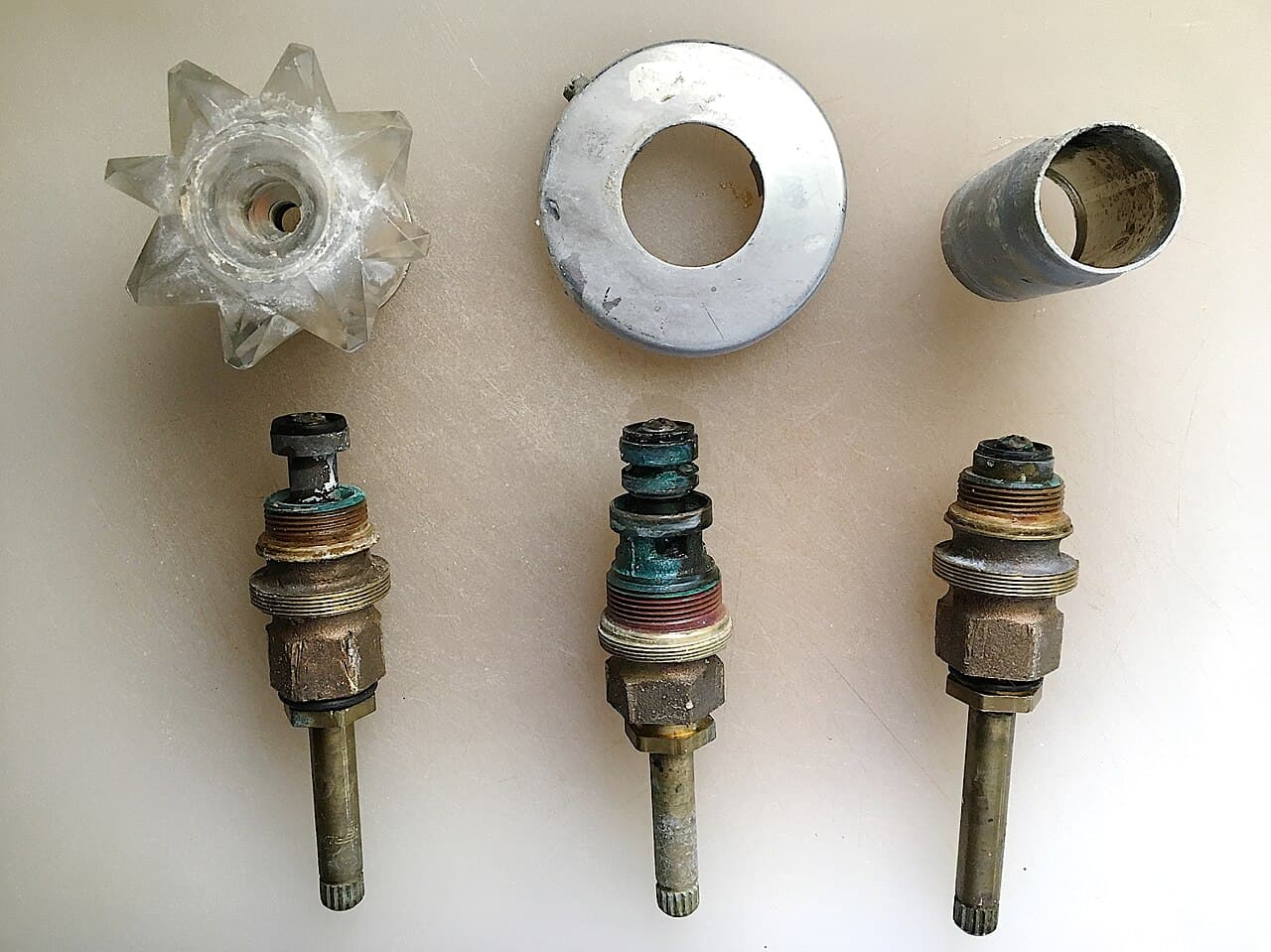
Shut off the water first
Shut the water off before anything else. "Any repairs done to a Moen faucet require the water supply to be shut off. Failure to do so could result in flooding or injury."[2] Shower shutoffs are often under the sink, in a closet access behind a shower or in an access panel around the tub.[2] Some showers have none, and then the only option is the main valve for the house. Once the valves are closed, turn the shower handle to the open position to make sure the water is completely off.[2]
Take the old cartridge out
Moen recommends covering the drain before you start.[1] Then take off the handle, usually held by a screw under a cap, and the trim plate behind it.
What holds the cartridge differs by brand. On a Moen Posi-Temp valve, use needle-nose pliers to slide the retainer clip up and out from the top of the valve body; do not let the clip fall behind the wall. Then use the plastic twisting tool to rotate the cartridge a little more than a quarter turn, then take the tool off, grip the stem with pliers and pull the cartridge out, which may require some effort.[1] Do not twist the cartridge with the pliers. Other brands often use a threaded bonnet nut or screws in place of a clip, and the maker's instructions for your model say which.
If a cartridge will not budge, stop before you lever against the valve body. The body is joined to the pipes inside the wall, and twisting it can start a leak you cannot see.
Clean and flush the valve body
Moen recommends cleaning the valve body whenever a new cartridge goes in, because it eliminates any mineral build-up and loose debris that may have accumulated inside the valve body.[3] Scrub the inside walls gently with the nylon brush.
Then flush it. Moen warns that the water may come out of the valve body with considerable force, so stand outside the tub or shower when the shutoffs are turned back on,[3] open them just enough for a small flow, and close them again. If the shower has separate hot and cold shutoffs, Moen says this process will need to be repeated "one at a time" for both sides.[3] Dry the back of the valve body with a rolled paper towel. "If the water is not eliminated, the cartridge will not fit all the way back in."[3]
Fit the new cartridge
Lubricate the surface of the oval rubber grommets on either side of the cartridge, on the side facing out.[1] For its 1225 faucet cartridge, Moen specifies a silicone-based grease and warns against plumber's grade faucet grease, silicone sprays or any lubricant that may contain petroleum, which may react with the rubber seals.[4] If your cartridge's instructions name a lubricant, use that one.
Orientation matters too. On the Moen 1222, the H and C tab points up, the cartridge slides in without being rotated, and the tab sits flush with the valve body. Slide the retainer clip back in; if the retainer clip cannot be installed or appears damaged, the water cannot be turned back on to the faucet until the clip is replaced. Finally, the notched side of the brass stem should face opposite the H and C marking.[1] If the house was plumbed with hot and cold reversed, some cartridges allow for it: The Kohler K-8305 is reversible for installations where hot and cold supplies are reversed.[8]
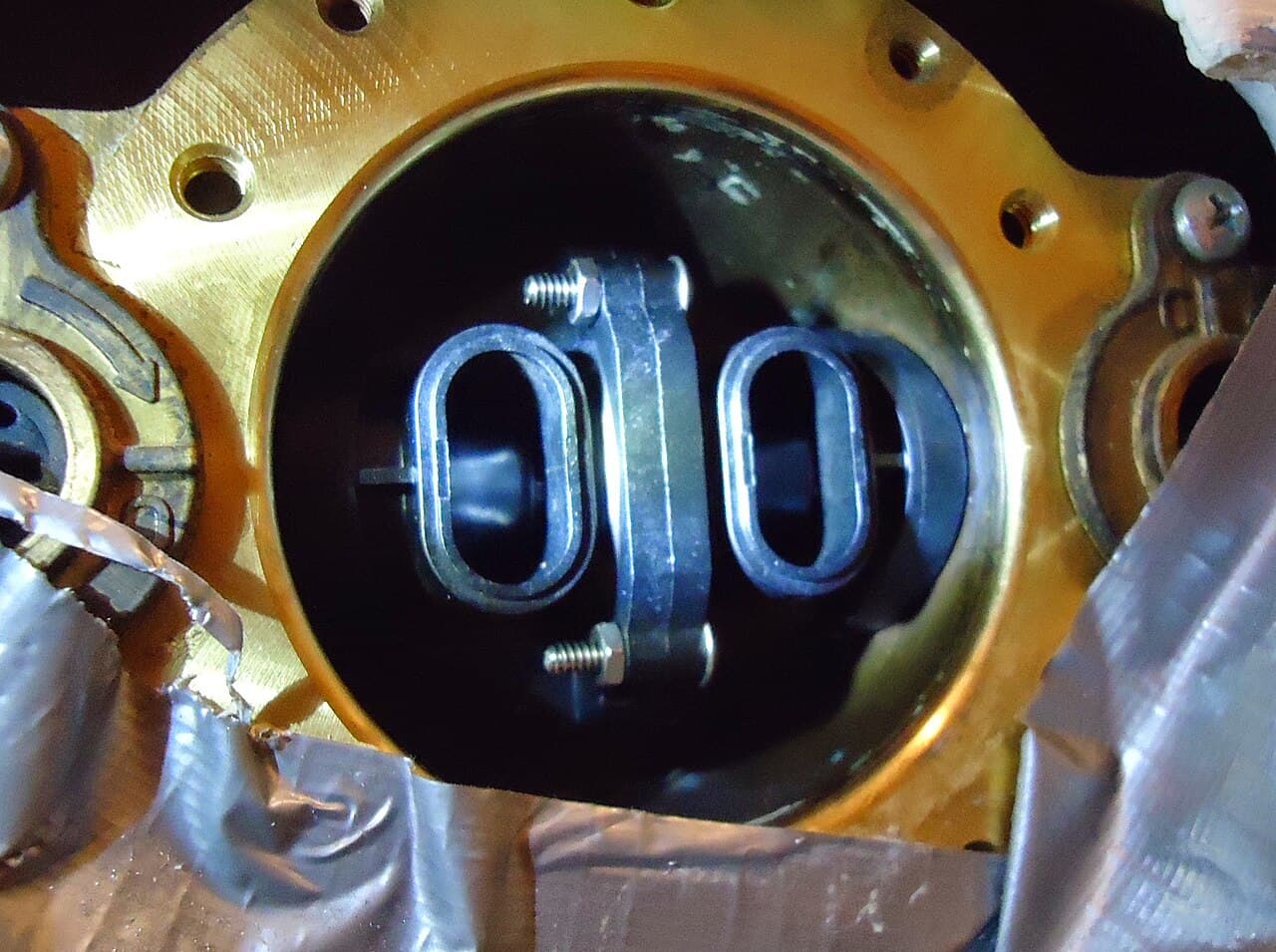
Set the hot limit before you close up
Moen advises adjusting the temperature limit stop if the water is too hot after servicing a shower, so check the hottest setting before the trim goes back on. Moen recommends limiting the maximum temperature flowing from the shower to 120°F/49°C or less to prevent scalding.[7] If a thermometer in the stream at full hot reads higher, pull the temperature limit stop out, rotate it clockwise into a lower notch, and test again with a thermometer.[7]
This is worth the five minutes. The Consumer Product Safety Commission notes: "Most adults will suffer third-degree burns if exposed to 150 degree water for two seconds,"[9] and even at 120 degrees, a five-minute exposure could cause third-degree burns.[9] Then refit the trim and handle and watch for drips over the next day.
If the shower still swings between hot and cold with a new cartridge in, see why a shower goes from hot to cold.
Stop and call a pro if
- There is no shutoff you can close, or the main valve will not shut the water off completely.
- The old cartridge is seized, breaks apart, or will not come out without forcing the valve body.
- The retainer clip is lost, damaged or broken, or will not slide back into its slot. On the Moen 1222, the water cannot be turned back on to the faucet until the clip is replaced,[1] so leave the supply off until you have a new one.
- The valve body is cracked or corroded, its threads are damaged, or water is showing inside the wall or on a ceiling below.
- The job turns into replacing the valve itself. That means opening the wall and changing supply piping, and Virginia's building code exempts fixture replacement from a permit only without alteration of the water supply and distribution systems, sanitary drainage systems, or vent systems.[10] Virginia requires a master tradesman licence as a condition of licensure for plumbing contractors.[11]
- The water stays too cold or too hot with a new cartridge and a correctly set limit stop. The cause may be the water heater, which is a job for a licensed pro.
For what this costs when a plumber does it, see shower valve repair costs in Virginia, and for when the job is worth handing over, should you hire a plumber for a shower valve. Keeping the new cartridge working is covered in how to keep a shower valve working smoothly. You can also browse shower and tub repair, find plumbers in Blacksburg, or see all plumbing repair answers.
If the cartridge will not come out or the valve is leaking inside the wall, describe the shower repair once and licensed local plumbers quote it.
Common questions
- How do I know the cartridge is the problem?
- The usual signs are a shower that drips or keeps running with the handle off, water leaking from around the handle, a handle that has turned stiff, or water that loses pressure as you turn toward hot. Moen ties each of these to the cartridge in its troubleshooting pages. A leak you can see inside the wall, or a stain on the ceiling below, points to the valve body or piping instead.
- Can I use a cartridge from another brand?
- The safest choice is the cartridge the valve's maker lists for that model, because a cartridge has to match the valve body it sits in. Kohler's Rite-Temp K-8305, for example, is made for K-8300 series valve bodies. Take the old cartridge to the store or look up the valve's model on the maker's website before you buy.
- What grease should I use on the new cartridge?
- Use the lubricant your cartridge's instructions name. For its 1225 faucet cartridge, Moen specifies a silicone-based grease and warns against plumber's grade faucet grease, silicone sprays and any lubricant that may contain petroleum, because petroleum-based lubricants may react with the rubber seals and make the handle harder to turn.
- Do I need a permit to replace a shower cartridge in Virginia?
- Swapping a cartridge inside an existing valve does not change any piping. Virginia's building code exempts replacing plumbing fixtures from a permit when the water supply, drainage and vent systems are not altered. Replacing the valve body itself means cutting into the supply piping, so ask your local building department before that job starts.
- The new cartridge works but the water is too hot. What now?
- Adjust the limit stop. On a Moen Posi-Temp valve you pull the temperature limit stop out, rotate it clockwise into a lower notch and test again with a thermometer. Moen recommends keeping the shower's maximum at 120°F or less.
Sources
- [1] 1222 Cartridge: Single Handle Shower- PosiTemp, Moen. Checked October 26, 2026.
- [2] How to Turn Off the Water Supply to the Faucet, Moen. Checked October 26, 2026.
- [3] Valve Body Cleaning and Flushing, Moen. Checked October 26, 2026.
- [4] Handle is difficult to operate, Moen. Checked October 26, 2026.
- [5] Shower Faucet: Leaking- Moentrol Valves, Moen. Checked October 26, 2026.
- [6] Water temperature is not HOT enough on tub shower units, Moen. Checked October 26, 2026.
- [7] How to Adjust the PosiTemp Temperature Limit Stop, Moen. Checked October 26, 2026.
- [8] Rite-Temp Pressure-balancing cartridge K-8305, specification sheet, Kohler Co.. Checked October 26, 2026.
- [9] Avoiding Tap Water Scalds (Publication 5098), U.S. Consumer Product Safety Commission. Checked October 26, 2026.
- [10] 13VAC5-63-80. Section 108 Application for permit (Virginia Uniform Statewide Building Code), Virginia Administrative Code, Virginia General Assembly. Checked October 26, 2026.
- [11] Code of Virginia § 54.1-1100. Definitions, Code of Virginia, Virginia General Assembly. Checked October 26, 2026.
Want a pro to handle it?
Describe the job once. Licensed local businesses send quotes, and you pay only when you book one.
Get a quote for Plumbing Repair