How do I store a string trimmer for the winter?
Clean it, then empty the fuel tank and run the engine dry so no gasoline sits in the carburetor, and keep it in a dry, dust-free place with the stop switch off. For a cordless trimmer, take the battery out, never store it fully charged or fully depleted, and keep it in a clean, dry, enclosed area.
Free to ask. Local shops send quotes, and you pay only when you book one.
By Kasra Taheri, Founder, LoclisPublished
Researched and drafted with AI, then checked claim by claim against the sources listed below before it was published. Prices and rules change; the dates beside each source say when it was last checked.
Step by step
Read when to stop and call a pro, further down this page, before you start.
Step 2: Clean the trimmer
Remove the buildup of grease, oil, dirt and debris from the outside of the unit.[1]
Step 3: Empty the tank
Pour unused fuel into an approved fuel container; do not store the unit with fuel in its tank.[1]
Step 4: Clear the carburetor
Pull the recoil starter handle several times to remove fuel from the carburetor.[1]
Step 5: Oil the cylinder
Remove the spark plug, pour 7 cc (1/4 oz) of fresh two-stroke engine oil into the cylinder and pull the starter handle 2 or 3 times to spread it.[1]
Step 6: Refit the plug without the lead
Install the spark plug but do not connect the ignition cable.[1]
Step 7: Check the screws and head
Tighten loose screws and nuts, and look over the line, head and guard so repairs can be done before spring.[1]
Step 8: Store it dry
Keep it in a dry, dust-free place away from any open flame or spark, out of the reach of children.[1]
Empty it, clean it, keep it dry
For a gas trimmer, winter storage comes down to getting the fuel out and the machine clean and dry. ECHO's manual says: "Do not store your unit for a prolonged period of time (30 days or longer) without performing protective storage maintenance".[1] A cordless trimmer needs less: the battery comes out and the machine is cleaned and kept dry.
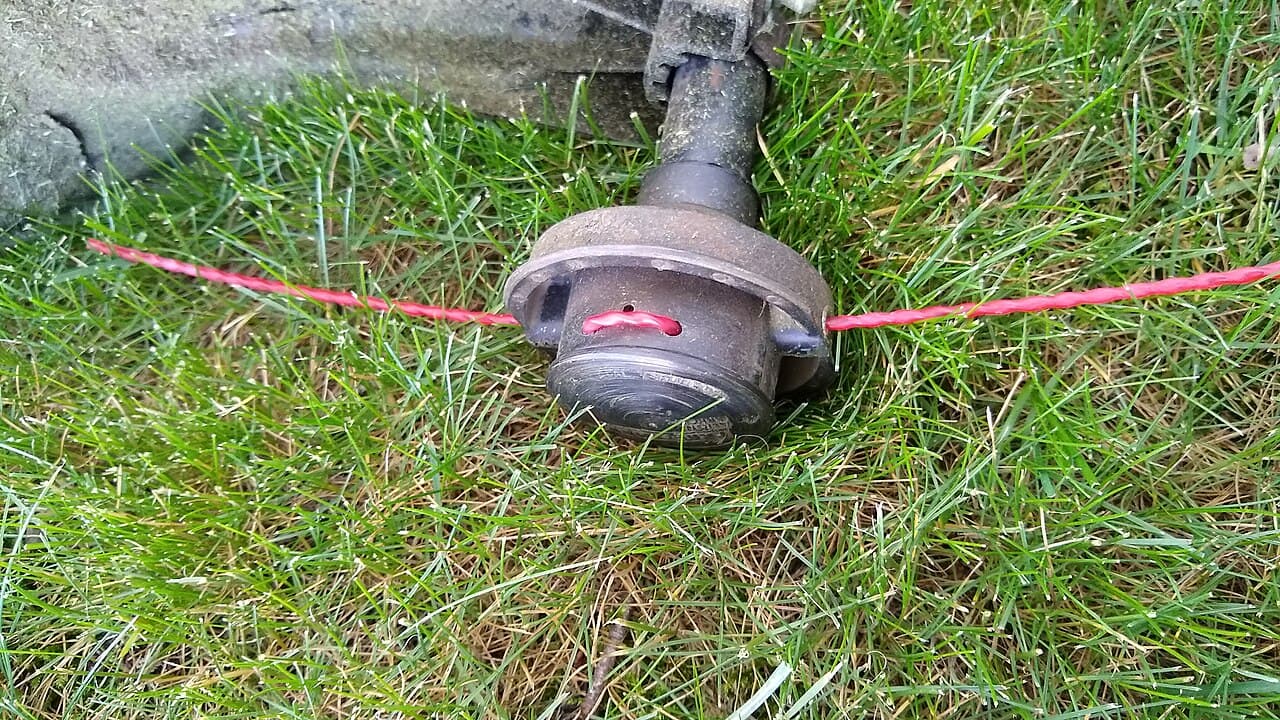
Spring starting trouble is mostly fuel trouble, which is why the tank is the first job. Our guide to why a trimmer will not start covers what stale fuel does.
Gas trimmers
Work outdoors with the engine cool. Virginia Cooperative Extension's rule for mowers is a good habit here too: "Disconnect the spark or electric plug before troubleshooting or repairing the mower."[4]
Start with the exterior. ECHO's list begins with "Store unit in a dry, dust free place, out of the reach of children." and "Remove accumulation of grease, oil, dirt and debris from exterior of unit." It also says "Tighten all the screws and nuts."[1] Check the cutting line and the head while you are at it, and fix them now: restringing is simple.
Then the fuel. ECHO's instruction is "Drain the fuel tank completely and pull the recoil starter handle several times to remove fuel from the carburetor."[1] The manual also warns: "DO NOT store a unit with fuel in its tank. Leaks can occur. Return unused fuel to an approved fuel storage container."[1]
Next, the cylinder. ECHO's list says to "Remove the spark plug and pour 7 cc (1/4 oz.) of fresh, clean, two-stroke engine oil into the cylinder through the spark plug hole." Then "Pull the recoil starter handle 2-3 times to distribute the oil inside the engine." Cover the plug hole with a clean cloth while you pull so oil does not spray out. Finally, "Install the spark plug (do not connect ignition cable)."[1] Leaving the lead off means a stray pull of the cord next spring cannot start it by surprise.
Set the stop switch to STOP: ECHO's instruction is "Place the stop switch in the "STOP" position."[1]
What to do with the leftover fuel
Mixed fuel does not keep. ECHO says: "Stored fuel ages. Do not mix more fuel than you expect to use in thirty (30) days, ninety (90) days when a fuel stabilizer is added."[1] It adds that "Stored two-stroke fuel may separate."[1] Penn State Extension's advice for seasonal equipment is: "Add fuel stabilizer if the equipment will be idle for more than a few weeks, and avoid keeping stored fuel for long periods of time."[3]
Keep what you do have in a proper can: "Store gasoline in an approved container with proper labeling."[4] ECHO notes "Fuel storage laws vary by locality. Contact your local government for the laws affecting your area."[1] Keep it away from the trimmer's storage spot too: "Do not store in enclosure where fuel fumes may accumulate or reach an open flame or spark."[1] That includes a closed shed with a water heater or furnace in it.
Cordless trimmers
Toro's manual says "Do not store the machine or charger with the battery pack installed."[2] Take the battery off, wipe down the machine and clean off any foreign material. "Do not store a fully charged or fully depleted battery."[2] For a long layoff, the manual says: "If you are storing the machine for a year or longer, remove the battery pack from the machine and charge the battery pack until 1 or 2 LED indicators turn green on the battery."[2] Keep the machine, battery and charger "in an enclosed clean, dry area".[2] Toro adds: "do not store the battery pack outside or in vehicles".[2] An unheated garage is a risk for batteries too, so a closet or cabinet indoors is better.
Stop and call a pro if
- Fuel leaks from the tank, line or carburetor when you drain it.
- The cord pulls hard or the engine will not turn over while you are spreading the oil. Something inside may be seized.
- The spark plug is stuck or its threads look damaged. A shop can remove it without damaging the cylinder.
- A battery is swollen, hot or cracked. Do not charge it; contact the manufacturer or a recycler.
Getting help in Virginia
If the winter check turns up a problem, read how much string trimmer repair costs in Virginia before ordering parts. Browse more small engine repair answers or find local trimmer repair shops.
When you are ready, describe your trimmer and local small engine shops can quote it.
Common questions
- Do I have to drain the gas for winter?
- ECHO's manual says to, for any storage of 30 days or longer: drain the tank completely and pull the starter several times to clear the carburetor. It also says not to store a unit with fuel in its tank because leaks can occur.
- Is fuel stabilizer enough instead of draining?
- ECHO allows stabilized fuel to be kept longer, up to 90 days instead of 30, but its long-term storage list still calls for draining the tank. Penn State Extension recommends a stabilizer for equipment idle more than a few weeks, and not keeping stored fuel for long periods.
- Where should I keep the leftover gas?
- In an approved, labeled container. Virginia Cooperative Extension says to store gasoline in an approved container with proper labeling, and ECHO says fuel storage laws vary by locality, so check with your local government.
- How should I store a cordless trimmer's battery?
- Out of the trimmer, in an enclosed clean, dry area, and not left fully charged or fully empty. Toro's manual says not to store the battery outside or in a vehicle.
- Why put oil in the cylinder?
- ECHO's storage list includes it as protective maintenance for storage of 30 days or longer. It is not needed for a short break between uses, and it applies to two-stroke engines like the one in that manual. Check your own manual.
Sources
- [1] Grass Trimmer/Brush Cutter Operator's Manual, model SRM-410U, ECHO Incorporated. Checked October 28, 2026.
- [2] Flex-Force Power System 60V MAX String Trimmer, Operator's Manual (Form No. 3469-654), The Toro Company. Checked October 28, 2026.
- [3] Fuel Ethanol: Hero or Villain?, Penn State Extension. Checked October 28, 2026.
- [4] Lawn Care: Rotary Mower Safety (BSE-42P), Virginia Cooperative Extension, Virginia Tech. Checked October 28, 2026.
Want a pro to handle it?
Describe the job once. Licensed local businesses send quotes, and you pay only when you book one.
Get a quote for Small Engines