How do I keep a small engine carburetor from gumming up?
Keep fuel fresh and the tank full. Buy only what you will use in a month or so, add a stabilizer before the engine sits for more than a few weeks, run it a few minutes so treated fuel reaches the carburetor, and follow your manual on whether to store with a full or empty tank.
Free to ask. Local shops send quotes, and you pay only when you book one.
By Kasra Taheri, Founder, LoclisPublished
Researched and drafted with AI, then checked claim by claim against the sources listed below before it was published. Prices and rules change; the dates beside each source say when it was last checked.
Step by step
Read when to stop and call a pro, further down this page, before you start.
Step 1: Buy fresh fuel
Buy only what you will use soon and keep it in an approved, labelled container; gasoline degrades in as little as 30 days.[2]
Step 2: Check the manual's fuel rules
Confirm which ethanol blends your engine maker allows before you fill up.[4]
Step 3: Add stabilizer
Add fuel stabilizer according to the package directions if the engine will sit for more than a few weeks.[3]
Step 4: Run the engine
Run it for a few minutes so the treated fuel circulates through the carburetor.[2]
Step 5: Top off the tank for storage
Fill the tank with treated fuel before storing, which reduces moisture and rust.[2]
Step 6: Or empty it if the manual says so
If you use no stabilizer or the fuel contains alcohol, run the engine until it stops from lack of fuel.[5]
Step 7: Replace filters on schedule
Change the air and fuel filters at the intervals in the engine manual.
The short version
Gum forms when gasoline sits, so the cure is to keep fuel fresh and the tank full, or to stabilize it. Use fresh gasoline, add a stabilizer when the engine will sit, run the engine a few minutes so the treated fuel reaches the carburetor, and store it with a full tank or according to the maker's manual.
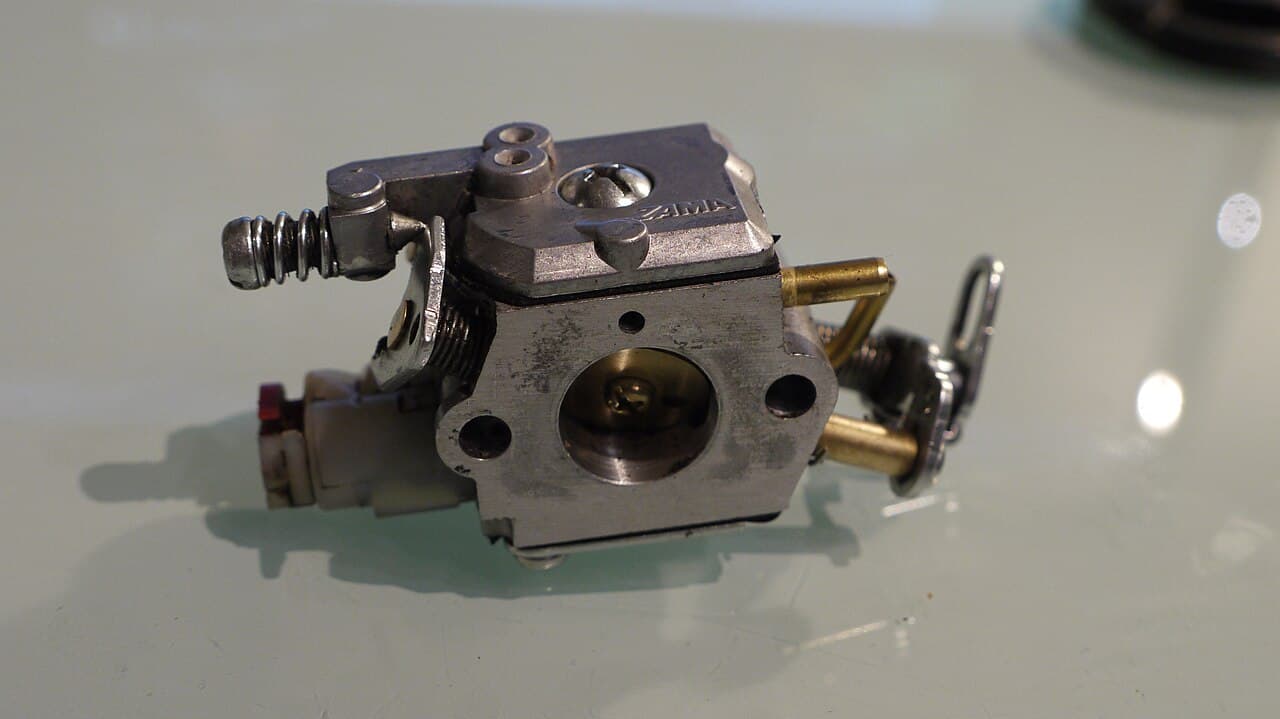
Why carburetors gum up
A carburetor meters fuel through very small passages. Fuel that sits leaves deposits that narrow them. Briggs & Stratton says "Gasoline deteriorates after 30 days and can negatively affect engine and starting performance."[1] Its stabilizer guidance says "Gas begins to degrade in as little as 30 days which can lead to your engine's fuel system clogging and your equipment not starting the following season."[2]
Ethanol blends add a second problem. Penn State Extension says "Engines that are rarely or seasonally used, such as lawnmowers or chainsaws, are especially prone to difficulties".[3] A mower or snow blower that sits for months is the textbook case.
Use fresh fuel
Buy only what you will burn in a month or so, and keep it in an approved, labelled container. Briggs & Stratton recommends "clean, fresh gasoline with a minimum octane rating of 87" for its engines, and says to avoid using ethanol and flex fuel in them, singling out E15.[2] Check your own engine's manual first, because the limits differ by maker. ECHO, for example, says "Alternative fuels, such as E-15 (15 % ethanol), E-85 (85 % ethanol) or any fuels not meeting ECHO requirements are NOT approved".[4] Penn State Extension suggests trying ethanol-free fuel if you suspect ethanol is the cause.[3]
Add a stabilizer
For anything that sits more than a few weeks, add stabilizer. Penn State Extension's advice is to "Add fuel stabilizer if the equipment will be idle for more than a few weeks, and avoid keeping stored fuel for long periods of time."[3] Follow the package directions, then run the engine: Briggs & Stratton says to "Add the stabilizer according to package directions and then run the engine for a few minutes to circulate the solution through the carburetor."[2] Skipping that run leaves untreated fuel in the carburetor bowl.
Store it properly
Briggs & Stratton's storage checklist starts with "Top off the fuel tank before storing."[5] The reason: "Keeping the tank full will minimize accumulation of moisture that causes carburetor-clogging rust."[2] The checklist adds that an alcohol-free stabilizer and ethanol treatment "keeps fuel fresh for up to 24 months".[5]
Some engines call for the opposite. If you do not use the maker's stabilizer or the fuel contains alcohol, Briggs & Stratton says to "remove all fuel from the tank and run the engine until it stops from lack of fuel."[5] ECHO says for its trimmers: "Drain the fuel tank completely and pull the recoil starter handle several times to remove fuel from the carburetor."[4] Follow your manual.
Keep stored fuel in an approved container, and note that ECHO says "Fuel storage laws vary by locality."[4] Take old fuel to your locality's household hazardous waste collection.
A simple routine
- Buy fresh fuel each season and write the date on the can.
- Stabilize before any storage longer than a few weeks.
- Run the engine a few minutes after adding stabilizer.
- Fill the tank for storage, unless the manual says to empty it.
- Replace the air and fuel filters at the intervals in the manual.
Stop and call a pro if
- The engine is already hard to start, surges or stalls after fresh fuel. The carburetor probably needs shop cleaning.
- Fuel leaks from the carburetor, line or tank, or you smell gasoline with the engine off.
- Fuel lines are cracked, stiff or swollen.
- You would have to adjust mixture screws or take the carburetor apart.
Getting help in Virginia
If it is already gummed up, read how to clean a small engine carburetor, what carburetor cleaning costs in Virginia and when to take a small engine in for carburetor service. Browse local handyman and repair businesses or more small engine answers.
When it needs a shop, describe the problem and local businesses will quote it.
Common questions
- How long can gasoline sit in a small engine?
- Briggs & Stratton says gasoline can start to degrade in as little as 30 days. With a stabilizer it says fuel can stay fresh for up to 24 months.
- Should I drain the tank or leave it full?
- It depends on the manual. Briggs & Stratton recommends a full tank of treated fuel; ECHO says to drain its trimmers completely before long storage.
- Does ethanol gum up a carburetor?
- It can contribute. Penn State Extension says ethanol can pick up contaminants and deposit them in the engine, and that seasonal equipment is especially prone to trouble.
- Do I have to run the engine after adding stabilizer?
- Yes, a few minutes, so the treated fuel reaches the carburetor.
Sources
- [1] How to Perform Lawn Mower Maintenance, Briggs & Stratton. Checked October 28, 2026.
- [2] The Importance of Fuel Stabilizer, Briggs & Stratton. Checked October 28, 2026.
- [3] Fuel Ethanol: Hero or Villain?, Penn State Extension. Checked October 28, 2026.
- [4] Grass Trimmer/Brush Cutter Operator's Manual, model SRM-410U, ECHO Incorporated. Checked October 28, 2026.
- [5] Storing Your Mower & Outdoor Power Equipment, Briggs & Stratton. Checked October 28, 2026.
Want a pro to handle it?
Describe the job once. Licensed local businesses send quotes, and you pay only when you book one.
Get a quote for Small Engines