Should I hire a painter or a drywall contractor to patch walls?
For small holes, nail pops and dents ahead of a repaint, a painter usually does the patching and painting in one job. For large holes, wet or crumbling board, or cracks that keep returning, hire a drywall contractor first. Check a Virginia license for work valued at $1,000 or more, and get written bids for the same list of work.
Free to ask. Local shops send quotes, and you pay only when you book one.
By Kasra Taheri, Founder, LoclisPublished
Researched and drafted with AI, then checked claim by claim against the sources listed below before it was published. Prices and rules change; the dates beside each source say when it was last checked.
Step by step
Read when to stop and call a pro, further down this page, before you start.
Step 1: Sort the damage
List each repair as small (nail pops, screw holes, dings), medium (a hole you can cover with tape) or large (bigger holes, soft or wet board).
Step 2: Check for moisture
Look for stains, bubbling or soft spots, and fix any leak before anyone patches.
Step 3: Call the right trade
Ask a painter to quote small repairs, and a drywall contractor for large holes, damaged board or cracks that keep returning.
Step 4: Check the house age
If it was built before 1978, ask whether the pro is lead-safe certified.[3]
Step 5: Look up the license
For work valued at $1,000 or more, check the contractor's Virginia license at dpor.virginia.gov.[4]
Step 6: Get written bids
Get at least three written bids based on the same list of work.[4]
Step 7: Settle who does what
Confirm in writing who patches, who primes and who paints, and whether texture matching is included.
Step 8: Limit the deposit
Keep the deposit to 10% down or $1,000, whichever is less.[4]
For a few small holes, nail pops or dents on walls you are about to paint, a painter is usually the better call, since the painter can patch, prime and paint in one job. For a hole bigger than a hand, damaged or wet board, or cracks that keep returning, hire a drywall contractor first and the painter second. When the job is both, ask one pro for a single quote and confirm in writing who patches and who paints.
What each trade does
Virginia's Board for Contractors defines both. "Drywall contracting" means the service that provides for the installation, taping, and finishing of drywall, panels and assemblies of gypsum wallboard.[5] "Painting and wallcovering contracting" includes surface preparation, caulking, sanding, and cleaning preparatory to painting or coverings.[5]
In plain terms, a drywall finisher works on the board itself: cutting out damaged sections, hanging new board, taping and finishing joints. A painter prepares and coats the surface. The line blurs on small repairs, and many painters patch small damage as part of prep. Its definitions add that the CBC and RBC classifications and the HIC and CIC specialties also provide for this function.[5]
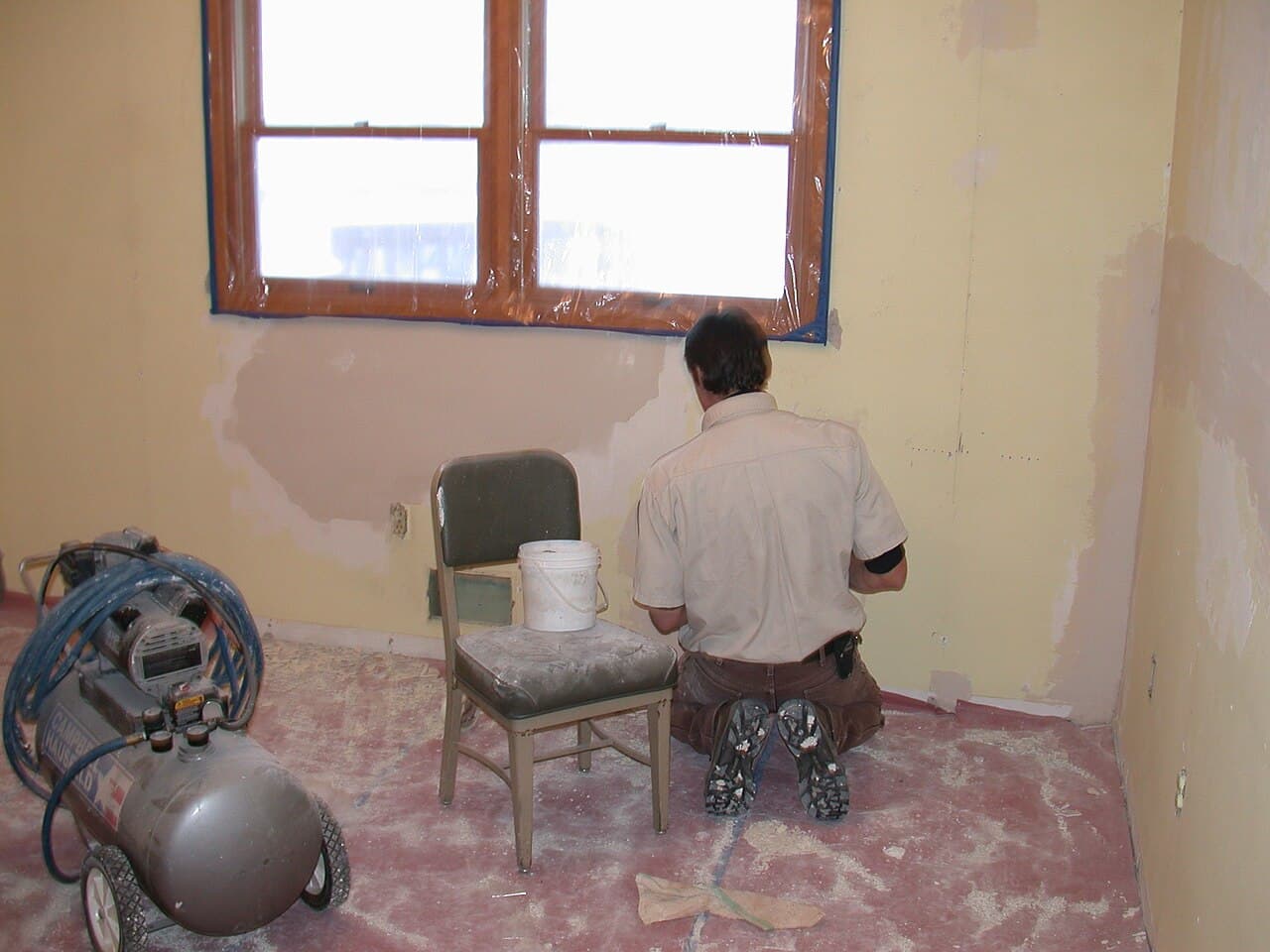
Which to call for which repair
Nail pops, screw holes, dings and hairline cracks. A painter. These are fill, sand, prime and paint jobs. USG gives the same recipe for a small hole or crack: wipe the area clean, fill with patching compound, let it dry, add a second coat if necessary, then sand and prime when dry.[1]
A medium hole. Either, as long as the one you hire has done it. USG's method is to crisscross two or three strips of paper joint tape over the opening and embed the tape in compound.[1] Ask to see a finished patch.
A large hole, a cut-out left by a removed fixture, or board that is soft or crumbling. A drywall contractor. The damaged board has to be cut back to something solid and a new piece fastened in before any finishing.
Water damage. Fix the leak first. Then a drywall contractor replaces the wet board, and the painter comes last. Patching over a wet wall hides a problem that comes back.
Cracks that keep reopening. A drywall contractor can look for the cause, which a fill-and-paint job does not address. USG notes that improperly installed or missing control joints will not allow for relief of stresses within or placed upon the gypsum membrane, resulting in cracks.[2]
Patches across a whole room. One firm that does both saves coordination. Otherwise sequence it: drywall repairs, then primer, then paint.
Questions to ask either one
Ask whether texture matching is included, how many visits the work needs, and whether the quote covers painting the whole wall. Patches are hard to hide with a touch-up, and Benjamin Moore notes that matching color and sheen is crucial to a proper touch-up.[6]
Ask about dust, too. A tidy pro keeps dust down; USG describes sanding with a wet sponge to eliminate dust and scuffing of paper.[1]
Licensing and paperwork in Virginia
If the work you are considering is valued at $1,000 or more, a valid Virginia contractor's license is required for the license category in which the contractor is to work.[4] You can look up a license at dpor.virginia.gov before you sign. Many small patch jobs fall under that line, but the advice on contracts still applies: Virginia law requires all licensed contractors to provide a written contract for residential work.[4]
Get at least three written bids on the same specifications, and limit your deposit to 10% down or $1,000, whichever is less.[4]
In a home built before 1978, anyone paid to perform work that disturbs paint must be certified in lead-safe work practices, and EPA recommends that homeowners hire a lead-safe certified contractor.[3] Ask about it before anyone sands.
Stop and call a pro if
- The wall has a stain, bubbling or a soft spot. Moisture has to be found and fixed before anyone patches.
- The drywall is crumbling. EPA's advice is that if in doubt, treat the material as if it contains asbestos and leave it alone.[7]
- Paint is flaking in a pre-1978 home. EPA recommends that homeowners hire a lead-safe certified contractor for work in a pre-1978 home.[3]
Next steps
Read what a patch and paint job costs in Virginia and how to fix nail pops in drywall. For more, browse painting answers or the painting category.
To get written quotes, describe the repair and local drywall and painting pros will quote it.
Common questions
- Can a painter patch drywall?
- For small repairs, yes, and many do. The Board for Contractors defines painting contracting to include surface preparation, caulking, sanding, and cleaning preparatory to painting. Large holes and damaged board are better handled by a drywall contractor, and you should ask to see finished work.
- Is a drywall contractor overkill for a few holes?
- Often, yes. Small holes and nail pops are fill, sand, prime and paint work, and a painter can do them in the same visit as the paint.
- Who comes first when I need both?
- The drywall contractor, then primer, then the painter. Compound has to be dry, sanded and primed before paint goes on.
- Do I need a licensed contractor for a patch job?
- Virginia's Board for Contractors says a license is required when the work is valued at $1,000 or more. Small patch jobs often fall below that. For anything larger, look up the license on the DPOR website before you hire.
- Does it matter if my house was built before 1978?
- It can. EPA's rule requires anyone paid to perform work that disturbs paint in housing built before 1978 to be certified in lead-safe work practices, and EPA recommends that homeowners hire a lead-safe certified contractor.
Sources
- [1] Sheetrock Brand Patch and Repair Pack Plus 3 Application Tips (J1805), United States Gypsum Company. Checked October 27, 2026.
- [2] Wallboard Finished Appearance, Managing Expectations and Best Practices (WB2625), United States Gypsum Company. Checked October 27, 2026.
- [3] Lead Renovation, Repair and Painting Program, U.S. Environmental Protection Agency. Checked October 27, 2026.
- [4] What You Should Know Before You Hire a Contractor, Virginia Board for Contractors, DPOR. Checked October 27, 2026.
- [5] 18VAC50-22-30. Definitions of specialty services (Board for Contractors Regulations), Virginia Administrative Code, Virginia General Assembly. Checked October 27, 2026.
- [6] How to Touch Up Paint, Benjamin Moore. Checked October 27, 2026.
- [7] Protect Your Family from Exposures to Asbestos, U.S. Environmental Protection Agency. Checked October 27, 2026.
Want a pro to handle it?
Describe the job once. Licensed local businesses send quotes, and you pay only when you book one.
Get a quote from a local pro