Should I repair or replace my kitchen cabinets?
Repair kitchen cabinets when the boxes are solid and the trouble is hinges, doors, drawers or a worn finish. Replace them when the boxes are water-damaged, separating or the layout no longer works. Check under the sink first, since swollen panels there settle the question. In a pre-1978 home, ask about lead-safe work before any sanding or demolition.
Free to ask. Local shops send quotes, and you pay only when you book one.
By Kasra Taheri, Founder, LoclisPublished
Researched and drafted with AI, then checked claim by claim against the sources listed below before it was published. Prices and rules change; the dates beside each source say when it was last checked.
Step by step
Read when to stop and call a pro, further down this page, before you start.
Step 1: Inspect the boxes
Press on the bottoms and sides of each base cabinet, especially under the sink and beside the dishwasher, for soft or swollen panels.
Step 2: Check the fixings
Check that the boxes are firmly fixed to the wall and level, and that the face frames are intact.
Step 3: Sort the problems
List which problems are hardware, doors and finish and which are the boxes themselves.
Step 4: Check the home's age
If the home was built before 1978, plan for lead-safe practices before any sanding or demolition.[1]
Step 5: Get written bids
Ask at least three licensed businesses for written bids on repair and on replacement.[3]
Step 6: Compare and decide
Weigh the repair quote against replacement, including the disruption and the life left in the boxes.
Repair your kitchen cabinets if the boxes are solid and the problems are doors, hinges, drawers or a tired finish. Replace them if the boxes themselves are damaged by water, falling apart, or the layout no longer works for you. Most cabinets in decent shape are worth repairing or refinishing, and the decision gets easy once you check three things.
Check the boxes first
The cabinet boxes are the part that matters. Doors, drawer fronts and hardware are easy to change, but a failing box means starting over.
Open each base cabinet and press on the bottom and sides. Swollen, soft or crumbling panels, especially under the sink and next to the dishwasher, mean water has been there. Particleboard and similar panels rarely recover once they have soaked. If only one or two bases are damaged, you can often replace just those. If the damage is widespread, replacement makes sense.
Then check that the boxes are firmly fixed to the wall, level, and that the face frames are not cracked or separating. A cabinet that is solid and straight is a good candidate for repair.
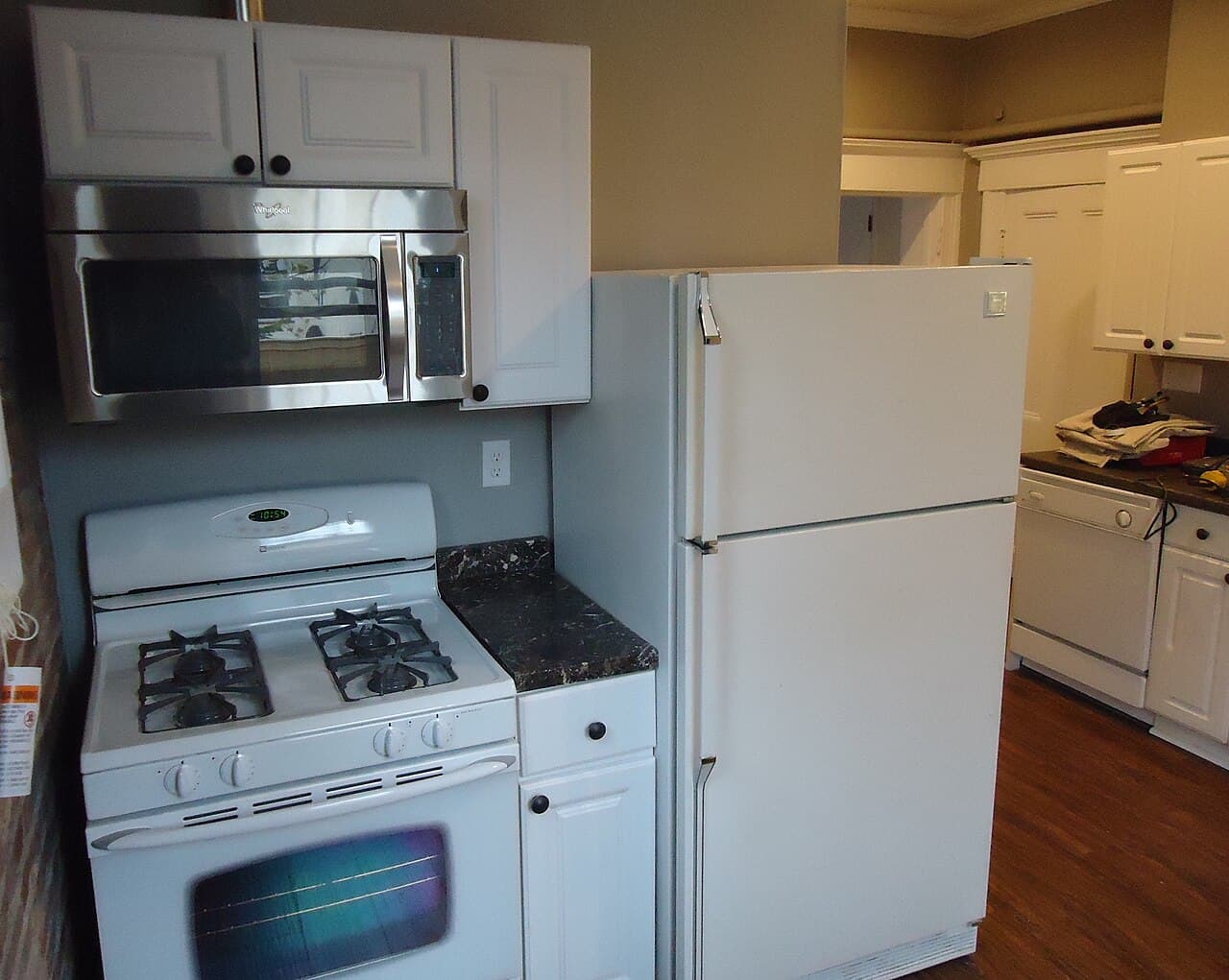
Repair is a good choice when
- the problems are sagging or sticking doors, worn hinges or drawer slides: see how to fix a sagging cabinet door
- the finish is worn, stained or dated, but the wood is sound
- the layout works and the cabinets fit the space and your storage needs
- you want to keep the budget small and the disruption short
Replace when
- water damage has softened the boxes or caused mold
- the layout does not work: not enough storage, awkward corners, or you are changing the room
- parts such as doors or hinges are no longer available and the boxes are failing
- you are doing a full kitchen remodel and want new cabinets anyway
Lead and materials in older kitchens
Age matters. If your home was built before 1978, EPA says it may have lead-based paint, and the older your home, the more likely it has lead-based paint.[1] EPA says any renovation, repair or painting project in a pre-1978 home that has lead-based paint can easily create dangerous lead dust, and recommends hiring a lead-safe certified contractor.[1] That applies to ripping out old painted cabinets as much as to sanding them, so ask any contractor whether they are lead-safe certified.
Material matters too. Particleboard, medium-density fiberboard and hardwood plywood are composite wood products, and EPA says formaldehyde is found in resins used in the manufacture of composite wood products (i.e., hardwood plywood, particleboard and medium-density fiberboard).[2] EPA finalized a regulation to set limits on how much formaldehyde can be released from composite wood products.[2] If you are replacing cabinets, ask the supplier about the panel material.
Hiring someone in Virginia
Kitchen cabinet replacement is usually a contractor job, and the licence rules apply. DPOR's guide says that if the work you are considering is valued at $1,000 or more, a valid Virginia Contractor's License is required for the license category in which the contractor is to work.[3] Check the licence on DPOR's lookup, solicit at least three bids for the work you need,[3] and make sure each is based on the same specifications. If the work includes plumbing or electrical changes, ask who is doing them and check their licences on the same lookup.
For a repair, ask for a written quote that lists what is covered. Cabinet repair costs in Virginia explains what drives the price.
Stop and call a pro if
- You find mold or a musty smell behind or inside the cabinets.
- Boxes are pulling off the wall or the countertop is sagging.
- Water keeps returning under the sink: a plumber should find the leak before any cabinet work.
- Your home predates 1978 and the plan involves sanding, stripping or demolition.[1]
Getting help in Virginia
Browse local cabinet repair pros, or read more furniture repair answers.
To get started, describe your cabinets and local pros will quote the repair.
Common questions
- Is it worth repairing old kitchen cabinets?
- Usually, if the boxes are solid. New hinges, slides, pulls and a fresh finish can transform a kitchen for a fraction of what replacement costs, and the boxes in older cabinets are often better built than cheap new ones.
- How do I know if water has ruined my cabinets?
- Press on the bottom and sides of the sink base. Soft, swollen, crumbling or stained panels mean water damage. Particleboard that has soaked rarely recovers.
- Can I replace just some cabinets?
- Often yes, if the style is still sold or a cabinet shop can build to match. Damage is usually concentrated under the sink and dishwasher.
- Do I need a licensed contractor to replace kitchen cabinets?
- DPOR says a Virginia Contractor's License is required when the work is valued at $1,000 or more. Plumbing and electrical changes also need properly licensed tradespeople.
- Should I refinish instead of replace?
- If the boxes are sound and the problem is the look, refinishing or painting is the usual middle path. In a pre-1978 home, ask about lead-safe practices first.
Sources
- [1] Lead-Safe Renovations for DIYers, U.S. Environmental Protection Agency. Checked October 27, 2026.
- [2] Facts About Formaldehyde, U.S. Environmental Protection Agency. Checked October 27, 2026.
- [3] What You Should Know Before You Hire a Contractor, Virginia Board for Contractors, DPOR. Checked October 27, 2026.
Want a pro to handle it?
Describe the job once. Licensed local businesses send quotes, and you pay only when you book one.
Get a quote for Furniture