Should I repair or replace my range hood?
Repair a range hood for a filter, switch, light or a covered part on a hood you like; replace it when the repair is a big share of a new hood's installed price, parts are scarce or it never cleared the cooktop. Check the warranty and compare written quotes.
Free to ask. Local shops send quotes, and you pay only when you book one.
By Kasra Taheri, Founder, LoclisPublished
Researched and drafted with AI, then checked claim by claim against the sources listed below before it was published. Prices and rules change; the dates beside each source say when it was last checked.
Step by step
Read when to stop and call a pro, further down this page, before you start.
Step 1: Wash the filters
Clean or replace the filters first; a clogged filter makes the motor work harder.[1]
Step 2: Name the symptom
Write down what is wrong: no light, no fan, weak airflow, noise, smell or grease dripping.
Step 3: Check the warranty
Look up the warranty and any extended plan, which may cover parts and labor.[2]
Step 4: Get a written diagnosis and quote
Ask for itemized written quotes, ideally from three businesses.[4]
Step 5: Price a new hood installed
Add the new hood price, any duct or wiring work and installation labor.
Step 6: Compare and decide
If the repair is a large share of the installed price on an older hood, replace it; otherwise repair.
Repair if the fix is small, replace if the hood is failing for good
Repair a range hood when the problem is a filter, a switch, a light or a single part on a hood you like, and replace it when it needs a major part, parts are hard to find, or the hood never cleared the cooktop well. There is no official cutoff. The decision is a comparison between a written repair quote and the price of a new hood installed.
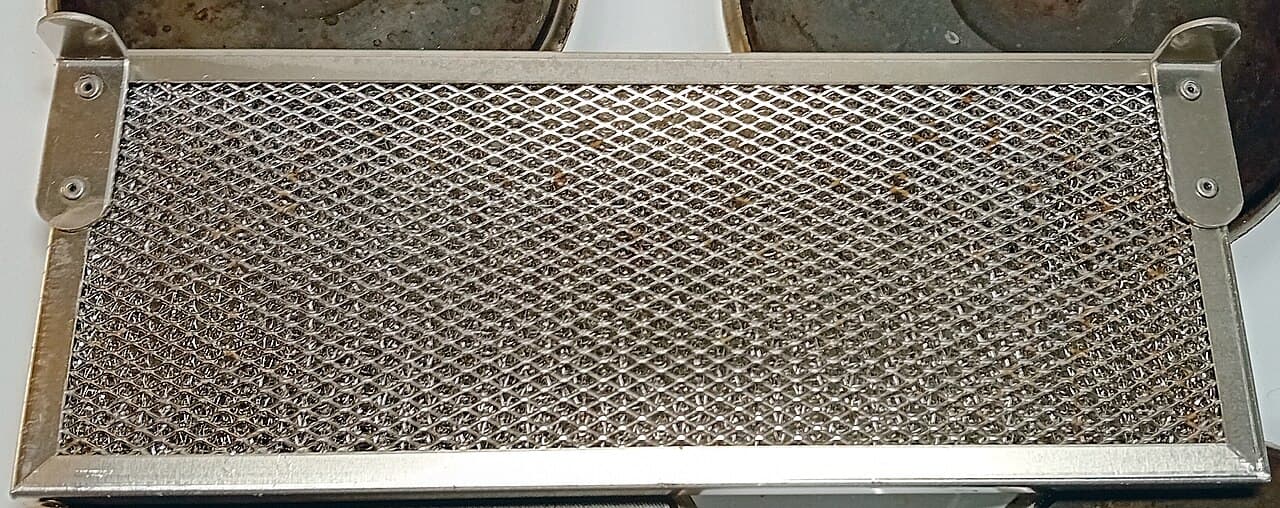
Start with what costs nothing. A hood that smells or moves little air may only need clean filters. The Department of Energy's building science lab says cleaning or replacing the filter can also save energy by reducing the amount of energy the motor uses to move air.[1] Wash them first: how to clean a greasy range hood filter.
Questions that settle it
Is it under warranty? Wolf's guide covers all parts and labor for two years from the date of original installation, and blower motors for five years with the owner paying labor.[2] Terms differ by maker, so read yours. A covered repair usually settles the question.
What is wrong? A burnt-out light, a worn switch or filters are repairs. A dead motor, a failed control board or a hood that rattles loose is a bigger bill. Get the diagnosis in writing.
How does the quote compare with a new hood installed? Put the repair next to the full price of a comparable new hood plus installation, not the sticker price alone. If the repair is close to that total on an older hood, replacing usually makes more sense. If the hood is newer or high end, repair usually wins.
Does the hood do its job? If it never captured smoke well, a repair keeps a hood that disappoints you. KitchenAid points out that cabinet clearances and the venting system affect performance: cabinet opening dimensions shown in the installation instructions must be used, and cabinets closer than the minimum can create dead air pockets that impair performance.[3]
Replacing a hood is more than swapping the box
A like-for-like replacement is simplest. A bigger or stronger hood changes the job. KitchenAid notes that local building codes may require the use of makeup air systems when ventilation systems move more than a specified CFM of air.[3] A new vented hood also has to connect to the duct: Wolf's guide says to use only steel ductwork to reduce the risk of fire.[2]
On permits, Virginia's building code lists ordinary repairs that need no permit, including "Replacement of mechanical appliances provided such equipment is not fueled by gas or oil in Group R-2 where serving a single-family dwelling and in Groups R-3, R-4, and R-5."[6] Whether your hood counts, and whether new wiring or duct work is involved, is a question for your local building office before the work starts.
Who should do it
Wolf's guide says the appliance must be properly installed and grounded (earthed) by a qualified technician.[2] Virginia defines a tradesman as any individual who engages in, or offers to engage in, work for the general public for compensation in the trades of electrical, plumbing and heating, ventilation and air conditioning.[5]
Compare at least three written quotes. The Board for Contractors' hiring guide advises getting at least three written bids or estimates using identical plans and specifications so you can compare prices and contractors.[4] For cost drivers see what range hood repair costs in Virginia.
Stop and call a pro if
- The hood smells of burning, sparks or trips the breaker. Switch it off and leave it off.
- Grease is dripping from the hood body or duct. It needs cleaning beyond the filters.
- The hood hangs from the cabinet or wall and shifts. Do not run it until it is secured by a qualified technician.
- Replacement means new wiring, a new duct run or a gas range below. Hand it to licensed trades.
Getting help in Virginia
Browse range hood repair, appliance repair and more appliance repair answers.
When you are ready, describe the hood problem once and local businesses quote it.
Common questions
- Is there a rule for when to replace a range hood?
- No official one. The usual approach is to compare a written repair quote with the full installed price of a new hood, and to weigh the hood's age, the warranty and whether it ever worked well.
- Does replacing a range hood need a permit in Virginia?
- The building code lists replacement of mechanical appliances not fueled by gas or oil in single-family dwellings among the ordinary repairs exempt from a permit application. Whether a hood counts, or new wiring or duct work is involved, is for your local building office to say.
- Should I repair a hood that is under warranty?
- Usually yes. Read the warranty: Wolf's covers parts and labor for two years and blower motors for five, with the owner paying labor after year two. Other makers differ.
- Can I upgrade to a more powerful hood?
- You can, but a stronger hood may need a larger duct and, per KitchenAid, local codes may require makeup air above a specified CFM. Ask the installer.
- Who installs a replacement hood?
- Wolf's guide says a qualified technician must install and ground it. Any wiring is electrical work, a licensed trade in Virginia.
Sources
- [1] Clean or Replace Range Hood Filter, Building America Solution Center, Pacific Northwest National Laboratory, U.S. Department of Energy. Checked October 27, 2026.
- [2] Wolf ventilation hood use and care guide (international products), Wolf Appliance, Inc.. Checked October 27, 2026.
- [3] Vent Hood Not Removing Smoke or Odor, KitchenAid Product Help. Checked October 27, 2026.
- [4] What You Should Know Before You Hire a Contractor, Virginia Board for Contractors, DPOR. Checked October 27, 2026.
- [5] Va. Code § 54.1-1128. Definitions (Tradesmen), Code of Virginia, Virginia General Assembly. Checked October 27, 2026.
- [6] 13VAC5-63-80. Section 108 Application for permit (Virginia Uniform Statewide Building Code), Virginia Administrative Code, Virginia General Assembly. Checked October 27, 2026.
Want a pro to handle it?
Describe the job once. Licensed local businesses send quotes, and you pay only when you book one.
Get a quote for Appliance Repair