Why is my range hood fan not working?
Start with the simple causes: a tripped breaker, a control set wrong, or filters packed with grease. If the fan runs but moves little air, check the filters, the recirculating charcoal filter and make-up air. If it hums, grinds or will not start, stop there; the motor and wiring are a technician's job.
Free to ask. Local shops send quotes, and you pay only when you book one.
By Kasra Taheri, Founder, LoclisPublished
Researched and drafted with AI, then checked claim by claim against the sources listed below before it was published. Prices and rules change; the dates beside each source say when it was last checked.
Step by step
Read when to stop and call a pro, further down this page, before you start.
Step 1: Look at the whole hood
Note whether the fan, the light or both are dead, and whether the fan hums, rattles or stays silent.
Step 2: Check the breaker
Look at the breaker panel for a tripped breaker for the kitchen circuit, and confirm power to the hood is on.[1] If it trips again right away, stop.
Step 3: Try every control
Switch the fan to each speed. On a touch-control hood, try each button, and check the manual for how the controls reset.
Step 4: Check the light separately
If the fan runs but the light does not, the bulb or LED is the issue, not the fan.[1]
Step 5: Look at the filters
Check that the grease filters are seated and not packed with grease, and that a recirculating hood has a fresh charcoal filter.[2]
Step 6: Rule out airflow problems
Switch off nearby fans, look at cabinet clearance and note whether the house is very tight, since the air exhausted by the unit must be replaced.[2]
Step 7: Stop at the housing
Do not open the motor housing or touch wiring; book a technician if the fan still does not run.[1]
Check power, controls and the light first
Most hoods that "died" have no power, are set wrong, or have a blocked filter. Work through the cheap checks before you call anyone.
Wolf's troubleshooting guide for a hood that does not operate says to verify power is on, and to verify electrical power to hood and home circuit breaker is on.[1] So look at the breaker panel for a tripped breaker, and check whether the hood's light or other controls respond. Then confirm the fan is set to a speed rather than only the light. On a hood with touch controls, try each speed button and check the manual for how the controls work.
If the fan runs but the light does not, the light is the problem, not the fan. Wolf's guide says to verify bulbs have not burned out, and that LED lighting must be replaced by Wolf factory certified service.[1] Check your own manual for which kind of light your hood uses.
If it runs but barely moves air
A fan that turns but does not clear smoke is a different problem. KitchenAid's help page lists the usual causes, starting with the controls, the grease filter and the airflow path.[2]
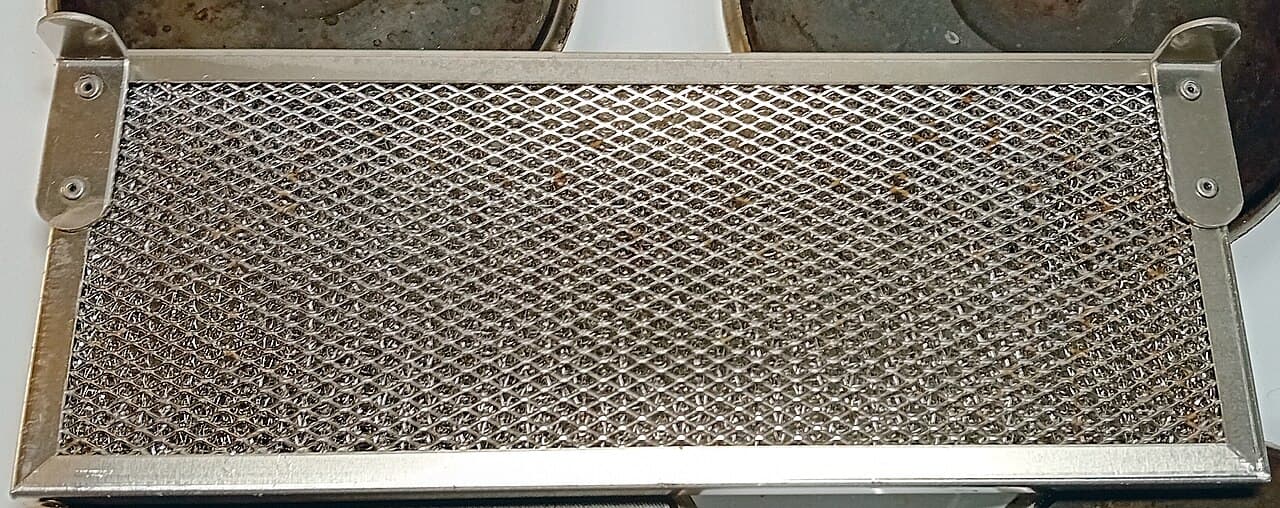
- The grease filter. To avoid the buildup of grease, the filter should be cleaned often.[2] See how to clean a greasy range hood filter.
- A recirculating filter. If the hood recirculates rather than exhausting outside, it needs a charcoal filter. The charcoal filter is not washable.[2] A spent one restricts airflow; replace it with the type your manual specifies.
- Competing air currents. Other air movement devices, such as ceiling fans, air conditioner registers, etc., can create air currents that interfere with ventilation.[2]
- Make-up air. The air exhausted by the unit must be replaced, and in a very tight house the hood may not vent properly.[2] Local building codes may require the use of makeup air systems when ventilation systems move more than a specified CFM of air.[2]
- Cabinets too close. Cabinets that are closer than the minimum distance allowed can create dead air pockets that impair performance.[2]
Noise, wobble and a fan that hums
A fan that hums but does not spin, rattles, or sounds unbalanced points to the motor, the fan wheel or a loose part inside the housing. Wolf warns that, to avoid motor bearing damage and noisy or unbalanced impellers, keep drywall spray, construction dust, etc. off power unit.[1] If the house has had recent drywall or construction work, dust in the housing is one possible reason a hood that worked before now sounds rough.
This is where DIY ends. Wolf's guide says: do not repair or replace any part of this appliance unless specifically recommended in this guide, and all other service should be performed by a qualified technician.[1] Opening the housing exposes wiring.
Safe things to try
Stay on the outside of the hood. Reset the controls, check the breaker, clean the filters and look at the recirculating filter. If none of that works, stop. Do not open the motor housing, jump a switch or power the fan another way.
Also, never keep using a damaged hood. Wolf's guide says to not operate any fan with a damaged cord or plug, and to discard the fan or return it to an authorized service facility for examination and/or repair.[1]
Stop and call a pro if
- The breaker trips again as soon as you reset it. That is a fault in the hood or its circuit, not a setting.
- You smell burning or see scorched plastic or wiring. Switch the hood off at the wall control, leave it off and have it looked at.
- The fan hums but does not turn, or grinds and wobbles. The motor, capacitor or wheel needs a technician.
- Nothing works and the breaker is on. The cause may be the switch, control board or the wiring.
- The hood needs wiring, a new duct or a new fan. In Virginia, "Tradesman" means any individual who engages in, or offers to engage in, work for the general public for compensation in the trades of electrical, plumbing and heating, ventilation and air conditioning.[3] Ask for the licence number.
Getting help in Virginia
Once you know it needs service, read what range hood repair costs in Virginia and whether to repair or replace the hood. Browse range hood repair, appliance repair and more appliance repair answers.
When you are ready, describe the hood problem once and local businesses quote it.
Common questions
- Why does my range hood light work but the fan does not?
- The light and the fan usually run from separate switches and parts, so a working light shows the hood has power. The fan motor, its speed control or its switch has then failed or is not getting a signal. Check the speed setting, then call a technician rather than opening the housing.
- Why does my range hood fan run but not suck air?
- Usually a grease-packed filter, a spent charcoal filter on a recirculating hood, a blocked or crushed duct, or not enough make-up air in a tight house. KitchenAid's help page lists the controls, filter, competing air currents, make-up air, cabinet clearance and venting as the things to check.
- Why did my range hood stop working after the breaker tripped?
- If the breaker is back on and the hood is still dead, the hood may have failed, which is what tripped the breaker. If it trips again when reset, leave it off and call a licensed electrician or an appliance technician.
- Is it safe to replace a range hood fan motor myself?
- Wolf's guide says to not repair or replace any part of the appliance unless the guide specifically recommends it, and to leave other service to a qualified technician. The motor sits behind wiring, so treat it as a technician's job.
- Can I use the stove while the hood is broken?
- For light cooking with a window open, many people do. Avoid high-heat frying and searing until it is fixed, and keep a lid or baking sheet nearby for a grease fire.
Sources
- [1] Wolf ventilation hood use and care guide (international products), Wolf Appliance, Inc.. Checked October 28, 2026.
- [2] Vent Hood Not Removing Smoke or Odor, KitchenAid Product Help. Checked October 28, 2026.
- [3] Va. Code § 54.1-1128. Definitions (Tradesmen), Code of Virginia, Virginia General Assembly. Checked October 28, 2026.
Want a pro to handle it?
Describe the job once. Licensed local businesses send quotes, and you pay only when you book one.
Get a quote for Appliance Repair