Should I repair or replace my refrigerator?
Repair a refrigerator when the fault is simple, the unit is not old and the quote is a small share of a new one. Replace when the sealed system has failed or the refrigerator is past about 15 years, since ENERGY STAR says older units cost more to run. Compare written quotes against a new price.
Free to ask. Local shops send quotes, and you pay only when you book one.
By Kasra Taheri, Founder, LoclisPublished
Researched and drafted with AI, then checked claim by claim against the sources listed below before it was published. Prices and rules change; the dates beside each source say when it was last checked.
Step by step
Read when to stop and call a pro, further down this page, before you start.
Step 1: Name the fault
Write down the symptom and model; a gasket, fan or switch is a simple repair, a sealed-system fault is not.
Step 2: Check the age
Note how old the refrigerator is; ENERGY STAR flags units over 15 years old as costing more to run.[4]
Step 4: Get written quotes
Collect at least three itemized written estimates.[1]
Step 5: Price a replacement
Add the new unit, delivery, any fittings and haul-away.
Step 6: Decide
Replace if the repair is a large share of the replacement total on an older unit; repair if it is a small share on a newer one.
Step 7: Dispose of it properly
If you replace it, use retailer haul-away or a municipal or utility program rather than leaving it out.[3]
Decide by age, fault and quote
Repair when the fault is simple, the refrigerator is not old and the quote is a modest share of a new one. Replace when the fault is in the sealed system, the refrigerator is well past its middle age, or you were already running an inefficient unit. The decision comes down to three questions.
1. What failed
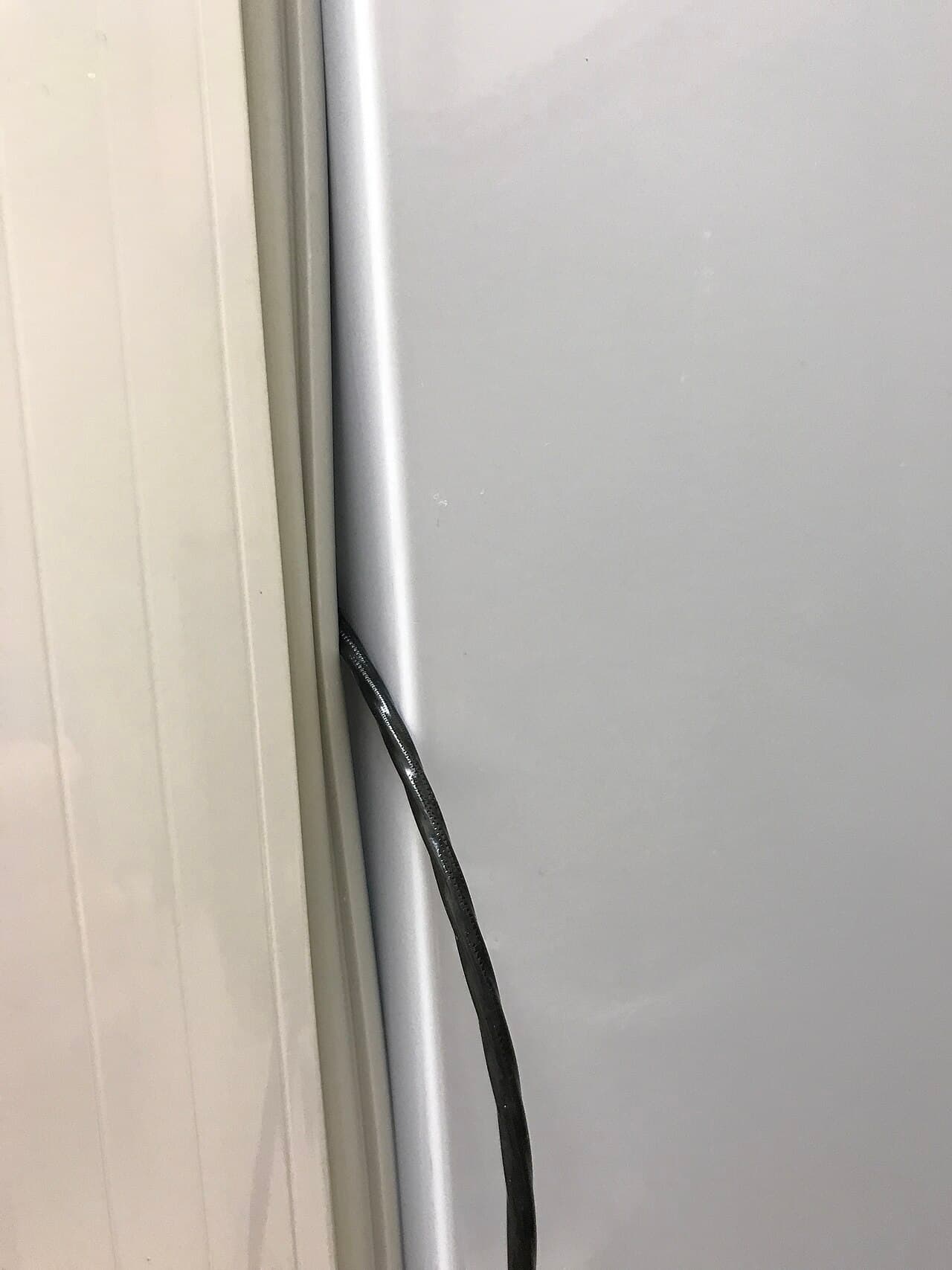
Gaskets, door switches, fans, thermostats and clogged defrost drains are routine repairs and usually make sense on a refrigerator you like. Start with the free checks: ensure the doors seal, as Whirlpool notes that a poor seal may lead to frost build-up and temperature fluctuation,[6] and keep the condenser coils clean on an older model as ENERGY STAR recommends.[4] See how to replace a door gasket.
A failure in the sealed system, meaning the compressor, evaporator or refrigerant circuit, is where replacement starts to win. Only certified technicians may service it, because EPA says technicians who maintain, service, repair, or dispose of equipment that could release ozone depleting refrigerants into the atmosphere must be certified.[2]
2. How old is it
ENERGY STAR gives a rough guide to what age costs you. It says refrigerators over 15 years old could be costing you about $95 per year more to run, and that on average, an old refrigerator uses about 20% more energy than a model that has earned the ENERGY STAR.[4] It also says ENERGY STAR certified refrigerators are about 9 percent more energy efficient than models that meet the federal minimum energy efficiency standard, and that replacing an old one while recycling it can save about $150 over the 12-year lifetime of the new product.[4]
So a major repair on a refrigerator in its late teens buys you a machine that is both near the end of its life and costing more to run. A modest repair on one under ten is usually worth doing.
3. What does the quote say
Get the quote in writing. The Virginia Board for Contractors advises at least three written bids or estimates so you can compare prices and contractors.[1] Ask for the diagnostic fee, part, labor and any warranty on the repair listed separately. Our page on what refrigerator repair costs lists the questions to ask.
Then price a replacement honestly: the new refrigerator, delivery, any water-line fitting and haul-away. If the repair is a large share of that total on an older unit, replace it. If it is a small share on a newer one, repair.
If you replace it
Do not just leave the old refrigerator out. Virginia law makes it unlawful to discard, abandon or leave a refrigerator with an airtight interior of more than two cubic feet without first removing the door or doors or hinges, with exceptions such as a unit being used for its intended purpose.[5]
EPA suggests checking with your electric utility for a rebate or turn-in program, and with your municipality, which may require the refrigerant to be recovered before it will pick the appliance up.[3] ENERGY STAR notes that many appliance retailers will pick up and recycle your old refrigerator when you purchase a new one.[4]
Stop and call a pro if
- The refrigerator is warm and the compressor runs hot or clicks. That is a sealed-system or electrical question for a technician.
- You see ice or water on the floor with the cabinet rusting inside. Get it looked at before replacing the contents.
- You smell burning or the cord is damaged. Unplug it and do not run it.
- You are about to move or tilt the old unit without help. They are heavy; use a retailer's haul-away.
Getting help in Virginia
Read the other appliance repair answers and browse the appliance repair directory to find local businesses.
When you are ready, describe the refrigerator problem once and local appliance repair businesses quote it, so you can compare the repair quotes against a new unit.
Common questions
- How old is too old to repair a refrigerator?
- There is no fixed age. ENERGY STAR points out that refrigerators over 15 years old could be costing you about $95 per year more to run, so a big repair at that age rarely pays.[^es]
- Is a new refrigerator more efficient?
- Generally. ENERGY STAR certified refrigerators are about 9 percent more efficient than models meeting the federal minimum standard, and an old refrigerator uses about 20% more energy than a certified one on average.[^es]
- Can I just put the old refrigerator on the curb?
- Not with the door on. Virginia Code § 18.2-319 makes it unlawful to discard a refrigerator with an airtight interior over two cubic feet without removing the doors or hinges, and municipalities may also require refrigerant recovery.[^va319][^epa-disp]
- Who can repair the sealed system?
- A technician certified under EPA Section 608, since the work could release refrigerant.[^epa-608]
Sources
- [1] What You Should Know Before You Hire a Contractor, Virginia Board for Contractors, DPOR. Checked October 27, 2026.
- [2] Section 608 Technician Certification, U.S. Environmental Protection Agency. Checked October 27, 2026.
- [3] Appliance Disposal (Section 608), U.S. Environmental Protection Agency. Checked October 27, 2026.
- [4] Refrigerators, ENERGY STAR, U.S. Environmental Protection Agency. Checked October 27, 2026.
- [5] Va. Code § 18.2-319, Discarding or abandoning iceboxes, etc.; precautions required, Code of Virginia, Virginia General Assembly. Checked October 27, 2026.
- [6] Doors Not Sealing - Refrigerator, Whirlpool Product Help. Checked October 27, 2026.
Want a pro to handle it?
Describe the job once. Licensed local businesses send quotes, and you pay only when you book one.
Get a quote for Appliance Repair