Why is my refrigerator not cooling when the freezer is cold?
Usually cold air is not reaching the fresh food section: blocked vents, a misset control, a crowded load, a poor door seal or dirty condenser coils. Check those first, then measure after 24 hours. If the fresh food side is still above 42 degrees, a fan, damper or defrost fault needs a technician.
Free to ask. Local shops send quotes, and you pay only when you book one.
By Kasra Taheri, Founder, LoclisPublished
Researched and drafted with AI, then checked claim by claim against the sources listed below before it was published. Prices and rules change; the dates beside each source say when it was last checked.
Step by step
Read when to stop and call a pro, further down this page, before you start.
Step 1: Check the controls
Confirm the fresh food control has not been turned up or down by accident; the factory sets controls to the mid setting, and you should wait at least 24 hours between adjustments.[1]
Step 2: Clear the air vents
Move food packages away from the vents at the back wall and near the bottom, because blocked vents restrict airflow.[1]
Step 3: Don't overload it
Thin out a crowded fresh food section so cold air can circulate, and give the refrigerator several hours to settle after adding a lot of warm food.[1]
Step 4: Check the door seal
Close the door on a strip of paper at several points, and look over the gasket for tears or gaps that let warm air in.
Step 5: Look at the surroundings
Make sure the refrigerator is not next to an oven or other heat source, behind a cabinet door or in a garage outside its rated range.[1]
Step 6: Clean the condenser coils
Unplug the refrigerator, then brush and vacuum the coils if your model has coils you can reach.[3]
Step 7: Retest over 24 hours
Put a thermometer in a glass of water on a middle shelf and read it after a day; the fresh food section should be between 37 and 42 degrees Fahrenheit.[2]
Start with airflow, not parts
If the freezer is cold but the refrigerator section is warm, the usual story is a cold-air supply problem, not a dead refrigerator. Cold air coming into the fresh food section originates in the freezer,[2] often through a damper, an air vent that on many models sits on the left side wall.[2] Block, starve or misread that flow and the fresh food side warms up while the freezer carries on.
Work from the free checks to the ones that need a technician.
Check the easy things first
Controls. The factory presets the temperature controls to the "mid setting."[1] If someone nudged the fresh food control, correct it one step and wait at least 24 hours between adjustments before judging the result.[1]
Vents. If the vents are blocked, airflow will be restricted, and temperature and moisture problems may occur.[1] A tub of leftovers pushed against the back wall is the classic culprit. Pull food away from the vents at the back and near the bottom.
Load. Adding a large amount of food or beverages warms the refrigerator or freezer, and it can take several hours for the refrigerator temperature to stabilize after adding a large number of warm items.[1] After a big grocery run, give it time before deciding something is broken.
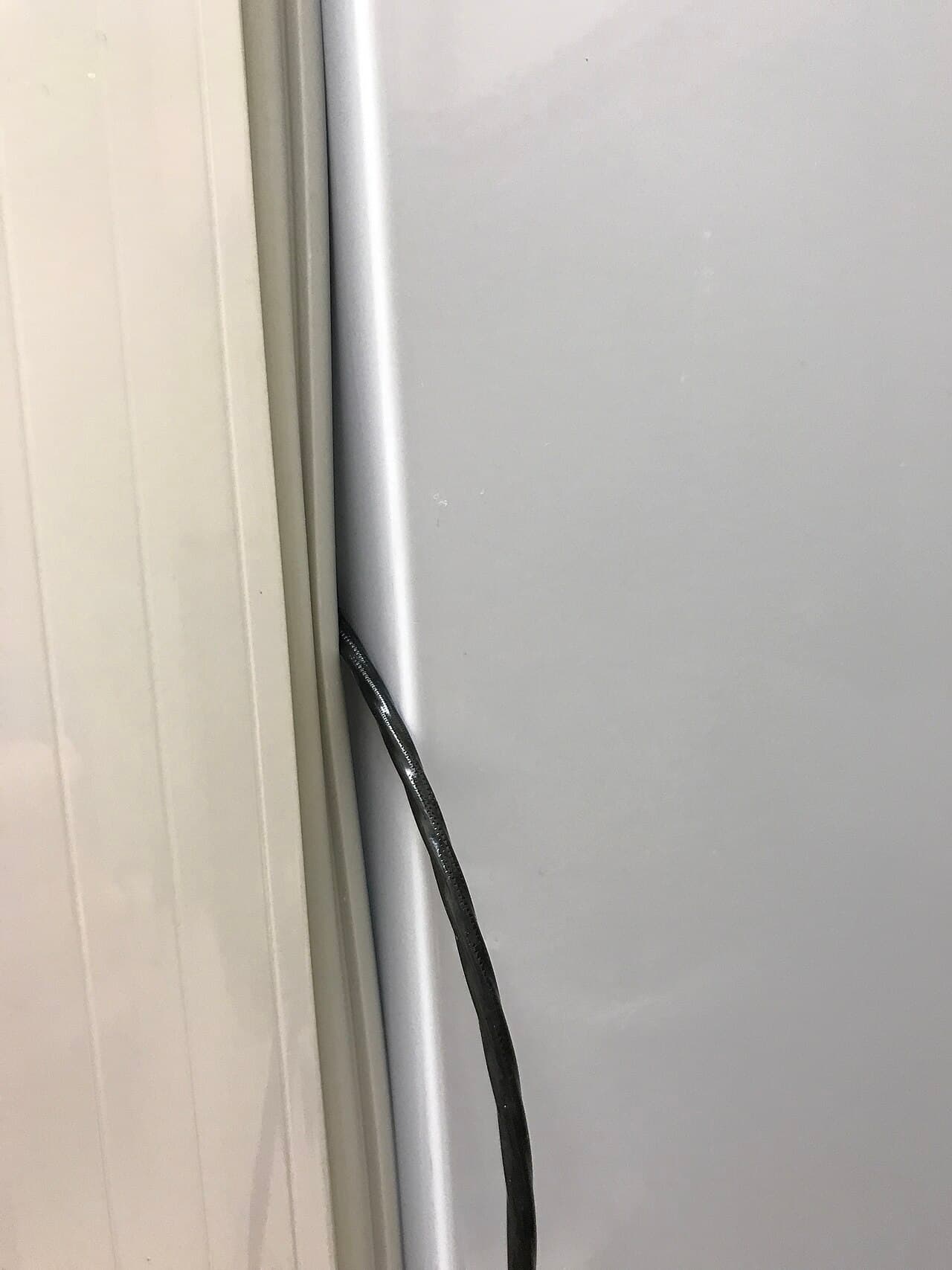
Door seal. A gasket that does not seal lets warm room air in all day. The paper-strip test and the fixes are in how to replace a refrigerator door gasket.
Location. Whirlpool recommends that you do not install the refrigerator near an oven, radiator, or another heat source.[1] Its guidance says the refrigerator is intended for use in a location where the temperature ranges from a minimum of 55°F (13°C) to a maximum of 110°F (43°C),[1] so check it if the refrigerator lives in a garage.
Condenser coils. GE notes that if your refrigerator runs but is not cold enough, you may need to clean the condenser coils.[3] Depending on the operating environment, coils may need to be cleaned as often as every other month.[1] The method is in how to clean refrigerator condenser coils.
Measure, don't guess
Set a thermometer in a glass of water on a middle shelf and read it after a day. GE gives the proper fresh food range as 37 to 42 degrees Fahrenheit and the freezer range as 0 to 8 degrees Fahrenheit.[2] If the freezer is in range and the fresh food side is several degrees above 42 after you have cleared vents, corrected the controls and cleaned the coils, the fault is likely inside the cabinet.
What a technician looks at
When the simple causes are ruled out, the usual suspects are parts that move cold air or manage frost: the damper that meters air from the freezer, the fan that circulates it, and the defrost system. A technician can tell them apart by checking the fan, the damper and whether the evaporator behind the freezer back panel is iced over. These are repairs done with panels off and power connected, which is not a job for the home.
A weak or leaking sealed system is a different category. EPA rules require that technicians who maintain, service, repair, or dispose of equipment that could release ozone depleting refrigerants into the atmosphere must be certified.[4] Do not try to open or add to the refrigerant circuit yourself.
If a repair is likely, ask for a written diagnosis, the part, and the labour as separate lines. Before you approve it, weigh it against the age of the unit using repair or replace a refrigerator and the price ranges in what refrigerator repair costs in Virginia.
Stop and call a pro if
- The fresh food side stays above range after the free checks. The cause is probably a fan, damper or defrost fault.
- Frost is built up on the freezer back wall or around the vents. That points to a defrost problem, and chipping at it can damage the evaporator.
- The compressor runs constantly and the cabinet is not cold, or you hear clicking and then silence. Unplug it and call.
- There is an oily residue or a chemical smell. That can mean a refrigerant leak. Servicing refrigerant equipment requires a certified technician.[4]
- You would have to remove panels or touch wiring. GE says to always unplug the refrigerator from the power supply before attempting any maintenance or cleaning.[3]
Move perishable food to a cooler with ice while you wait for a repair.
Getting help in Virginia
Browse more appliance repair answers, or see appliance repair businesses on Loclis.
When you are ready, describe the refrigerator problem once and local repair pros will quote it.
Common questions
- Why is the freezer cold but the refrigerator warm?
- Because the freezer makes the cold and the fresh food section borrows it. Cold air coming into the fresh food section originates in the freezer, usually through a vent or damper, so anything that blocks that path leaves the freezer cold and the fridge warm. Blocked vents are the easy cause to check first.
- How long should I wait after changing the temperature control?
- At least 24 hours. Whirlpool's guidance is to wait that long between adjustments and then recheck the temperature, so you are not chasing a reading that has not settled.
- What temperature should the refrigerator and freezer be?
- GE gives a proper fresh food range of 37 to 42 degrees Fahrenheit and a freezer range of 0 to 8 degrees. Check with a thermometer in a glass of water after a day, not by feel.
- Can a dirty condenser make the refrigerator warm?
- It can. GE says that if the refrigerator runs but is not cold enough, you may need to clean the condenser coils, though many newer models have coils placed so that they do not need cleaning. See [how to clean refrigerator condenser coils](/answers/how-to-clean-refrigerator-condenser-coils).
- Is it worth repairing a refrigerator that has stopped cooling the fresh food section?
- It depends on the part and the age of the refrigerator. Our guide to [repair or replace](/answers/should-i-repair-or-replace-refrigerator) and the page on [what repairs cost in Virginia](/answers/how-much-refrigerator-repair-cost-in-virginia) walk through the decision.
Sources
- [1] Not Cooling (refrigerator temperature concerns), Whirlpool Product Help. Checked October 28, 2026.
- [2] Side-by-Side Refrigerator - Too Cold, Freezing Food, GE Appliances. Checked October 28, 2026.
- [3] Refrigerator - Cleaning Condenser Coils, GE Appliances. Checked October 28, 2026.
- [4] Section 608 Technician Certification, U.S. Environmental Protection Agency. Checked October 28, 2026.
Want a pro to handle it?
Describe the job once. Licensed local businesses send quotes, and you pay only when you book one.
Get a quote for Appliance Repair