What are the signs a house needs to be rewired?
The warning signs include outlets or switch plates that feel hot, flickering lights, circuits that stop working, a burning-plastic smell, loose-fitting plugs and extension cords used as permanent wiring. Old wiring types matter too: knob-and-tube, and aluminum branch circuits from about 1965 to the mid-1970s. One sign is often a repair call; several, in an old house, are a reason for a licensed electrician to assess a rewire.
Free to ask. Local shops send quotes, and you pay only when you book one.
By Kasra Taheri, Founder, LoclisUpdated
Researched and drafted with AI, then checked claim by claim against the sources listed below before it was published. Prices and rules change; the dates beside each source say when it was last checked.
This is a job for a licensed pro in Virginia
This page explains what the work involves, the permits, what a licensed pro does and what drives the cost. It does not give step-by-step instructions, because this work needs a licence, a permit or both, and doing it wrong can injure someone. Before you hire, check the licence on Virginia's DPOR record.
A house usually needs rewiring when two things come together: warning signs that the wiring is failing or overloaded, and wiring that is old or of a type known for problems. One warm outlet is a repair. Warm outlets, flickering lights and dead circuits in a house still running on knob-and-tube or 1970s aluminum point to a rewire assessment by a licensed electrician.
The warning signs
Signs of electrical system problems include hot-to-the-touch face plates on receptacles or switches, flickering lights, circuits that don't work, and the smell of burning plastic at outlets or switches.[1] Each is worth acting on, and the list below adds a few more.
Warm outlets and switches. Unusually warm outlets or switches may mean a loose electrical connection that can start a fire, though some dimmer switches warm up in normal use.[2] Stop using a warm outlet until an electrician has checked it.[2]
Outlets and switches that misbehave. Outlets or switches that do not work properly may point to an unsafe wiring condition, and a loose screw holding a wire or a worn-out switch can lead to arcing, overheating or a fire.[2] Outlets that work only when you jiggle the plug, or switches that crackle, belong here.
Plugs that fall out. Loose-fitting plugs can cause overheating and fires.[2] A worn outlet on its own is a repair, but several in different rooms are worth mentioning to the electrician.
Extension cords everywhere. Cords used as permanent wiring can be a sign the house has too few outlets for how you live in it. "Extension cords are not as safe as permanent house wiring."[2] If a cord is in permanent use, have new outlets installed where they are needed.[2]
Fuses that keep blowing. When fuses blow often, the temptation is to fit a bigger one. The wrong size fuse can let too much current flow and overheat the wiring.[2] If the right size is not known, CPSC recommends having an electrician identify and label the correct size.[2]
The wiring itself
Some houses need a rewire assessment because of what is in the walls, even before symptoms appear.
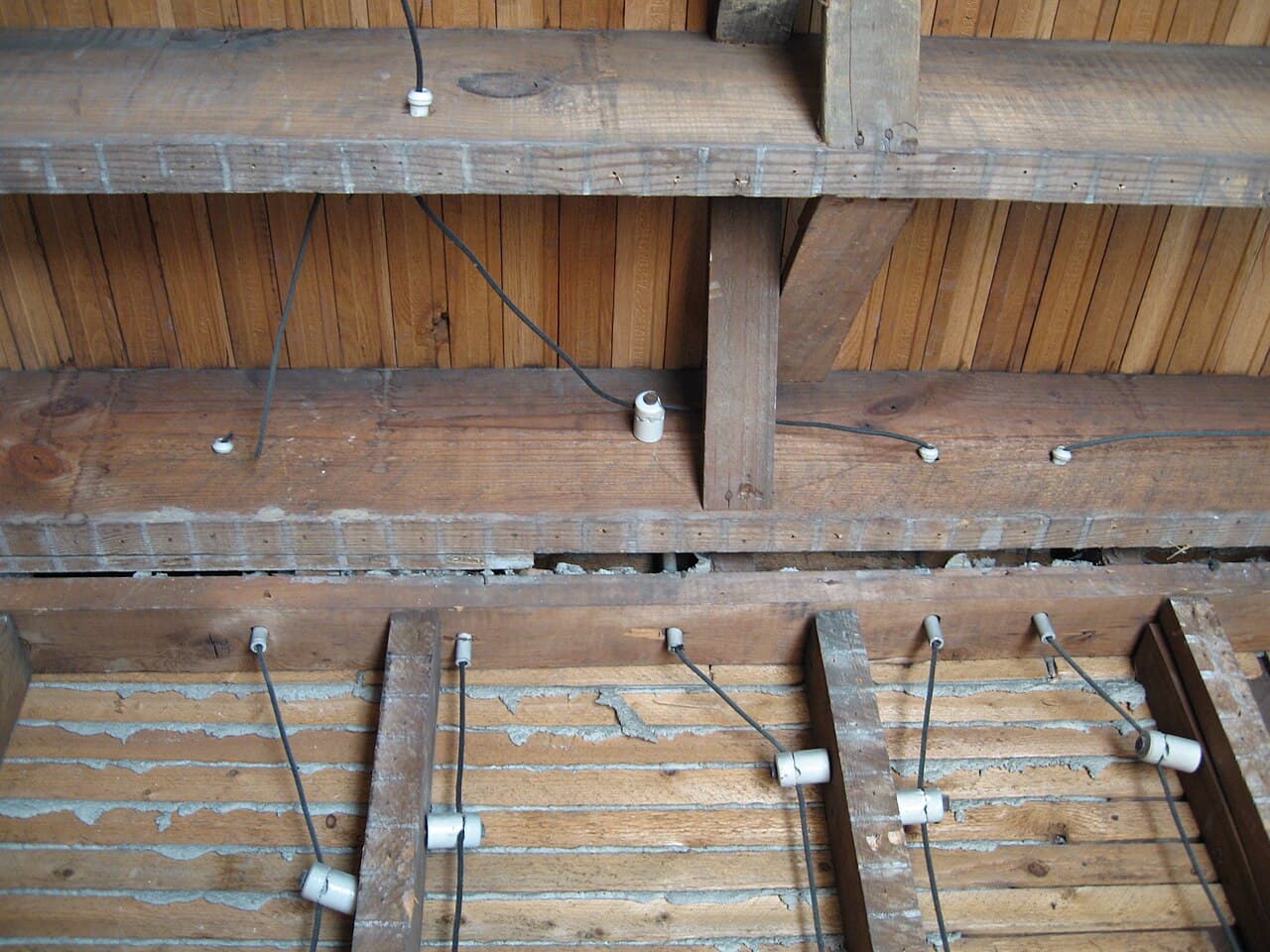
Knob-and-tube. Knob-and-tube wiring dates from before 1930, and it can be a fire hazard when in contact with insulation.[6] Look in an unfinished basement or attic for single wires running on white ceramic knobs. If you are buying, see whether knob-and-tube is a problem when buying in Virginia.
Aluminum branch circuits. Homes built before 1965 are unlikely to have aluminum branch circuit wiring, but cable installed between 1965 and the mid-1970s may.[1] The risk is at the connections: a survey for CPSC found that homes built before 1972 and wired with aluminum were 55 times more likely than copper-wired homes to have at least one outlet connection reach fire hazard conditions.[1] CPSC also warns that failing aluminum connections seldom give easily detected warning signs and have been reported to overheat with no prior indication.[1]
You can often check exposed cable in a basement, attic or garage without touching anything. Cable with aluminum conductors is marked "Al" or "Aluminum" on its jacket every few feet.[1] Read the whole marking: "CU-clad" or "Copper-clad" means copper-coated aluminum, which CPSC's repair advice does not cover.[1]
Age and additions. Decades of additions, a finished basement wired by a previous owner, or a kitchen remodel tacked onto old circuits can all leave a house with a patchwork system. That is not automatically dangerous, but it is a reason for an electrician to look.
Why it matters
Electrical fires are not rare. U.S. Fire Administration national estimates for 2023 put residential building electrical malfunction fires at 23,700, with 305 deaths, 800 injuries and $1,501,600,000 in dollar loss.[5] Wiring that is overloaded or failing at its connections is the kind of risk a rewire is meant to remove.
Repair or rewire?
A single symptom with an obvious cause, such as one worn outlet, is a repair. Signs in several rooms, or any sign at all in a house with knob-and-tube or aluminum wiring, are reasons for a whole-house assessment. The electrician will tell you whether targeted repairs, new circuits, a panel upgrade, a partial rewire or a full rewire fits. Our guides to what rewiring involves and what a rewire costs in Virginia cover the next steps.
When to call a licensed pro
Call a licensed electrician the same day for a burning smell, scorch marks, an outlet or switch plate that is hot to the touch, or a breaker or fuse that will not hold. Stop using that circuit until it is checked. With aluminum wiring, do not try to fix problems yourself, because you could be electrocuted or make the problem worse.[1]
Diagnosis and repair are electrician's work, and in Virginia no individual may work as a tradesman unless licensed.[3] A rewire or new circuit also needs a permit, since a permit is required before work starts on electric wiring.[4] Like-for-like replacement of switches, dimmers, standard 15- or 20-amp 125-volt receptacles, light fixtures and ceiling fans in a house is an ordinary repair that needs no permit.[4] You can check an electrician's licence on DPOR's record before you hire.
Find an electrician
Browse Loclis electrical services, look up electricians in Blacksburg, or read more electrical answers.
Describe what you are seeing and licensed local electricians quote the assessment.
Common questions
- Do flickering lights mean my house needs rewiring?
- Not on their own. A single flickering fixture is often a bulb or a loose connection at that fixture. Flickering in several rooms, together with warm outlets, dead circuits or old wiring, is a reason to have a licensed electrician look at the whole system.
- Is a warm outlet an emergency?
- Treat it as urgent. CPSC says an unusually warm outlet or switch may mean a loose connection that can start a fire, and advises not using it until an electrician checks it. A burning smell or scorch marks call for the same response, sooner.
- How do I know if my house has aluminum wiring?
- CPSC says aluminum cable is marked "Al" or "Aluminum" on its jacket every few feet, which you can often read on exposed cable in an unfinished basement, attic or garage. Houses wired between 1965 and the mid-1970s are the ones to check. If you cannot tell, have an electrician confirm it.
- If I see no warning signs, is old wiring fine?
- Not necessarily. CPSC notes that failing aluminum connections seldom give easily detected warning signs, and old wiring inside finished walls cannot be seen at all. The age and type of wiring are reasons for an assessment even when nothing seems wrong.
- Can I just add outlets instead of rewiring?
- Sometimes. If the wiring is sound and the problem is too few outlets, new circuits may be enough. An electrician can tell you after checking the panel and the existing wiring, and new circuits need a permit.
Sources
- [1] Repairing Aluminum Wiring (Publication 516), U.S. Consumer Product Safety Commission. Checked October 26, 2026.
- [2] Home Electrical Safety Checklist (Publication 513), U.S. Consumer Product Safety Commission. Checked October 26, 2026.
- [3] Code of Virginia § 54.1-1129, Tradesman license required, Code of Virginia, Legislative Information System. Checked October 26, 2026.
- [4] 13VAC5-63-80, Virginia Uniform Statewide Building Code, Section 108 Application for permit, Virginia Administrative Code, Legislative Information System. Checked October 26, 2026.
- [5] Residential Building Electrical Malfunction Fire Trends (2014-2023), U.S. Fire Administration, FEMA. Checked October 27, 2026.
- [6] A Do-It-Yourself Guide to Sealing and Insulating with ENERGY STAR, ENERGY STAR, U.S. Environmental Protection Agency and U.S. Department of Energy. Checked October 27, 2026.
Want a pro to handle it?
Describe the job once. Licensed local businesses send quotes, and you pay only when you book one.
Get a quote for Electrical Repair