What does rewiring an old house involve?
Rewiring an old house means a licensed electrician replacing the old branch-circuit wiring, and often the panel, with new cable run through the walls, ceilings and floors. In Virginia it needs a permit and an inspection before the walls are closed. Expect a survey first, power off in parts of the house while circuits are switched over, and plaster or drywall repairs afterward.
Free to ask. Local shops send quotes, and you pay only when you book one.
By Kasra Taheri, Founder, LoclisUpdated
Researched and drafted with AI, then checked claim by claim against the sources listed below before it was published. Prices and rules change; the dates beside each source say when it was last checked.
This is a job for a licensed pro in Virginia
This page explains what the work involves, the permits, what a licensed pro does and what drives the cost. It does not give step-by-step instructions, because this work needs a licence, a permit or both, and doing it wrong can injure someone. Before you hire, check the licence on Virginia's DPOR record.
Rewiring an old house means replacing its worn or outdated branch-circuit wiring with new cable, new boxes and new devices, often with a panel upgrade alongside. It is an electrician's job from start to finish, it needs a permit, and the work is inspected before any wall is closed. Here is what the project looks like, so you can plan around it and read a quote with confidence.
Why old houses get rewired
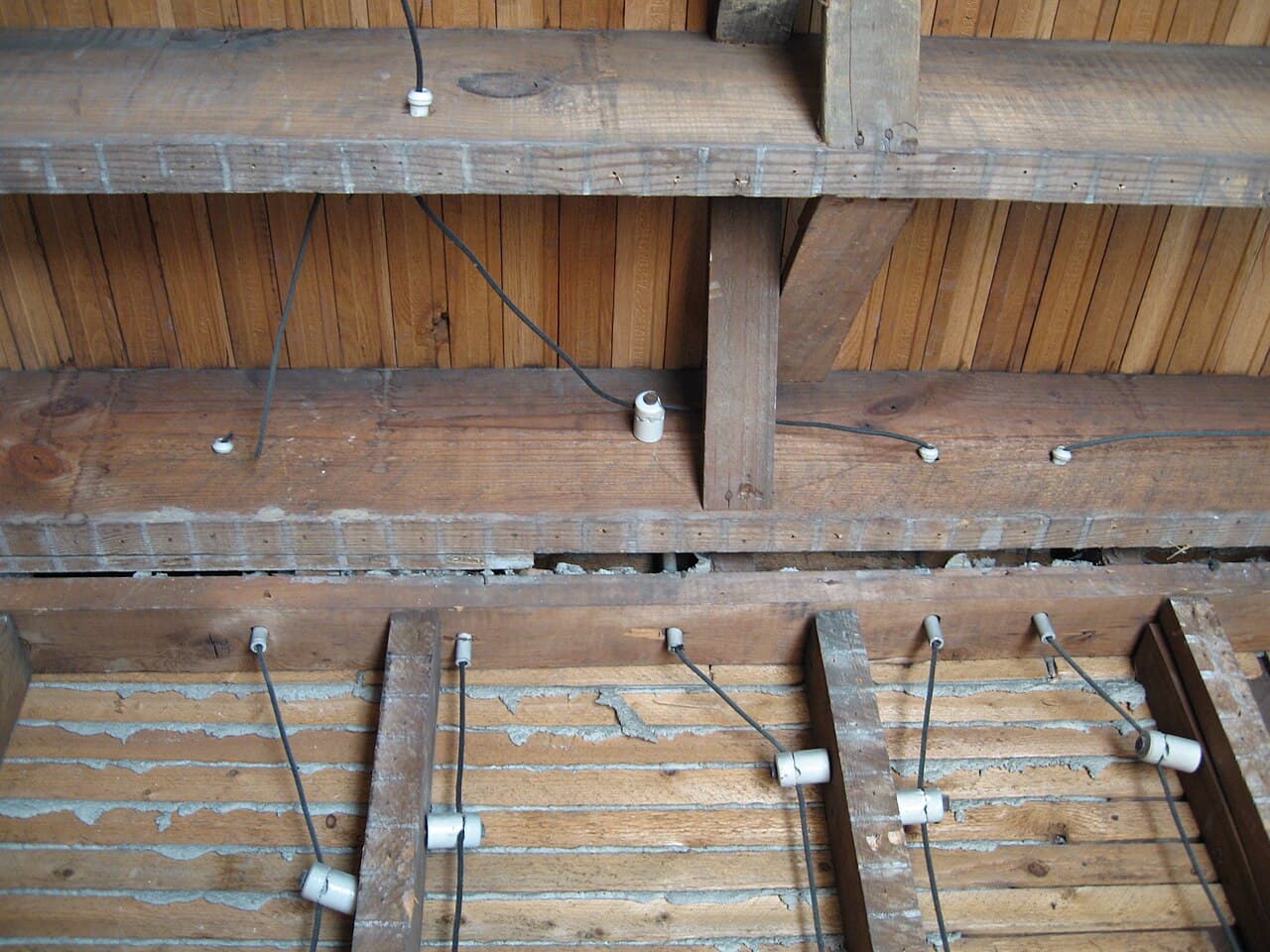
Two kinds of old wiring prompt most rewire conversations. Knob-and-tube wiring dates from before 1930, and it can be a fire hazard when in contact with insulation.[8] Cable installed between 1965 and the mid-1970s may have aluminum conductors instead,[6] which have their own connection problems; our guide to the signs a house needs rewiring covers both.
A full rewire is not the only option. Sometimes an electrician recommends replacing only the worst circuits, adding new circuits for the kitchen and laundry, or upgrading the panel first. CPSC calls full replacement with copper the best method for aluminum wiring, but for many homes it is impractical or prohibitively expensive.[6] CPSC also accepts two connector repairs, COPALUM and AlumiConn, as permanent fixes.[6] The survey is what tells you which route fits your house.
The survey and the plan
The job starts with an electrician walking the house: the panel, the attic, the basement or crawl space, and a sample of outlets and switches. They are looking at what kind of wiring is there, what condition it is in, whether the service is big enough, and how cable can be routed through the house.
That last point usually drives a lot of the price. A one-storey house over an open basement can often be wired from below and above with few openings. A two-storey house with plaster walls and finished floors on every level generally takes longer and needs more patching.
A good plan names every room, the number of circuits, where new outlets go, whether the panel is replaced, and who repairs the walls afterward.
Permits and inspections
Virginia's Uniform Statewide Building Code says a permit is required before work starts on electric wiring.[1] Small swaps are different: replacing ordinary switches, dimmers, 15- or 20-amp 125-volt receptacles, light fixtures and ceiling fans in a house is listed as an ordinary repair that needs no permit.[1] A rewire is well beyond that list.
Once work starts, the building official has to inspect electrical materials, equipment and systems before they are concealed, and then make a final inspection.[2] In practice that means the new cable and boxes are left visible until the inspector signs off the rough-in, and only then do the walls get patched.
The contractor should apply for and obtain any necessary building permits, and the contract should say so.[5]
What happens during the work
Most rewires follow a similar broad pattern. The electrician runs new circuits room by room from the panel, through the attic and basement where possible, and into the walls through small openings. New boxes go in for outlets, switches and lights, often with more outlets than the old layout had. When a room's new circuits are ready and inspected, the old ones feeding it are disconnected.
Old wire is not always pulled out. When aluminum branch circuits are replaced with copper, a new copper branch-circuit system is installed and the old aluminum wire can be abandoned inside the walls.[6] If any old wire is left in place, you want a record of which circuits are dead.
Living through a rewire
Plan for interruptions. Expect the power to be off in parts of the house while circuits are switched over, usually one area at a time. Ask the electrician to stage the work so the refrigerator, the heating system and a bathroom keep working overnight.
Expect dust, holes in plaster or drywall at outlet and ceiling locations, and a patching and painting phase after the final inspection. Some electricians patch; others leave it to a plasterer or painter. Settle that before you sign.
When it is finished, keep the invoice and the final inspection record with your house papers, so you can show later what was replaced and when.
Cost
Rewiring is a large project, and it is priced house by house. What drives the price in Virginia, and the permit fees, are in our answer on what it costs to rewire a house in Virginia.
When to call a licensed pro
A rewire is electrician's work. Virginia defines an electrician as a tradesman who does the construction, repair, maintenance, alteration or removal of electrical systems regulated under the building code,[3] and no individual may work as a tradesman unless licensed, though unlicensed helpers may work under the supervision of a licensed tradesman in that specialty.[4]
Call an electrician now, before planning anything else, if you notice hot-to-the-touch face plates on outlets or switches, flickering lights, circuits that stop working, or a smell of burning plastic at outlets or switches.[6] If an outlet or switch is unusually warm, stop using it until an electrician checks it.[7]
Before you hire:
- Check the business's licence and the electrician's tradesman licence on DPOR's record; our guide to checking a contractor's licence walks through it.
- Get the scope in writing. Virginia law requires all licensed contractors to provide a written contract for residential work.[5]
- Compare bids on the same plan: rooms, circuits, panel, permit and wall repair.
Get it quoted
Browse Loclis electrical services, look up electricians in Blacksburg, or read more electrical answers. If you are buying an older home, see whether knob-and-tube wiring is a problem when buying in Virginia.
Describe your rewiring job and licensed local electricians quote it.
Common questions
- Do I need a permit to rewire a house in Virginia?
- Yes. The Uniform Statewide Building Code requires a permit before work starts on electric wiring. The code lists some exemptions, for example replacing a switch, a standard receptacle or a light fixture in a house, and low-voltage wiring under 50 volts, but a rewire is not one of them. The electrician should pull the permit.
- Do the walls have to come down to rewire a house?
- Usually not whole walls. Electricians generally route new cable from the attic and basement and open small sections where they cannot reach. How much opening up is needed depends on the house's layout and how much of it is unfinished. Ask each bidder how many openings they expect and who patches them.
- Can I live in the house during a rewire?
- Often, yes, if the work is done in stages, but expect power to be off in parts of the house while circuits are switched over, plus dust and noise. Ask the electrician for a schedule that keeps the refrigerator, heat and at least one bathroom working each night.
- What happens to the old wiring?
- It may be pulled out or left in place, disconnected. When aluminum branch circuits are replaced with copper, for example, the old aluminum wire can be abandoned inside the walls. Ask the electrician to note in writing which old circuits were disconnected, and keep the invoice with your house records.
- Does a rewire include a new panel?
- Not automatically. Some old houses also need a larger service or a new panel to handle new circuits, and that is a separate line on the quote. Ask each electrician whether the panel and service are included.
Sources
- [1] 13VAC5-63-80, Virginia Uniform Statewide Building Code, Section 108 Application for permit, Virginia Administrative Code, Legislative Information System. Checked October 26, 2026.
- [2] 13VAC5-63-130, Virginia Uniform Statewide Building Code, Section 113 Inspections, Virginia Administrative Code, Legislative Information System. Checked October 26, 2026.
- [3] 18VAC50-30-10, Tradesman Rules and Regulations, Definitions, Virginia Administrative Code, Legislative Information System. Checked October 26, 2026.
- [4] Code of Virginia § 54.1-1129, Tradesman license required, Code of Virginia, Legislative Information System. Checked October 26, 2026.
- [5] What You Should Know Before You Hire a Contractor, Virginia Board for Contractors, DPOR. Checked October 26, 2026.
- [6] Repairing Aluminum Wiring (Publication 516), U.S. Consumer Product Safety Commission. Checked October 26, 2026.
- [7] Home Electrical Safety Checklist (Publication 513), U.S. Consumer Product Safety Commission. Checked October 26, 2026.
- [8] A Do-It-Yourself Guide to Sealing and Insulating with ENERGY STAR, ENERGY STAR, U.S. Environmental Protection Agency and U.S. Department of Energy. Checked October 27, 2026.
Want a pro to handle it?
Describe the job once. Licensed local businesses send quotes, and you pay only when you book one.
Get a quote for Electrical Repair