What does building a home addition involve?
A home addition is a permitted construction project: design and drawings, a building permit, a new foundation, framing and roof joined to your house, new electrical, plumbing and heating and cooling, and building-official inspections from the footings to the final. A licensed contractor manages the whole job, and the space is not finished until it passes final inspection.
Free to ask. Local shops send quotes, and you pay only when you book one.
By Kasra Taheri, Founder, LoclisPublished
Researched and drafted with AI, then checked claim by claim against the sources listed below before it was published. Prices and rules change; the dates beside each source say when it was last checked.
This is a job for a licensed pro in Virginia
This page explains what the work involves, the permits, what a licensed pro does and what drives the cost. It does not give step-by-step instructions, because this work needs a licence, a permit or both, and doing it wrong can injure someone. Before you hire, check the licence on Virginia's DPOR record.
A home addition is a permitted construction project, not a cosmetic remodel. It means designing the new space, getting a building permit, building a new foundation, floor, walls and roof, joining them to your existing house, adding electrical, plumbing and heating and cooling for the new rooms, and passing the building official's inspections from the footings to the final. A licensed contractor manages all of it.
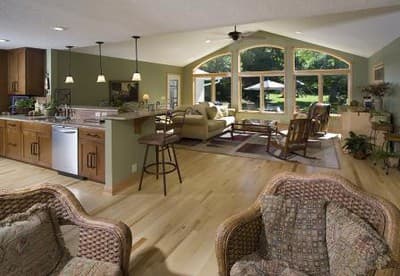
Planning and drawings
Every addition starts with what you want it to do: a bedroom suite, a larger kitchen, a family room or a second storey. Your contractor or designer then measures the house and lot and draws plans showing the footprint, the structure, the windows and the systems. Your locality's zoning rules also limit how close to the property line you can build, so confirm that with the local planning and zoning office before design money is spent.
Virginia does not always require an architect for this. The Code of Virginia says no architect or professional engineer licence is required for people who prepare plans for single- and two-family homes, excluding electrical and mechanical systems, not exceeding three stories, provided the plans bear the name and address of the author and his occupation.[1] The question is covered in do you need an architect for a home addition in Virginia.
The permit
An addition needs a permit before work starts. Section 108.1 of the Virginia Uniform Statewide Building Code requires a permit before construction of a building or structure, and before alterations involving any structural component, plumbing, electric wiring or mechanical systems.[2] An addition does all of these at once.
The application goes to your local building department. Before a permit is issued, the applicant must give the building official either proof of a Virginia contractor licence or a written statement that the person is not subject to licensure.[2] The contractor should apply for and obtain the permits, and your contract should say so. DPOR's consumer guide warns that otherwise you may be held legally responsible for failure to obtain any required permits, and that you should not let work start until you have copies of the officially issued permits.[4]
Building it
The order is predictable even if the schedule is not.
Site and foundation. The crew marks the footprint, excavates and pours footings and the foundation wall, or a slab, depending on the design. Utility lines and drainage are located and protected first. A new foundation has to tie into the old one correctly, which is a detail that often separates a good addition from a cracked one.
Framing and roof. The floor, walls and roof structure go up, and the new roof is joined to the existing roofline. This stage usually involves opening part of the existing exterior wall, which is why it is structural work for a licensed contractor.
Weatherproofing. Sheathing, house wrap, windows, doors, roofing and siding make the new space weathertight before anything inside is finished.
Systems. Electricians, plumbers and heating and cooling contractors run wiring, supply and drain lines and ducts through the open walls. The existing furnace or air conditioner may not be able to handle the extra rooms, so ask early whether the new space gets its own equipment or an extension of the current system.
Insulation and finishes. Insulation, drywall, flooring, trim, paint and fixtures finish the rooms.
Inspections
The building official inspects at set stages. The Code lists minimum inspections including footing excavations and reinforcement before concrete is placed, foundation systems, structural members and fasteners before they are concealed, electrical, mechanical and plumbing systems before concealment, energy conservation material before concealment, and a final inspection.[3] The permit holder must notify the building official when construction reaches a stage that requires an inspection.[3] Work covered up before an inspection may have to be opened again, so do not let anyone close walls early.
In a flood hazard area, the elevation certification must be submitted to the building official once the lowest floor, including any basement, is placed and before further vertical construction.[3]
What you do as the owner
Choose the design, approve the contract and any written change orders, keep copies of the permits and inspection approvals, and keep payments tied to finished work. See what a home addition costs in Virginia for how to compare quotes.
When to call a licensed pro
For all of it. Virginia licenses contractors by the size of the job: Class A contractors handle a single contract of $150,000 or more, Class B $30,000 or more but less than $150,000, and Class C over $1,000 but less than $30,000.[5] Check the licence number and class on DPOR's lookup before you sign; how to check a contractor's licence shows how.
Loclis lists DPOR-licensed businesses with their licence number and class. Browse remodeling services or read more remodeling answers, then describe your addition once and licensed local businesses will quote it.
Common questions
- Does a home addition need a permit in Virginia?
- Yes. The Uniform Statewide Building Code requires a permit before construction of a building or structure and before structural, plumbing, electrical or mechanical alterations. Your local building department issues it, and the contractor normally applies.
- Who applies for the permit, me or the contractor?
- The contractor should, and your contract should say so. DPOR's consumer guide warns that otherwise you may be held legally responsible for failure to obtain any required permits.
- What inspections does an addition go through?
- At least footings, foundation, framing and fasteners before concealment, electrical, mechanical and plumbing before concealment, insulation before concealment, and a final inspection. Your building official may add more.
- Can I build an addition myself?
- Ask your building department what it allows. An addition involves foundations, structure, wiring and ductwork, which is why most owners hire a licensed contractor.
- Will the new rooms need their own heating and cooling?
- The existing equipment may not be sized for the extra space, so ask your contractor and heating and cooling contractor to check this early rather than after the walls are closed.
Sources
- [1] Va. Code § 54.1-402, Further exemptions from license requirements for architects, professional engineers, and land surveyors, Code of Virginia, Virginia General Assembly. Checked October 27, 2026.
- [2] 13VAC5-63-80, Section 108 Application for permit (Virginia Uniform Statewide Building Code), Virginia Administrative Code, Virginia General Assembly. Checked October 27, 2026.
- [3] 13VAC5-63-130, Section 113 Inspections (Virginia Uniform Statewide Building Code), Virginia Administrative Code, Virginia General Assembly. Checked October 27, 2026.
- [4] What You Should Know Before You Hire a Contractor, Virginia Board for Contractors, Department of Professional and Occupational Regulation. Checked October 27, 2026.
- [5] Va. Code § 54.1-1100, Definitions, Code of Virginia, Virginia General Assembly. Checked October 27, 2026.
Want a pro to handle it?
Describe the job once. Licensed local businesses send quotes, and you pay only when you book one.
Get a quote from a local pro