What does installing a new garage door involve?
A professional measures the opening and checks headroom, backroom and sideroom, takes out the old door and its springs, repairs the framing, then assembles and mounts the track, sections, springs and cables, reinforces the top section for the opener, and tests balance and reversing. Springs are under heavy tension and doors are heavy, so this is a job for a trained installer.
Free to ask. Local shops send quotes, and you pay only when you book one.
By Kasra Taheri, Founder, LoclisPublished
Researched and drafted with AI, then checked claim by claim against the sources listed below before it was published. Prices and rules change; the dates beside each source say when it was last checked.
This is a job for a licensed pro in Virginia
This page explains what the work involves, the permits, what a licensed pro does and what drives the cost. It does not give step-by-step instructions, because this work needs a licence, a permit or both, and doing it wrong can injure someone. Before you hire, check the licence on Virginia's DPOR record.
Installing a new garage door is a measured, step-by-step job: check the opening, take out the old door and springs, repair the framing, build and mount the track and sections, set the springs and cables, fit the opener and test everything. It is heavy, spring-loaded work, and the manufacturers themselves say it needs the right tools and a second person.
Why this is a pro job
Clopay's manual for its Avante residential door says a door may weigh up to 800 lbs. and that the installer needs help.[1] The danger is not only the weight. A door is held in balance by springs under strong tension, and the same manual warns that loosening fasteners on the springs, cables or bottom fixtures could suddenly release spring forces and risk severe injury.[1]
For that reason this page explains what happens so you can judge a quote, not how to do it yourself. If your current door is just worn, see whether an old garage door is worth repairing first.
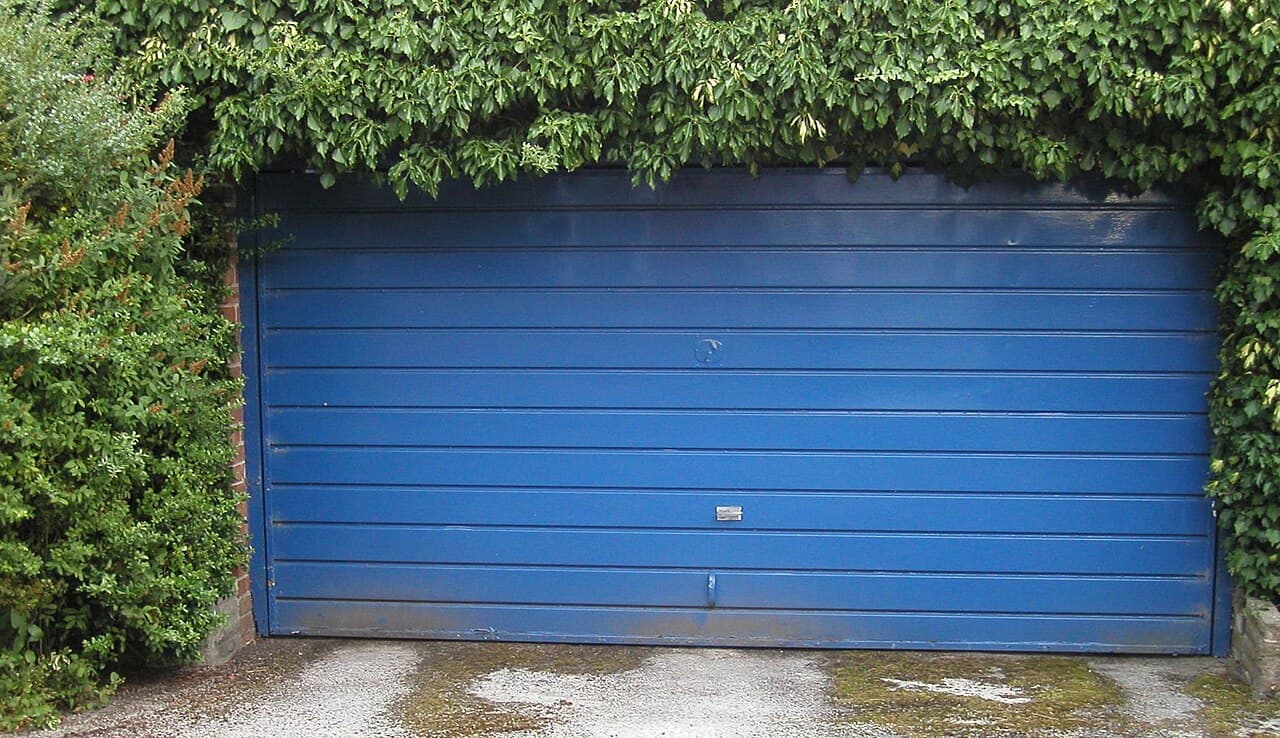
What a complete installation covers
1. Measuring and planning. Before ordering, the installer measures the opening and checks the space around it. Clopay's guidance is that the backroom, measured from the back of the door into the garage, should be at least 18 inches more than the height of the door, with at least 3-3/4 inches of sideroom on each side of the door.[1] The rough opening should be the same size as the door.[1] A garage with little space above the opening needs low-headroom hardware, which is a different and often pricier setup.
2. Removing the old door. This is the most dangerous stage. If the old door uses torsion springs, Clopay tells the homeowner not to attempt to remove the door or the springs and to have a qualified door repair service remove them.[1] A professional unwinds the springs with proper winding bars before anything is unbolted.
3. Checking the framing. The jambs and header are what the new track bolts to. If the wood jambs are rotten, Clopay says they should be replaced before the new door goes in.[1] This is also where the opening size is confirmed, which matters for permits (below).
4. Building the door. Sections are stacked and joined with hinges and rollers, starting from the bottom with the weatherseal. Clopay's instructions say never to reuse old track or hardware,[1] so a proper replacement includes a new track, brackets and cables.
5. Springs and cables. The springs are mounted, wound to the right tension for the door's weight and secured. This is the step where a mistake can injure someone, and the step that most clearly separates a trained installer from a first-timer.
6. Opener connection. Clopay says the top section must be reinforced to give a strengthened mounting point for an automatic opener.[1] If your opener is old, this is the moment to ask about replacing it.
7. Testing. A well-installed door is balanced. The CPSC describes a properly operating door as balanced, meaning it stays in place when stopped in any partially open position.[2] The installer should then test the opener. The CPSC says to place a 2x4 on the floor in the door's path, and if the door does not properly reverse when it strikes the 2x4, the opener should be disengaged until it is adjusted, repaired or replaced.[2] An electric eye, if used, should be installed 4 to 6 inches above the floor.[2] Clopay tells owners to test the sensitivity of the opener's safety reverse mechanism monthly.[1]
A tight new door can also seal a garage more completely. Clopay also tells owners to make sure the garage meets all applicable ventilation requirements before enclosing a vehicle.[1]
Permits
Replacing a garage door is often a permit-free swap. Virginia's building code exempts the replacement of windows and doors with windows and doors of similar operation and opening dimensions that do not require changes to the existing framed opening.[3] Local rules and historic districts can add requirements of their own. If you are widening the opening, changing the header or altering a fire-rated wall between the garage and the house, call your locality's building department first.
Clopay disclaims liability for any installation that is not in compliance with applicable state or county building codes.[1] If a permit is needed, DPOR's guidance is that licensed contractors should apply for and obtain all building permits, not the consumer.[4]
When to call a licensed pro
For the whole job. Choose an installer with a DPOR licence, a written quote and a clear plan for removing the old springs, and read what to look for in a garage door installer before you sign. For budgeting, see how much a new garage door costs in Virginia. Already have a door that works but is stiff? Try how to lubricate a garage door first.
Loclis lists DPOR-licensed businesses; browse garage door services or read more garage door answers.
To get written quotes for your own garage, describe the job once and local garage door businesses respond.
Common questions
- Can I install a garage door myself?
- Manufacturers write instructions for homeowners, but they are blunt about the risks. Clopay's manual for its Avante residential door says a door may weigh up to 800 lbs. and that the installer needs help, and it tells owners with torsion springs to have a qualified door repair service remove the old door and springs. Most Virginia homeowners hire the job out.
- Will the old opener work with a new door?
- Often it can, but the new top section has to be reinforced for the opener bracket, and the opener's safety reversing has to be retested afterward. If the opener is old, ask the installer about replacing it, because the CPSC urges replacing older openers that do not reverse.
- Do I need a permit to replace a garage door in Virginia?
- Often not. The building code exempts replacing doors with doors of similar operation and opening dimensions that do not need changes to the framed opening. Changing the opening size is different, and local rules can add requirements, so ask your building department before you sign.
- Why does the installer need to check headroom and backroom?
- A sectional door rolls up and back along overhead tracks, with springs above the opening. If there is not enough space for the track and springs, the installer needs a low-headroom hardware option.
- What should the installer leave me with?
- The manufacturer's manual, the warranty paperwork, the model and serial number, and a door that stays put when stopped halfway and reverses on the 2x4 test. Keep the manual for future service.
Sources
- [1] Aluminum Full Vision Residential Garage Door Instructions (Installation and Maintenance), Clopay Building Products, Avante door manual. Checked October 27, 2026.
- [2] Non-Reversing Automatic Garage Door Openers Are a Hazard (Pub. 523), U.S. Consumer Product Safety Commission. Checked October 27, 2026.
- [3] 13VAC5-63-80, Section 108 Application for permit (Virginia Uniform Statewide Building Code), Virginia Administrative Code, Virginia General Assembly. Checked October 27, 2026.
- [4] What You Should Know Before You Hire a Contractor, Virginia Board for Contractors, DPOR. Checked October 27, 2026.
Want a pro to handle it?
Describe the job once. Licensed local businesses send quotes, and you pay only when you book one.
Get a quote from a local pro