What does repairing damaged wiring in a wall involve?
A licensed electrician finds where the cable is damaged, opens the wall to reach that spot, replaces or properly joins the damaged section, tests the circuit and closes the wall. Virginia's building code requires a permit before electric wiring work begins, so expect an inspection too. This is not a homeowner repair.
Free to ask. Local shops send quotes, and you pay only when you book one.
By Kasra Taheri, Founder, LoclisPublished
Researched and drafted with AI, then checked claim by claim against the sources listed below before it was published. Prices and rules change; the dates beside each source say when it was last checked.
This is a job for a licensed pro in Virginia
This page explains what the work involves, the permits, what a licensed pro does and what drives the cost. It does not give step-by-step instructions, because this work needs a licence, a permit or both, and doing it wrong can injure someone. Before you hire, check the licence on Virginia's DPOR record.
Repairing damaged wiring inside a wall is work for a licensed electrician. The job usually means finding the damaged section, opening the wall to reach it, replacing or properly joining the cable, testing the circuit and closing the wall again. The Consumer Product Safety Commission's guide to home wiring hazards says that finding specific defects in electrical systems and repairing them are jobs for qualified electrical professionals.[1]
How you know wiring in a wall is damaged
Damaged cable behind a wall rarely announces itself. The signs show up at outlets, switches and lights: lights that dim or flicker, sparks or flashes anywhere in the system, sizzling or buzzing sounds, switch plates or outlet covers that are hot to the touch or discolored, the smell of hot insulation, and any shock, even a mild tingle.[1] A breaker that keeps tripping on one circuit also points toward a fault somewhere on it.
Common causes include a nail or screw through a cable during a renovation, rodent chewing, water, an old cable that has dried out and cracked, and a connection that has worked loose. Unseen damage is not a small risk. Nearly half (47%) of the residential building electrical fires where equipment was involved were caused by the building's wiring.[2] Inside the walls, wiring that is overloaded heats up and damages its own insulation.[2]
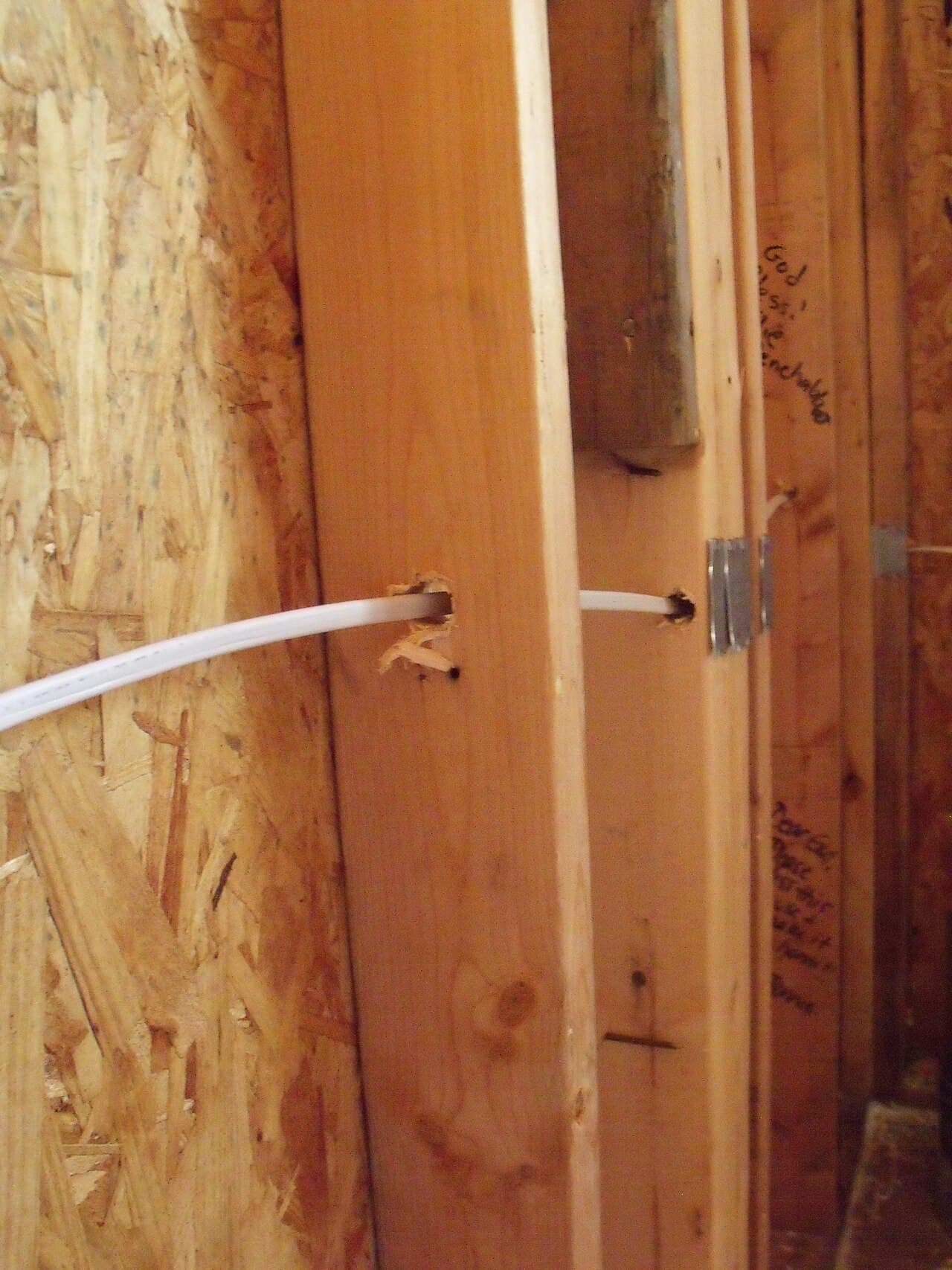
What the repair involves
The details change with the house, but a licensed electrician's visit usually covers these stages.
Diagnosis. The electrician asks what you saw, which outlets and lights are affected and what the breaker did, then works out which circuit is involved. They check the circuit and its connections to narrow the fault down to a stretch of wall, ceiling or floor. This can take longer than the repair, especially in a house where several rooms share one circuit.
Opening the wall. Once the fault is located, the electrician cuts an opening in the drywall or plaster just large enough to reach the cable. In a finished room with plaster, a masonry wall or insulation packed around the cable, the opening takes more effort than in a simple stud wall.
Fixing the cable. A short damaged section is typically replaced, or the cable is joined in a way the electrical code allows. Ask the electrician to explain which, and where any connection will be. If the insulation is brittle along the whole run, the sensible fix is to replace the run, not the damaged inch. For the larger question of old wiring, see how long house wiring lasts.
Testing. After the repair the circuit is re-energized and checked, including the outlets, switches and fixtures on it, before the wall is closed.
Closing up. Patching drywall, texture and paint is a separate trade. Many electricians leave the opening cut but unpatched, so ask what the quote covers.
Permits and inspection
Virginia's Uniform Statewide Building Code requires a permit to be obtained before starting installations or alterations involving "electric wiring".[3] The same section says applications for emergency construction, alterations, or equipment replacement are due by the end of the first working day after the work starts.[3] Whether a particular repair falls under that rule is the local building official's call, so ask the electrician and, if in doubt, your county or city building department.
DPOR's consumer guide says the contractor should apply for and obtain any necessary building permits, that this should be spelled out in your contract, and that you should not let work start until you have copies of the officially issued permits.[7]
What affects the price
The cost depends mostly on how hard the fault is to find and reach, how much cable is damaged, whether the wall is plaster, masonry or insulated, whether the old wiring is brittle, and whether patching is included. Our guide to what electrical wiring repair costs in Virginia explains these and what to ask for in a written quote.
When to call a licensed pro
For this whole job. Virginia law defines a tradesman as anyone who works for the general public for compensation in the electrical, plumbing and HVAC trades.[4] No individual may work as a tradesman unless licensed, though someone working under the supervision of a tradesman licensed in that specialty does not need their own licence.[5] The Board for Contractors requires a master tradesman licence as a condition of licensing an electrical contractor.[6] Check the licence before you agree to anything.
If the circuit is giving off sparks, a burning smell or hot cover plates, read when a wiring problem is an emergency first. Loclis lists DPOR-licensed electrical businesses with their licence number and class: browse electrical repair services or read more electrical repair answers.
To get prices for your own wall, describe the job once and licensed local electricians quote it.
Common questions
- Can I patch damaged wall wiring myself with a wire nut and tape?
- No. The Consumer Product Safety Commission says finding specific defects in electrical systems and repairing them are jobs for qualified electrical professionals. Wiring work also needs a permit under Virginia's building code, which a licensed electrician arranges.
- Do I have to open the whole wall?
- Usually not. An electrician locates the damaged section and opens only what is needed to reach it, often a patch of drywall. How much opens up depends on where the cable runs, what is in the way and how far the damage extends.
- Does wall wiring repair need a permit in Virginia?
- Generally yes. The Uniform Statewide Building Code requires a permit before installations or alterations involving electric wiring begin. Your local building department decides how it applies to a given repair, so ask the electrician whether they will pull the permit.
- Who fixes the wall after the electrician is done?
- Often not the electrician. Many electricians leave the opening cut but unpatched, and drywall, texture and paint are a separate trade. Ask in the quote whether wall patching is included.
- What should I do until the electrician arrives?
- Stop using any outlet, switch or fixture on the affected circuit. If you can do so safely, turn off that circuit's breaker, and do not take the panel cover off. If you see smoke, smell burning or notice sparks, treat it as an emergency.
Sources
- [1] CPSC Guide to Home Wiring Hazards (Publication 518), U.S. Consumer Product Safety Commission. Checked October 27, 2026.
- [2] Residential Building Electrical Fires, Topical Fire Report Series, Volume 8, Issue 2 (March 2008), U.S. Fire Administration, FEMA. Checked October 26, 2026.
- [3] 13VAC5-63-80. Section 108 Application for permit (Virginia Uniform Statewide Building Code), Virginia Administrative Code, Virginia General Assembly. Checked October 26, 2026.
- [4] Va. Code § 54.1-1128, Definitions, Code of Virginia, Virginia General Assembly. Checked October 27, 2026.
- [5] Va. Code § 54.1-1129, Necessity for licensure, Code of Virginia, Virginia General Assembly. Checked October 26, 2026.
- [6] Va. Code § 54.1-1100, Definitions, Code of Virginia, Virginia General Assembly. Checked October 26, 2026.
- [7] What You Should Know Before You Hire a Contractor, Virginia Board for Contractors, Department of Professional and Occupational Regulation. Checked October 26, 2026.
Want a pro to handle it?
Describe the job once. Licensed local businesses send quotes, and you pay only when you book one.
Get a quote for Electrical Repair