What does replacing a sewer line involve?
Replacing a sewer line starts with a camera inspection that shows where and how badly the pipe has failed. A licensed plumbing contractor then gets a permit, has public utilities marked through Virginia 811, and replaces the pipe between the house and the public sewer, either in an open trench or with a trenchless method, before the yard, walk or driveway is restored.
Free to ask. Local shops send quotes, and you pay only when you book one.
By Kasra Taheri, Founder, LoclisPublished
Researched and drafted with AI, then checked claim by claim against the sources listed below before it was published. Prices and rules change; the dates beside each source say when it was last checked.
This is a job for a licensed pro in Virginia
This page explains what the work involves, the permits, what a licensed pro does and what drives the cost. It does not give step-by-step instructions, because this work needs a licence, a permit or both, and doing it wrong can injure someone. Before you hire, check the licence on Virginia's DPOR record.
The short version
A sewer line replacement is a dig, a pipe job and a permit, done in that order by a licensed contractor you hire. The contractor runs a camera down the line to see what has failed, gets a plumbing permit, has the public utilities marked, then replaces the pipe from your house to the public sewer, in an open trench or by a trenchless method. Then the yard, walk or driveway is put back. In Fairfax County, repairs are inspected by the county's Building Inspections Branch,[1] so ask your own building department when it inspects.
The pipe in question is usually called the sewer lateral: the pipe that carries sanitary waste from the plumbing system in a home or business to the public sanitary sewer main.[1] Fairfax County describes laterals as typically 4 inches in diameter and public mains as typically 8 inches and larger,[1] and Spotsylvania County puts laterals at 4 to 6 inches.[2] Which part of that pipe is yours to replace depends on your locality; see who is responsible for the sewer line.
First, a camera inspection
Nobody should quote a replacement without seeing inside the pipe. Fairfax County lists the signs that a lateral may need repair as frequently clogged drains, odor of sewage, and basement backups during rain, and says the best way to assess a lateral's condition is a closed-circuit television (CCTV) examination.[1] The camera goes in through a cleanout or a drain and records the whole run.
The video answers the questions that decide the job:
- Where the damage is. One cracked joint or root entry point can sometimes be repaired on its own. A line that is broken, crushed or full of roots along its length usually has to be replaced.
- What the pipe is made of. Older homes often have clay or cast iron, which break down differently from plastic.
- How deep it runs and what is on top of it. Depth, trees, driveways, walks and other utilities change both the method and the price.
Ask for a copy of the video and a marked-up sketch of where the problems are. If you are not sure what you are looking at, our page on the signs of a broken sewer line explains what each problem means, and a sewer scope inspection can be booked on its own.
Permits and the call to 811
Virginia's building code requires a permit before work that alters a building's sanitary drainage system,[3] and an application for emergency work can be submitted by the end of the first working day after the work starts.[3] Localities add their own steps. In Fairfax County, a repair or replacement on private property needs a plumbing permit from the county, work in a VDOT right of way needs a state permit as well, and repairs are inspected by the county's Building Inspections Branch.[1] Ask your county or city building department what it requires before the job is scheduled.
The permit is the contractor's job. The Board for Contractors says: "The contractor should apply for and obtain any necessary building permits."[9] It also warns that the permit holder becomes the general contractor and assumes responsibility for the overall job,[9] which is why a contractor who asks you to pull the permit yourself is not doing you a favour.
Before any digging, Virginia's damage prevention law applies: "No person shall make or begin any excavation or demolition without first submitting a locate request to the notification center."[4] That marks the gas, electric, water and communications lines that public utilities own. It does not mark your sewer lateral. Virginia 811 explains that the point of consumption for a sewer line is the sewer cleanout, which is usually located within 5 feet of the edge of the property,[5] so the line between your house and the main at that cleanout will not be marked.[5] The contractor finds it from the cleanout, with the camera, or with a locator.
Open trench or trenchless
There are two broad ways to put in new pipe.
Open trench. The crew excavates along the line, takes out the old pipe, lays new pipe at the right slope with proper bedding, and backfills. It is the most direct method and usually the way a sag or a collapsed section gets fixed. The cost is mostly in the digging and in putting back whatever was on top.
Trenchless. The pipe is replaced or rebuilt from the inside through one or two small pits. In lining, a resin-soaked tube is pulled or pushed into the old pipe and cured in place, leaving a new pipe inside the old one. In pipe bursting, a new pipe is pulled through while the old one is split apart around it. Trenchless work spares the lawn, trees and driveway, but it needs a line the liner or new pipe can follow; a fully collapsed section or a bad sag usually has to be dug out anyway.
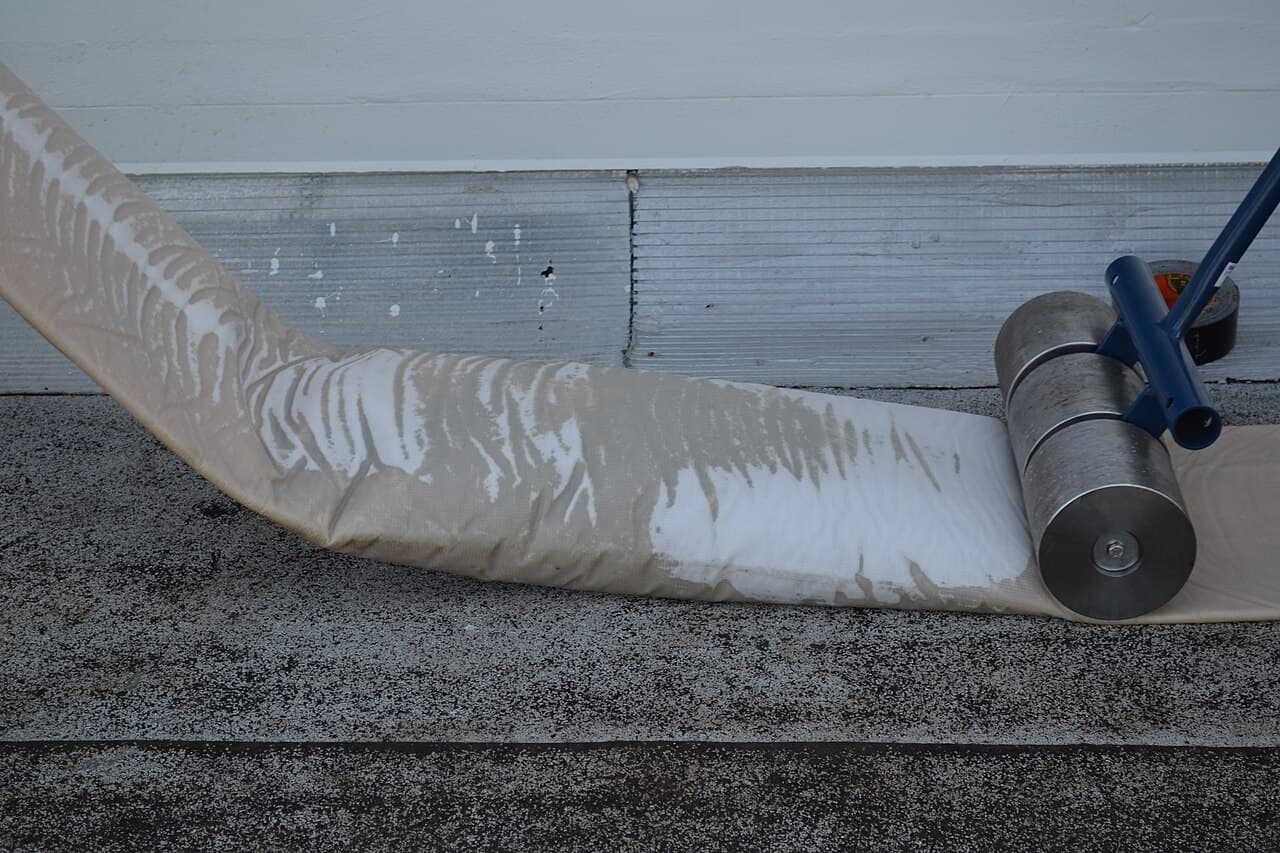
Either way, the job also covers the connections at each end. Ask whether the price includes a new cleanout, the connection at the house, and the tie-in at the property line or main. Broken sewer laterals can allow tree roots or debris into the pipe,[2] so a replacement is also the time to fix the joints that let roots in; see how to keep tree roots out of a sewer line.
Who does the work
A contractor you hire for this job should hold a licence that covers it. Virginia's plumbing contractor classification (PLB) covers piping for sanitary drainage facilities and the installation, maintenance, extension or alteration of sewerage systems.[6] The Board also has an underground utility and excavating specialty (UUC) that covers water, gas and sewer connections to residential sites, subject to local ordinances.[7] And the Board for Contractors requires a master tradesman licence as a condition of licensing a plumbing contractor.[8]
Check before you sign. The Board warns that a license number in an advertisement or on a business card does not necessarily mean the contractor's license is valid;[9] our guide to checking a contractor's licence shows how to look it up.
What to get in writing
Virginia law requires all licensed contractors to provide a written contract for residential work.[9] For a sewer replacement, the contract should name the method, the length and material of the new pipe, who gets the permit, what happens if the crew finds rock or an unexpected problem, and exactly what restoration is included: grass seed or sod, concrete, asphalt, landscaping. On the deposit, the Board's rule of thumb is an initial deposit of no more than 10% of the total price or $1,000, whichever is less.[9] For what drives the price, see what sewer line replacement costs in Virginia.
When to call a licensed pro
Call a licensed plumbing contractor as soon as you suspect the sewer line itself rather than one drain: several fixtures backing up at once, sewage in the basement, a wet or sunken patch over the line, or a sewage smell outside. Replacing a sewer line means trenching, working in and around raw sewage, connecting to the public system and passing a permit inspection, and it is not a job to take on yourself. If sewage is backing up now, start with the steps on our sewer backup page.
Find a licensed sewer pro
Loclis lists licensed businesses from Virginia's DPOR register with their licence number and class. Browse sewer line services, look up plumbers in Blacksburg, or read more plumbing answers. When you are ready, describe the job once and licensed local businesses quote it.
Common questions
- Do I need a permit to replace a sewer line in Virginia?
- Yes. The Uniform Statewide Building Code requires a permit before work that alters a building's sanitary drainage system, and emergency work must be applied for by the end of the next working day. Your plumbing contractor should pull the permit in its own name.
- Will Virginia 811 mark my sewer line before the dig?
- No. Virginia 811 says the sewer line between your house and the cleanout near the property edge is private and is not marked. Public utilities are marked; your contractor locates the private lateral, often from the cleanout or with a camera.
- Is trenchless sewer replacement always possible?
- Not always. Lining or bursting needs a pipe that a liner or new pipe can follow. A collapsed section, a sag that holds water, or a line with the wrong slope often has to be dug up. The camera inspection is what tells the contractor which methods fit your line.
- Can I use my plumbing while the sewer line is replaced?
- Usually not while the line is open. Most of the time the household goes without drains for part of the job. Ask the contractor how long that will be and whether they can set up a temporary bypass.
- Who can replace a sewer line in Virginia?
- Hire a contractor whose Board for Contractors licence covers the work: the plumbing (PLB) classification covers sewerage systems, and the underground utility and excavating (UUC) specialty covers sewer connections to residential sites. Check the licence on DPOR's lookup before you sign.
Sources
- [1] Sanitary Sewer House Lateral: Key things to know about your home's sewer system, Fairfax County Department of Code Compliance. Checked October 26, 2026.
- [2] FAQs: Utilities, Sanitary Sewer Lateral, Spotsylvania County, Virginia. Checked October 26, 2026.
- [3] 13VAC5-63-80, Virginia Uniform Statewide Building Code: Section 108 Application for permit, Virginia Administrative Code, Legislative Information System. Checked October 26, 2026.
- [4] Code of Virginia § 56-265.17, Notification required prior to excavation or demolition, Code of Virginia, Legislative Information System. Checked October 26, 2026.
- [5] Private Utilities Explained, Virginia 811. Checked October 26, 2026.
- [6] 18VAC50-22-20, Board for Contractors Regulations: Definitions of license classifications, Virginia Administrative Code, Legislative Information System. Checked October 26, 2026.
- [7] 18VAC50-22-30, Board for Contractors Regulations: Definitions of specialty services, Virginia Administrative Code, Legislative Information System. Checked October 26, 2026.
- [8] Code of Virginia § 54.1-1100, Definitions, Code of Virginia, Legislative Information System. Checked October 26, 2026.
- [9] What You Should Know Before You Hire a Contractor, Virginia Board for Contractors, DPOR. Checked October 26, 2026.
Want a pro to handle it?
Describe the job once. Licensed local businesses send quotes, and you pay only when you book one.
Get a quote for Plumbing Repair