What does a technician do to fix a microwave that will not heat?
A technician confirms which part failed using test equipment, usually after discharging the high-voltage capacitor, then replaces it and tests the oven. You should not attempt it yourself, because the capacitor can hold a charge when unplugged. Before calling, check the timer and close the door firmly.
Free to ask. Local shops send quotes, and you pay only when you book one.
By Kasra Taheri, Founder, LoclisPublished
Researched and drafted with AI, then checked claim by claim against the sources listed below before it was published. Prices and rules change; the dates beside each source say when it was last checked.
This is a job for a licensed pro in Virginia
This page explains what the work involves, the permits, what a licensed pro does and what drives the cost. It does not give step-by-step instructions, because this work needs a licence, a permit or both, and doing it wrong can injure someone. Before you hire, check the licence on Virginia's DPOR record.
A technician fixes a microwave that runs but does not heat by confirming the fault with test equipment, then replacing the failed part. It is work for a trained technician, not a home project: a microwave has an internal high-voltage capacitor that can hold a charge even after it is unplugged.[1] GE says it offers no do-it-yourself repair advice for that reason, along with the complexity of the circuitry and the special equipment needed to diagnose it.[2]
What you can check before you call
Two checks are safe because you never open the case. Make sure the timer or a cook-time function was not set by accident. Then open the door and close it firmly. GE says to open the door and close it firmly, which confirms the engagement of the door's safety mechanisms.[1] If it still will not heat, stop there. GE recommends contacting service when those suggestions do not solve the problem.[1]
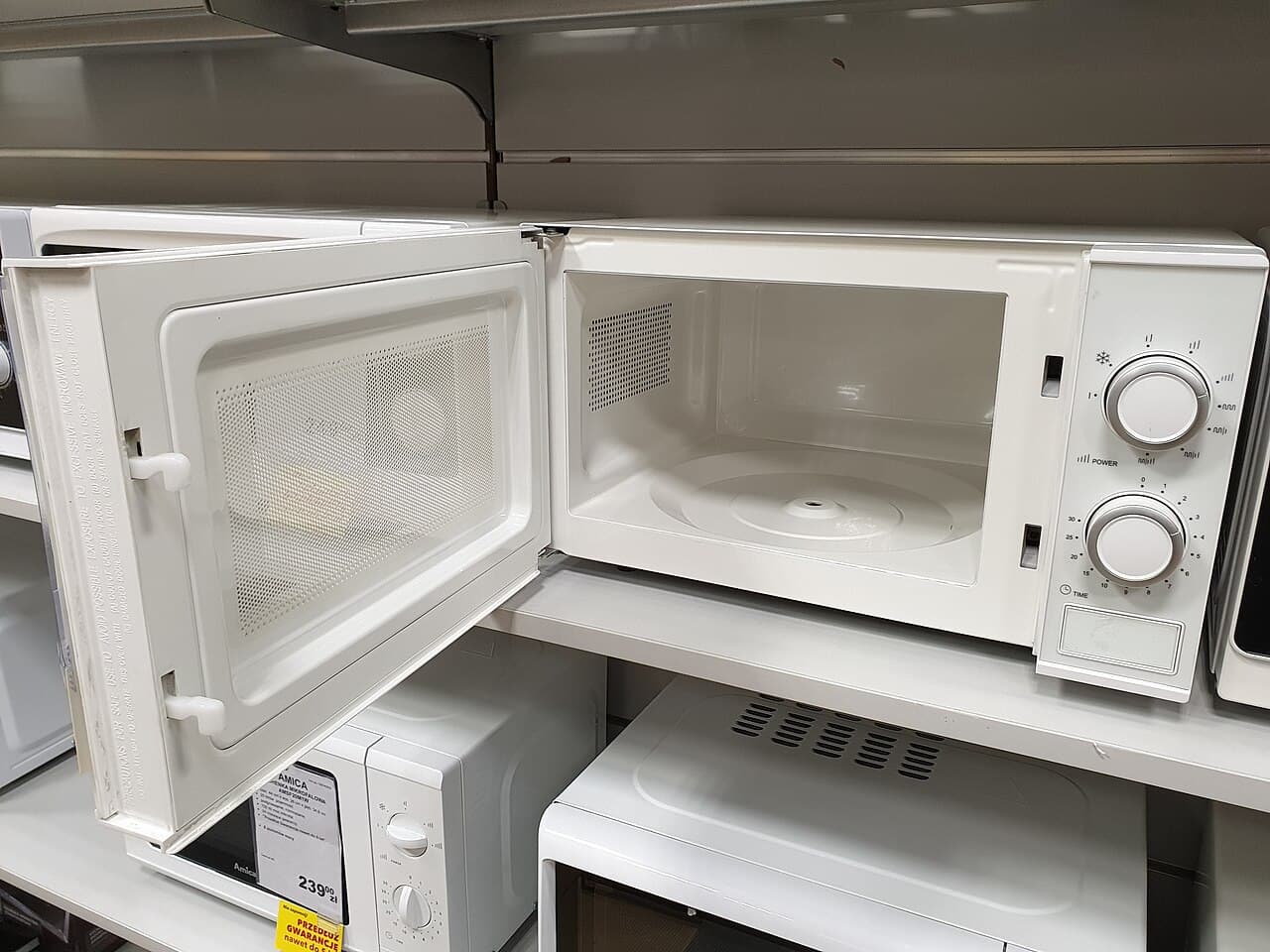
What the technician does
The exact order varies by brand and model, but a visit usually follows this outline.
Asks about the symptoms. Does the light come on, does the turntable spin, does the fan run, is there a hum or a burning smell, and did it fail suddenly or fade? A microwave that runs but does not heat points to the parts that make and deliver the microwave energy, not to the controls.
Inspects the outside and the door. The technician checks the cord and plug, the door, hinges, latch and seals, and looks for scorching or arcing marks inside the cavity. FDA says a damaged microwave oven may present a risk of microwave energy leaks.[3]
Safely discharges and tests the high-voltage parts. With the oven unplugged and the capacitor discharged, the technician uses a meter to test the components in the heating path, starting with the high-voltage capacitor and the other parts that make and deliver the microwave energy, plus the fuses and thermal cut-outs. This is the step that needs training and equipment, and it is why a "guess and swap" approach is both costly and dangerous.
Checks the door switches. An oven will not run its heating circuit unless the door interlocks tell it the door is closed. FDA says the standard requires two independent interlock systems that stop the production of microwaves the moment the latch is released or the door is opened, and that a monitoring system stops oven operation in case one or both of the interlock systems fail.[3] A worn latch or a failed switch can therefore stop heating while everything else looks normal. Interlocks are safety parts and should be replaced only with the right part and adjusted correctly.
Replaces the failed part and tests the result. After the repair, the technician reassembles the oven, checks that the door closes and latches properly, and runs it on a load of water to confirm it heats.
Why this is not a home repair
The danger is not microwaves leaking out of a closed oven. It is the electrical parts inside. The capacitor can stay charged after the plug is pulled,[1] and a meter test of the wrong terminal can injure you. Interlocks and shielding also have a job in keeping the oven within the safety standard, so a repair that leaves a door out of adjustment is a real problem.
Stop using it if
- the door does not close firmly, or is bent, warped or otherwise damaged. FDA advises not using an oven in that condition.[3]
- you smell burning, see sparks or arcing, or the oven trips the breaker.
- the oven runs with the door open.
If the door, hinges, latch or seals are damaged, FDA says to contact the manufacturer for assistance.[3]
When to call a licensed pro
Call a qualified microwave or appliance technician for any no-heat fault. Judge a business on its written estimate, warranty on parts and labor, and references. DPOR's hiring guide says it is advisable to get at least three written bids or estimates using identical plans and specifications so you can compare prices.[4] The same guide says: Do not automatically accept the lowest.[4] A built-in or over-the-range microwave that needs to be removed from the wall or cabinet may also involve an electrician or a handyman, so ask who handles removal.
Ask each business what the diagnostic or visit fee is, whether it is credited toward the repair, which part they believe failed, and what is covered if the new part does not fix it. A good technician will tell you when the repair is not worth it, which is the subject of whether it is worth repairing a microwave.
Getting help in Virginia
Browse appliance repair answers or see microwave repair businesses.
When you are ready, describe the microwave problem once and local appliance repair businesses quote it.
Common questions
- Can I fix a microwave that will not heat myself?
- Not safely. A microwave has an internal high-voltage capacitor that can hold a charge even after it is unplugged, and GE offers no do-it-yourself repair advice for that reason. The only checks to make are the timer setting and closing the door firmly.
- What parts usually fail when a microwave stops heating?
- Technicians test the high-voltage heating path, the fuses and the door interlock switches. Which part failed has to be confirmed with a meter, not guessed.
- Is it safe to use a microwave that runs but does not heat?
- If the door closes firmly and nothing is damaged, it is not a radiation hazard. Stop using it if you see sparks, smell burning, or find a bent or damaged door, hinge, latch or seal, since FDA says a damaged oven may leak microwave energy.
- Why does closing the door firmly matter?
- Microwaves will not run unless the door interlocks confirm the door is closed. FDA says ovens must have two independent interlock systems plus a monitoring system, so a poorly engaged latch can stop heating.
- How do I choose a repair business?
- Get at least three written estimates for the same symptom, compare the visit fee, the part and the warranty, and do not automatically accept the lowest, as DPOR's hiring guide advises.
Sources
- [1] Microwave - Runs But Does Not Heat, GE Appliances. Checked October 27, 2026.
- [2] Microwave Do-It-Yourself Repair Recommendations, GE Appliances. Checked October 27, 2026.
- [3] Microwave Ovens, U.S. Food and Drug Administration. Checked October 27, 2026.
- [4] What You Should Know Before You Hire a Contractor, Virginia Board for Contractors, DPOR. Checked October 27, 2026.
Want a pro to handle it?
Describe the job once. Licensed local businesses send quotes, and you pay only when you book one.
Get a quote for Appliance Repair