Why does my microwave run but not heat food?
A microwave that runs but does not heat has usually lost one part of the circuit that makes microwaves, because the light, fan and turntable run separately from it. Check the timer setting and close the door firmly. If a cup of water still stays cool, stop using it and call a technician. Do not open the case.
Free to ask. Local shops send quotes, and you pay only when you book one.
By Kasra Taheri, Founder, LoclisPublished
Researched and drafted with AI, then checked claim by claim against the sources listed below before it was published. Prices and rules change; the dates beside each source say when it was last checked.
This is a job for a licensed pro in Virginia
This page explains what the work involves, the permits, what a licensed pro does and what drives the cost. It does not give step-by-step instructions, because this work needs a licence, a permit or both, and doing it wrong can injure someone. Before you hire, check the licence on Virginia's DPOR record.
A microwave that runs but does not heat usually has a failed part in the circuit that makes the microwaves, and that repair is for a technician. Start with two free checks, then decide whether the oven is worth fixing.
What "runs but does not heat" means
When you press start, the light, turntable and fan can all work because they run on separate, low-power parts of the oven. A device called a magnetron inside the oven produces microwaves.[3] The heat comes from those microwaves, not from the light, fan or turntable. If the magnetron or anything that feeds it stops working, the oven keeps spinning and humming along while the food stays cold. GE puts it this way: there could be one of many components that is not working properly.[1]
That is why the symptom alone cannot tell you the cause. Several different failures look identical from the outside, and telling them apart takes a meter.
Two checks that cost nothing
Both checks happen outside the case, so they are safe to do.
Check the settings. Make sure the "Timer" function was not inadvertently used, which is the first tip GE lists.[1] A reduced power level can also make food come out barely warm, so confirm the oven is on full power.
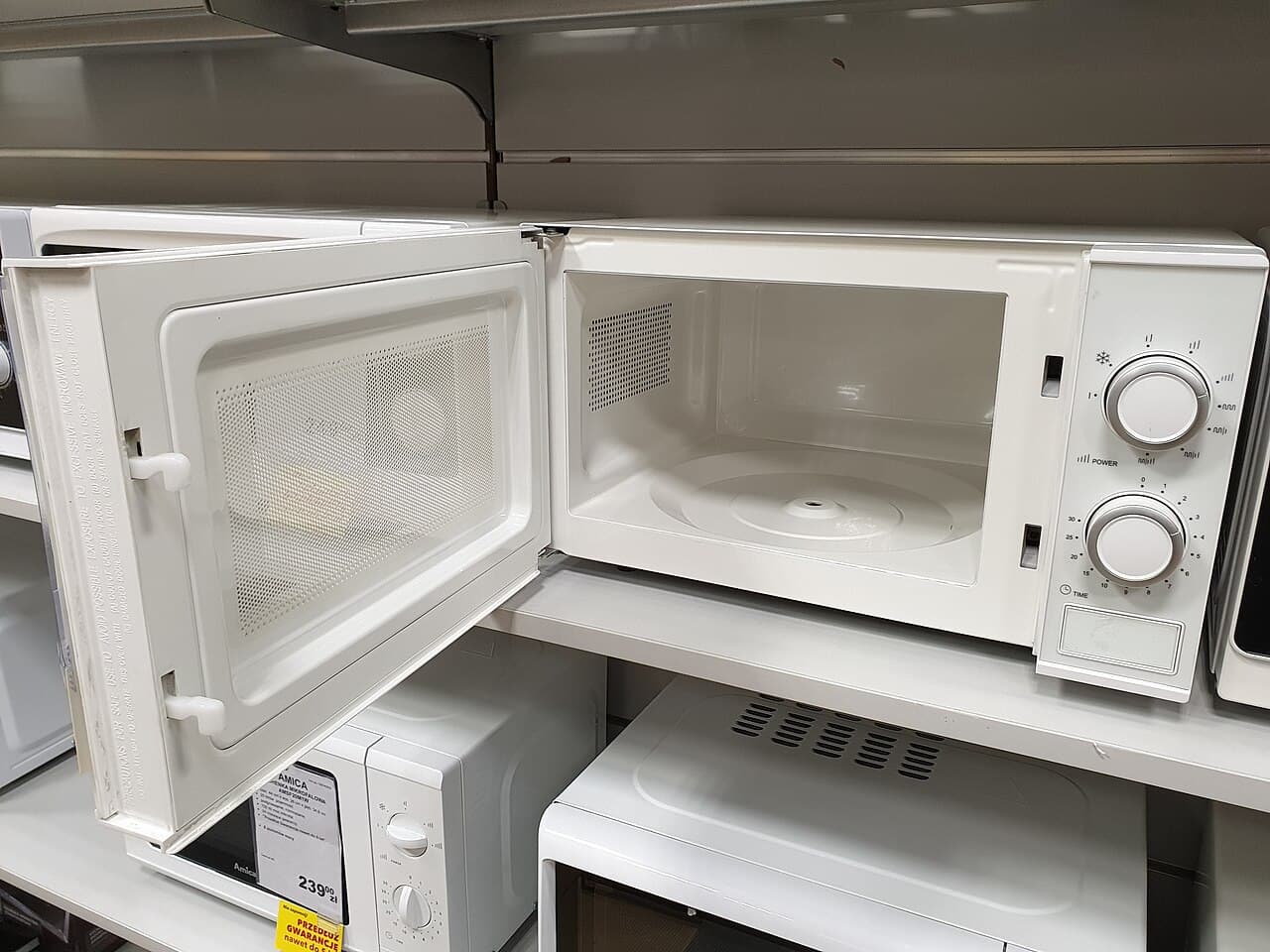
Close the door firmly. GE says to open the door and close it firmly, which confirms the engagement of the door's safety mechanisms.[1] FDA says the standard requires two independent interlock systems that stop the production of microwaves the moment the latch is released or the door is opened, and that a monitoring system stops oven operation in case one or both of the interlock systems fail.[3] A latch that is not fully engaged, or a worn door switch, can therefore stop the heating while the rest of the oven seems normal.
Check what you are heating
Before blaming the oven, try a cup of water. FDA says microwaves are absorbed by foods and cause the water molecules in food to vibrate,[3] and that foods that are high in water content, like fresh vegetables, can be cooked more quickly than other foods.[3] Dry food, or food in a container the waves cannot reach, will come out disappointing in a perfectly healthy oven. FDA also says generally, metal pans or aluminum foil should also not be used in a microwave oven, as the microwaves are reflected off these materials causing the food to cook unevenly and possibly damaging the oven.[3]
If a cup of water is still barely warm after a normal heating run, the oven has a real fault. Some ovens should not be operated when empty,[3] so keep the cup of water in the oven and check your manual.
Why you should not open it
Do not take the case off, even with the plug pulled. GE says it offers "no do-it-yourself repair advice on microwave ovens" for safety reasons, citing a capacitor that can hold a high voltage charge even after it has been unplugged, complex electronic circuitry, and special equipment needed to make a diagnosis.[2] Its words: "We urge you NOT to attempt any microwave repairs."[2]
The risk is not only a shock. FDA says there have been very rare instances of radiation injury due to unusual circumstances or improper servicing.[3] What a technician does with a meter, and in what order, is covered in what a technician does to fix a microwave that will not heat.
Stop using it if
- The door does not close firmly, or is bent, warped or otherwise damaged. FDA recommends not using an oven if the door doesn’t close firmly or is bent, warped, or otherwise damaged.[3]
- The oven keeps running with the door open. If an oven continues to operate with the door open, FDA recommends immediately discontinuing use of the oven.[3]
- You see sparks, smell burning, or the oven trips the breaker.
If the door hinges, latches or seals are damaged, FDA says to contact the manufacturer for assistance.[3]
When to call a licensed pro
If the door and settings are fine and a cup of water still does not warm, GE says: "we recommend contacting service."[1] Call a qualified appliance repair technician, and for a built-in or over-the-range unit ask who handles taking it out of the wall or cabinet.
Ask each business for its visit fee, whether that fee is credited toward the repair, which part it believes failed, and what is covered if the new part does not fix the problem. Ask for the estimate in writing. DPOR's hiring guide says it is advisable to get at least three written bids or estimates using identical plans and specifications so you can compare prices.[4] The same guide says: Do not automatically accept the lowest.[4] A quote that is cheap because it skips the diagnosis is not a bargain.
Whether the repair makes sense depends on the oven's age and price, which is the subject of whether it is worth repairing a microwave.
Getting help in Virginia
Browse more appliance repair answers, see appliance installation businesses for a built-in unit that has to come out, or look at microwave repair businesses.
When you are ready, describe the microwave problem once and local appliance repair businesses quote it.
Common questions
- Why does my microwave spin and light up but not heat?
- The light, fan and turntable run separately from the part that makes microwaves. A device called a magnetron produces the microwaves, and if it or the circuit feeding it fails, the oven keeps running while the food stays cold. A technician has to test which part failed.
- Can a loose door cause a microwave not to heat?
- Yes. FDA says ovens must have two independent interlock systems that stop the production of microwaves the moment the latch is released or the door is opened. If the door is not fully latched, or a switch is worn, the oven can run without heating. Open the door and close it firmly, as GE advises.
- Is it dangerous to keep using a microwave that does not heat?
- Not if the door closes firmly and nothing is damaged, but there is little point. Stop using it if the door is bent or does not latch, if it runs with the door open, or if you see sparks or smell burning. FDA says a damaged oven may present a risk of microwave energy leaks.
- Can I fix a microwave that runs but does not heat myself?
- GE offers no do-it-yourself repair advice on microwave ovens and urges owners not to attempt any microwave repairs, because a capacitor can hold a high-voltage charge even after the oven is unplugged. Make the timer and door checks, then call a technician.
- Could the food or container be the problem?
- Sometimes. Microwaves are absorbed by foods, and foods high in water content heat more quickly, while metal pans and foil reflect the microwaves. Test with a cup of water before deciding the oven has failed.
- How do I choose a repair business?
- Get at least three written estimates for the same symptom, compare the visit fee, the part and the warranty, and do not automatically accept the lowest, as DPOR's hiring guide advises.
Sources
- [1] Microwave - Runs But Does Not Heat, GE Appliances. Checked October 27, 2026.
- [2] Microwave Do-It-Yourself Repair Recommendations, GE Appliances. Checked October 27, 2026.
- [3] Microwave Ovens, U.S. Food and Drug Administration. Checked October 27, 2026.
- [4] What You Should Know Before You Hire a Contractor, Virginia Board for Contractors, DPOR. Checked October 27, 2026.
Want a pro to handle it?
Describe the job once. Licensed local businesses send quotes, and you pay only when you book one.
Get a quote for Appliance Repair