What does trenching for a utility line involve?
Trenching a utility line means getting lines marked through Virginia 811, planning a route around them, digging to the depth the line needs with hand digging near marked lines, protecting the trench, laying the line, inspecting it, then backfilling and restoring. It is licensed work: a permit, a qualified contractor and a licensed electrician for any wiring are usually involved.
Free to ask. Local shops send quotes, and you pay only when you book one.
By Kasra Taheri, Founder, LoclisPublished
Researched and drafted with AI, then checked claim by claim against the sources listed below before it was published. Prices and rules change; the dates beside each source say when it was last checked.
This is a job for a licensed pro in Virginia
This page explains what the work involves, the permits, what a licensed pro does and what drives the cost. It does not give step-by-step instructions, because this work needs a licence, a permit or both, and doing it wrong can injure someone. Before you hire, check the licence on Virginia's DPOR record.
Trenching for a utility line is a sequence: get the underground lines in your yard marked, plan a route, dig to the depth the line requires, lay the line or conduit, then backfill and restore the surface. The digging is the visible part. Most of what keeps the job legal and safe happens before the machine arrives and depends on who is licensed to connect what.
Before any digging: marking and a route
Virginia law says no person shall make or begin any excavation or demolition without first submitting a locate request to the notification center.[1] That includes trenching. The law defines excavation to include grading, trenching, digging, ditching, dredging, drilling, augering, tunneling, scraping, cable or pipe plowing and driving.[2] The request is free, and Virginia 811 says markings take approximately three business days.[3] Details are in do I need to call 811 before digging in Virginia.
Public utilities do not mark everything. Virginia 811 says the point of consumption for a sewer line is the sewer cleanout, which is usually located within 5 feet of the edge of the property,[4] and that the line connecting your house to the water meter is private. Its list of private lines that the notified utilities will not mark also includes lines running from your home to a detached garage or shed, septic tanks and propane tanks and their lines.[4] A trench to a detached garage or workshop is exactly the kind of job where the line you most need to avoid, or the one you are about to join, is private. A contractor typically hires a private locator for these.
A route is then planned around the markings, the structures, tree roots, drainage and the end points: the meter, panel, cleanout or building the line serves. The longer and straighter the run, the simpler the trench.
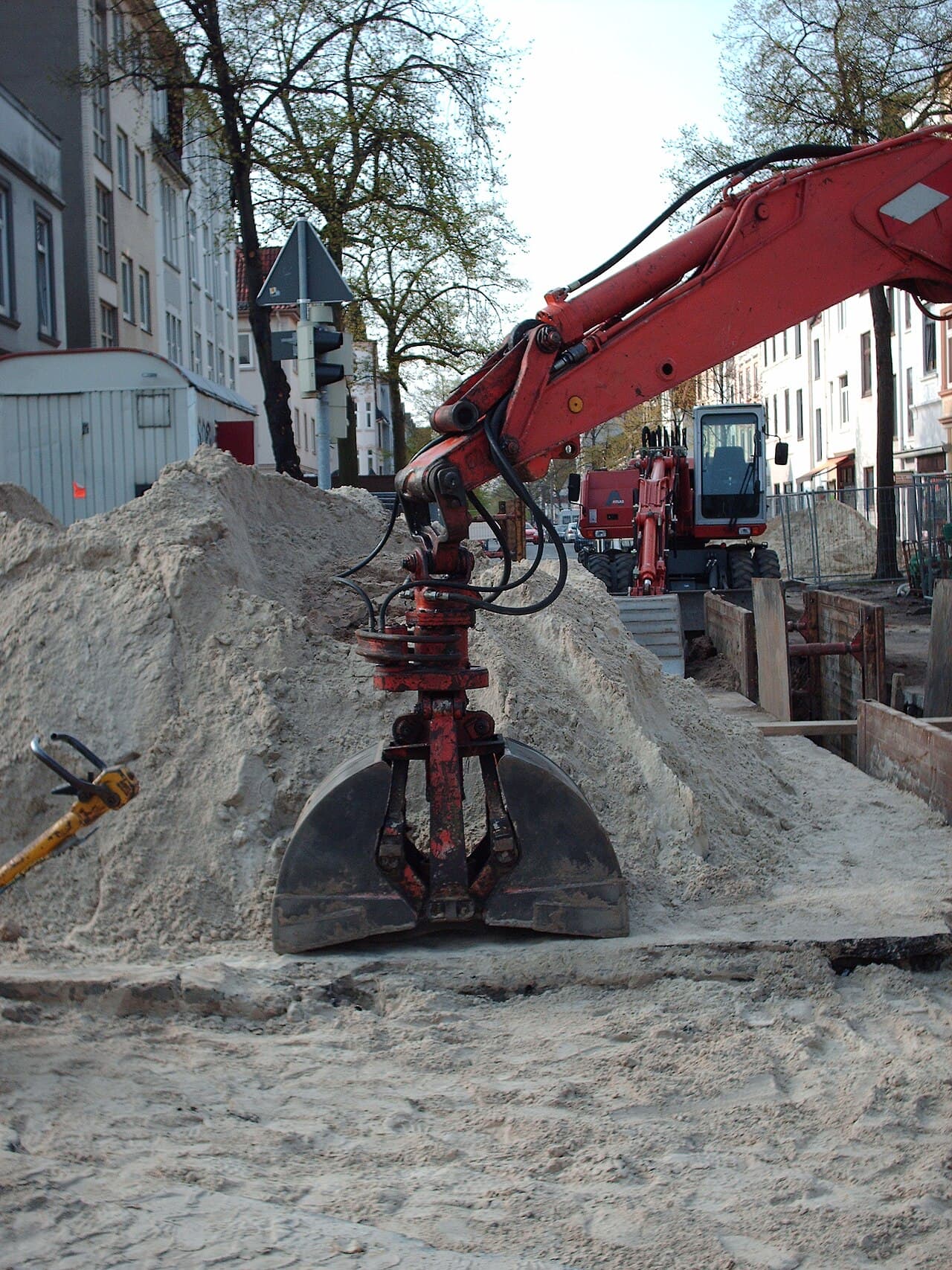
The trench itself
Near existing lines. Once lines are marked, Virginia 811 says state law mandates a two-foot tolerance zone on either side of the marks, where only certain types of excavation are allowed, such as digging with hand tools.[5] The law counts digging with shovels, picks, and manual post hole diggers, vacuum excavation or soft digging as hand digging.[2] Crews usually expose a crossing line by hand and then dig on with the machine.
Depth and shoring. Required depth depends on what is going in: a water service, a sewer lateral, electrical conduit and a low-voltage line each have their own rules, set by the plumbing or electrical code and often the utility. Federal workplace rules protect the people in the hole: each employee in an excavation shall be protected from cave-ins by an adequate protective system, unless the excavation is in stable rock or is less than 5 feet in depth and examination of the ground by a competent person provides no indication of a potential cave-in.[6] That is why a deeper trench has sloped sides or a shield or shoring in it. Stay out of any trench that has no protection.
Laying the line. Pipe, wire or conduit goes in on a prepared bed, usually with warning tape above it, and gets inspected before it is covered. Where a permit applies, the inspector needs to see the line open.
Backfill and restoration. The trench is filled in layers and compacted so it does not settle into a ditch, then the lawn, gravel, driveway or paving is restored. Ask what restoration is in the price.
Permits and who may connect what
Virginia's Uniform Statewide Building Code requires a permit before installations or alterations involving a water supply and distribution system, a sanitary drainage system or electric wiring.[7] Ask your local building department what applies to your line and who pulls the permit.
Virginia's Board for Contractors defines an underground utility and excavating specialty for the construction, repair, improvement, or removal of water, gas, and sewer connections to residential, commercial, and industrial sites, subject to local ordinances.[8] The same definition limits empty-conduit work to cases where each conduit system does not include installation of any conductor wiring or connection to an energized electrical system.[8] Pulling wire and connecting to the panel is electrical work, and under Virginia law no individual shall engage in, or offer to engage in, work as a tradesman unless he has been licensed.[9] So an electrical feed to a shed usually involves two trades: an excavator for the trench and a licensed electrician for the wire.
When to call a licensed pro
Hire one for every utility trench: a machine, buried lines, a collapse risk and a code-regulated line at the bottom. Contractors need a Class C licence for a single contract over $1,000 but less than $30,000, and a higher class above that.[10] Look up the licence on DPOR before you sign, and ask who will request the 811 markings: your contractor is responsible for contacting Virginia 811, and you should confirm that they have before excavation begins.[5] If anyone hits a line, the rule is simple: stop digging immediately, step away, and call 911 if gas, other flammable, toxic or corrosive material is escaping or there is danger.[5]
For what the trenching will cost, see how much trenching costs per foot in Virginia; for who handles the markings, who is responsible for marking underground utilities in Virginia. Browse excavation services or read more excavation answers. To get prices for your yard, describe the job once and licensed local businesses quote it.
Common questions
- Can I rent a trencher and dig the trench myself?
- Virginia law requires a locate request before any excavation, and the 2-foot tolerance zone limits machine digging near marked lines. Deep trenches also need protection against cave-in. For anything beyond a shallow, short run, hire a licensed contractor.
- Does a trench for a line to a detached garage get marked by 811?
- Not the line that is yours. Virginia 811 says utilities will not mark lines running from your home to a detached garage or shed. They mark public lines to the meter, so the private ones need a private locator.
- How deep does a utility trench have to be?
- It depends on the line. Water, sewer, electrical and communications lines each have their own depth rules in code or from the utility. Ask your building department and your contractor to state the depth in the quote.
- Do I need a permit to run a new line underground?
- Often yes. Virginia's building code requires a permit for installations involving water supply, sanitary drainage or electric wiring. Ask your locality, and make sure the contractor's quote says who pulls it.
- Who connects the electrical wire at the end of the trench?
- A licensed electrician. Virginia's excavating specialty does not include installation of conductor wiring or connection to an energized electrical system.
Sources
- [1] Va. Code § 56-265.17, Notification required prior to excavation or demolition; waiting periods; marking of proposed site, Code of Virginia, Virginia General Assembly. Checked October 26, 2026.
- [2] Va. Code § 56-265.15, Definitions; calculation of time periods, Code of Virginia, Virginia General Assembly. Checked October 26, 2026.
- [3] The Process, Virginia 811. Checked October 27, 2026.
- [4] Private Utilities Explained, Virginia 811. Checked October 26, 2026.
- [5] Homeowners FAQ, Virginia 811. Checked October 26, 2026.
- [6] 29 CFR 1926.652, Requirements for protective systems, Occupational Safety and Health Administration, U.S. Department of Labor. Checked October 27, 2026.
- [7] 13VAC5-63-80, Section 108 Application for permit (Virginia Uniform Statewide Building Code), Virginia Administrative Code, Department of Housing and Community Development. Checked October 27, 2026.
- [8] 18VAC50-22-30, Definitions of specialty services, Virginia Administrative Code, Board for Contractors. Checked October 26, 2026.
- [9] Va. Code § 54.1-1129, Tradesman license required, Code of Virginia, Virginia General Assembly. Checked October 26, 2026.
- [10] Va. Code § 54.1-1100, Definitions, Code of Virginia, Virginia General Assembly. Checked October 27, 2026.
Want a pro to handle it?
Describe the job once. Licensed local businesses send quotes, and you pay only when you book one.
Get a quote from a local pro