What happens during a bathroom remodel?
A bathroom remodel runs in order: demolition, plumbing and electrical rough-in, an inspection before walls close, waterproofing, tile, fixtures and finishes, then a final inspection. Much of the work is licensed trade work that needs a Virginia permit. Expect hidden problems when walls open, especially in older homes.
Free to ask. Local shops send quotes, and you pay only when you book one.
By Kasra Taheri, Founder, LoclisPublished
Researched and drafted with AI, then checked claim by claim against the sources listed below before it was published. Prices and rules change; the dates beside each source say when it was last checked.
This is a job for a licensed pro in Virginia
This page explains what the work involves, the permits, what a licensed pro does and what drives the cost. It does not give step-by-step instructions, because this work needs a licence, a permit or both, and doing it wrong can injure someone. Before you hire, check the licence on Virginia's DPOR record.
A bathroom remodel runs in a set order: demolition, rough-in of the plumbing and wiring, inspection, waterproofing, tile, fixtures and finishes, then a final inspection. Where the walls and floor are opened up, the work is licensed trade work with permits and inspections along the way: under Virginia's building code, a permit is required before removing or adding any wall or partition, or altering the water supply and distribution system, sanitary drainage, vents, electric wiring, mechanical systems or fuel supply systems.[1] A small refresh can take far less than that, and a full gut takes all of it.
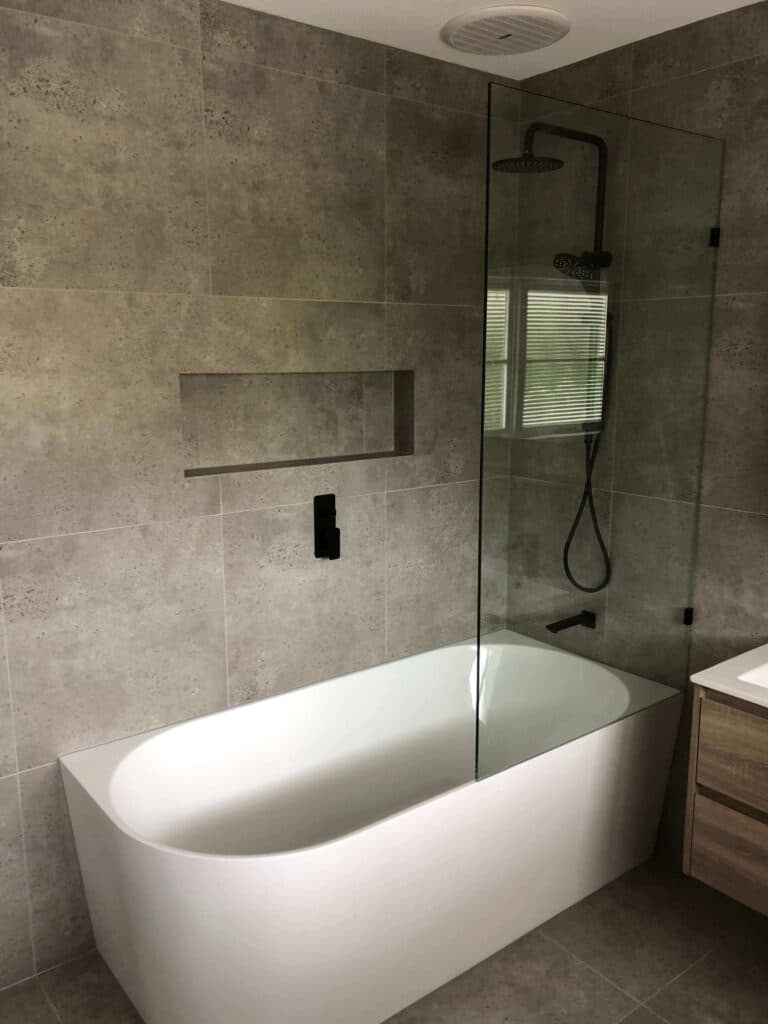
Before work starts
The contractor measures, agrees the layout and fixtures with you, and puts it in a written contract. Virginia's Board for Contractors says the contractor should apply for and obtain any necessary building permits, that this should be spelled out in your contract, and that you should not allow work to start until the contractor gives you copies of the officially issued permit(s).[2] The same guide says to resist the temptation to make any changes verbally with the contractor and to be sure all changes are in writing.[2]
This is also when you choose the tub or shower, vanity, toilet, faucets, tile and lighting. Fixtures and tile that are special-ordered can take weeks to arrive, so a good contractor wants them chosen before demolition begins, not after.
Demolition and what it uncovers
Crews protect the rest of the house, shut off and cap the water to the room, and take out the old tub or shower, vanity, toilet, flooring and any wall surfaces being replaced. Opening a wall is where surprises appear: rot around an old tub, corroded pipes, outdated wiring or a subfloor that has been wet for years.
In an older house, two hazards need a plan before anything is torn out. EPA says that approximately three-quarters of the homes in the United States built before 1978 still contain some lead-based paint, and its rule says anyone paid to perform work that disturbs painted surfaces in homes built before 1978 must be certified and their employees trained in lead-safe work practices.[3] On asbestos, EPA says you can't tell whether a material contains asbestos simply by looking at it,[4] and the building code requires a permit before the removal or disturbing of any asbestos containing materials during the construction or demolition of a building or structure.[1] If a contractor suspects either, ask for testing first.
Rough-in and the first inspection
With the room stripped to the framing, the licensed plumber moves or connects supply lines, drains and vents for the new layout, and the electrician adds or relocates outlets, lights and the exhaust fan circuit. Any framing change, such as a recessed niche or a relocated wall, happens now.
The building code lists, among its minimum inspections, "Inspection of electrical, mechanical and plumbing materials, equipment, and systems prior to concealment".[5] That means the inspector looks at the rough-in before the walls are closed. The code says that when construction reaches a stage of completion that requires an inspection, the permit holder shall notify the building official.[5] If the work is not ready or fails, the schedule slips, which is why the inspection dates matter more than the calendar.
Waterproofing, tile and finishes
Once the walls are closed, wet areas get a waterproof layer under the tile. Products differ, and the manufacturer's installation instructions govern. One liquid-applied membrane's data sheet, for example, lists the line "Flood test immediately after drying".[6] The point of a flood test is to find a leak while it is still behind a membrane and nothing is tiled over it.
After that come tile and grout, then paint, the vanity, toilet, faucets and shower trim, mirrors, lighting and accessories. Grout and sealants need time to cure before heavy use, so the contractor will tell you how long to keep the shower out of service.
Ventilation and the final inspection
A bathroom that stays damp grows mold. EPA's tip for homeowners is: "Run the bathroom fan or open the window when showering".[7] Check that the new fan vents outdoors and works before the crew leaves. The code's list of minimum inspections ends with a "Final inspection".[5] Do not pay the last installment until it has passed. The Board for Contractors tells homeowners: "Do not pay 100% of the total bill until the work is 100% complete."[2] It adds: "Make sure all required building inspections have been completed".[2]
How long it takes
Time depends on scope, not on a fixed number of days. Swapping a vanity, toilet and flooring is quick. Moving a tub, relocating drains or rebuilding a shower adds trade visits, inspections and cure times, and a hidden problem found at demolition adds more. Ask for a schedule with start and finish dates, what is waiting on special-order items, and who calls the inspector.
When to call a licensed pro
Hire one for any bathroom work behind the surface. Under the Code of Virginia, the Board for Contractors must require a master tradesman licence as a condition of licensing electrical, plumbing and HVAC contractors.[8] Check the licence of the contractor and ask which licensed trades will do the plumbing and wiring.
To budget the job, read how much a bathroom remodel costs in Virginia, and whether you need a permit. The kitchen version of this guide is what happens during a kitchen remodel. You can also browse remodeling businesses or read every remodeling answer.
To get quotes for your bathroom, describe the project once and licensed local contractors will bid on it.
Common questions
- What is the first thing that happens in a bathroom remodel?
- Planning and paperwork. The contractor measures, agrees the layout and fixtures with you in a written contract, and obtains any required permits before demolition. Virginia's Board for Contractors says not to let work start until you have copies of the issued permits.
- Does a bathroom remodel need inspections?
- Where a permit is required, yes. The building code lists an inspection of plumbing, electrical and mechanical work before it is concealed, and a final inspection. The contractor, as permit holder, notifies the building official when the job reaches each stage.
- Why is waterproofing tested before the tile goes on?
- A leak is far cheaper to fix while the membrane is still exposed. One manufacturer's data sheet for a liquid waterproofing membrane says to flood test immediately after drying, and your contractor should follow whichever product's instructions they use.
- Can I stay in the house during a bathroom remodel?
- Usually, if you have another bathroom, though water shutoffs, dust and noise are part of it. In a house built before 1978, ask how the contractor will contain lead dust, and plan on staying clear of the work area.
- What problems turn up when the walls come open?
- Rot around an old tub, corroded pipes, outdated wiring and a damaged subfloor are the common ones, and older homes may also have lead paint or asbestos materials. Ask in the contract how hidden problems will be priced and approved in writing.
Sources
- [1] 13VAC5-63-80. Section 108 Application for permit (Virginia Uniform Statewide Building Code), Virginia Administrative Code, Board of Housing and Community Development. Checked October 27, 2026.
- [2] What You Should Know Before You Hire a Contractor, Virginia Board for Contractors, DPOR. Checked October 27, 2026.
- [3] Lead Renovation, Repair and Painting Program, U.S. Environmental Protection Agency. Checked October 27, 2026.
- [4] Protect Your Family from Exposures to Asbestos, U.S. Environmental Protection Agency. Checked October 27, 2026.
- [5] 13VAC5-63-130, Virginia Uniform Statewide Building Code, Section 113 Inspections, Virginia Administrative Code, Board of Housing and Community Development. Checked October 27, 2026.
- [6] RedGard Waterproofing and Crack Prevention Membrane, TDS-104, Custom Building Products. Checked October 27, 2026.
- [7] A Brief Guide to Mold, Moisture and Your Home, U.S. Environmental Protection Agency. Checked October 27, 2026.
- [8] Code of Virginia § 54.1-1100, Definitions (contractors), Virginia General Assembly, Legislative Information System. Checked October 27, 2026.
Want a pro to handle it?
Describe the job once. Licensed local businesses send quotes, and you pay only when you book one.
Get a quote from a local pro