What should I ask a tile installer before a shower job?
Ask for the Virginia contractor licence number and look it up, then ask how the shower will be waterproofed and whether it will be flood tested before tile, who handles any plumbing and permits, what insurance they carry, for photos and references from similar showers, and for a written contract that lists the materials, price, payment schedule and warranty.
Free to ask. Local shops send quotes, and you pay only when you book one.
By Kasra Taheri, Founder, LoclisPublished
Researched and drafted with AI, then checked claim by claim against the sources listed below before it was published. Prices and rules change; the dates beside each source say when it was last checked.
Step by step
Read when to stop and call a pro, further down this page, before you start.
Step 1: Look up the licence
Ask for the business's Virginia contractor licence number and check it on DPOR's licence lookup, including its class and specialty.[1]
Step 2: Ask for similar work
Ask for photos of tile showers the installer has built and for local references you can call.
Step 3: Ask how it is waterproofed
Ask which membrane and pan system they use, what goes on the walls under it, and whether they flood test the floor before setting tile.
Step 4: Ask who does the plumbing
Ask whether the drain or valve will move and, if so, which licensed plumber does that work and who pulls the permit.
Step 5: Ask about insurance
Ask what liability and workers' compensation insurance the business carries and ask for the certificate.
Step 6: Ask about hidden damage
Ask how they handle rotted framing found during demolition and how that change is priced and approved.
Step 7: Get a written bid
Ask for an itemised written bid on the same scope you gave the other installers.[1]
Step 8: Read the contract
Check that the contract lists start and finish dates, total price, payment schedule, materials, permits and the contractor's licence details.[4]
Step 9: Agree the warranty
Get the installer's warranty against leaks and cracked grout in writing, with how long it lasts and what it covers.
Step 10: Keep a job file
Keep the contract, change orders, permits and receipts in one file,[1] and photograph each stage, especially the membrane before tile covers it.
Before you hire anyone to build or rebuild a tile shower, ask five things: whether the business is licensed in Virginia, how the shower will be waterproofed, who handles the plumbing and the permit, what insurance and warranty come with the job, and whether you can see showers they have already built. Then get the answers into a written contract. A shower that leaks behind the tile usually does so for years before anyone notices, so the questions you ask before work starts matter more than they do for most jobs.
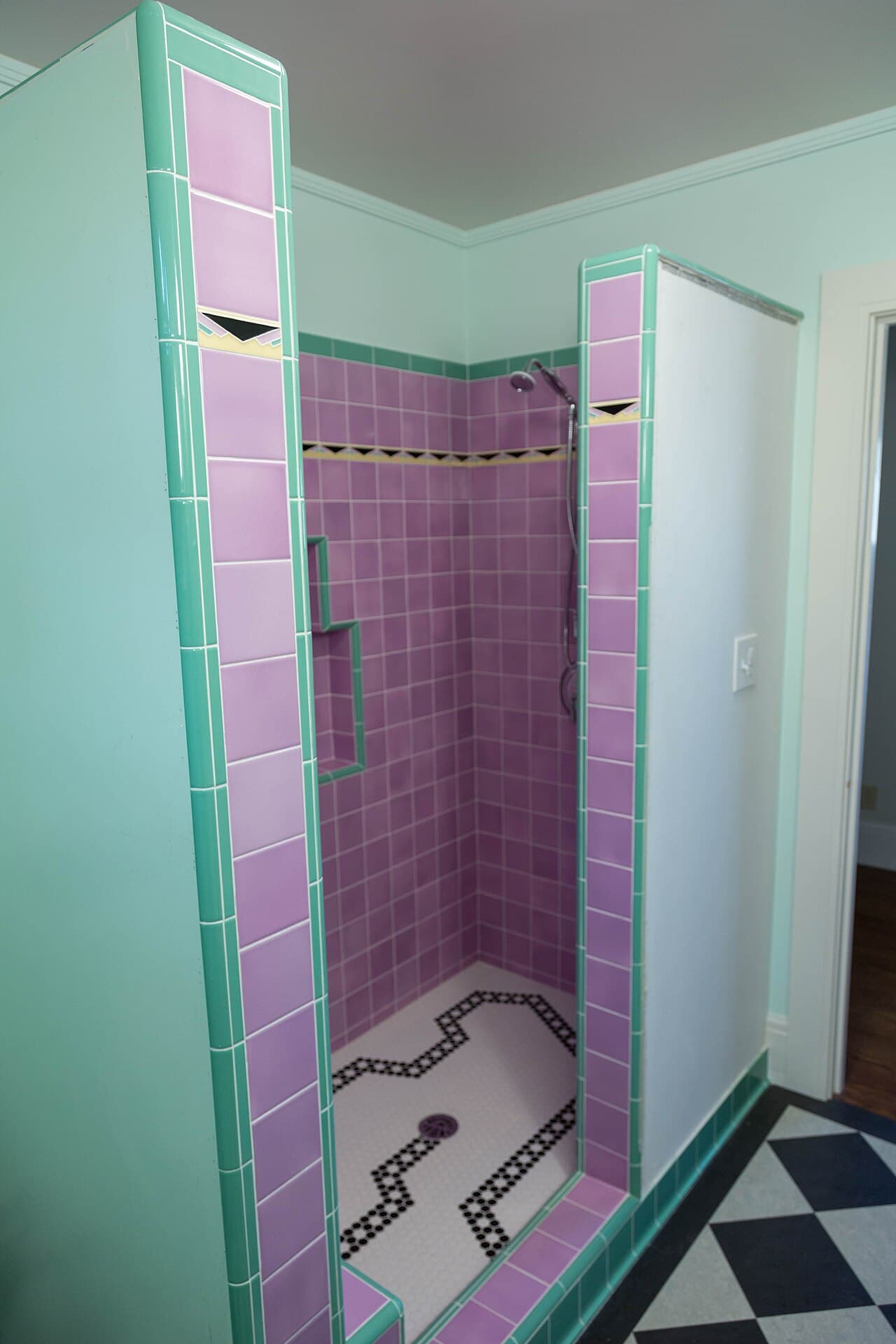
Are you licensed, and for this work?
Virginia's Class C contractor licence covers jobs over $1,000 and under $30,000.[2] Virginia's tile, marble, ceramic and terrazzo specialty (TMC) covers installing ceramic and other tile and cementitious board,[3] and the home improvement (HIC) specialty and the residential and commercial building classifications also provide for that work.[3]
Ask for the licence number and look it up yourself. DPOR's own guide warns: "A license number in an advertisement or on a business card does not necessarily mean the contractor’s license is valid."[1] Check the class and specialty as well as the status; the Board for Contractors also has information on past complaints and disciplinary actions.[1] Step-by-step help is in how to check if a contractor is licensed in Virginia.
Who does the plumbing, and who pulls the permit?
If the drain, valve or shower head is moving, ask who is doing that part. The HIC specialty does not provide for plumbing,[3] and Virginia requires a master tradesman licence as a condition of licensing plumbing contractors,[2] so a tile installer without a plumbing licence should name the licensed plumber they work with.
Ask who will apply for any permit. DPOR's guidance is that licensed contractors should apply for and obtain all building permits, not the homeowner,[1] and it warns that the permit holder becomes the general contractor and takes on responsibility for the job.[1]
How will you waterproof it?
This is the question that separates installers. A good answer names the system: the membrane or pan product, the board on the walls, how the corners, niche, bench and drain are treated, and how the floor is sloped. Be wary of "the tile and grout keep the water out": membrane makers state that mortars and grouts are not replacements for a waterproofing membrane.[5]
Ask whether they flood test the floor before setting tile. HYDRO BAN's data sheet, for example, says to flood test prior to applying tile or stone,[5] and says tile installations must include movement joints at coves, corners and other changes of plane.[5] In practice that usually means flexible caulk, not grout, in the inside corners and where the walls meet the floor. Ask to see the membrane, or a photo of it, before the tile covers it.
Can I see showers you have built?
Ask how long the installer has been setting tile and whether they have built showers like yours, not only floors or backsplashes. Ask for photos of finished showers and look for even spacing, straight grout lines, no lippage (edges of neighbouring tiles at different heights) and a balanced layout. Look closely at niches, corners and the curb, where the hardest cuts are.
Call references. Ask whether the work finished on schedule, whether the price held, and whether the shower has leaked or the grout has cracked since.
What insurance and warranty come with the job?
Ask what liability and workers' compensation insurance the business carries and ask to see the certificate. Ask what the installer's warranty against leaks covers and how long it lasts, and get the length and the terms into the contract.
What about lead and asbestos?
If your home was built before 1978, tearing out a shower usually disturbs painted walls. EPA's lead rule requires anyone paid to do work that disturbs painted surfaces in a home built before 1978 to be certified,[6] so ask for the firm's lead-safe certification. Ask too how they will handle old tile and adhesive that might contain asbestos.
Get the answers in writing
DPOR advises getting at least three written bids using identical plans and specifications.[1] Once you choose, Virginia's contractor regulations require a written contract for residential work that includes, among other things:[4]
- when work is to begin and the estimated completion date
- the total cost of the project
- the amounts and schedule of progress payments, including the down payment
- a list of the specified materials and work
- a statement that the contractor will comply with local permit, inspection and zoning requirements
- the contractor's name, address, licence number, class of licence and specialty
- a statement that any change to cost, materials, work or completion date must be in writing and signed by all parties
For the deposit, DPOR's rule of thumb is a deposit of no more than 10% of the total or $1,000, whichever is less.[1] For what the job may cost and why bids differ, see how much a tile shower costs in Virginia.
Stop and call a pro if
- An installer suggests you pull the permit yourself, or wants to move plumbing without a licensed plumber.
- Demolition turns up rot, a sagging floor or damaged joists. That needs repair before any tile work.
- Your current shower is already leaking into a ceiling or wall. Have the leak traced first; see why a tile shower leaks.
You can browse shower tile installers, look up licensed flooring and tile businesses around Blacksburg, or read the other flooring and tile answers. To have licensed businesses quote your shower, describe the job on Loclis.
Common questions
- Does a tile installer need a licence in Virginia?
- For a job over $1,000, yes: that is where Virginia's Class C contractor licence begins. Tile work falls under the tile, marble, ceramic and terrazzo (TMC) specialty, and the home improvement (HIC) specialty and the residential and commercial building classifications also provide for it. Look the licence up on DPOR's site before you sign.
- Can a tile installer move my shower drain or valve?
- Only if the business also holds a plumbing licence or brings in a licensed plumber. The HIC specialty does not cover plumbing, and altering the drain or water supply needs a building permit.
- What waterproofing answer should I expect?
- A specific one: the product name of the membrane or pan system, what board goes on the walls, how corners, niches and the drain are treated, and a flood test of the floor before tile. A vague answer such as "the grout and tile keep the water out" is a reason to keep looking.
- Who should pull the permit?
- The contractor. DPOR warns that the person who holds the permit becomes the general contractor and takes on responsibility for the job, so do not agree to pull it yourself for an installer's convenience.
- How much should I pay up front?
- DPOR's rule of thumb is no more than 10% of the total or $1,000, whichever is less, and up to 30% for custom-made or special-order items. Do not let payments get ahead of the work.
- My house was built before 1978. Does that change anything?
- Yes. Tearing out a shower usually disturbs painted walls, and EPA requires anyone paid to disturb paint in a pre-1978 home to be lead-safe certified. Ask for the firm's certification, and ask about testing old tile and adhesive for asbestos before demolition.
Sources
- [1] What You Should Know Before You Hire a Contractor, Virginia Board for Contractors, Department of Professional and Occupational Regulation. Checked October 27, 2026.
- [2] Va. Code § 54.1-1100, Definitions (contractors), Code of Virginia, Virginia General Assembly. Checked October 27, 2026.
- [3] 18VAC50-22-30, Definitions of specialty services, Virginia Administrative Code, Virginia General Assembly. Checked October 27, 2026.
- [4] 18VAC50-22-260, Filing of charges; prohibited acts, Virginia Administrative Code, Virginia General Assembly. Checked October 27, 2026.
- [5] HYDRO BAN Data Sheet DS-663, LATICRETE International. Checked October 27, 2026.
- [6] Lead Renovation, Repair and Painting Program, U.S. Environmental Protection Agency. Checked October 27, 2026.
Want a pro to handle it?
Describe the job once. Licensed local businesses send quotes, and you pay only when you book one.
Get a quote from a local pro