What should an office cleaning contract cover?
A written scope of work: tasks and frequency per area, visit times, who supplies what, disinfecting methods, insurance and who employs the crew, how missed work is reported and fixed, the price, and how either side ends the contract. Get all of it in writing before the first visit, and start with a short trial period.
Free to ask. Local shops send quotes, and you pay only when you book one.
By Kasra Taheri, Founder, LoclisPublished
Researched and drafted with AI, then checked claim by claim against the sources listed below before it was published. Prices and rules change; the dates beside each source say when it was last checked.
Step by step
Read when to stop and call a pro, further down this page, before you start.
Step 1: Write the scope by area
List each area (offices, restrooms, kitchen, entrance, floors) with the tasks and how often each is done.
Step 2: Separate daily and periodic work
Put tasks like carpet extraction or floor stripping on their own schedule and price.
Step 3: Set the visit times and access
State the days, the hours, who holds keys or codes and what happens if the building is closed.
Step 4: Name supplies and products
Say who provides paper, soap and liners, and which products are used, including any disinfectant and its contact time.[3]
Step 6: Ask for proof of insurance
Get a certificate of insurance before the first visit.
Step 7: Agree how problems are handled
Name a contact, a way to report missed work and a time limit for a re-clean at no charge.
Step 8: Fix the price and the term
State the monthly price, what triggers a change, the trial period, the term, renewal and how either side gives notice to end it.
A good office cleaning contract is a written scope of work with a price attached. It says what is cleaned, how often, by whom, with what, and what happens when it goes wrong. The contract is the only thing you can point to when a restroom is missed, so every vague line costs you later.
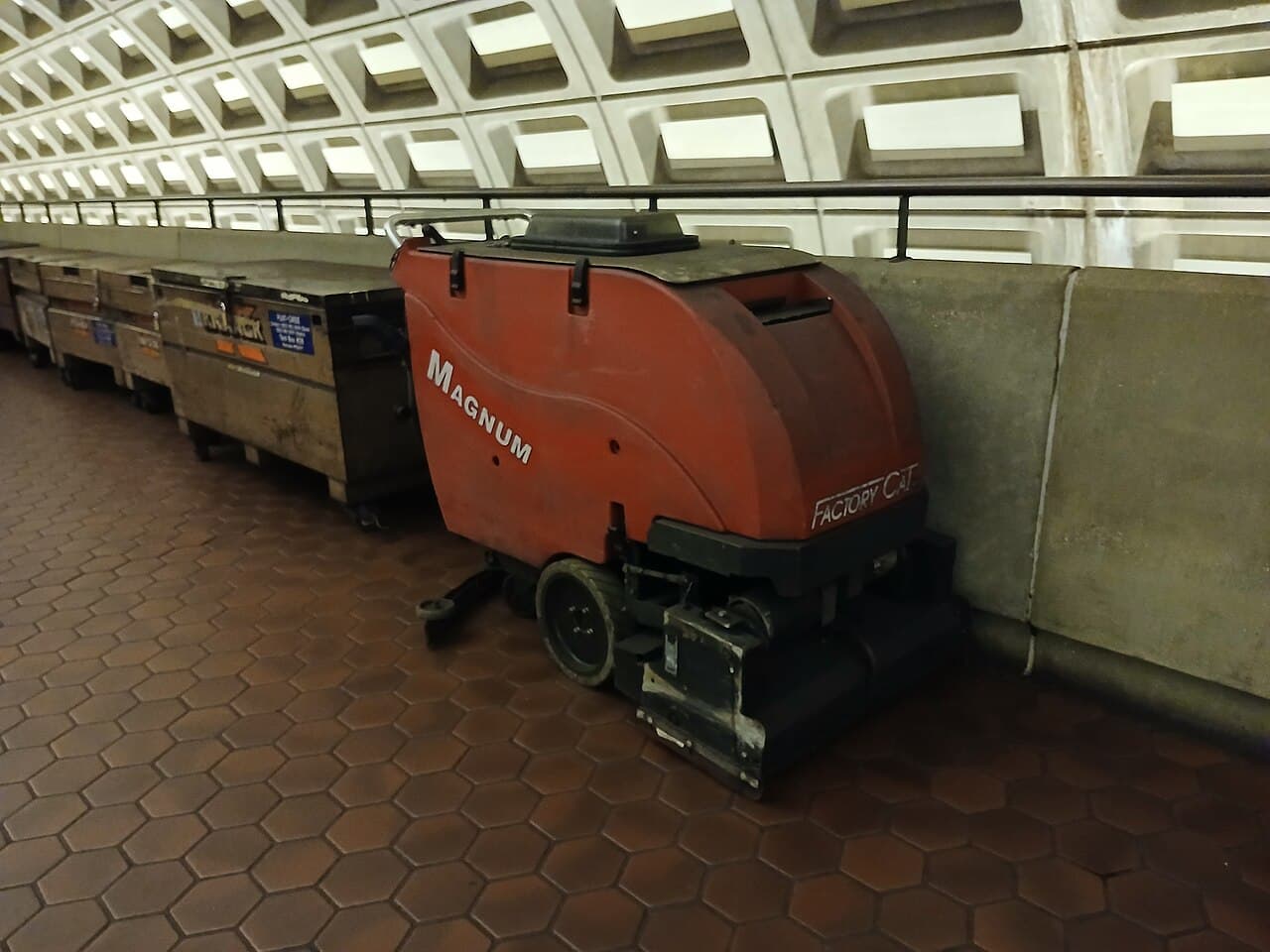
The scope of work
This is the core. List each area, the tasks in it and how often they are done:
- Offices and open areas: trash, desks cleared or wiped, vacuuming or floor care
- Restrooms: fixtures, floors, restocking, trash
- Kitchens and break rooms: counters, sinks, appliance exteriors, floors
- Entrances and common areas: glass, mats, floors
Put periodic work in its own schedule with its own price: carpet extraction, floor stripping and waxing, window cleaning. A contract that only says "office cleaning" lets the company decide what that means.
Schedule and access
State the days and hours of service, who holds keys or alarm codes, what happens on holidays and when the building is closed, and how a missed visit is made up. If cleaning happens after hours, say who is responsible for locking up.
Products, supplies and disinfecting
Decide who supplies paper goods, soap and liners and whether they are billed at cost or included.
If you want disinfecting, write it down. Virginia Cooperative Extension says the first step is to clean dirty surfaces,[4] and that choosing whether to sanitize or disinfect a cleaned surface will depend on what kind of germs you want to reduce.[4] Name the surfaces (door handles, switches, shared equipment) and the frequency. The EPA's guidance is to check that your product is EPA-approved and to follow the contact time.[3] It also says to follow the product's directions and check "use sites" and "surface types" to see where you can use the product.[3] Ask the company to say in the contract which product it uses and that it will follow the label.
Who does the work, and who covers them
This is the clause most people skip. Ask whether the crew are the company's own employees or subcontractors. Virginia's workers' compensation law says that "nothing in this title shall be construed to make the employees of any independent contractor the employees of the person or corporation employing or contracting with such independent contractor."[1] In practice the crew's coverage depends on their own employer, so ask for a certificate of insurance, and put the employment arrangement in the contract.
The same law lets an employer choose to include an independent contractor in its coverage, provided the independent contractor agrees to such inclusion[1] and, unless the employer is self-insured, its insurer agrees in writing. That is a decision for you and your insurer, not a default.
If you hire a person directly, the labels matter. The IRS asks about the degree of control and independence: behavioral ("Does the company control or have the right to control what the worker does and how the worker does his or her job?"), financial ("Are the business aspects of the worker's job controlled by the payer?") and the type of relationship, including whether there are written contracts or employee type benefits.[2] A cleaner you schedule, equip and direct may be your employee whatever the paperwork says.
Quality, problems and exits
Name one contact on each side. Say how missed work is reported, how quickly it is re-cleaned at no charge, and what repeated misses allow you to do. Ask for a trial period of a month or two with a short notice period, and read the renewal clause closely.
Price and changes
State the monthly price, what is included in it, how add-ons are billed and when and why the price can change. Labor drives the bill, so see how much commercial cleaning costs in Virginia before you compare bids.
Stop and call a pro if
- The company will not put the scope in writing. Do not start without a scope, a schedule and a price on paper.
- There is a legal question about employees or insurance. The classification of workers and the limits of your coverage are questions for your insurer, accountant or attorney.
- The space has mold, sewage or biohazards. That is a specialist job, not janitorial cleaning; see biohazard cleanup.
Getting help in Virginia
See how to get house cleaning priced for the pricing basics, what recurring cleaning costs, browse cleaning services or read more cleaning answers.
When you are ready, describe the job once and local cleaning businesses quote it.
Common questions
- Should the contract list tasks or just say 'office cleaning'?
- List tasks. A scope by area, with the task and how often it is done, is what you can point to when something is missed. A bare line like 'office cleaning' leaves every disagreement to memory.
- Who should carry workers' compensation for the cleaning crew?
- Their employer. Virginia's law says nothing in the workers' compensation title makes the employees of an independent contractor the employees of the person contracting with that contractor. Ask for a certificate of insurance and say in the contract who employs the crew.
- Does the contract need to mention disinfecting?
- Yes, if you want it. Say which surfaces, how often, with which product, and that the product is EPA-approved and left wet for its contact time. Otherwise a wipe-down is likely to be billed and delivered as disinfecting.
- How long should the contract term be?
- Start short. A trial period of a month or two with a clear exit clause lets you judge the work before you commit. Read the renewal clause closely, since some agreements renew on their own unless you give notice.
- What if the cleaners are classed as independent contractors?
- The IRS looks at behavioral control, financial control and the type of relationship, and says to consider all of the evidence. If you direct how the work is done, the label in the contract may not decide the question. Ask your accountant or the IRS, not the cleaning company.
Sources
- [1] Va. Code § 65.2-101, Definitions, Code of Virginia, Virginia General Assembly. Checked October 27, 2026.
- [2] Independent contractor (self-employed) or employee?, Internal Revenue Service. Checked October 27, 2026.
- [3] Six Steps for Safe & Effective Disinfectant Use, U.S. Environmental Protection Agency. Checked October 27, 2026.
- [4] How to Clean, Sanitize, and Disinfect Surfaces (FST-395NP), Virginia Cooperative Extension, Virginia Tech. Checked October 27, 2026.
Want a pro to handle it?
Describe the job once. Licensed local businesses send quotes, and you pay only when you book one.
Get a quote from a local pro