Does green house cleaning cost more in Virginia?
Not necessarily. Green cleaning has no standard price in Virginia; each business sets its own. Products with EPA's Safer Choice label must perform comparably to conventional ones, so switching products alone should not add much. A quote can rise for extra time on gentler methods, a HEPA vacuum, fragrance-free requests or certified staff. Compare written quotes that name the products and list the same work.
Free to ask. Local shops send quotes, and you pay only when you book one.
By Kasra Taheri, Founder, LoclisPublished
Researched and drafted with AI, then checked claim by claim against the sources listed below before it was published. Prices and rules change; the dates beside each source say when it was last checked.
Step by step
Read when to stop and call a pro, further down this page, before you start.
Step 1: Describe the house
Write down bedrooms, bathrooms, rough square footage, floor types, pets and anyone with allergies or asthma, so every quote covers the same house.
Step 2: Say what green means to you
List what you want, such as Safer Choice products, fragrance-free products, no bleach, a HEPA vacuum or reusable cloths instead of paper towels.
Step 3: Ask for the product list
Ask each business to name the products it would use in your home by brand and product name, not just call them green or natural.
Step 4: Look the products up
Search each name in EPA's Safer Choice product list, which you can filter for home use and fragrance-free products.[2]
Step 5: Check the disinfectant
If the business disinfects, ask which product and look for its EPA registration number on the label.[8]
Step 6: Get it in writing
Ask for the price in writing with the tasks listed, whether it is flat or hourly, and what any green surcharge pays for.
Step 7: Compare like with like
Line up quotes that cover the same rooms, tasks, products and number of cleaners before you compare totals.
Green house cleaning does not have to cost more in Virginia. There is no standard price; each business sets its own. Switching to safer products adds little on its own. What can raise a quote is extra time, equipment or training, so the useful step is to ask what a higher price pays for and compare written quotes that list the same work.
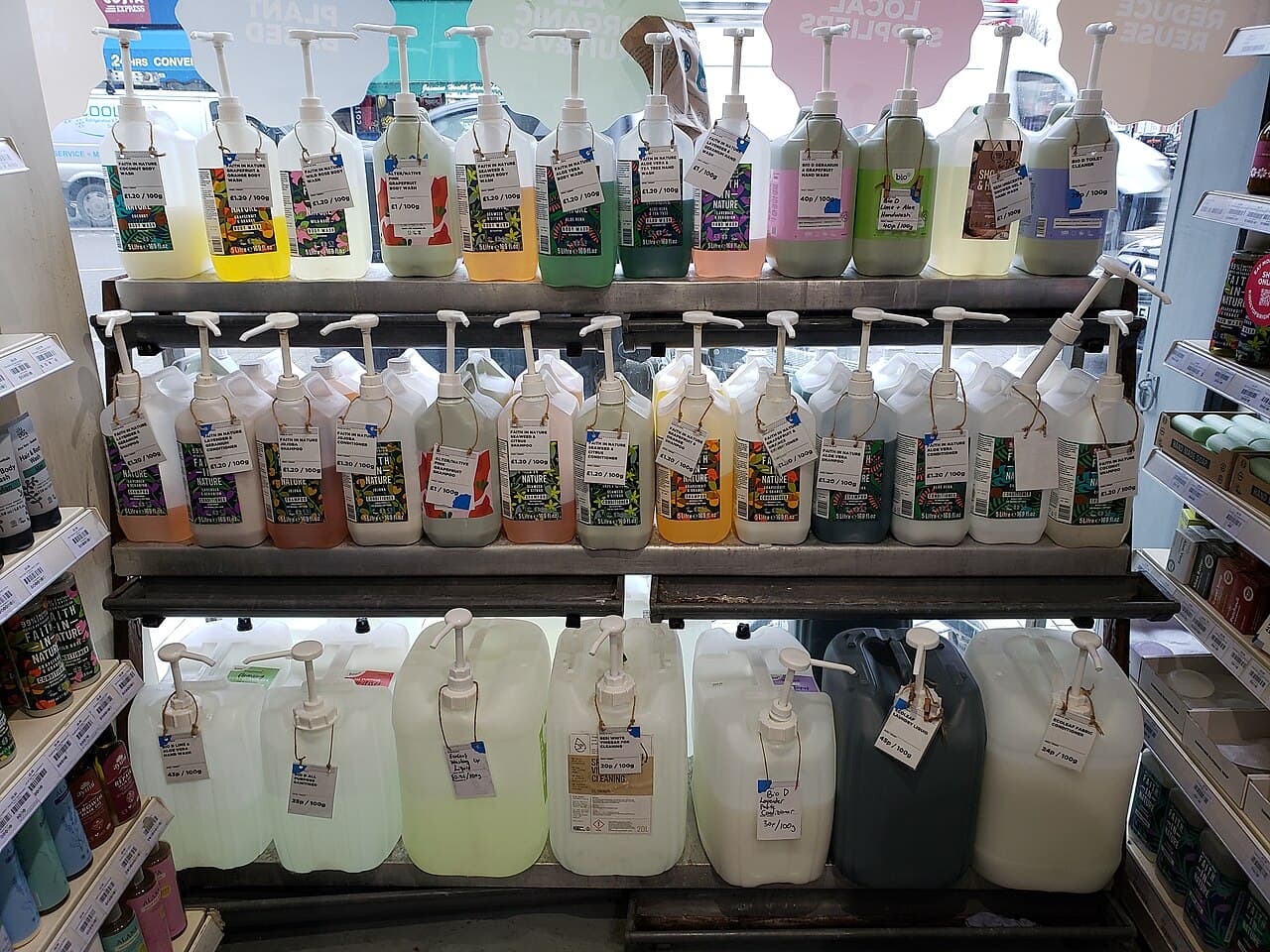
Products: switching alone should add little
Green products are no longer a niche. EPA says products with the Safer Choice label must perform comparably to conventional products.[1] Nearly 2,000 products qualified to carry the label when we checked in October 2026,[1] and they are sold for homes as well as for facilities such as schools, hotels and offices.[1] EPA's product search lets you filter for home use and for fragrance-free products,[2] so a business that says it cannot find safer products for a particular job may not have looked.
Homemade cleaners are another option. Cleaning vinegar, at 6% acidity against 5% for distilled white vinegar, may cost more, and the difference is probably not significant.[4]
Disinfectants are the one place to expect a specific product. EPA's Design for the Environment (DfE) logo marks antimicrobial products that meet EPA criteria for efficacy and effects on human health and the environment.[7] Ask the business to name the disinfectant it would use and what, if anything, it adds to the price.
Where a higher price can be fair
More time on heavy buildup. Milder products can take more elbow grease: safer alternatives may require more physical effort to get the same result.[3] On a house that is cleaned every week or two, that difference is small. On a first deep clean with baked-on grease and soap scum, it can add time.
Equipment. For households with allergies or asthma, EPA advises a vacuum with a HEPA filter on carpet and fabric-covered furniture to reduce dust build-up,[6] and says people with asthma or allergies should leave the area being vacuumed.[6] A business that brings a HEPA vacuum and washes its microfiber cloths between homes has real costs a paper-towel operation does not.
Products bought just for you. A request for a specific brand or fragrance-free line the business does not normally stock may carry a small charge, or you can supply the products yourself.
Training and certification. Green Seal's GS-42 standard for cleaning services gives a sense of what a serious green program involves. It requires reusable cleaning cloths or microfiber to be used instead of paper products whenever appropriate, and laundered before reuse,[5] concentrated products to be diluted using dilution control that limits worker exposure,[5] and at least 12 hours of training for cleaning staff when they are hired.[5] Note the limit, though: GS-42 does not cover residential buildings.[5] A company may hold it for office work, but it is not a certificate for how your house is cleaned.
What does not justify a higher price
A green label on the van is not a service. The Federal Trade Commission's Green Guides say unqualified general environmental benefit claims are difficult to interpret, and marketers should not make them.[9] By the FTC's example, a brand name like "Eco-friendly" on its own is deceptive, while a qualified claim such as "Eco-friendly: made with recycled materials" can be fine.[9] The guides apply to services as well as products.[9] If a quote carries a green surcharge, ask what specifically is different: which products, what equipment, what training. If the answer is vague, the surcharge is too. For a full checklist, see how to tell if a cleaning service is really eco-friendly.
The cheapest option: doing some of it yourself
Cleaning green yourself can cost less than buying conventional products, because reducing the hazardous products you buy saves you money,[3] and most households have the basic ingredients for safer substitutes.[3] EPA's suggestions include glass cleaner from one tablespoon of vinegar or lemon juice in one quart of water,[10] and a rug deodorizer of baking soda sprinkled liberally, left at least 15 minutes and vacuumed up.[10] See how to clean a house without harsh chemicals and the vinegar and baking soda upkeep routine.
A common middle path is paying for a first deep clean, then keeping up with it yourself, or booking a cleaner less often and handling the weekly wipe-downs in between.
How to read the quotes
Give every business the same description of the house and the same definition of green. Ask for the products by name and look them up, as the steps above lay out. Then compare quotes line by line. One that looks expensive may include a HEPA vacuum, inside-the-oven cleaning and two cleaners; one that looks cheap may be a single cleaner with conventional products and a green label on the invoice. For the wider picture of what drives cleaning prices, read what house cleaning costs in Virginia.
Stop and call a pro if
- Cleaning turns up mold that covers a large area or keeps returning, a musty smell, or water damage. That is a moisture problem, not a cleaning quote.
- Someone in the house has severe asthma or a chemical sensitivity and products are causing symptoms. Talk to their doctor about what to avoid before choosing a service.
- The job involves sewage, a hoarding cleanout or biohazard cleanup, which are separate services with their own safety rules.
- High windows or fixtures in a two-storey room need a tall ladder.
Getting quotes on Loclis
Browse green cleaning businesses, look up cleaning services around Blacksburg, or read more cleaning answers. Loclis's own fees are on the pricing page. To get quotes, describe the green cleaning job on Loclis and list the products or labels you want used.
Common questions
- Is there a standard price for green cleaning in Virginia?
- No. Each cleaning business sets its own price. Ask whether it quotes by the visit or by the hour and whether a first deep clean is priced separately. The useful comparison is written quotes that list the same tasks and name the products.
- Do eco-friendly cleaning products cost more?
- Some do and some do not. Products with EPA's Safer Choice label are sold in ordinary categories such as all-purpose, floor and bathroom cleaners, and they must perform comparably to conventional products. If a business charges extra for them, ask what the extra pays for.
- Why would a green cleaning quote be higher?
- Often because of time or equipment: more scrubbing on heavy buildup with milder products, a HEPA vacuum, laundering reusable cloths, buying fragrance-free products just for your home, or staff training. Ask the business to say which of these the higher price pays for.
- Is a Green Seal certified cleaning company worth paying more for?
- Green Seal's GS-42 standard covers commercial and institutional cleaning services and does not cover residential buildings, so it does not certify how a company cleans a house. It can still tell you a company runs trained crews and buys environmentally preferable products for its commercial work. Ask what it will do in your home.
- Can I save money by asking the cleaner to use my products?
- Often, yes, or at least you control exactly what is used. Many cleaners will use products you supply. Say so in the request, keep the products labeled and in one place, and ask whether the price changes.
Sources
- [1] Learn About the Safer Choice Label, U.S. Environmental Protection Agency. Checked October 27, 2026.
- [2] Search Products that Meet the Safer Choice Standard, U.S. Environmental Protection Agency. Checked October 27, 2026.
- [3] Green Cleaning Methods for Your Home (Guide G-315), New Mexico State University Cooperative Extension Service. Checked October 27, 2026.
- [4] Green Alternatives to Toxic Household Products and Hazardous Waste (Guide G-313), New Mexico State University Cooperative Extension Service. Checked October 27, 2026.
- [5] GS-42 Commercial and Institutional Cleaning Services, Green Seal. Checked October 27, 2026.
- [6] Asthma Triggers: Gain Control, U.S. Environmental Protection Agency. Checked October 27, 2026.
- [7] Learn About Design for the Environment (DfE) Certification, U.S. Environmental Protection Agency. Checked October 27, 2026.
- [8] 6 Steps for Safe and Effective Disinfectant Use, U.S. Environmental Protection Agency. Checked October 27, 2026.
- [9] Guides for the Use of Environmental Marketing Claims (16 CFR Part 260), Federal Trade Commission, via the Electronic Code of Federal Regulations. Checked October 27, 2026.
- [10] Household Hazardous Waste (HHW), U.S. Environmental Protection Agency. Checked October 27, 2026.
Want a pro to handle it?
Describe the job once. Licensed local businesses send quotes, and you pay only when you book one.
Get a quote from a local pro